Bad Bunny: The Song Before the Applause
Long before the stage, the streaming numbers, or the noise of success, there was a song carried in silence. This is the story of how Bad Bunny lived his identity before the world was ready to hear it.
A Boy with a Sound Before a Stage
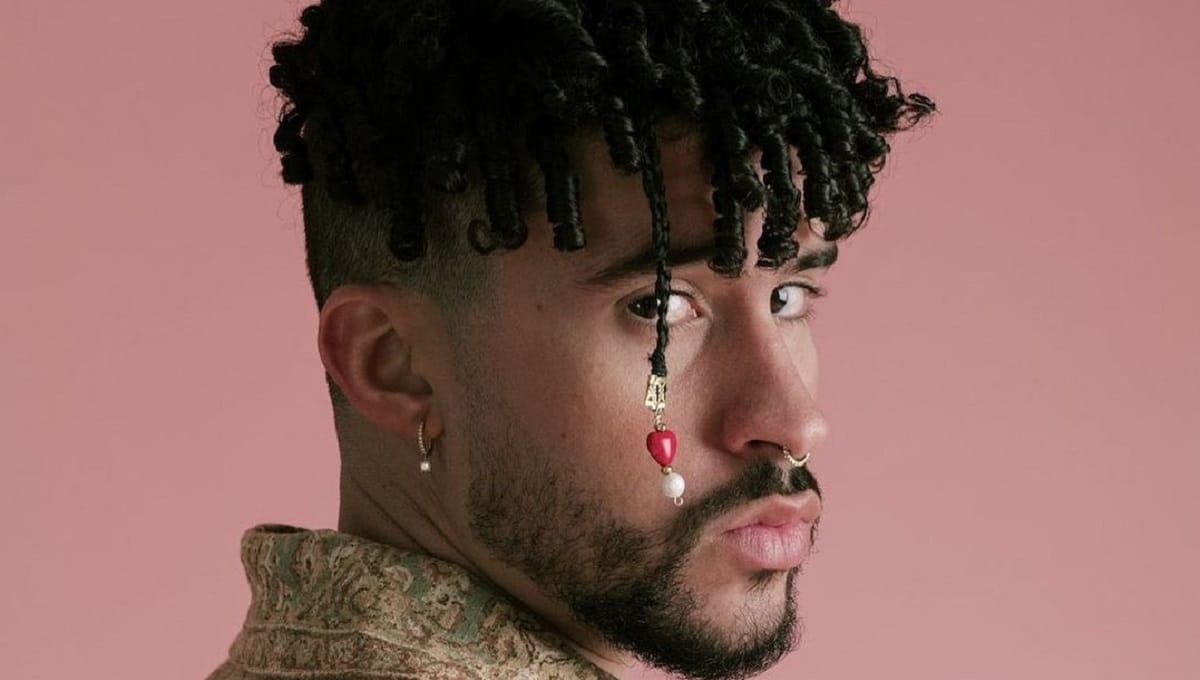
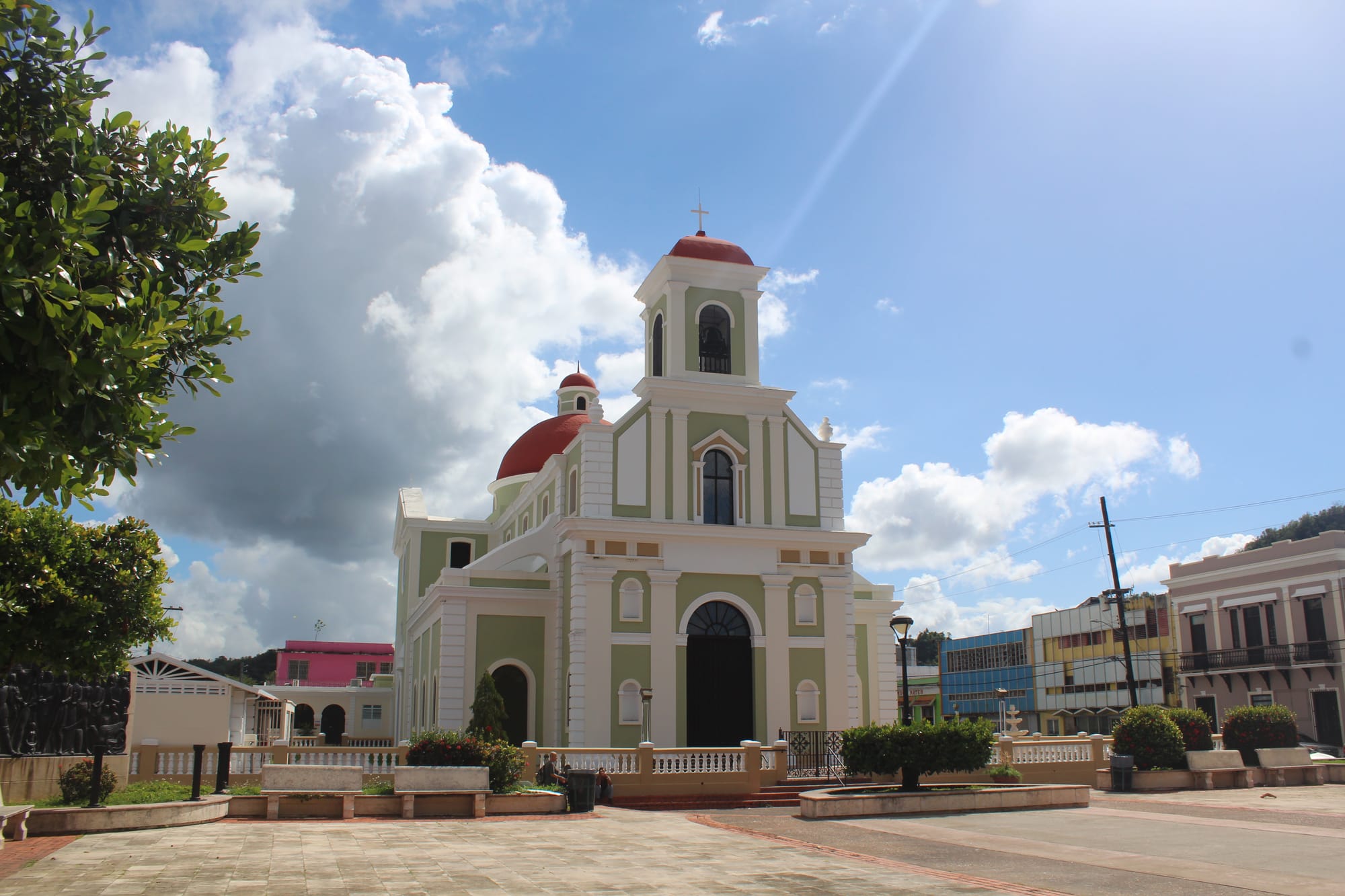
Benito Antonio Martínez Ocasio was born in a small barrio of Vega Baja, Puerto Rico – a place far from the glittering lights of any musical capital. His father drove trucks, his mother taught school, and their home was humble and loving. In this quiet childhood, Benito found his first sanctuary in sound. At five years old, he unwrapped a Christmas gift – a Vico C rap album – and something sparkled in him. He didn’t yet have a stage, but he had a voice forming inside. While other kids roamed the streets, he preferred the warmth of home. “I wasn’t the kid who got involved in the streets. I liked to be at home with my family,” he later remembered.
Every Sunday, he sang beside his devout mother in the church choir, a small voice rising in the chapel until age 13.
When he left the choir, he carried with him a reverence for melody and a heart tuned to rhythm. In the car after church, the radio would crackle with the fiery beats of Daddy Yankee and Héctor Lavoe, and Benito would listen closely. The sacred songs of morning gave way to the dembow of afternoon – salsa to reggaetón – and a new kind of prayer took root in him. He had no audience beyond his own reflection, no stage beyond his bedroom floor, but already the music lived in him. In a family snapshot from school days, a little boy scowls while forced to wear bunny ears – a bad bunny in the making.
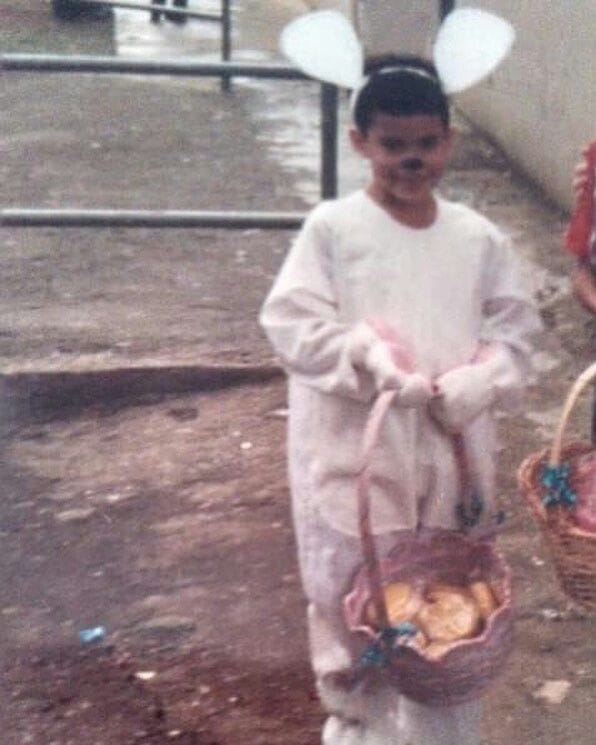
It was a nickname born as a joke, yet he would one day make it his myth. Even as a child, Benito carried a secret: an unspoken certainty that he was meant to sing, meant to stand apart. In his heart, he was already an artist waiting for the world to catch up.
Vega Baja was no metropolis – just a coastal town with more beaches than recording studios. The odds of a boy from there becoming a music star were “slim to none”, but young Benito paid odds no mind. He felt destiny humming in his ear like a familiar tune. In school, he was shy but imaginative, scribbling down rhymes in the margins of notebooks. He didn’t look or act like anyone else, even then. “Since I was a kid, I didn’t like to look like anyone else,” he admitted later. That independent spark – a quietly defiant individuality – was already glowing, even while he was just a boy with a dream and a song no one yet heard.
Creation Without Witnesses
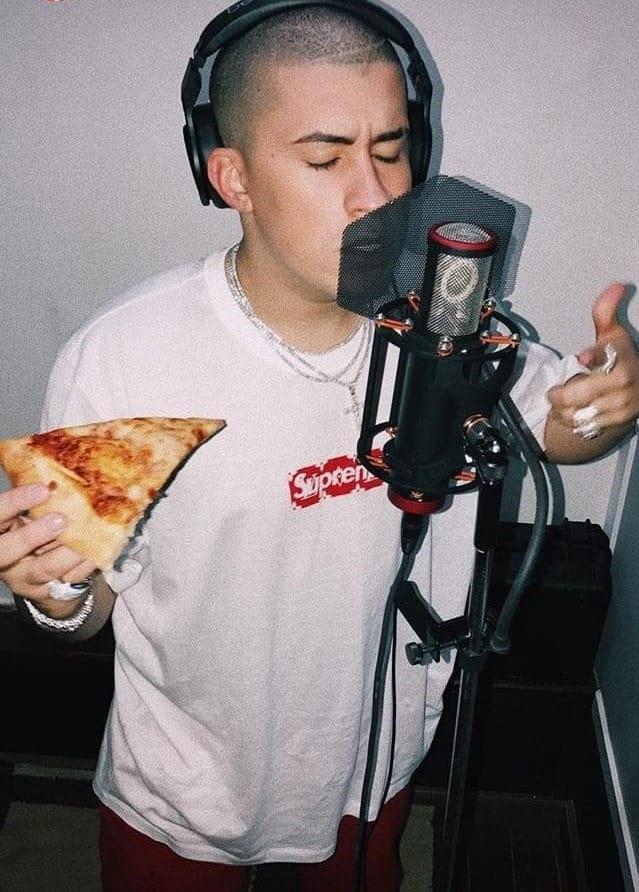
In his mid-teens, long before fame, Benito began creating music as if it were as natural as breathing. At 14 he was holed up in his bedroom in the late hours, crafting beats on a simple setup and whispering lyrics that only the walls heard. He’d freestyle for friends at school, turning the lunchroom or the street corner into an impromptu stage. Every line he rapped into the void, every melody he caught in his head, was an act of faith. There were no witnesses to these early creations – just a teenager and his imagination. In the still of the night, with headphones on, he layered rhythms under his own voice and felt a quiet sense of rightness. The applause he imagined lived only in his mind. In reality, there was silence after each song ended – but it was a satisfied silence, the kind that follows a truth spoken aloud in an empty room.
After high school, life pressed in with practicalities. Benito enrolled in university, more to appease reality than to pursue it, studying communications with a notion of maybe becoming a radio host. By day, he stocked shelves and bagged groceries at the local Econo supermarket, wearing a nametag on his chest instead of a star. He earned about $5 an hour scanning items and helping abuelas with their shopping bags – ordinary work that left his feet sore but his resolve intact. Co-workers and customers saw a polite, quiet young man in a uniform. They didn’t see the artist inside him, humming reggaetón under his breath in the checkout line, his mind busy with rhymes even as he made change. “I worked in a supermarket and wrote songs in my head while I put groceries in bags,” he would recall, describing those unglamorous days (and nights) of double lives.

Every evening after his shift, Benito went home, kicked off his work shoes, and became Bad Bunny. It was like stepping through a secret doorway. He’d sit at his laptop in his small room – often still in his supermarket uniform – and record the songs he’d been hearing in his mind all day. The glow of the screen lit up his face as he uploaded his latest track to SoundCloud, the online platform where anyone could share music with the world. In 2013, he began posting these homemade songs into the digital ether. There was no fanfare. He would hit “upload” and watch the progress bar inch across the screen, then stare at the empty play count, wondering if anyone out there would ever listen. Creation without any witness became his nightly ritual.
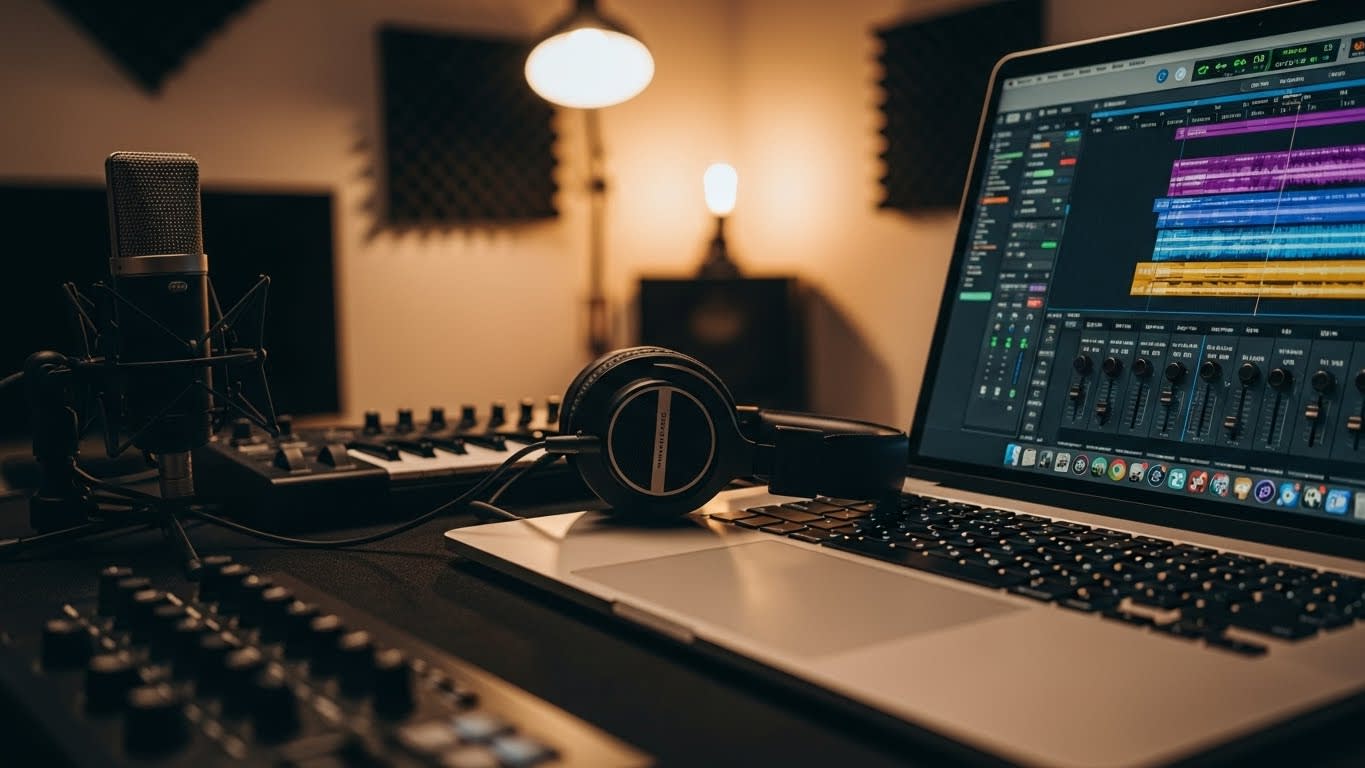
He wasn’t asking for permission or waiting for validation – he simply created because the music demanded to exist.
For years, the pattern continued. Work, study, create, upload – repeat. A handful of listeners might stumble across a track or leave a comment, but mostly it felt like singing into a void. And yet, he kept at it with quiet devotion. Each new song was a message in a bottle cast into a dark sea, with faith that someday it would wash ashore for someone. Bad Bunny – the persona born of a joke – had become as real to him as the mirror image he faced every morning. In those solitary sessions, he already was the artist he imagined himself to be. He didn’t need a crowd to confirm it. In the stillness of his late-night bedroom studio, he heard the roar of a crowd in his own heartbeat. He was living the life of a singer long before anyone knew his name.
🎧 Listen on SoundCloud: An Homage to Where It All Began
Before the charts, there was SoundCloud — where Bad Bunny first shared his voice with the void. In honor of those early days, we’ve uploaded this episode the same way he did back then: simply, directly, for whoever’s meant to find it. Hit play to hear The Song Before the Applause.
Identity Forming Without Validation
Long before accolades or applause, Benito’s identity as an artist had settled deep into his bones. He knew, almost from birth, that music was his calling. While stacking cans in the supermarket, he was already a singer in his soul. He carried himself with that inner certainty. It wasn’t arrogance – it was coherence, an alignment between who he felt he was and how he moved through the world, even when the world offered no approval yet. Day after day, he poured songs onto the internet with little more than hope to accompany them. And day after day, he woke up and did it again.
This was a young man living his identity before anyone else believed in it.
What was unfolding here has a name, though it did not require one to operate. In Neville Goddard’s language, it is the Law of Assumption: reality reorganizes around what is internally treated as already true. Benito did not wait to be validated as an artist in order to become one. He assumed the position first. The identity came before the evidence. The world’s response arrived later, not as permission, but as confirmation.
He forged his persona in those invisible years. He had chosen a stage name – Bad Bunny – that felt both playful and provocative, a nod to a childhood snapshot of him frowning in bunny ears. It made people chuckle, but for Benito it was a banner of authenticity. It reminded him not to take himself too seriously, to stay true to the quirky kid he’d always been. “Bad Bunny” was the artist who didn’t need permission to exist. By the time people heard that name, it wasn’t an alias he was trying on; it was who he already was.
With no fans to please and no label executives to answer to, he had total freedom to shape his sound and style. In those formative days, he blended the music he loved – the streetwise grit of Latin trap, the infectious bounce of reggaetón, even a touch of the heartfelt ballads his parents played at home. He rapped about heartbreak and passion with a raw honesty that didn’t fit the macho mold of the genre. There was introspection in his lyrics, vulnerability amid the bragging – an authenticity that only someone unconcerned with industry expectations could risk. He didn’t censor himself or sand down his edges for anyone’s approval. No validation was coming – and that was oddly liberating. It meant he could be completely, unapologetically Benito.
When college classes and supermarket shifts began to tug him away from his music, he made a bold choice: he dropped out of university to give his dream an undivided chance. It was a leap without a safety net. To outsiders, it seemed foolhardy – why abandon a stable path for a fantasy of stardom that might never come? But in Benito’s heart, it didn’t feel like a gamble at all. He was an artist – he had assumed that identity fully, and the idea of living anything else had become impossible. So he walked out of the classroom for the last time and stepped into uncertainty, calm and sure. He would stack another shelf or bag another grocery if he had to, but he would not shelve his true self any longer.
Even as he inched toward the brink of discovery, he remained in a kind of sacred anonymity that protected his blossoming identity. There were whispers among those who knew him – friends who heard his tracks online, locals who noticed his offbeat fashion or the confidence in his demeanor. They could sense something inevitable about him. Benito didn’t boast about his aspirations; he simply embodied them. He wore his uniqueness quietly but resolutely. He had always hated the idea of blending in. “I can simply tell you that since I was a kid, I didn’t like to look like anyone else,” he said later, as if explaining the roots of a tree that had finally borne fruit. He was already standing tall in who he was, long before any spotlight found him.
The Refusal to Shrink or Translate Himself
Then, almost as if by a twist of fate, one of those messages in a bottle came back with a signal. In mid-2016, Benito’s phone buzzed with an unfamiliar call while he was at work. His song “Diles,” uploaded without fanfare to SoundCloud, had started to gain traction – hundreds of thousands of listens turning into millions. On the other end of the line was DJ Luian, a well-known Puerto Rican music producer, eager to find the voice behind the track. Benito, still wearing his grocery store apron, found himself ducking into the break room to take calls about record deals. The world beyond his island had finally heard a whisper of what he’d been shouting into the void. Opportunity was knocking.
Bad Bunny entered the music industry on his own terms, or not at all. From the outset, when advisers and insiders realized this young man was something different, they tried to steer him. He recalls the early advice: tone it down, don’t be too different. Perhaps they saw the painted nails, the eccentric street style, the willingness to defy reggaetón’s machismo, and it made them nervous. Here was a Latin trap newcomer who wore pink, painted his nails bright colors, and braided his hair in ways that traditionalists frowned upon – a flamboyant flourish in a scene dominated by hyper-masculine posturing. And he was outspoken, unafraid to call out misogyny in lyrics or on social media, challenging norms that others had long accepted. The Latin pop world, by 2017, had never seen anything quite like Bad Bunny.
When faced with pressure to conform, Benito’s response was a calm, steady no.
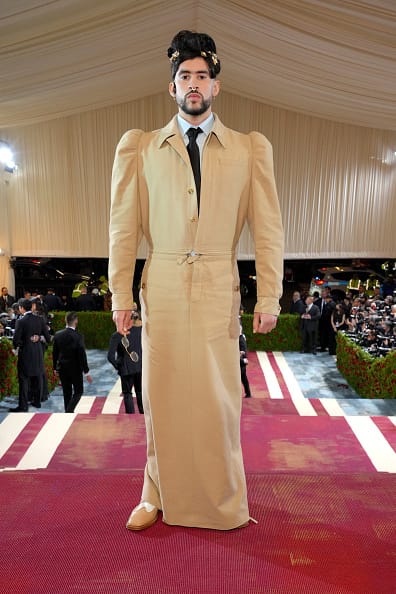
“When I came into this industry, I was never afraid to be myself,” he said, reflecting on those moments. There were people who warned him to dial it back, to fit the mold. But he just asked quietly, “What’s the worst that could happen?”. In other words, why should he fear being true to who he already was? He had spent too many years being authentic in the shadows to start faking it in the light. So he refused to shrink. He did not cut his hair to appease anyone’s expectations; instead, he shaved artistic patterns into his fade and topped it with unexpected accessories. He did not hide his painted nails; instead, he flashed them in music videos and magazine covers as if daring the world to question him. And if anyone suggested he deepen his voice or change his style to sound more traditionally “tough,” he only leaned further into his natural, laid-back vocal delivery – a doleful, soulful tone that made even hard trap beats feel introspective and new.
Perhaps the most radical stance he took was linguistic. The music industry had a formula for global success: Latin artists often felt they had to switch to English to conquer the international charts. But Bad Bunny would not translate himself for anyone. He kept writing and singing primarily in Spanish, his mother tongue, even as his fame spread worldwide. He proved that his culture and his language were not a barrier but a bridge. “He became a success while writing and singing in Spanish, unlike previous acts who switched to English to broaden their fan bases,” one profile noted, marveling at this unprecedented achievement. Benito simply didn’t see why he should change the poetry of his thoughts into another language for approval. The rhythms of Puerto Rico were in his blood, the slang of his barrio on his tongue; to dilute that would be to dilute himself. And so he didn’t. In studio meetings and marketing discussions, if someone pushed for a crossover English single, they’d meet a polite smile and a gentle shake of his head. Bad Bunny’s music would remain unmistakably Puerto Rican, unabashedly in español.
As the buzz around him grew and his songs began to chart, he kept a steady grip on the identity that had carried him this far. In late 2016, “Soy Peor” – his breakout solo hit – stormed onto the Latin charts. Its very title means “I’m worse,” a wry anthem of self-acceptance in heartbreak. Latin trap suddenly had a new face, and it was not the face of a polished, packaged pop star, but of a real young man from Vega Baja with sadness and humor in his eyes. He gleefully subverted machismo at every turn, whether by wearing skirts on magazine covers or by comforting a broken-hearted character in his songs rather than shaming her. The genre, and the world, had to expand their definition of a Latino superstar to accommodate him. And in that expansion, countless fans saw themselves – those who never fit the mold either, who spoke Spanish at home but rarely saw it celebrated on global stages, who loved reggaetón’s energy but wished it had more heart. Bad Bunny was their champion simply by being wholly himself. “The world can criticize me,” he said defiantly at one point, “but I can always criticize it back. I don’t want to be fake. I’m just being me”.
The Moment the World Catches Up
Under the same Caribbean sky where a quiet boy once daydreamed, a young man now stood before tens of thousands, microphone in hand. The world, at last, had caught up to Bad Bunny. In the span of a few short years, he went from bagging groceries to igniting stadiums. By 2018, his voice was unavoidable – blasting from car radios in San Juan and rooftop bars in New York, pulsing through earbuds in Tokyo and Madrid. He found himself invited onto one of the biggest songs of that year: “I Like It,” alongside Cardi B and J Balvin, a Spanglish summer anthem that shot to No. 1 on the Billboard Hot 100. Suddenly, the boy who once sang alone in his room had the whole world dancing to his voice.
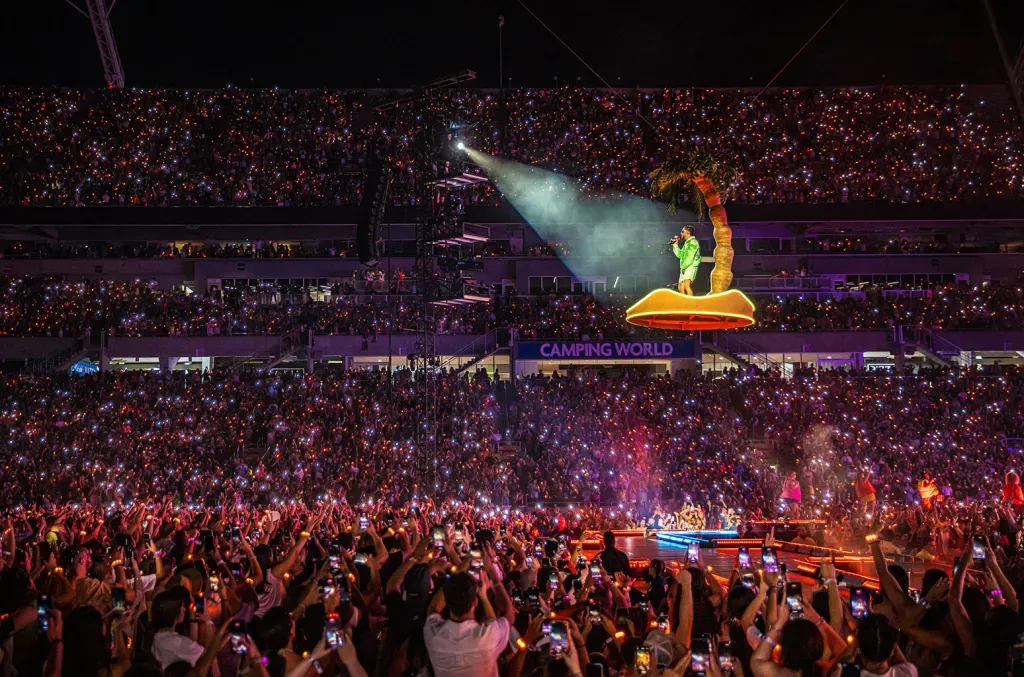
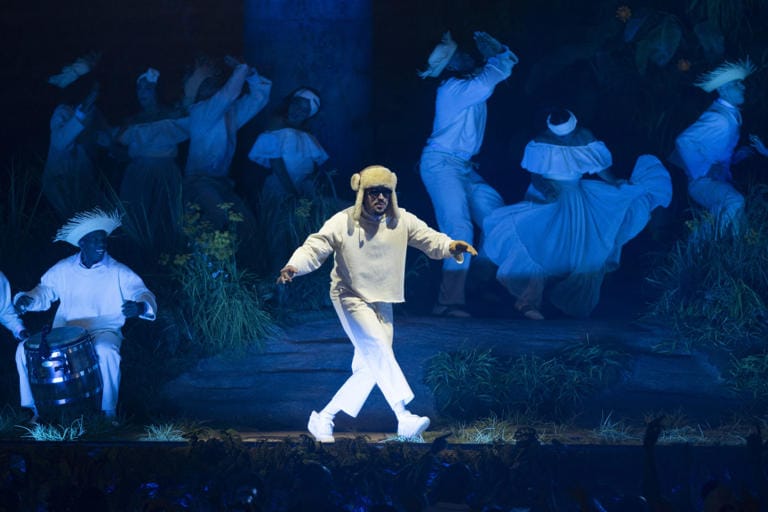
Yet, in this moment of triumph, there was a profound sense of recognition rather than surprise. Bad Bunny stood on stage at award shows with legends and newcomers alike, and he felt he belonged – because in his heart, he had been here for years. The roaring crowds, the flashing lights, the awards and accolades – they were catching up to an identity long solidified. He famously achieved what many thought impossible: an all-Spanish language album topping the main US charts and receiving Grammy honors, all without ever resorting to an English crossover. In 2020, he performed at the Super Bowl halftime show, beaming with Puerto Rican pride as he belted Spanish lyrics to over a hundred million viewers. There he was, el conejo malo, on one of the most-watched stages on earth, doing exactly what he had always done – being himself, rapping and singing in the language of his home. The world was not granting him legitimacy; it was finally witnessing the truth of it.
In interviews around this time, Benito remained almost preternaturally calm about his exploding fame. He was grateful, even joyful, but he wasn’t shaken. How could he be? This was the life he had already been living in private. Now it was simply unfolding in public. He used his new platform to speak about the island that raised him, to honor those who paved the way. “What I’m feeling goes beyond myself,” he said, reflecting on the significance of his success. “It’s for those who came before me… this is for my people, my culture, and our history”. In those words, the quiet myth of his identity became a shared legend. Bad Bunny’s victory was a victory for Puerto Rico and for every dreamer from a place deemed “too small.” Latinos around the world felt seen and heard through him – a local boy who stayed local even as he went global, bringing his community with him instead of leaving it behind.
Picture the scene: a massive concert in San Juan, years after the supermarket days. The night is warm, and the coliseum is packed to its brim. Benito walks out in his own eccentric style – maybe a flamboyant coat, nails painted neon green – and the crowd erupts. He begins to sing one of his first songs, perhaps “Diles” or “Soy Peor,” and something extraordinary happens. The audience sings every word back to him, thousands of voices merging with his, Spanish syllables rolling like thunder across the venue. He pauses and listens, his heart swelling. This song used to be a file on his computer, uploaded in the dead of night when he wasn’t sure if anyone would ever care. Now it has transcended him; it belongs to everyone. In that powerful exchange between artist and audience, there is a moment of resonance so pure it feels like destiny. Bad Bunny closes his eyes and smiles. He has no need to shout over the applause. Instead, he lets the audience carry the tune while he briefly becomes just another listener on stage, hearing the echo of what once only he believed.
It feels inevitable, like it was always going to happen this way. The boy with a song in his heart was always going to be heard, because he never stopped listening to himself. The world did not make him who he is – it only finally noticed. In the end, Bad Bunny’s greatest triumph is not the records broken or the headlines garnered, but the simple fact that he became exactly who he knew he was, long before the rest of the world knew it too. And as the lights dim and the final chorus reverberates into the night, one can sense that this is not an ending at all, but a harmony of identity and destiny, humming on and on, true to its source. The applause is thunderous now, but it only confirms what Benito Antonio Martínez Ocasio believed in the silence all along. The man stands on stage, looking out at a world that has at last caught up to his imagination, and quietly, tenderly, he takes a bow.