What is the best way to reprogram your subconscious mind? Learn how to access the ideal mental state, install new beliefs, and shift your identity through repetition, visualization, and subconscious programming.
Danish Landscape by Vilhelm Kyhn — a quiet natural scene reflecting the calm, receptive state required for subconscious reprogramming.
What Is the Best Way to Reprogram Your Subconscious Mind?
The best way to reprogram your subconscious mind is by accessing the theta brain state—where the conscious mind quiets and the subconscious becomes highly receptive—then installing new beliefs through repetition, visualization, and emotionally charged identity-based thoughts.
Most people try to reprogram their subconscious mind the wrong way.
They try harder. They repeat affirmations louder. They force belief through effort.
Because your brain is not always operating the same way.
It moves through different frequencies throughout the day — and each frequency determines what your mind accepts, what it rejects, and what it installs as identity.
If you understand this, everything changes.
Because the best way to reprogram your subconscious mind is not about doing more.
It’s about entering the right state.
The Five Brainwave States (And Which One Actually Reprograms You)
The Science Behind Subconscious Reprogramming (Why This Works)
This is where most explanations stay surface-level.
Let’s go deeper.
Your brain is made up of neural pathways — networks of neurons that fire together.
Every belief you have is a pattern of repeated neural activity.
The more a pattern repeats, the stronger it becomes.
This is known as:
Hebbian learning — “neurons that fire together wire together.”
Now here’s what happens in theta:
The prefrontal cortex (critical thinking) becomes less active
The limbic system (emotion + memory) becomes more active
The brain becomes highly responsive to imagery and repetition
This creates a high neuroplasticity window.
Meaning:
New patterns are easier to form
Old patterns are easier to weaken
This is why theta is the most effective state for reprogramming.
Why Visualization Works So Powerfully in Theta
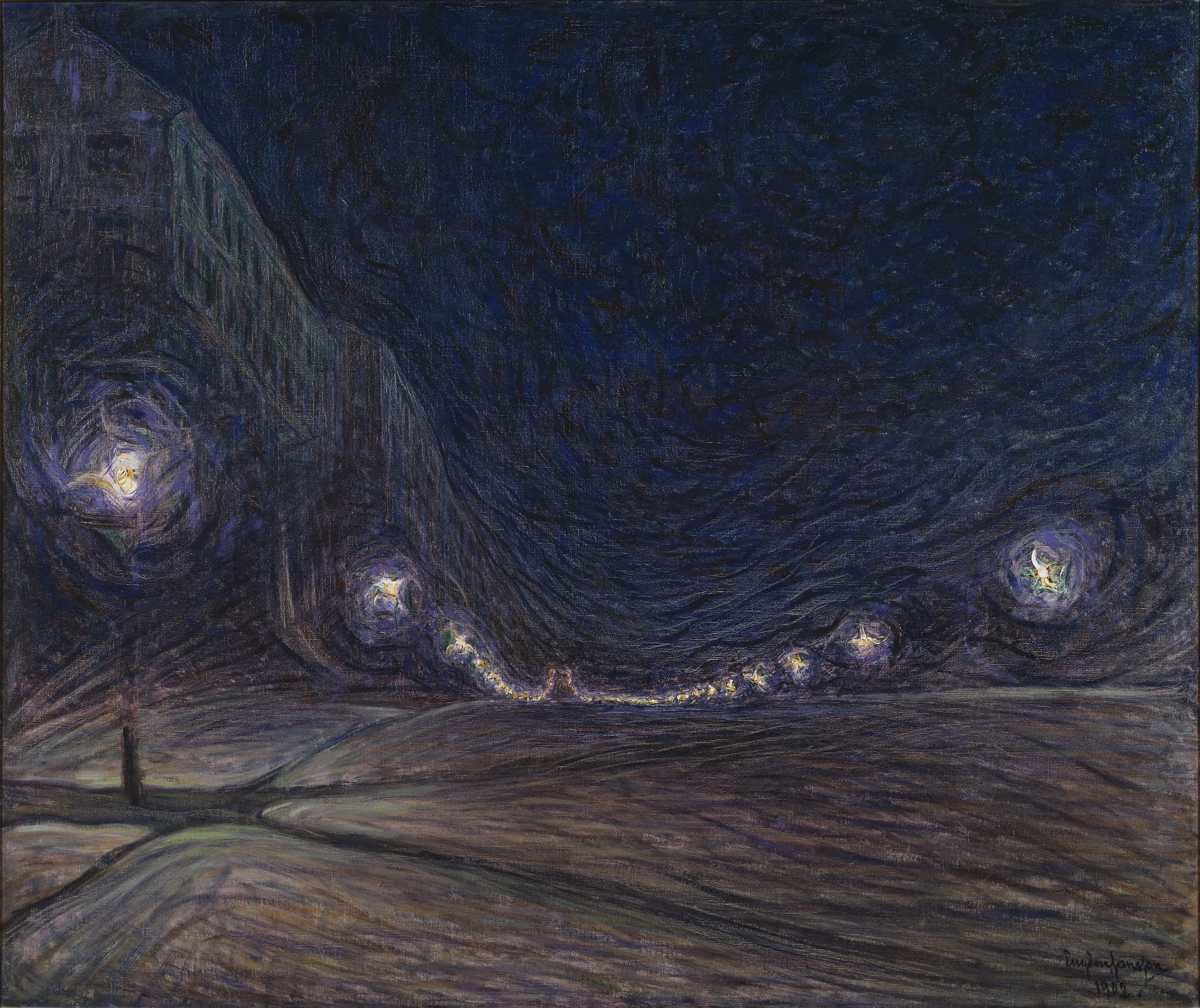
Nocturne by Eugène Jansson — a dreamlike nightscape illustrating the vivid inner imagery accessed during theta brain state.
When you visualize something clearly:
Your brain activates similar neural circuits as real experience
Emotional centers respond as if it is happening now
Memory systems begin encoding the experience
In theta, this effect is amplified.
Because the brain is not strongly distinguishing between:
what is imagined and what is real
This is the foundation of:
Future memory
Identity installation
Manifestation
You are not “pretending.”
You are training the brain to accept a new reality as familiar.
Why Nighttime Is the Most Powerful Window
Have you noticed:
Thoughts feel more vivid at night
Emotions feel stronger
Visualization feels easier
That is because your brain is entering theta.
And that is why the most effective subconscious reprogramming happens:
right before sleep and right after waking
This is the natural doorway.
Sign up for The Universe Unveiled
Everything is possible — but only if your subconscious agrees. Explore identity, imagination, and the subconscious — and change them to shape your reality.
No spam. Unsubscribe anytime.
How to Reprogram Your Subconscious Mind (Step-by-Step)
You don’t need complexity.
You need precision.
Step 1 — Enter Theta
Use one of the following:
Lie down and relax (SATS method)
Deep breathing or meditation
Repetitive audio or affirmations
Goal: reach the state where your body is relaxed but your mind is still aware.
See a short scene that implies your desire is already done
Keep it simple
Loop it
Affirmations (Identity-Based)
Not: “I want…”
But: “I am…”
Examples:
I am financially free
I am confident and decisive
I am already living this reality
Step 3 — Add Emotion
Emotion is what locks it in.
The stronger the emotional experience:
The faster the subconscious accepts it.
Step 4 — Repeat Daily
This is where most people fail.
Reprogramming is not about intensity.
It is about repetition.
The sequence is:
Repetition → Familiarity → Belief → Identity
At this point, the only question that remains is time—what actually determines how quickly repetition becomes identity—which is exactly what we break down in how long it takes to reprogram your subconscious mind.
The Biggest Mistakes in Subconscious Reprogramming
1. Trying to Force It
Effort creates resistance.
2. Doing It in the Wrong State
Beta = resistance Theta = receptivity
3. Being Inconsistent
Identity is installed through repetition — not occasional effort.
Why Your Environment Still Programs You (Whether You Like It or Not)
Even if you practice this perfectly:
Your environment is still shaping your subconscious.
Every day, you are exposed to:
Social media
Conversations
Cultural beliefs
Repeated messaging
This is why advertisers spend millions to be in front of you.
Because they understand something most people don’t:
Repetition installs identity.
Subconscious Reprogramming Library
This is exactly why The Universe Unveiled exists.
Not as content.
As an environment.
A place you return to — where repetition is intentional, and identity is reinforced instead of contradicted.
Frequently Asked Questions About The Best Way To Reprogram The Subconscious Mind
The best way to reprogram your subconscious mind is to enter a highly receptive state—especially theta—and then repeat new identity-based thoughts through visualization, affirmations, and emotional reinforcement until they become familiar enough to feel natural.
Reprogramming the subconscious mind means changing the deep patterns of belief, expectation, emotional association, and self-image that operate automatically beneath conscious thought and influence behavior, decisions, and perception.
The subconscious mind is important because it runs much of your life automatically. It shapes habits, emotional reactions, default thoughts, and what feels possible to you long before the conscious mind tries to intervene.
Yes. The brain changes through repetition, emotional experience, and neuroplasticity. When a new pattern is reinforced consistently enough, it can become the new default instead of the old one.
The theta brain state is a slower brainwave state, generally associated with the range of about 4 to 8 Hz, where the mind becomes deeply relaxed, internally focused, emotionally receptive, and more open to suggestion and imagery.
Theta is considered the best state because the conscious mind quiets down, the critical filter softens, and the subconscious becomes more receptive to repeated thoughts, visual images, and emotionally charged beliefs.
You naturally enter theta right before sleep, right after waking, during deep meditation, and sometimes during repetitive, trance-like states when the mind becomes calm and inwardly focused.
Beta is the active, analytical thinking state. Theta is more inward, receptive, and suggestible. Beta is useful for problem-solving, while theta is more effective for installing new subconscious patterns.
Affirmations often fail during the day because they are usually repeated in beta, where the mind is analytical and resistant. If the statement feels too far from your current identity, the mind may reject it instead of absorbing it.
Not exactly, but they are closely related. Hypnosis often uses a deeply relaxed, highly suggestible state that overlaps with theta-like qualities, making it useful for belief change and subconscious work.
The critical faculty is the mental filter that compares new information with existing beliefs and rejects what feels unfamiliar, unrealistic, or threatening to your current identity structure.
It matters because if the critical faculty is highly active, new beliefs may be resisted before they ever reach the subconscious. In more receptive states like theta, that resistance weakens.
The five commonly referenced brainwave states are beta for active thinking, alpha for relaxed awareness, theta for subconscious access, delta for deep sleep and restoration, and gamma for high-level integration and peak cognition.
Alpha is a bridge state. It is calmer than beta and can make the mind more relaxed and open, but theta is generally deeper and more associated with direct subconscious receptivity.
Delta is associated with deep sleep and restoration. It is not usually the main conscious programming state, but it can support healing, nervous system repair, and deeper rest that helps overall mental integration.
Gamma is often linked with intense focus, insight, and integration. It is not usually the primary installation state for subconscious programming, but it may help with clarity, coherence, and higher-order processing.
Neuroplasticity is the brain’s ability to change and reorganize itself. Subconscious reprogramming depends on this capacity because repeated mental and emotional patterns can strengthen new neural pathways over time.
Hebbian learning is the principle often described as “neurons that fire together wire together.” It means repeated patterns of thought and feeling strengthen the brain circuits associated with them.
Repetition matters because the subconscious learns through familiarity. What is repeated often enough begins to feel normal, and what feels normal is more likely to be accepted as true and installed as identity.
Emotion strengthens programming because emotionally charged experiences are encoded more deeply. When feeling is present, the brain treats the experience as more meaningful and worth storing.
Yes. Visualization helps because the brain responds to vividly imagined experiences in ways that overlap with real experience, especially when emotion and repetition are added to the mental scene.
Visualization works especially well in theta because the mind is more inwardly focused, the analytical filter is softer, and imagery can feel more vivid and emotionally believable.
Future memory is the idea of mentally rehearsing a desired reality so often and so vividly that the brain begins to relate to it as something familiar rather than distant or imaginary.
Identity-based subconscious programming focuses on changing who you believe yourself to be, not just what you want to get. It works at the level of self-image, expectation, and internal certainty.
Identity is more powerful than desire because behavior, perception, and choices tend to align with who you believe you are. Desire wants something; identity acts from a place of already being it.
Identity-based affirmations are statements rooted in who you are becoming, such as “I am confident,” “I am supported,” or “I am financially free,” rather than statements rooted only in wanting.
SATS stands for State Akin to Sleep. It is a deeply relaxed condition, often practiced before sleep, where the body becomes heavy and calm while the mind remains aware enough to visualize and impress the subconscious.
For many people, yes. The period right before sleep is one of the most effective times because the mind is naturally moving toward theta and becoming more receptive to impression.
Yes. Right after waking, the mind is often still relaxed and less guarded, which makes it a powerful window for visualization, affirmations, and identity reinforcement.
Yes. Meditation can calm the nervous system, reduce mental noise, and help the brain move into more receptive states where subconscious programming becomes easier and more consistent.
Yes. Repetitive audio, guided meditations, and well-structured subconscious tracks can support programming by sustaining focus, repetition, and emotional engagement in receptive states.
It depends on the depth of the old pattern, the intensity of emotional reinforcement, the consistency of repetition, and whether your environment supports or contradicts the new belief.
A practical sequence is repetition, then familiarity, then belief, then identity. As a thought becomes familiar, it feels safer. As it feels safer, it becomes believable. As it becomes believable, it can become part of who you are.
Old beliefs can often be weakened, interrupted, and replaced through repeated new experiences and new interpretations, especially when the new pattern is practiced consistently enough to become stronger than the old one.
Resistance happens because the mind is designed to preserve identity and predictability. A new belief can feel threatening, fake, or unsafe if it is too far from what the nervous system currently accepts.
In general, yes. Subconscious reprogramming through meditation, visualization, affirmations, and intentional repetition is usually a safe process of mental conditioning. It is far less invasive than many people assume and, in fact, subconscious conditioning is already happening every day through media, culture, family patterns, and repeated experience.
They matter because repetition shapes belief. Advertisers understand that repeated images, messages, and emotional cues influence how people feel, what they trust, and what they come to see as normal.
Yes. Your environment can either reinforce the new identity or constantly drag you back into the old one. The people, content, conversations, and emotional atmosphere around you all matter.
Nighttime often feels more emotional and vivid because the brain begins shifting out of highly analytical beta and toward slower, more inward states where imagery and feeling become more pronounced.
Yes. Many people do. Falling asleep does not automatically ruin the process, but staying aware long enough to impress the subconscious with intention can make the practice more precise and effective.
Visualize a short, simple scene that implies your desired reality is already true. The best scenes are emotionally meaningful, easy to repeat, and rooted in identity rather than fantasy overload.
It does not need to be long. Even five to fifteen focused minutes can be effective if the scene is clear, the state is receptive, and the practice is done consistently.
It is usually better to focus on one core identity shift or one closely related cluster of beliefs at a time. Too many targets at once can dilute emotional clarity and consistency.
Common mistakes include trying to force belief in beta, being inconsistent, using statements that feel too unbelievable, overcomplicating the process, and surrounding yourself with an environment that constantly reinforces the old identity.
Forcing tends to activate more tension, more analysis, and more awareness of the gap between where you are and where you want to be. That often strengthens resistance instead of softening it.
Yes. Confidence is deeply connected to self-image and expectation, so changing the subconscious patterns around worth, safety, and identity can support more natural confidence over time.
Yes. Many money patterns are rooted in subconscious associations formed through childhood, culture, family beliefs, and repeated emotional experiences. These patterns can be challenged and replaced.
Yes. When the subconscious accepts a new reality as normal, action, perception, emotional response, and expectation begin to align more naturally with what you want instead of fighting it.
Subconscious programming shapes the internal identity that drives what you expect, notice, allow, and do. In manifestation language, it changes the state of self from which your outer reality is approached and interpreted.
The ultimate goal is to become internally congruent with the life you want—so that your thoughts, emotions, behavior, expectations, and identity all move in the same direction instead of contradicting one another.
IMAGE CREDITS
Vilhelm Kyhn, Danish Landscape, oil on canvas, Nasjonalmuseet (Norway).
Eugène Jansson, Hornsgatan by Night, 1902, oil on canvas, Nationalmuseum (Stockholm).
Eugène Jansson, Nocturne, 1900, oil on canvas, Göteborgs Konstmuseum (Sweden).
Ferdinand Hodler,The Holy Hour, 1911, oil on canvas, Stiftung für Kunst, Kultur und Geschichte (Winterthur, Switzerland).
Reprogram the mind. Refine the self. Become the identity your reality obeys.