Do the Hardest Thing First: How Identity Commands Time (The Mahākāla Principle)
What you do first each day is not a habit. It is a declaration of who governs your time. The hardest task is not a burden. It is the key that frees attention, restores identity, and allows time to move again.

This is not productivity advice.
It is temporal doctrine.
What you do first each day is not a habit.
It is a declaration of who governs your time.
Most people believe time is something they manage.
They are wrong.
Time is something that responds.
Not to effort.
Not to busyness.
But to position.
Position is not where you stand.
It is what you face.
And position is chosen by what you face first.
The Hidden Tax of Avoidance
Every day contains at least one task that you do not want to do.
A phone call you have been postponing.
A message you have not answered.
A decision you keep deferring.
The hardest set of the workout.
The first uncomfortable sentence of the book.
You may think you are simply delaying it.
You are not.
You are allowing it to occupy your nervous system.
The unfinished task does not wait quietly.
It becomes a background process.
It fragments attention.
It leaks energy.
It creates a low-grade pressure that never fully leaves.
This is not laziness.
This is identity debt.
An unresolved action that taxes your capacity to be fully present.
You are not tired.
You are occupied.
The First Action Is Identity Selection
Most people arrange their day by priority.
That is not what matters.
The first action of the day is not about efficiency.
It is about identity selection.
What you do first is the act that decides:
- Who you are today
- What kind of person governs this day
- What kind of time you are allowed to have
Before belief.
Before motivation.
Before mood.
There is only posture.
The first action is the one that establishes the state.
If you avoid first, you become an avoider.
If you confront first, you become someone who goes first.
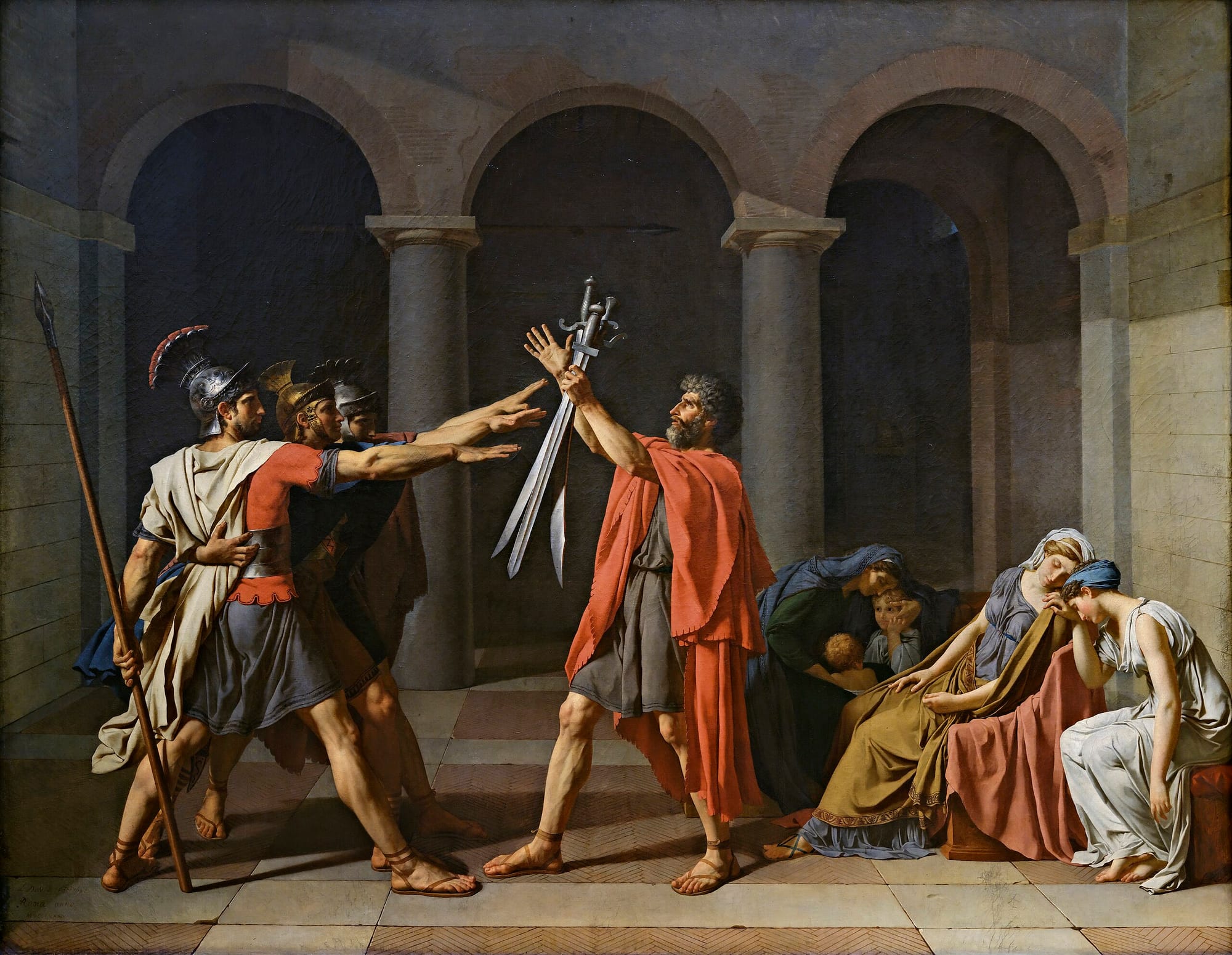
And identity, once chosen, organizes everything that follows.
Mahākāla: Why Time Moves After Decision
In The Mahākāla Principle, time is not mechanical.
Time is intelligent.
It does not respond to motion.
It responds to resolution.
While the hardest thing remains undone:
- Time feels slow
- The day feels heavy
- Progress feels resisted
Not because the universe is blocking you.
But because part of you is still guarding what you refuse to face.
When the unresolved collapses, time resumes flow.
This is Mahākāla:
Time aligns after identity aligns.
You do not free time by working harder.
You free time by removing the one thing that fractures your position.
The Haunted Mind
The mind cannot become its best self
while part of it is assigned to guard an unresolved threat.
Every avoided task creates:
- Background anxiety
- Micro-avoidance loops
- Reduced executive clarity
You think you are distracted by many things.
In reality, you are distracted by one thing
that has been allowed to persist.
The mind becomes powerful only after it becomes unhaunted.
And haunting is not caused by trauma alone.
It is caused by the things you keep postponing.
The One Who Goes First
There is an identity archetype that changes everything.
Not the productive person.
Not the disciplined person.
But:
The One Who Goes First.
This is the one who:
- Faces friction early
- Removes threats to attention
- Treats fear as scheduling data
- Does not negotiate with avoidance
Power is not in doing many things.
Power is in removing the one thing
that weakens all others.
In the Universe Unveiled doctrine:
Identity precedes outcome.
Identity precedes clarity.
Identity precedes time.
And identity is chosen by the first cut.
Temporal Leverage
When the hardest thing is done first, something precise happens.
The rest of the day is no longer fought.
It is governed.
Energy releases.
Bandwidth returns.
Time opens.
This is not relief.
This is temporal leverage.
One early action reorganizes the entire cognitive economy of the day.
Mahākāla does not reward effort.
He rewards position.
The Three Laws of the First Cut
Law 1 — The Hardest Task Is the One That Owns Your State
If it disturbs you, it governs you.
Law 2 — First Action Determines Identity for the Day
You do not become who you intend.
You become who you face first.
Law 3 — Time Follows Resolution
Clear one threat to attention, and the day accelerates.
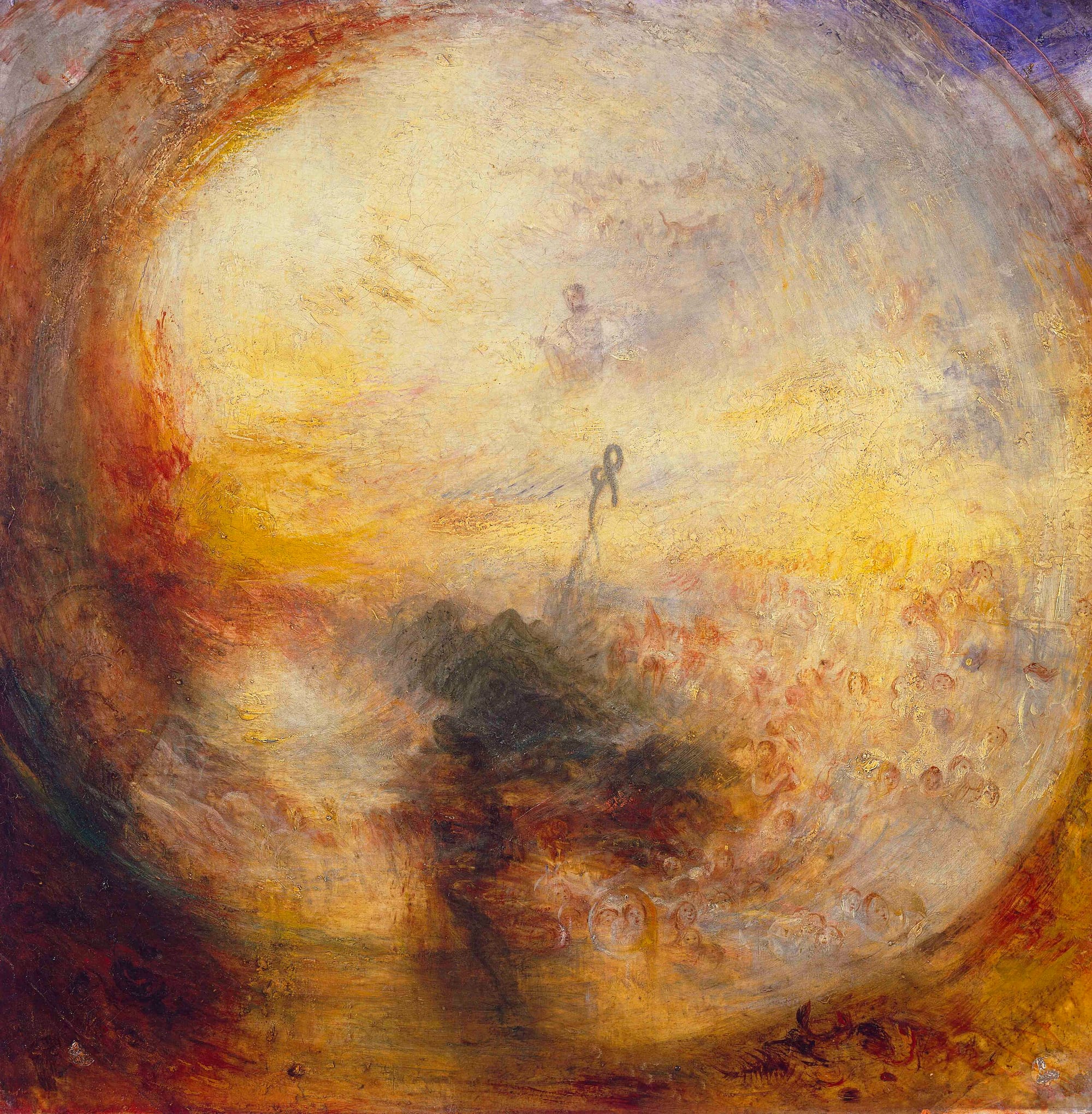
The Cut That Frees the Day
Every day contains one task that holds the rest hostage.
Do not schedule around it.
Do not motivate yourself toward it.
Do not wait for the right mood.
Cut it first.
And watch how time, suddenly, becomes available to you.
Mahākāla does not reward effort.
He rewards position.
And position is chosen
by what you face first.
Image Credits
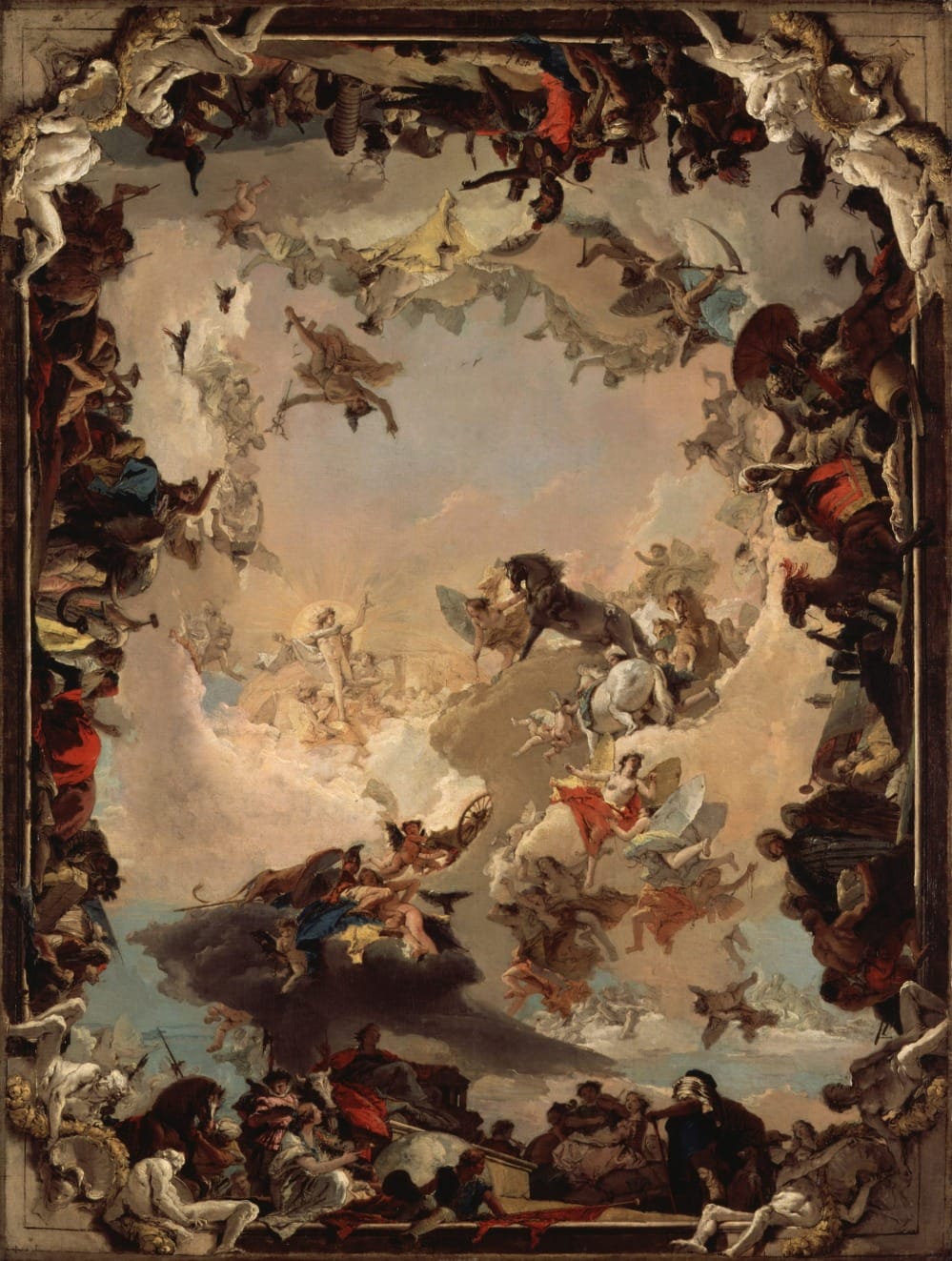
Giovanni Battista Tiepolo (1696–1770), Allegory of the Planets and Continents, 1752, oil on canvas. The Metropolitan Museum of Art, New York. Public domain.
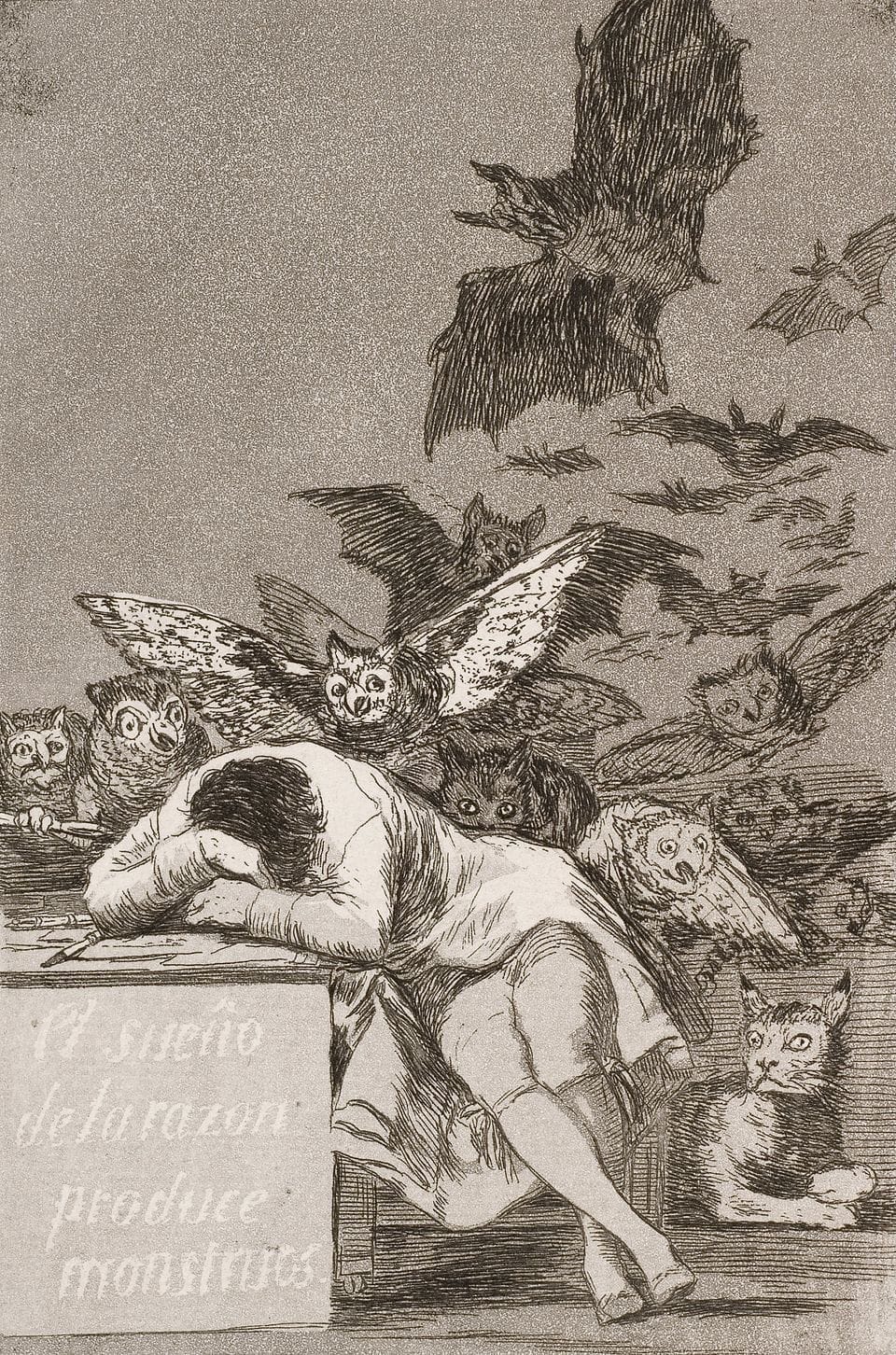
Francisco Goya, The Sleep of Reason Produces Monsters, c. 1799, etching and aquatint from Los Caprichos. Nelson-Atkins Museum of Art. Public domain.
Jacques-Louis David (1748–1825), The Oath of the Horatii, 1784, oil on canvas. Musée du Louvre, Paris. Public domain.
J.M.W. Turner, Light and Colour (Goethe’s Theory) – The Morning after the Deluge – Moses Writing the Book of Genesis, 1843.
Oil on canvas. Public domain.