Faith as Assumption: Why Belief Works Without Knowledge of the Law
Why outcomes follow assumed identity rather than belief, effort, or understanding. This essay examines faith as positional residence and explains how reality aligns automatically with an unopposed inner state, regardless of conscious knowledge of the law.

The Paradox of Faith
Reality aligns with inner position regardless of conscious knowledge of the governing principle. Outcomes do not require belief in the law to occur. The law of Assumption operates independently of explanation, strategy, or awareness. Results follow position, not understanding.
This is the paradox of faith: reality responds to what is assumed, not to what is intellectually affirmed. Knowledge of the mechanism is unnecessary. The law is automatic and indifferent to recognition.
Faith as Positional Residence
Faith is not expectation, hope, or confidence. It is positional residence—the internal occupation of a state as already real. Faith is not waiting for confirmation; it is the absence of waiting altogether.
Assumption is the internal posture that sustains this residence. It is the premise consciousness lives from, not the outcome it imagines toward. Together, faith and assumption describe how consciousness stabilizes within a fulfilled position and expresses it as lived reality.
Operation Without Recognition
The law functions without requiring conscious acknowledgment. Individuals enact assumptions continuously, whether aware of the principle or not. Manifestation does not depend on belief in the law; it depends on coherence within the assumed state.
When an inner position is held without internal contradiction, the law enforces correspondence automatically. Ignorance of the rule does not exempt one from its effect. The inner premise produces its result regardless of whether the mechanism is named or understood.
Pre-Linguistic Causation
The operation of the law precedes language. It responds to internal reality—imagery, sensation, felt position—not to verbal instruction. Words are optional. Affirmations are unnecessary. Concepts are secondary.
Communication with the subconscious occurs below speech. The structure of experience adjusts to assumption without requiring it to be articulated. Language may follow the state, but it does not initiate it.
Faith as Pre-Reflective State
Faith is not reasoned into existence. It is pre-reflective—arriving prior to evidence, logic, or justification. It is the silent premise from which thought proceeds, not a conclusion reached by thought.
Because it is not constructed through reasoning, it cannot be dismantled by logic. It does not argue for itself. It simply is. Conscious belief aligns afterward, if at all.
Cessation of Internal Negotiation
Once a position is occupied, internal debate ends. The assumed state leaves no room for contradiction. Doubt, resistance, and alternative narratives dissolve because there is no longer a question being asked.
All inner dialogue proceeds from the settled premise. There is no negotiation with reality when the position is fixed.
Identity as Causal Structure
Stabilized identity is the causal force behind outcomes. Identity is not descriptive; it is positional. When consciousness holds a state consistently, it becomes a fixed coordinate through which events reorganize.
External circumstances do not create results. They respond. Reality reconfigures itself around the dominant inner position without instruction or effort.
Time as a Function of Assumed Position (Mahākāla)
This identity-based causation necessarily includes time.
Within The Universe Unveiled canon, The Mahākāla Principle describes how time responds to stabilized assumption. Mahākāla is not introduced here as myth or devotion, but as structural language for an observable effect: when inner position becomes fixed, time reorganizes accordingly.
Delay is not imposed by external sequence. It is produced by unresolved internal negotiation. When assumption wavers, time appears resistant. When assumption stabilizes, waiting collapses and chronology rearranges without effort.
Mahākāla names this relationship: identity governs sequence. Time does not reward effort, belief, or repetition. It responds only to position. Once the assumed state is held without contradiction, time yields to it as a subordinate function.
Impersonal Law, Sovereign Effect
The law of assumption is impersonal and sovereign. It requires no permission, belief, or agreement. It enforces coherence to whatever position is occupied.
When an assumption is unwavering, the outcome is inevitable. Delay appears only where internal conflict remains. In the absence of contradiction, the law resolves the state into form as a necessary consequence.
Faith, understood as positional residence, is not a method. It is a structural principle. The assumed identity governs reality by default. Nothing outside the occupied state alters the result.
Image Credits
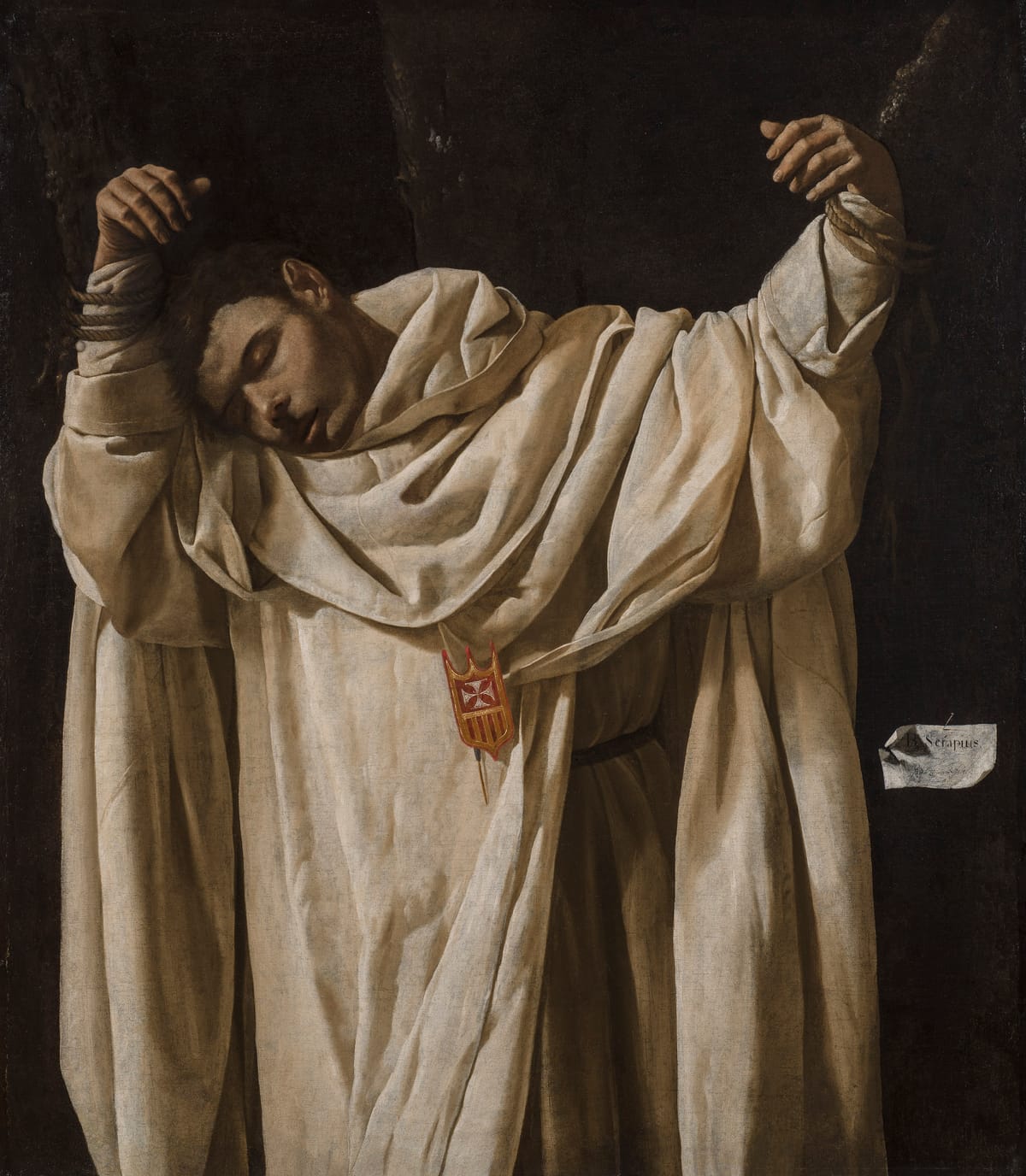
Francisco de Zurbarán, The Martyrdom of Saint Serapion (1628). Oil on canvas. Wadsworth Atheneum Museum of Art, Hartford, Connecticut.
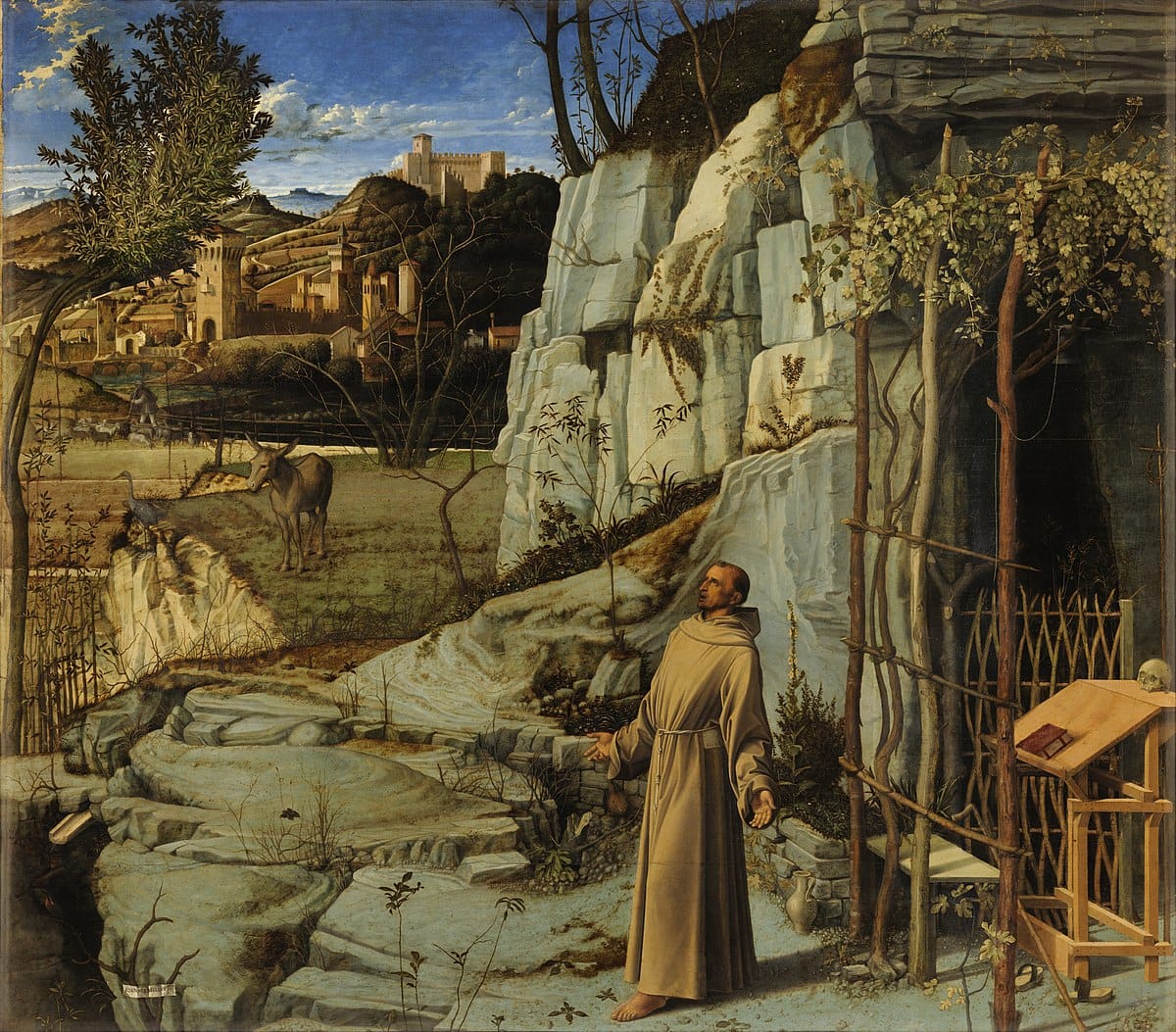
Giovanni Bellini, Saint Francis in the Desert (c. 1480). Oil on panel. The Frick Collection, New York.
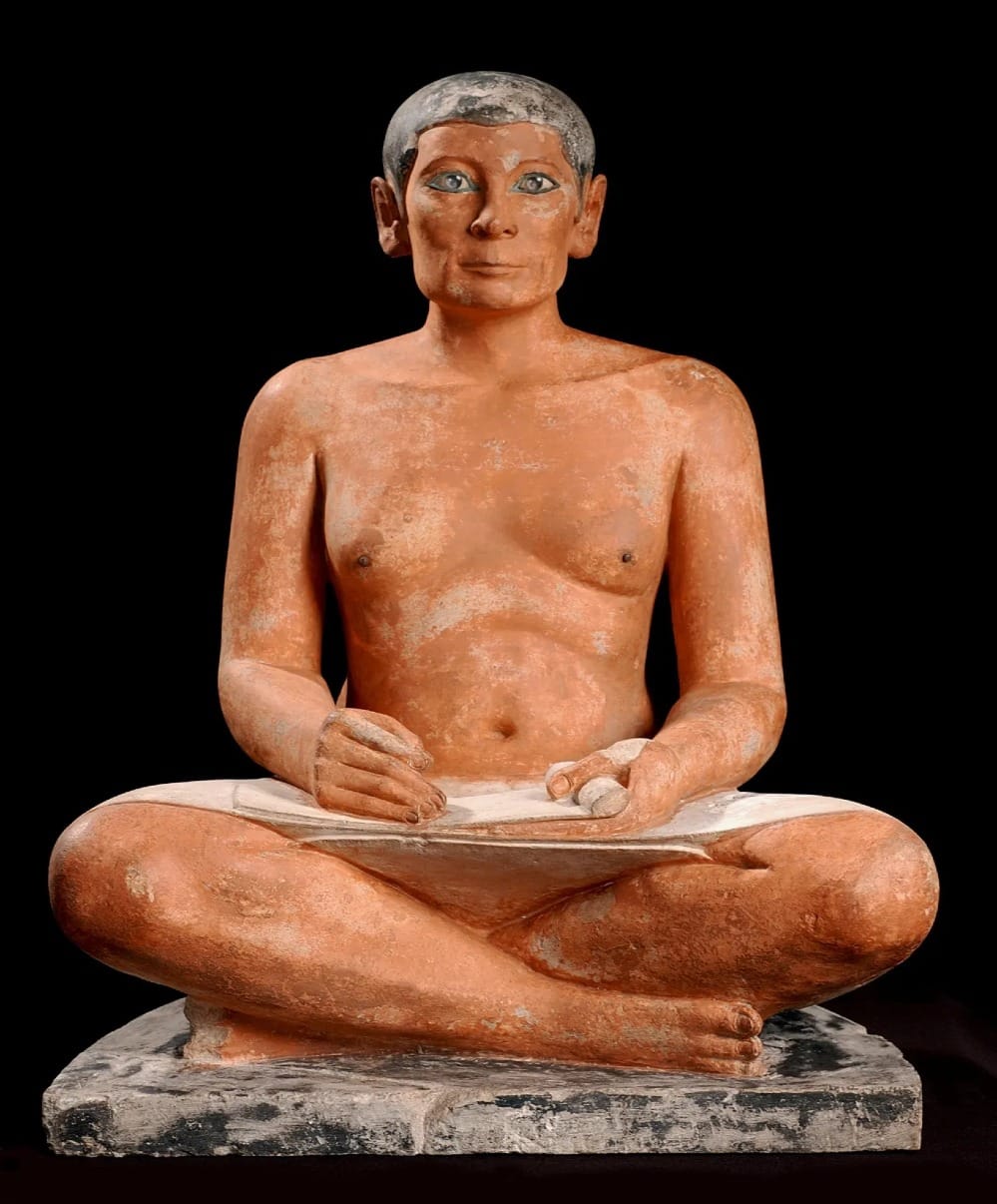
The Seated Scribe, Saqqara Necropolis, Old Kingdom, 4th–5th Dynasty (c. 2600–2350 BC). Limestone with painted details. Musée du Louvre, Paris. Room 635, Sully Wing, Level 1. Inventory no. E 3023.
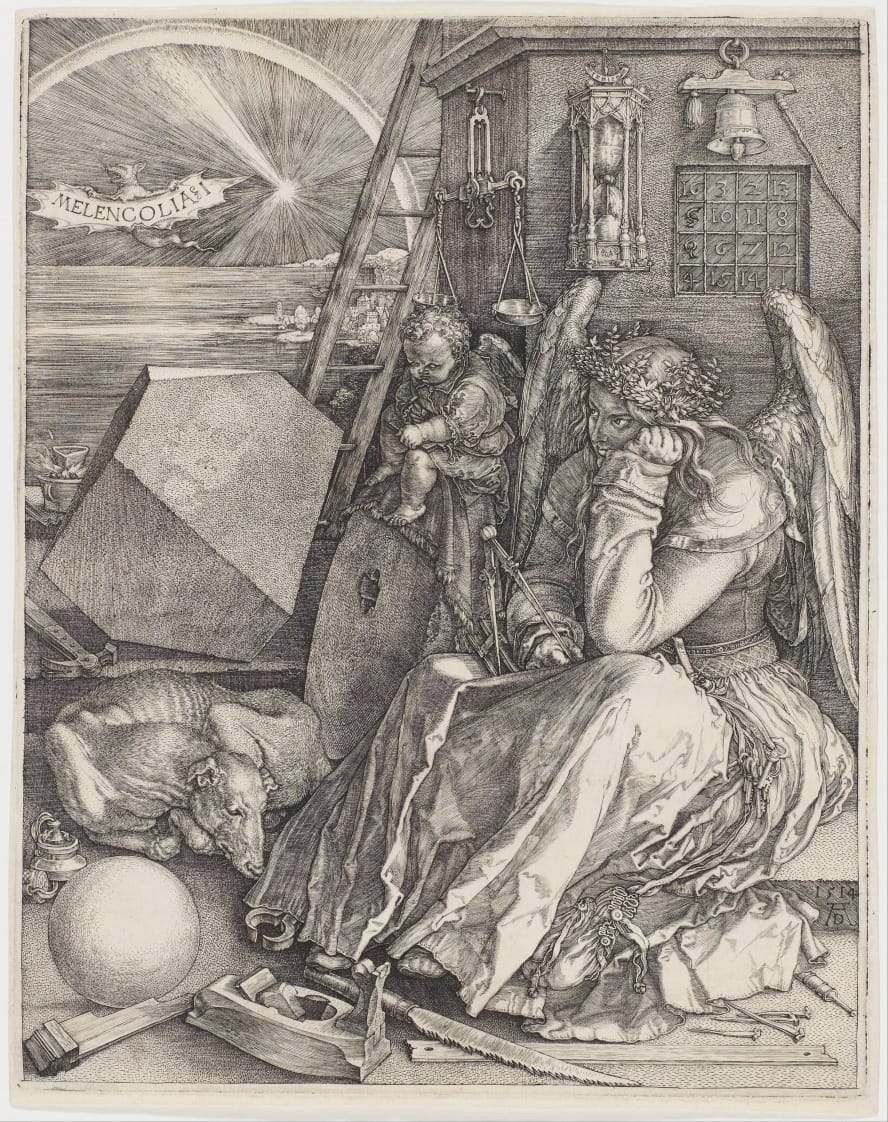
Albrecht Dürer, Melencolia I (1514). Engraving. Image source: Sotheby’s.