How Steve Jobs Thought — And Why Reality Bent Around Him
Why did Steve Jobs operate differently from everyone else? This guide explores the mindset, conviction, and decision-making patterns that drove his most defining moments.

He did not ask what was realistic.
He operated from a different question:
“What becomes inevitable if I decide it is?”
Steve Jobs Is Misunderstood — Even Now
Most people believe they understand Steve Jobs.
They’ve seen the presentations.
They’ve read the quotes.
They’ve studied the products.
But they are studying the output, not the mechanism.
They analyze:
- Apple’s innovation
- Pixar’s storytelling
- product design philosophy
But they rarely ask:
What internal structure produced all of this?
Because if you remove the mythology, the timelines, the press…
what remains is not a businessman.
It is a pattern of identity in motion.
He Didn’t Respond to Reality — He Preceded It
The average person lives like this:
- Observe reality
- Interpret reality
- Make decisions based on reality
Steve Jobs inverted this completely:
- Decide what reality should become
- Align internally with that decision
- Move as if it were already unfolding
This is why his behavior confused people.
Because he was not reacting.
He was leading reality.
The Internal Architecture of Steve Jobs’ Thinking
To understand Jobs, you have to go beneath habits and into structure.
Not what he did.
How his mind was organized.
1. Identity Before Strategy
Most people start with strategy.
Jobs started with identity.
Before Apple became Apple…
he had already assumed the role of:
- builder
- innovator
- shaper of culture
He didn’t become that because of Apple.
Apple became what it was because of who he had already decided to be.
This is the reversal most people never see.
2. Certainty Without Evidence
This is where people mislabel him as “delusional.”
Jobs would:
- demand impossible timelines
- insist on unproven ideas
- reject constraints
But what looked like irrationality…
was actually certainty detached from current evidence.
He did not require proof to proceed.
He required alignment.
3. Emotional Conviction as a Driver
Jobs didn’t just think differently.
He felt differently about his ideas.
There was emotional intensity behind his vision:
- urgency
- belief
- inevitability
That emotional charge is what made others feel it too.
People didn’t just hear his vision.
They experienced it.
This wasn’t random — Steve Jobs was deeply influenced by Eastern philosophy, especially Autobiography of a Yogi, which shaped how he understood intuition, vision, and creation — explored in detail in our breakdown of his connection to Yogananda.
4. Rejection of External Authority
Jobs did not outsource truth.
He didn’t defer to:
- market trends
- expert opinion
- consensus thinking
He filtered everything through one question:
“Does this align with the vision?”
If not, it was irrelevant.
The Reality Distortion Field — A Misnamed Phenomenon
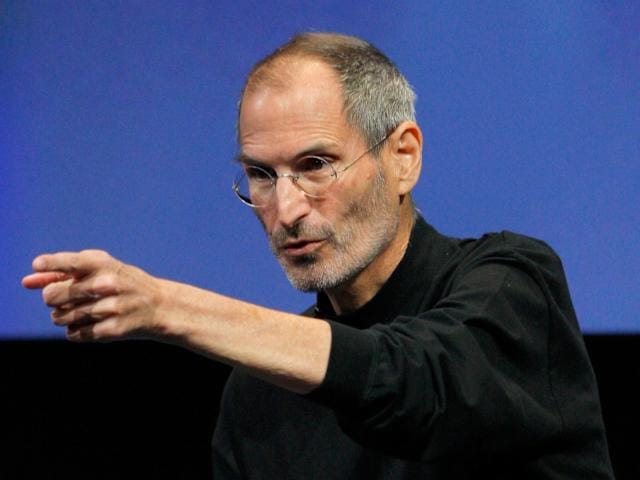
The term “Reality Distortion Field” sounds like exaggeration.
Almost like myth.
But it was observed repeatedly.
People inside Apple described the same pattern:
- impossibilities became timelines
- resistance dissolved
- teams executed beyond perceived limits
The common explanation is charisma.
That is incomplete.
Here is a more precise interpretation:
The Reality Distortion Field was the result of:
- identity certainty
- emotional conviction
- behavioral consistency
- communicative clarity
When those four align, something happens:
other people begin to reorganize their own belief systems in response.
It is not distortion.
It is coherence overriding doubt.
What People Felt Around Him
To understand the effect, you have to understand the experience.
People didn’t just think Jobs was persuasive.
They felt like:
- their limitations were being removed
- their timelines were being compressed
- their objections didn’t hold
This created pressure.
But it also created results.
Because when someone is fully aligned internally…
they become extremely difficult to resist externally.
The Apple Firing — Not a Failure, but a Recalibration
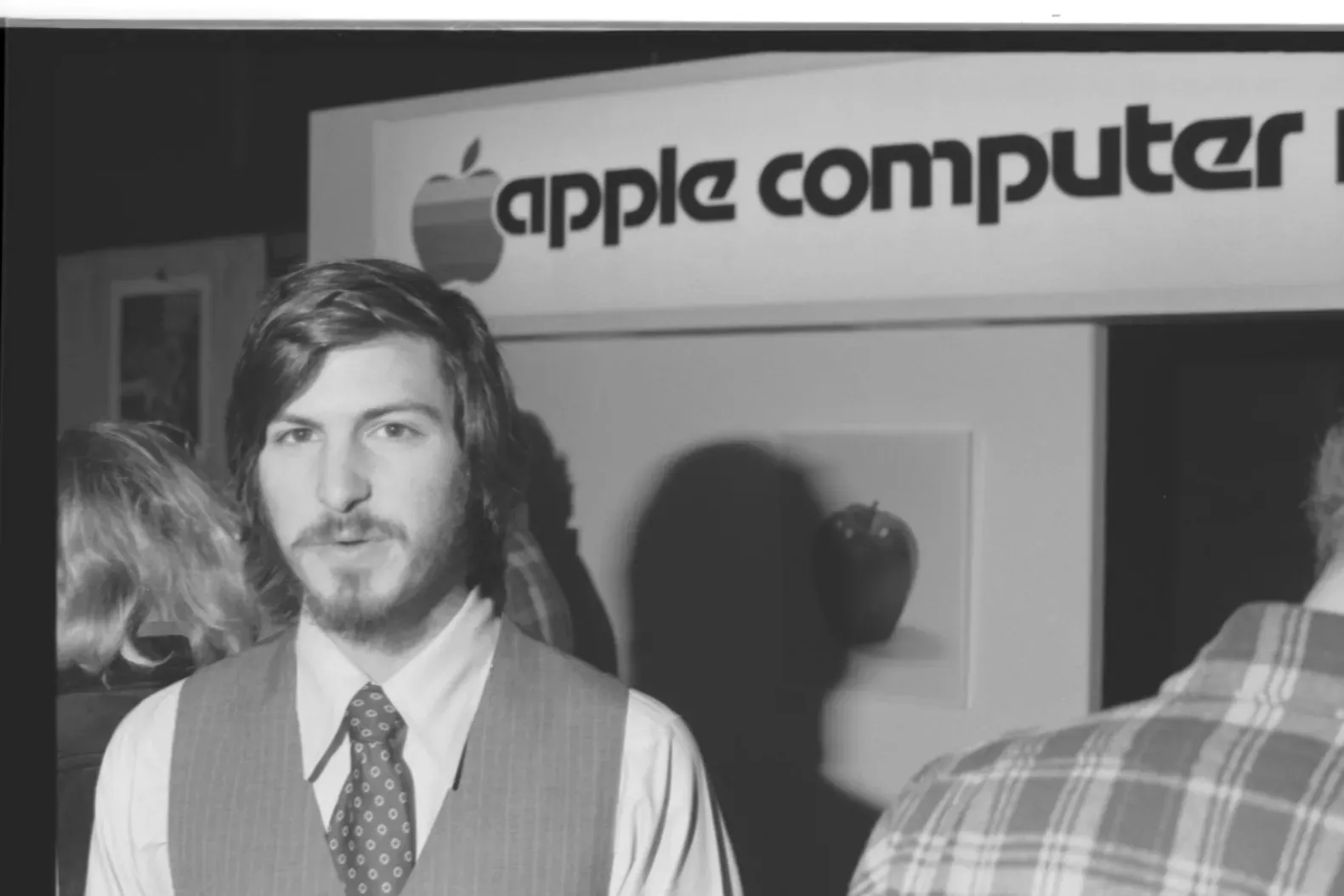
In 1985, Steve Jobs was removed from Apple.
On paper, this is collapse.
Loss of control.
Loss of identity.
Loss of position.
But what actually happened is more precise:
the identity evolved.
During this period:
- he built NeXT
- he developed Pixar into a cultural force
- he refined his design and leadership philosophy
When he returned to Apple…
he was no longer the same version of himself who had been removed.
And the company responded accordingly.
This is a pattern most people miss:
external collapse often signals internal upgrade.
Delay Did Not Shake Him — It Refined Him
Most people can hold vision…
until time passes.
Delay introduces:
- doubt
- second-guessing
- identity instability
Jobs did not collapse under delay.
He remained aligned.
Which means:
- his decisions stayed consistent
- his direction remained stable
- his vision did not fragment
This is why his results appeared “inevitable.”
Because internally, they were.
The Hidden Pattern Behind His Life
When you remove all surface-level interpretation, what remains is simple:
- He assumed an identity
- He operated from that identity
- He held that position through time
- Reality reorganized around it
This is not philosophy.
This is a pattern.
And it is repeatable.
Steve Jobs Was Not Lucky — He Was Coherent
Luck is inconsistency.
Randomness.
Unpredictability.
Jobs’ life was not random.
It was coherent.
His thinking, feeling, decisions, and direction all aligned toward the same internal image.
And when coherence is sustained long enough…
results begin to appear inevitable.
Steve Jobs Wasn’t Guessing. He Was Operating From Decision.
If you want the full decode of how Steve Jobs actually operated — beyond surface-level mindset advice — this is where it’s broken down completely.
Steve Jobs Unveiled: The Man Who Assumed the Future into Existence
This is not a biography.
It is a reconstruction of the internal framework behind one of the most influential lives in modern history.

This is a decode of identity.
Few ask who he became to build it.
This book reveals the unseen architecture behind it — identity, assumption, intuition, and vision.
How to Think Like Steve Jobs (Applied Framework)
This is where most people fail.
They understand concept.
But they do not translate it into operation.
Here is the translation:
1. Decide Identity First
Do not ask:
“What can I realistically become?”
Ask:
“Who am I choosing to be — regardless of current evidence?”
2. Remove Dependence on Validation
Validation slows execution.
Jobs did not wait to be agreed with.
He moved from internal alignment.
3. Hold Vision Without Negotiation
Most people negotiate with doubt.
Jobs did not.
Once the vision was set, it remained stable.
4. Act in Alignment Before Results Appear
Action was not reactive.
It was expressive of identity.
5. Let Time Catch Up to You
This is where most people break.
They assume time disproves them.
In reality:
time reveals whether you were stable or not.
Steve Jobs didn’t follow reality.
Reality followed the identity he assumed.
Why Steve Jobs Felt So Different
People often describe Jobs using surface-level traits:
- intense
- demanding
- obsessive
But these are effects, not causes.
What they were experiencing was:
a person who had already made the decision internally.
And once that decision is made:
- doubt decreases
- hesitation disappears
- direction sharpens
That is what people felt.
The Real Reason His Life Worked
It was not intelligence alone.
It was not timing.
It was not resources.
It was this:
He treated his internal reality as primary — and external reality as secondary.
And once that hierarchy is established…
everything changes.
Final Thought
Most people wait:
- for clarity
- for confidence
- for proof
Steve Jobs did not wait.
He decided.
And from that decision:
clarity followed
confidence followed
proof followed
The identity you choose…
the assumptions you hold…
the vision you refuse to drop.
That is what reorganizes reality.