Why Identity Shifts Trigger Quantum Leaps, Luck, and Synchronicity
Sudden luck, synchronicities, and opportunity clusters aren’t random. They’re signals of a quantum leap already in motion—caused by an identity shift that forces multiple systems to realign at once.

The Hidden Mechanics Behind “Things Suddenly Falling Into Place”
Introduction — It Felt Like Luck… But It Wasn’t
Almost everyone who experiences a genuine life shift reports the same pattern.
Not gradual improvement.
But a sudden phase where:
- Invitations appear without pursuit
- Messages arrive unexpectedly
- Traffic spikes
- Opportunities stack on top of each other
- Doors open in clusters, not lines
People describe it as:
“I don’t know what happened. I just got lucky.”
But this interpretation is backwards.
What feels like luck is usually identity alignment becoming visible.
Not effort paying off.
Not chance intervening.
But position finally matching structure.
Section I — Why Luck Appears Suddenly, Not Gradually

Most people assume fortune works like accumulation.
More work → more progress → more results.
But identity does not operate on a slope.
It operates on thresholds.
Position-based systems do not reward partial alignment.
They respond only when position crosses a boundary.
That is why long periods of nothing are followed by short periods of everything.
Because:
- Identity is not linear
- Opportunity is not proportional
- Alignment is binary
You are either positioned correctly — or you are not.
Which leads to the central principle:
Luck does not accumulate.
It switches on.
And this explains a second rule most people never see:
Opportunity follows position, not effort.
Effort without position produces exhaustion.
Position without effort produces leverage.
Section II — The Structural Definition of Synchronicity
Synchronicity is one of the most misunderstood phenomena in psychology and manifestation.
It is not:
- Magic
- Signs from the universe
- Random coincidence
- Spiritual messaging
Synchronicity is a structural event.
It occurs when multiple independent systems reorient around a new center at the same time.
When identity shifts, it changes:
- What you notice
- What you select
- What you respond to
- What others read from you
- What systems now categorize you as
At that moment, different systems — social, algorithmic, financial, relational — begin updating simultaneously.
This is not fate.
This is re-indexing.

Synchronicity is multiple structures responding to the same identity shift.
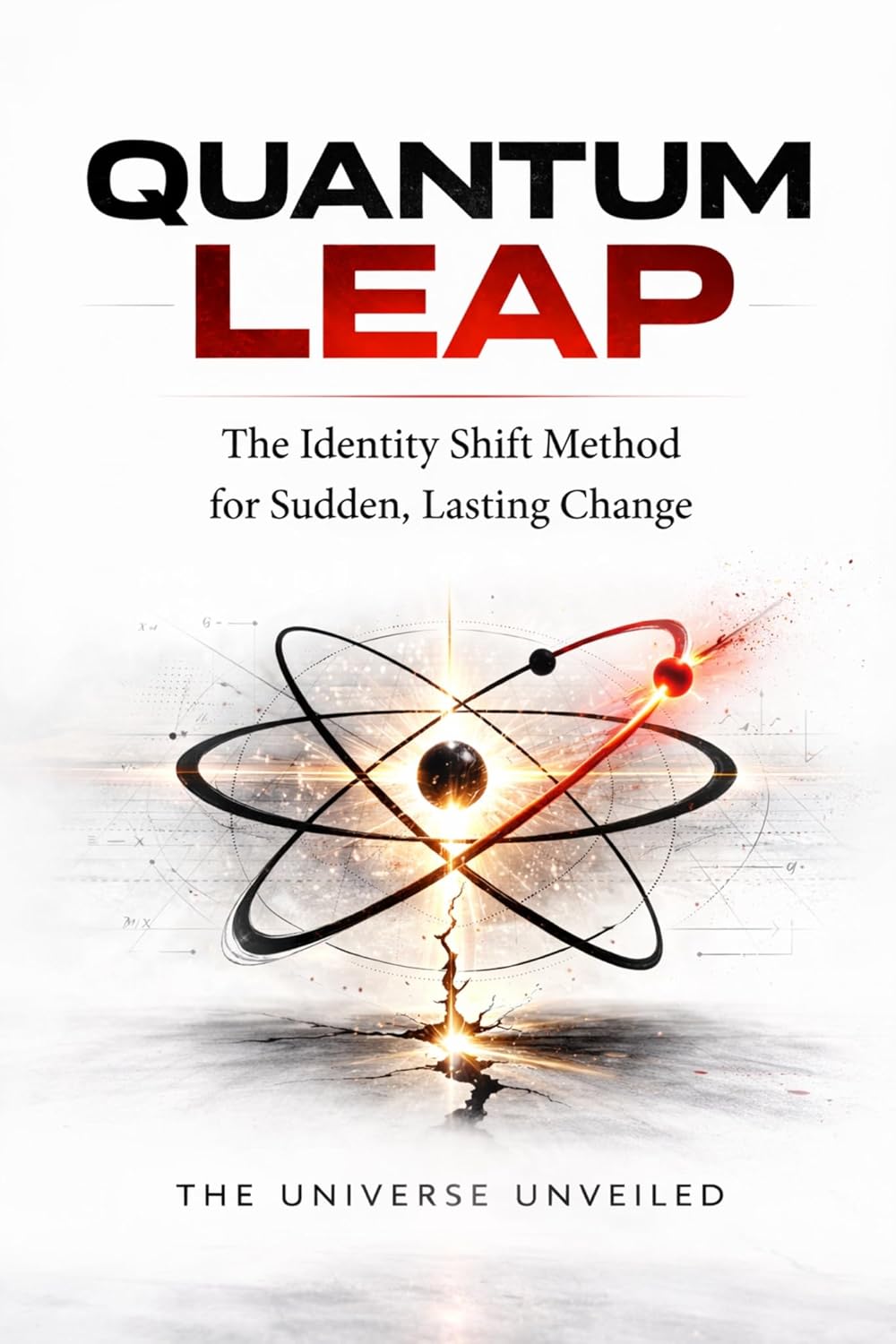
Featured Book
Quantum Leap
This book explains why opportunity clusters, luck switches on, and multiple systems respond at once — not because of effort, but because identity relocated.
This is the exact mechanism behind what is commonly called a quantum leap.
Here is the deeper structural model:
→ What Is a Quantum Leap in Manifestation
Section III — Why Opportunity Clusters After Identity Moves
One of the most consistent reports after an identity shift is clustering.
Not one door.
Many doors.
Not one signal.
Multiple signals.
This happens because systems update in batches, not increments.
When the center moves:
- Algorithms recalibrate
- People reinterpret you
- Networks reroute
- Attention redistributes
- Probabilities re-weight
But they do not update one by one.
They update in synchronized windows.
Which produces the phenomenon of waves.
Opportunity clusters because structure updates in batches, not increments.
This is precisely why:
- Multi-page activations occur
- Multiple platforms light up at once
- Several unrelated channels open simultaneously
Not because you worked harder.
But because the index changed.
Section IV — Why People Misattribute This to Chance
Human cognition has a default explanation for events it cannot model.
It calls them random.
Chance is not an explanation.
It is a placeholder.
When people cannot see:
- The identity shift
- The positional change
- The structural re-indexing
They explain the result as luck.
But this is a cognitive error.
Chance is the story we tell when we cannot see the organizing position.
This is why:
- Breakthroughs look mysterious
- Success looks sudden
- Leaps look unearned
Not because they are.
But because their cause is invisible.
Section V — Identity as the Magnet, Not Intention
This is where most manifestation teachings fail.
They emphasize intention.
But intention is weak.
Intention only requests.
Identity reorganizes.
You do not attract what you want.
You attract what your position authorizes.
Which leads to the governing law:
Intention requests.
Identity reorganizes.
This is the core of the Identity canon:
→ Identity Is the Law
When identity shifts:
- Environments change
- People reposition
- Systems reclassify
- Opportunities relocate
Not because you asked.
But because you moved.
Section VI — Why This Phase Is Brief and Must Be Stabilized
This is the most dangerous part of a leap.
After identity relocation, there is a window.
A brief period where:
- Probability is loose
- Opportunity spikes
- Systems are still updating
- Position is fluid
But this window is unstable.
If identity is not stabilized, the system drifts back.
Which is why:
- Many breakthroughs collapse
- Many lucky streaks end
- Many rises reverse
Because the identity did not hold.
Luck appears when identity relocates.
It remains only if identity stays.
This is not about maintenance.
This is about anchoring.
Closing — The Signature of a Quantum Leap Is Not Success, But Convergence
People think the sign of a leap is achievement.
It is not.
The real sign is convergence.
When:
- Multiple unrelated systems respond at once
- Several channels activate simultaneously
- Opportunities arrive in clusters
- Attention reorients across platforms
That is not luck.
That is a center shift becoming visible.
The real sign of a leap is not achievement.
It is convergence.
And the final principle:
When many unrelated systems begin responding at once, the center has already moved.
Image Credits:
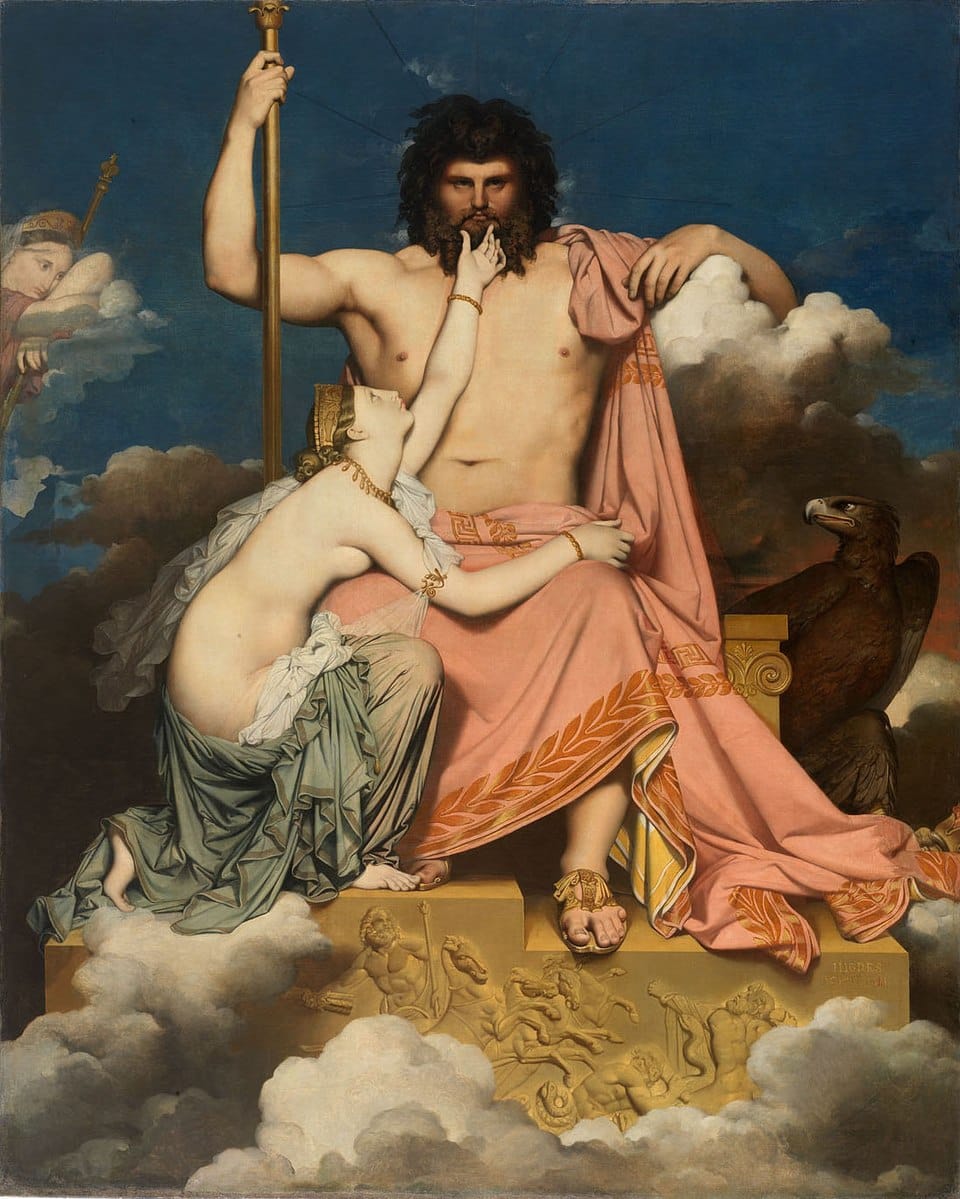
Jean-Auguste-Dominique Ingres, Jupiter and Thetis, 1811. Oil on canvas. Musée Granet, Aix-en-Provence, France.
Jean-Baptiste Greuze, La Cruche cassée, 1771–1772. Oil on canvas. Département des Peintures, Musée du Louvre, Paris.
INV 5036 ; MR 1779.
Jacques-Louis David, The Coronation of Napoleon, 1805–1807, oil on canvas. Musée du Louvre, Paris.
Jean-Auguste-Dominique Ingres, Portrait of Monsieur Bertin, 1832, oil on canvas, 116.2 × 94.9 cm. Musée du Louvre, Paris.
Luck Isn’t Random. It’s Alignment Visible.
Why opportunities cluster after identity moves—and how to stabilize the new center.