Koyaanisqatsi
A structural diagnosis of koyaanisqatsi—life out of balance—examining fragmentation, noise, acceleration, and how modern systems like social media distort identity, fracture attention, and replace coherence with perpetual motion.

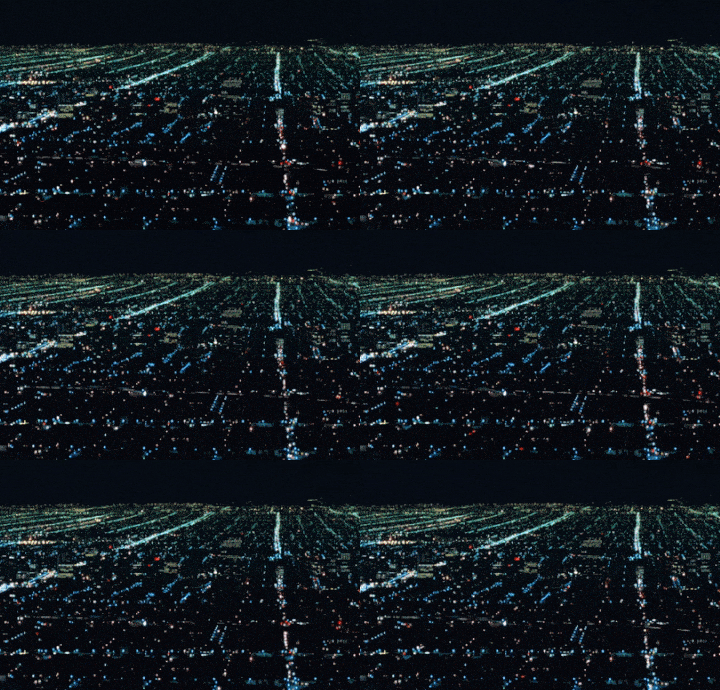
Fragmentation, Noise, and the Loss of Inner Coherence
A Koyaanisqatsi Diagnosis Through The Universe Unveiled
The Hopi word koyaanisqatsi means life out of balance.
It does not describe a moral failure, a personal flaw, or a temporary crisis. It names a condition—a structural state in which life continues to move, but coherence has been lost. Motion persists, systems accelerate, and activity increases, yet meaning no longer organizes what is in motion.
This condition was made visible in the 1982 film Koyaanisqatsi. Without dialogue, characters, or solutions, the film presents a diagnosis: accelerating systems, mechanized repetition, and human lives caught inside forces they no longer direct. It does not argue. It shows. And what it shows is no longer confined to the screen.
Within The Universe Unveiled, reality is understood as an identity-based phenomenon:
identity → energy → field → matter.
From this perspective, koyaanisqatsi can be recognized as a breakdown in coherence at the most fundamental level—when identity fragments, energy destabilizes, the field becomes noisy, and lived reality accelerates without center.
Identity Without Integrity
In a coherent system, identity is stable. It knows what it is, what it values, and what it is oriented toward. From that stability flows coherent energy—clear intention, consistent direction. That energy shapes a coherent field of relationships, which in turn manifests as ordered, meaningful matter: a lived reality that feels navigable, grounded, and alive.
Koyaanisqatsi emerges when this chain fractures at the source.
When identity becomes fragmented—split across roles, signals, and expectations—it can no longer generate a unified energetic signature. The energy emitted becomes erratic. The field becomes noisy. The resulting reality is disordered: full of speed, force, and stimulation, yet strangely empty of meaning.
This is not chaos in the dramatic sense. It is cacophony—too many signals, none dominant enough to organize the whole. Life continues to move, but without harmony. People stay busy, but without direction. Systems expand, but without wisdom.
A life out of balance, then, is identity without integrity, broadcast into the world as noise.
The Age of Fragmentation
Modern life is saturated with fragmentation, and social media has become its primary accelerator.
Attention is split into shards. Identity is no longer held in one place but distributed across platforms, profiles, and audiences. A single individual may simultaneously inhabit the roles of professional, parent, brand, commentator, consumer, and curator—each role optimized for visibility, each pulling the self in a different direction.
Social media environments mirror and intensify this inner fracture. Feeds refresh endlessly. Notifications interrupt thought before it completes itself. Content auto-plays. Metrics replace reflection. Urgency becomes the ambient condition of existence, not because something is happening, but because something might be missed.
This produces what feels like movement, but is actually displacement—energy spent signaling rather than integrating.
In such a field, stillness feels unnatural. Silence feels suspicious. Reflection feels indulgent. The coherent signal of an integrated identity struggles to register at all. The inner voice, once a stabilizing reference point, is drowned out by the continuous demand to react, respond, and remain visible within the feed.
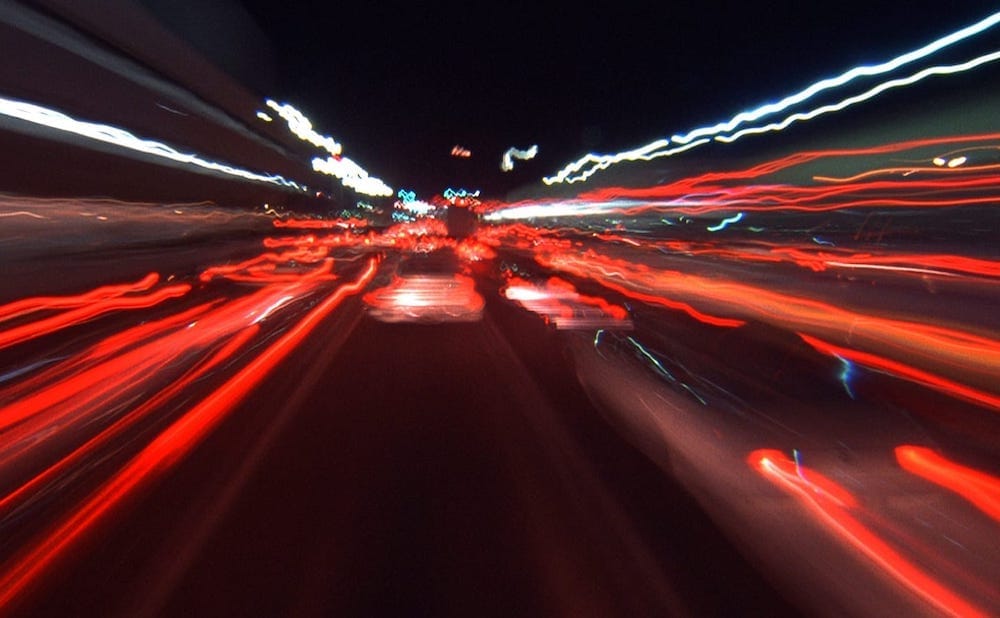
Noise as a Structural Condition
Noise, in this sense, is not just sound. It is informational turbulence—a field so saturated with competing signals that no stable pattern can emerge.
The modern field is noisy because it is uncentered. Social media scrolls endlessly, training the nervous system to expect perpetual novelty. News cycles move from crisis to crisis without digestion or resolution. Economic systems demand constant growth without rest or renewal.
These structures do not merely reflect fragmentation; they amplify it.
The result is a feedback loop:
- Fragmented identities generate fragmented systems
- Fragmented systems reinforce fragmented identities
Over time, this loop produces exhaustion, disorientation, and a chronic sense that something is wrong—without clarity about what, exactly, needs to change.
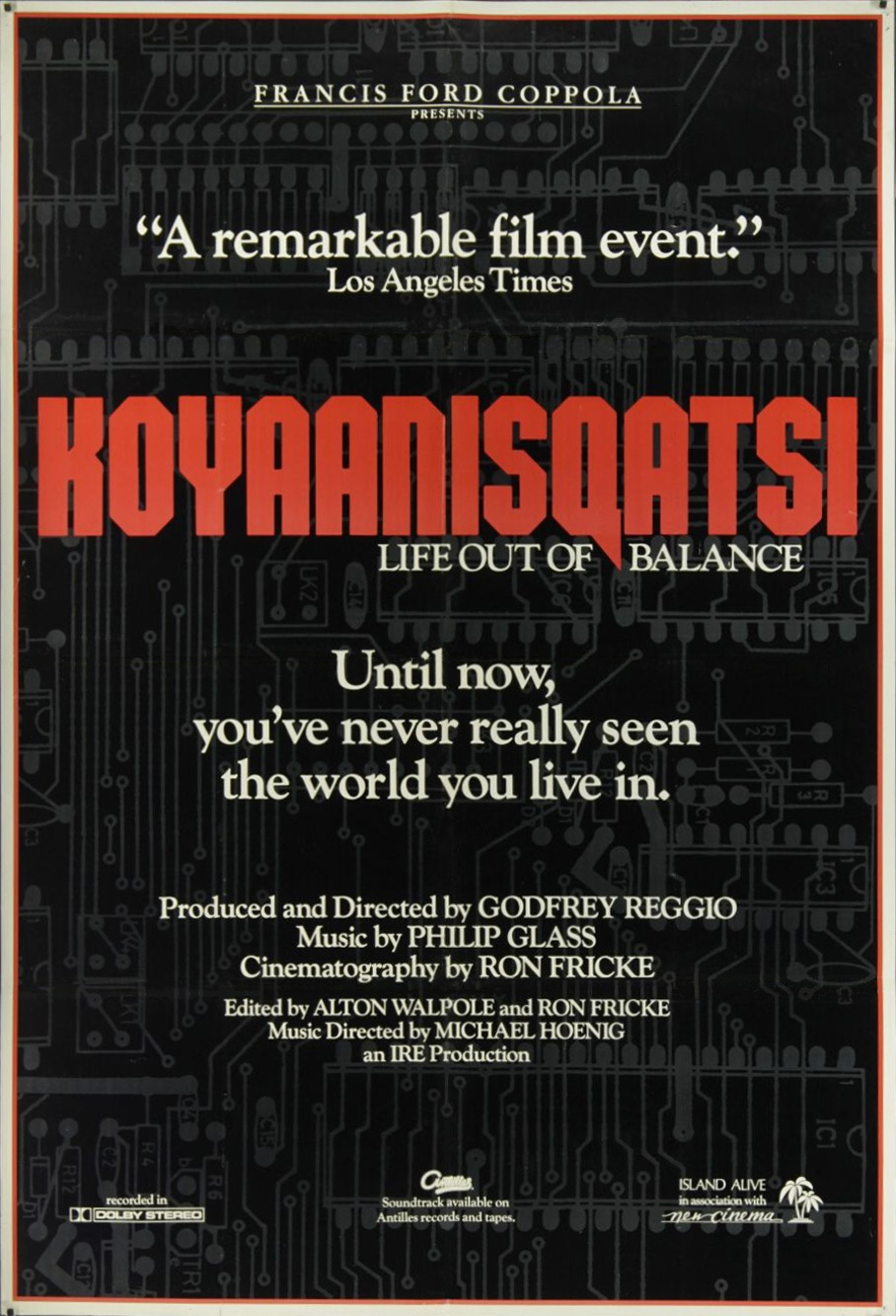
Koyaanisqatsi (1982)
A hypnotic, wordless cinematic meditation on modern life, technology, and humanity’s disconnection from nature. Philip Glass’s legendary score guides a visual journey through acceleration, collapse, and planetary imbalance.
▶ Watch the FilmBurnout: When the System Overheats
Burnout is often framed as a personal failure—insufficient resilience, poor boundaries, weak coping skills. This framing misses the point.
Burnout is a systemic signal.
Human nervous systems evolved in environments of far slower tempo and far fewer stimuli. Today, they are continually overclocked. Alerts, traffic, screens, deadlines, and social comparison keep the sympathetic nervous system in a near-constant state of activation.
The result is chronic stress that never fully resolves. Rest becomes shallow. Recovery incomplete. Even moments of stillness are haunted by a low-grade anxiety: I should be doing something. I’m missing something. I’m falling behind.
Eventually, the system collapses—not dramatically, but quietly. Motivation drains away. Focus disintegrates. The body refuses to cooperate. This is not weakness. It is the predictable outcome of sustained incoherence.
Burnout is koyaanisqatsi made personal.
Overstimulation and Spiritual Anxiety
Alongside burnout arises a subtler condition: spiritual anxiety.
This is not anxiety about something. It is anxiety from something—a pervasive unease rooted in loss of center. Even when material needs are met, people report emptiness, meaninglessness, and a vague dread that surfaces when the noise finally stops.
In Koyaanisqatsi, there is a haunting sequence of human faces staring directly into the camera—silent, exposed, unadorned. Their expressions are not dramatic. They are weary, vacant, searching. Stripped of context, they seem to ask an unspoken question:
Who am I in all of this?

That question requires silence to answer. It requires slowness. It requires coherence. But in a koyaanisqatsi world, silence is rare and slowness is penalized. So the question remains unanswered, generating an existential tension that hums beneath daily life. This is the anxiety of a being disconnected from its own identity—a soul riding a speeding train with no clear destination.
Not a Moral Failure, but a Structural Imbalance
It is essential to state this clearly: koyaanisqatsi is not a moral judgment.
The suffering it produces is not the result of bad people making poor choices. It is the result of living within structures that are fundamentally misaligned with human coherence.
Blaming individuals for struggling in such conditions is like blaming a musician for dissonance when the instrument itself is out of tune. No amount of effort can restore harmony without adjusting the structure.
This is why Reggio’s film offers no villains and no heroes. It simply observes. And in observing, it invites recognition.
Naming the Condition
There is power in naming.
The Hopi term koyaanisqatsi gives language to a feeling many experience but cannot articulate. It says: This state has a name. It is not normal. It is not inevitable.
By naming the condition, we gain distance from it. We can see fragmentation, noise, and acceleration not as personal defects, but as environmental qualities. And once seen clearly, a condition can be responded to.
In Hopi prophecy, koyaanisqatsi is not the end state. It is a signal—a warning that life has moved out of alignment and must find another way.
Koyaanisqatsi and Its Opposite Condition
In Diné (Navajo) philosophy, the opposite condition to koyaanisqatsi is Hózhó.
Hózhó does not mean happiness, peace, or moral goodness. It names a structural state in which life is in right order—where identity, rhythm, and environment are coherent with one another. In a Hózhó condition, movement still occurs, but it is organized rather than frantic. Change still happens, but it unfolds with timing rather than urgency.
Where koyaanisqatsi describes motion without center, Hózhó describes motion oriented around a stable center.
In a Hózhó state, identity is not fragmented across competing signals. It is integrated. From that integration, energy becomes directional rather than reactive. The surrounding field quiets—not through suppression, but through clarity. Systems no longer accelerate to compensate for confusion. They move at the pace coherence allows.
Hózhó is not achieved through correction, optimization, or discipline layered on top of fragmentation. It emerges when identity is coherent enough that it no longer renegotiates itself moment to moment. When identity stabilizes, time reorganizes naturally. Friction decreases. Noise subsides. Meaning reappears—not as an idea, but as lived order.
Koyaanisqatsi names the warning condition: life driven forward without coherence.
Hózhó names the resolving condition: life organized from within.
Between them is not effort, belief, or technique—but position.