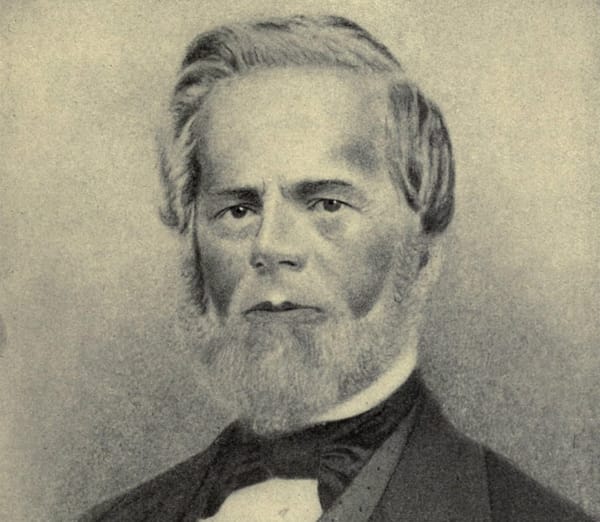
Napoleon Hill Before Carnegie
Before Napoleon Hill became an authority, he was unstable, un-credentialed, and unfinished. This essay examines the pre-doctrinal phase—how identity, assumption, and internal position formed authority long before formulas, success, or public validation appeared.


The Formation of Assumption Before the Formula
Before authority, there was instability.
Before doctrine, there was posture.
Napoleon Hill does not enter history as a finished figure. He arrives un-credentialed, unproven, and internally unsettled. There is no early evidence of mastery, no institutional backing, no settled identity. What exists instead is pressure: ambition without confirmation, desire without social proof, and a persistent attempt to stand somewhere not yet secured.
This is not the story of success foreshadowed.
It is the record of formation before legitimacy.
Not a biography—but a pre-doctrinal state.
Before Authority: Hill Without a System
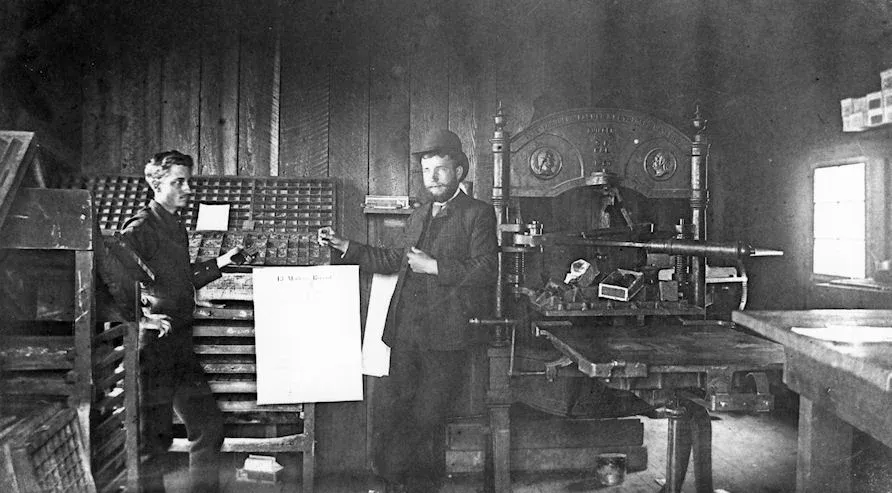
Hill’s early life resists clean framing. He appears as a journalist, a hustler, a self-inventor—moving through roles faster than he can anchor them. He writes, pitches, positions himself, and repositions again. There is motion, but no stable platform beneath it.
What matters here is not whether these early efforts succeeded. What matters is that they occurred before validation.
Hill does not wait for permission to speak with authority. He does not wait for institutional consensus to begin acting as though his voice matters. This produces contradictions—confidence without evidence, certainty without endorsement—but it also reveals a pattern: positioning precedes legitimacy.
The assumption is already operating, even if unnamed.
The Pressure Field: Meeting Carnegie (Demythologized)

The encounter with Andrew Carnegie has been romanticized into a blessing narrative—a wealthy titan selecting a chosen pupil. That framing misses the actual mechanism at work.
Carnegie does not confer authority. He creates pressure.
The challenge placed before Hill is not instruction; it is demand. A demand that Hill occupy a position larger than his current proof supports. Carnegie functions here not as savior, but as a stress test—forcing Hill to either retreat into self-doubt or stabilize into a future role he has not yet earned.
This mirrors, in a different lineage, the dynamic later seen between Abdullah and Neville Goddard: not teaching, but refusal to acknowledge the student’s former identity.
No romance. No blessing. Just pressure.
Apprenticeship Without Credentials

Hill does not apprentice through institutions. He has no academic scaffolding, no formal authorization. His learning occurs through proximity—watching how powerful men speak, decide, and occupy space.
This is not mentorship in the conventional sense. There are no lessons handed down. There is observation: tone, cadence, assumption of inevitability. Hill absorbs not information, but identity patterns.
What he studies is not what power says—it is how power stands. This is how Hill learns the mechanics of authority long before he names them.
This distinction matters. Teaching transfers knowledge. Proximity transfers posture.
Doctrine Before Doctrine
Long before Hill articulates principles, he is already behaving as though they are true.
He writes from a future position. He speaks as an authority he has not yet been recognized as. He moves as though legitimacy is inevitable rather than pending. This is not arrogance; it is identity rehearsal.
The doctrine does not create the state.
The state precedes the doctrine.
Hill’s later frameworks do not emerge from discovery; they emerge from rationalization of a posture already lived. The assumption hardens first. Language follows later.
Self-Myth, Narrative Control, and Inner Coherence
Hill’s self-mythologizing is often treated as deception. That interpretation is too moral—and too shallow.
Narrative, here, is not falsehood. It is stabilization.
By telling a consistent story about who he is, Hill reduces internal contradiction. The coherence of the narrative matters more than factual precision because it allows identity to consolidate. Without coherence, authority cannot hold.
Myth is not manipulation in this context.
It is structural reinforcement.
This does not absolve inaccuracy; it explains how identity coherence precedes verification.
Identity Crystallization
At some point—quietly, without announcement—Hill stops becoming.
He begins occupying.
This is the critical transition. Authority is no longer aspirational; it is assumed. He does not wait for consensus. He does not ask permission. He no longer positions himself toward legitimacy—he speaks from it.
Not because success has arrived.
But because identity has stabilized.
Everything that follows will appear to confirm this position. But confirmation is downstream, not causal.
This moment occurs before Think and Grow Rich exists. There is no success summary here. Only placement.
Assumption as the Hidden Mechanism
Hill’s early behavior maps cleanly onto the Law of Assumption—without techniques, affirmations, or steps.
State precedes outcome.
Position precedes proof.
Identity precedes evidence.
Effort is secondary. Hustle is incidental. What matters is where one is standing internally while acting. Hill is not striving toward authority; he is rehearsing it until it becomes stable.
This is not manifestation theater. It is positional coherence.
This piece traces how assumption precedes authority — a dynamic that parallels the Blair Hill subconscious phenomenon.

Before the Formula, There Was Position
Hill’s story, when stripped of reverence, reveals something quieter and more unsettling: doctrine follows stabilization.
The formula does not create the authority.
The authority creates the formula.
Before the system, there was position.
Before the teaching, there was assumption.
And before the name existed, the state was already occupied.
See this same mechanism at work in Abdullah Unveiled.