Parallel Selves: Identity Selection — How You Choose Which Version of You Lives
Identity selection determines which parallel self you occupy. This doctrine explains how beliefs, emotional baselines, and self-concept weight sort you into specific reality tracks — making manifestation a process of occupancy, not creation.


Quick Answer — What Is Identity Selection in Parallel Selves?
Identity Selection is the subconscious process that determines which parallel version of you becomes your lived reality. Rather than creating outcomes, manifestation operates through occupancy — where dominant beliefs, self-concept, emotional baselines, and perceived worthiness stabilize you inside a specific identity timeline.
Opening — Manifestation Is Not Creation
Manifestation is misunderstood as creation.
As if reality is empty… waiting to be built.
As if you stand before a blank canvas, brush in hand, painting circumstances into existence.
But identity work reveals something far more confronting — and far more empowering:
Reality is already populated with identity outcomes — a doctrine explored more deeply in the Parallel Selves framework, where multiple versions of you exist across probability timelines.
Every version of you that could exist… already does.
Wealthy you.
Obscure you.
Expressed you.
Muted you.
Sovereign you.
Suppressed you.
They are not future possibilities.
They are identity positions within an existing selection field.
And manifestation is not the act of creating them.
It is the act of choosing which one animates your lived experience.
You are not building a life.
You are selecting which version of you gets the microphone.
Section I — The Identity Selection Field
To understand manifestation at the identity level, you must first understand the Selection Field.
The Identity Selection Field is the subconscious sorting mechanism that determines which experiential track you occupy.
It functions like an unseen operating system beneath perception — continuously filtering, sorting, and stabilizing you into a specific version of self.
Not based on wishes.
Not based on affirmations alone.
But based on identity congruence.
Think of reality not as a single timeline…
…but as a multidimensional archive of identity expressions.
Each version of you exists as a stabilized possibility:
• The entrepreneur
• The artist
• The wealthy benefactor
• The quiet observer
• The leader
• The hidden genius
They are all structurally available.
But you do not experience all of them simultaneously.
Why?
Because the subconscious selects one as your dominant experiential anchor.
This selection determines:
• Opportunities that appear
• Conversations you enter
• Risks you take
• Rooms you feel allowed in
• Wealth you tolerate holding
• Love you permit yourself to receive
You don’t “attract” these outcomes randomly.
You are sorted into them.
And the sorting mechanism is identity resonance.
Not desire.
Identity.
Section II — What Determines Selection

If reality contains multiple identity tracks…
What determines which one you occupy?
Selection is governed by Identity Weight — the psychological and emotional density of who you believe yourself to be.
Four primary selectors dominate this process:
1) Dominant Beliefs
Beliefs are not surface thoughts.
They are subconscious permissions.
They determine what you perceive as possible, safe, or accessible.
If wealth feels dangerous, you will not stabilize inside wealthy identity outcomes — even if opportunity appears.
If success feels inevitable, doors open with eerie normalcy.
Beliefs do not influence reality abstractly.
They filter which identity tracks you are allowed to occupy.
2) Self-Image Authority
Self-image is the throne room of identity selection.
It answers the silent question:
“Who am I allowed to be?”
If your self-image holds you as small, overlooked, or secondary…
You will unconsciously reject environments that contradict that positioning.
Not because you can’t enter them.
Because you can’t stabilize inside them.
Conversely, when self-image expands, reality reorganizes to reflect that authority.
Rooms change.
Conversations change.
Financial ceilings dissolve.
Not because reality changed first…
…but because you did.
3) Emotional Expectation Baseline
Emotion is predictive, not reactive.
Most people assume feelings respond to life.
In identity mechanics, feelings forecast life.
If your baseline emotional expectation is:
• Disappointment
• Delay
• Rejection
• Scarcity
You will select identity tracks that confirm those emotional set points.
Not consciously.
Structurally.
But when your emotional baseline shifts toward:
• Certainty
• Expansion
• Wealth tolerance
• Recognition expectancy
You begin stabilizing into identity outcomes that mirror those emotional climates.
Emotion is not decoration.
It is selection gravity.
4) Perceived Worthiness
Worthiness is perhaps the most silent selector — yet one of the most decisive.
Many individuals can imagine wealth…
…but cannot imagine themselves worthy of holding it.
They can visualize love…
…but not sustaining it.
They can taste success…
…but not embody it.
So the subconscious reroutes them into lesser identity tracks — not as punishment, but as congruence maintenance.
You never occupy identities that feel internally illegal.
Worthiness determines identity admissibility.
Identity Weight Determines Reality Expression
Combine these four selectors and you form Identity Weight — the psychological mass pulling you toward specific experiential outcomes.
Heavier identity convictions stabilize faster.
Lighter, conflicted identities flicker and collapse.
This is why fleeting affirmations rarely manifest durable change.
Selection is not influenced by repetition alone.
It is governed by identity density.
Section III — The Subconscious Voting System
To make this process tangible, imagine the subconscious as a voting system.
Every thought casts a ballot.
Every reaction casts a ballot.
Every assumption casts a ballot.
Every emotional response casts a ballot.
And the identity receiving the most votes…
Wins occupancy rights.
Micro-Votes Shape Macro-Reality
Consider daily micro-reactions:
You see someone successful and think:
“Must be nice… not for me.”
Vote cast.
You hesitate to charge your worth.
Vote cast.
You downplay your achievements.
Vote cast.
You expect rejection before speaking.
Vote cast.
None of these feel monumental in isolation.
But collectively?
They form a landslide election result.
The subconscious tallies consistency, not intensity.
The identity most reinforced becomes the identity most experienced.
Reinforcement Creates Residency
You don’t occupy identities once.
You rehearse them until they naturalize.
Confidence is voted in.
Wealth tolerance is voted in.
Visibility comfort is voted in.
And the more votes an identity receives…
The more reality stabilizes around it.
Not symbolically.
Structurally.
Section IV — Passive vs Conscious Selection

Here lies the divide between unconscious manifestation and deliberate identity work.
Most people believe they are consciously creating their lives.
In truth, they are passively selected by inherited identity scripts.
Passive selection is driven by:
• Social programming
• Cultural limitation
• Family identity ceilings
• Economic conditioning
• Environmental repetition
If you grow up around scarcity, you inherit scarcity identity defaults.
If visibility was punished, you inherit invisibility reflexes.
If wealth was villainized, you inherit guilt thresholds.
You didn’t choose these positions consciously.
They were installed.
And unless examined…
They continue selecting reality on your behalf.
Environmental Echo Reinforcement
Environments reinforce identity defaults.
Your surroundings mirror back who you’ve been — not who you’re becoming.
So when identity begins shifting, friction appears:
• Old conversations feel misaligned
• Old spaces feel constrictive
• Old expectations feel outdated
This is not regression.
It is selection conflict.
The inherited identity track is losing votes.
But the new one hasn’t fully stabilized yet.
Conscious Selectors Override Inheritance
Deliberate manifestation begins when conscious selectors activate.
This means you no longer allow:
• Past identity scripts
• Social expectations
• Cultural ceilings
…to determine your experiential track.
You begin selecting identity outcomes intentionally.
Not by fantasy.
By stabilization.
Section V — Intentional Identity Occupancy

So how do you consciously choose which version of you lives?
Through Identity Occupancy Mechanics.
You do not “become” the version.
You acclimate to them.
You stabilize inside their psychological climate.
Four core mechanics govern this transition:
1) Assumption Installation
Assumptions are subconscious defaults about reality.
Installed assumptions override reactive thinking.
Examples:
• “Opportunities find me.”
• “Wealth expands around me.”
• “I am received well.”
• “Rooms open when I enter.”
When assumptions install deeply enough…
Reality begins reflecting them as structural norms.
Not miracles.
Norms.
2) Identity Rehearsal
Rehearsal is psychological familiarization.
You practice thinking, deciding, and perceiving from the target identity.
Questions shift from:
“What do I hope happens?”
To:
“What would this version of me expect?”
Rehearsal builds identity muscle memory.
The unfamiliar becomes neutral.
Then natural.
Then inevitable.
3) Emotional Acclimation
Many people fail manifestation not due to belief…
…but due to emotional intolerance.
They cannot emotionally hold the life they seek.
Wealth feels overwhelming.
Visibility feels unsafe.
Love feels destabilizing.
So emotional acclimation trains your nervous system to normalize expanded identity states.
You practice feeling safe in success.
Calm in recognition.
Grounded in abundance.
Until expansion no longer triggers contraction.
4) Decision Alignment
Identity is ultimately proven through decisions.
Not visualizations.
Decisions reveal occupancy.
Ask:
• What does this identity tolerate?
• What do they accept?
• What do they walk away from?
• What rooms do they enter without apology?
Aligned decisions signal to the subconscious:
“This is who we are now.”
And reality reorganizes accordingly.
You Don’t Become the Version — You Stabilize Inside Them
This is the final identity correction most people miss.
You are not transforming into a new self from scratch.
You are selecting and stabilizing inside an already-existing identity outcome.
Like tuning a frequency dial…
Until the signal becomes clear.
At first, the new identity feels performative.
Then unfamiliar.
Then natural.
Then inevitable.
Eventually, you stop “trying” to be them.
Because you are no longer rehearsing the identity…
You are residing inside it.
Closing Integration — The Responsibility of Selection
If reality is populated with identity outcomes…
And subconscious votes determine occupancy…
Then your life is not random.
It is selected.
Continuously.
Moment by moment.
Through belief density.
Emotional baselines.
Self-image authority.
Worthiness thresholds.
Every reaction affirms residency.
Every assumption stabilizes trajectory.
So the question is no longer:
“Can I manifest a different life?”
The real question becomes:
Which version of you are you currently voting into existence?
And more importantly:
Which one are you ready to consciously select… and stabilize inside next?
Parallel Selves: Identity Selection — FAQ
What is Identity Selection in Parallel Selves? +
Identity Selection is the subconscious process that determines which parallel version of you becomes your lived reality. Manifestation operates through identity occupancy rather than outcome creation.
How does Identity Selection influence manifestation? +
Manifestation reflects the identity you stabilize inside. Beliefs, emotional baselines, self-concept, and perceived worthiness determine which reality track materializes.
Can you consciously choose a different identity timeline? +
Yes. Through assumption installation, identity rehearsal, emotional acclimation, and aligned decision-making, individuals can intentionally stabilize inside expanded identity outcomes.
What determines which parallel self becomes dominant? +
The dominant parallel self is selected through subconscious reinforcement — including belief systems, emotional expectations, behavioral alignment, and identity repetition.
Is Identity Selection the same as a quantum leap? +
No. Identity Selection determines which version of you is occupied, while quantum leaps describe the speed and magnitude of transitioning between identity timelines.
Image Credits
Agnolo Bronzino, Portrait of Eleonora of Toledo and Her Son Giovanni, circa 1545, oil on panel, Galleria degli Uffizi, Florence
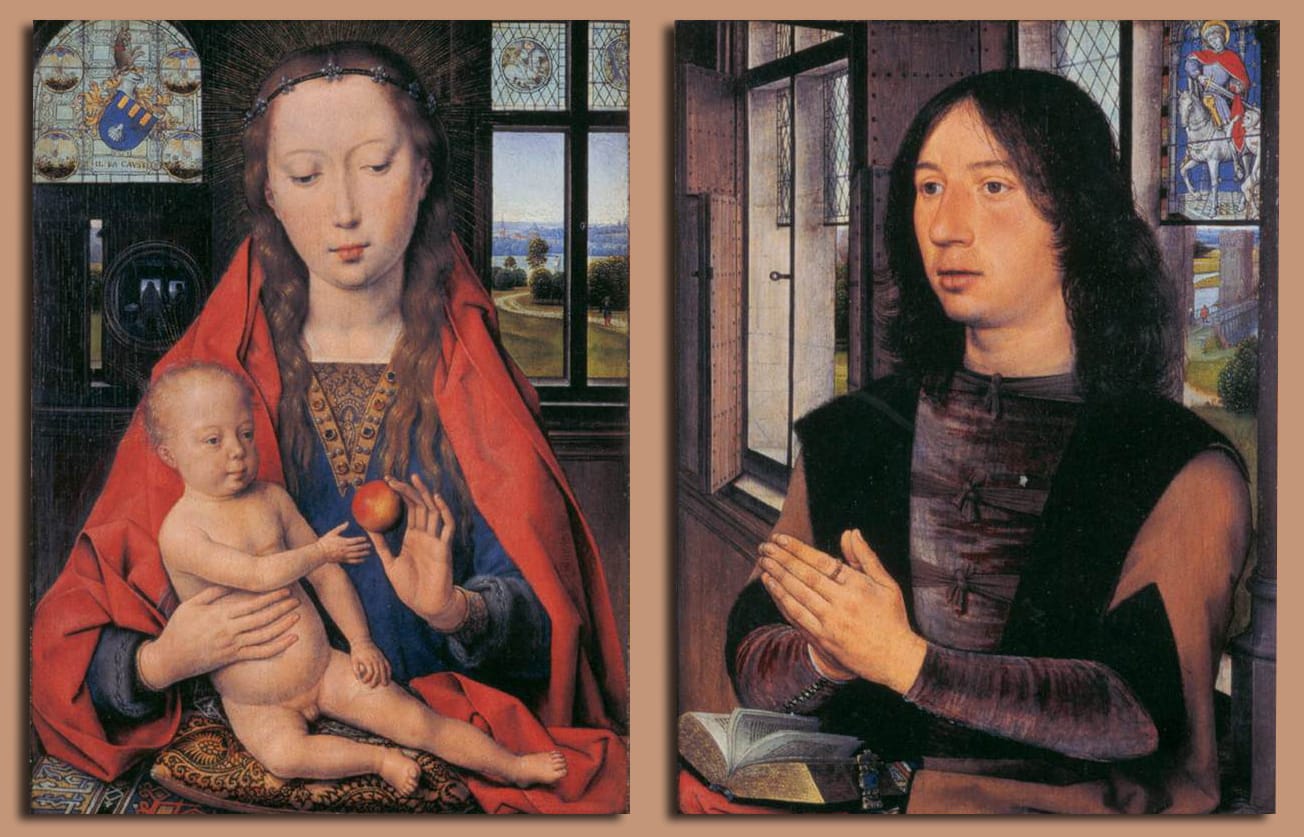
Hans Memling, Diptych of Maarten van Nieuwenhove, 1487, oil on panel, Museum Sint-Janshospitaal, Bruges
Agnolo Bronzino, Portrait of a Young Man, 1530s, oil on panel, The Metropolitan Museum of Art, New York
Lorenzo Lotto, Allegory of Virtue and Vice, 1505, oil on panel, National Gallery of Art, Washington, D.C.
Agnolo Bronzino, Cosimo I de’ Medici in Armour, c. 1545, oil on panel, Thyssen-Bornemisza Museum, Madrid