Phineas Parkhurst Quimby and the Hidden Machinery of Manifestation
Long before the Law of Attraction or Neville Goddard’s teachings became popular, a self-taught healer was exploring how beliefs shape physical experience. His theory of mind, illness, and “Truth” helped seed the philosophical roots of modern manifestation culture.

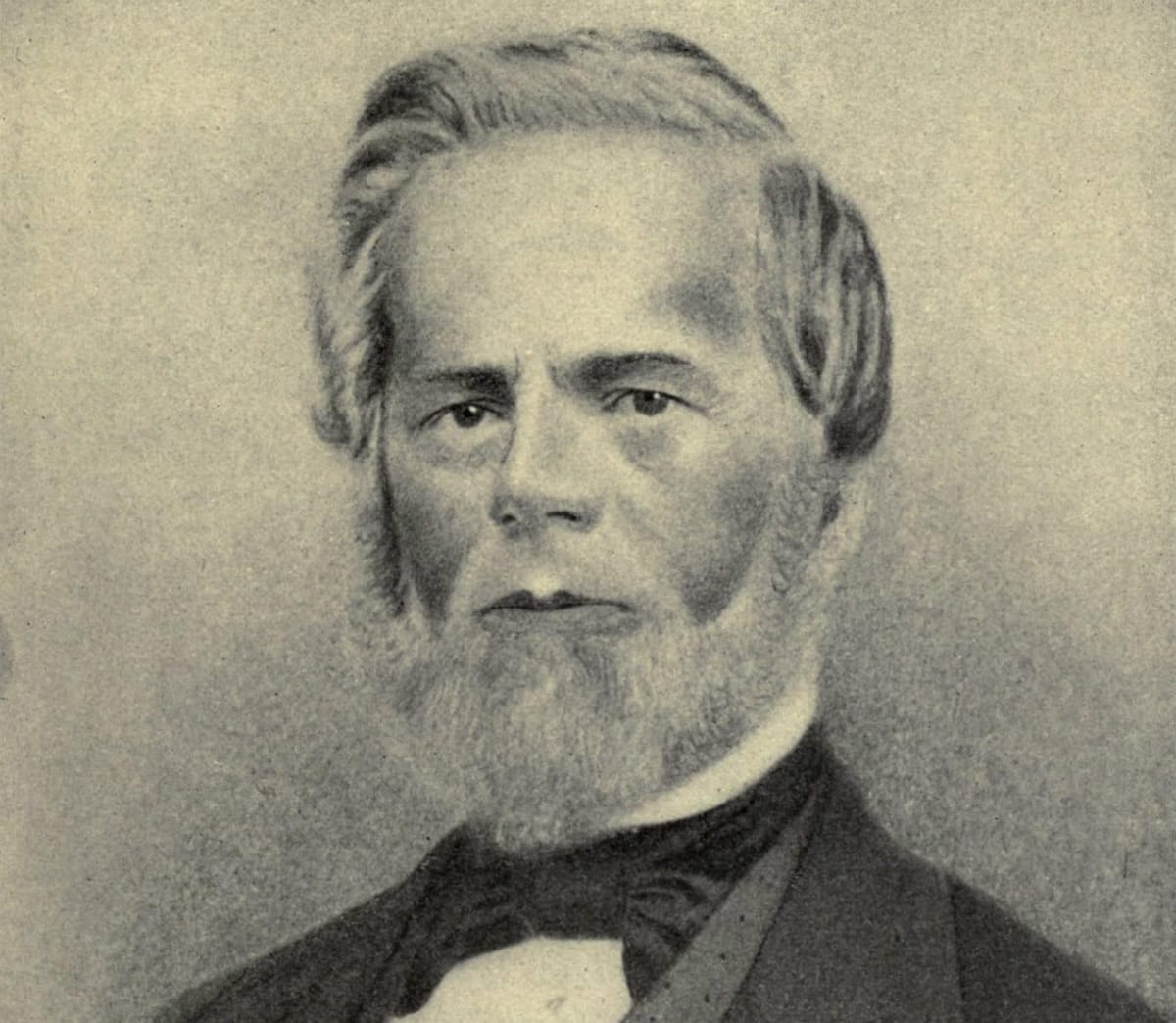
Who Was Phineas Parkhurst Quimby?
Phineas Parkhurst Quimby (1802–1866) was a 19th-century American healer whose work laid the groundwork for what later became the New Thought movement. He proposed that many illnesses originate in mistaken beliefs held in the mind and that correcting those beliefs through understanding could restore health.
Although Quimby never published his teachings during his lifetime, later collections of his manuscripts revealed ideas that influenced early mind-cure writers and helped shape the philosophical background of modern manifestation concepts such as the Law of Attraction and Neville Goddard’s law of assumption.
Phineas Parkhurst Quimby (1802–1866) stands at a candlelit crossroads in American spiritual history: a self-taught healer who treated illness as something like a miswritten story in the mind—then tried to rewrite it by conversation, explanation, and “Truth.”
In Quimby’s world, symptoms were not merely chemical accidents; they were often the body’s echo of a belief—an inner conviction, fear, or “error” that had taken form as pain.
Modern “manifestation” movements—especially the Law of Attraction (LOA) and Neville Goddard’s “law of assumption”—inherit parts of this architecture: the idea that inner states (belief, imagination, feeling, expectation) can pattern outer experience.
Yet Quimby’s relationship to today’s manifestation culture is not a simple family tree. He didn’t publish in his lifetime; key texts arrived decades later through editors with their own framing, and historians debate how directly his ideas shaped early New Thought’s formative years.
Modern critiques of LOA-style manifestation also matter: empirical research suggests “manifestation” beliefs can be psychologically appealing and sometimes motivating, yet can correlate with unrealistic expectations and risky decision-making—especially when framed as a cosmic law guaranteed to deliver outcomes.
Biography
Quimby’s origin story reads like a parable about attention. Born in Lebanon, New Hampshire, with little formal education, he later wrote of suffering “consumption” (tuberculosis) and being treated with calomel—an era’s harsh medicine that, in his telling, damaged his teeth rather than curing him.
Then came the strange hinge: he noticed that intense excitement—galloping a horse, the rush of motion—could temporarily relieve his pain, and this observation drew him toward a mind–body question that would become his life’s work.
Quimby’s next portal was mesmerism, the 19th-century frontier zone where hypnosis, stage demonstration, and early psychology blurred. After hearing lectures on mesmerism (including those associated with Charles Poyen) and being stirred by local “animal magnetism” culture, Quimby began experimenting—first as a skeptical investigator, then as a practitioner.
In the early 1840s, Quimby worked with Lucius Burkmar, a young man described (in later accounts) as highly susceptible to trance. Together they toured, demonstrating mesmeric “sleep” and claims of clairvoyant diagnosis to crowds—public performances that were sometimes treated as witchcraft or fraud, and sometimes as wonder.
But the deeper pivot came when Quimby concluded that trance “diagnoses” often mirrored the opinions present in the room rather than revealing a hidden medical truth. In one influential account, Lucius appeared to be reading beliefs—absorbing and reflecting them—more than reading bodies, and Quimby’s attention shifted from “magnetism” as a fluid to mind-to-mind influence as a mechanism.
In his later years, particularly in Portland and Belfast, Maine, Quimby moved away from public demonstrations and developed a quieter healing method. He sat with patients, explored the beliefs behind their symptoms, and attempted to dissolve what he called ‘error’ by restoring Truth
A crucial uncertainty shadows this biography: many vivid details about Quimby’s development come from later editorial compilations and family or follower narratives—valuable, but not neutral. Even the major published collection warns that the editor added bracketed material, adjusted formatting, paraphrased scripture as Quimby did, and sometimes condensed repeated material.
Core Ideas and Teachings
Quimby’s system can feel mystical because it treats thought like an invisible artisan shaping matter. But it is also intensely practical: a theory of causation, diagnosis, and “treatment” built on how beliefs lodge in the body like spells—then can be undone by understanding.
At the heart of his model is a reversal: rather than the mind passively suffering the body, the body often suffers the mind’s convictions. In his own words, “the trouble is in the mind,” and the body is “only the house for the mind to dwell in.”
That reversal is not merely philosophical—it is therapeutic. If illness is partly crystallized belief, then healing becomes a kind of interpretive work: identifying the belief, exposing its logic, and replacing it with what Quimby called Truth or Science.
The inner mechanics: belief, error, and embodiment
Quimby repeatedly framed disease as the embodied effect of deception—an “invisible enemy” persuading the mind into a belief, which then “put it into the form of a disease.”
This is an early template for what later manifestation culture calls mental causation—the claim that inner states generate outer experiences. Even where modern LOA speaks of “vibration” or “energy,” Quimby’s language is more courtroom and laboratory: error, evidence, verdict, truth.
He also insisted that the healer’s role is not to impose a medicine from outside, but to clarify from within. The cure is an epistemic event: a shift in what the patient takes to be real.
Method: the healer as interpreter, not magician
Quimby’s own metaphor is striking: a sick person is like “a criminal cast into prison” for “disobeying some law,” and Quimby “plead[s] his case.” If the explanation satisfies the internal “judge,” the patient is released.
This matters for modern manifestation debates because it’s closer to reframing than to wishful thinking. Quimby’s intended mechanism is not “ask the universe”; it is “remove a false idea,” and let the body follow the corrected mind.
In a widely circulated public notice (“To the Sick”), Quimby is described as sitting with patients, telling them what they think is their disease, and curing by explanation—“The Truth is the Cure”—while refusing medicine and outward applications.
What Quimby is not saying (and why that matters)
Quimby is frequently grouped with “New Thought” and later prosperity teachings, but his main arena was health—especially ailments other doctors, in his era, could not cure.
Even so, the structure of his claim can expand beyond health almost automatically: if beliefs can organize bodily reality, why not social reality, money, love, or luck? That expansion is exactly what later New Thought and LOA writers attempt—sometimes explicitly, sometimes with new metaphors layered on the old logic.
Primary Sources and Key Quotes
Because Quimby published nothing in his lifetime, most “Quimby quotations” reach us through edited compilations—especially The Quimby Manuscripts, which includes editorial notes acknowledging added bracket text, selective condensation, and presentation choices.
That editorial layer does not make the texts useless; it simply means we should read them the way we read any transmitted manuscript tradition: alert to framing, grateful for preservation, and cautious about treating any one edition as a perfect mirror.
Below are “load-bearing” statements from Quimby’s attributed writings and from contemporaneous follower accounts that explicitly frame his method—presented in short excerpts to preserve fidelity without overquoting.
“In either case the trouble is in the mind, for the body is only the house for the mind to dwell in.”
“Therefore if your mind has been deceived … you have put it into the form of a disease… the Truth is the cure. I use no medicines…”
“If the patients admit that he tells them their feelings… then his explanation is the cure… The Truth is the Cure.”
“P. P. Quimby’s writings, when published, will speak for themselves…” (a defense shaped by controversy, but historically revealing about delayed publication and the politics around authorship).
One of the most important meta-facts is embedded in the publication history itself: Quimby’s major writings were not publicly available until decades later, and Horatio W. Dresser’s 1921 edition arrived after New Thought had already developed many organizational forms. This is one reason historians debate how direct Quimby’s influence was on early New Thought’s formative period.
Historical Context and the New Thought Movement
Quimby’s work arose in a 19th-century American atmosphere where medical uncertainty, revival religion, mesmerism, and romantic idealism all mingled—an era hungry for healing and suspicious of both cold empiricism and rigid orthodoxy.
Encyclopaedia Britannica traces New Thought’s origins to dissatisfaction with scientific empiricism and reactions against earlier religious skepticism, with Romanticism shaping the movement’s tone and imagination.
In this broader story, Quimby is “usually cited as the earliest proponent” of New Thought—specifically as a practitioner who developed mental and spiritual healing concepts and practiced mesmerism/hypnotism.
As New Thought matured, it did not remain only a healing practice; it became a dispersed spiritual culture—lectures, journals, books, and later churches—spreading globally.
A defining institutional moment is visible in the modern International New Thought Alliance. Its publicly posted Declaration of Principles affirms that “mental states are carried forward into manifestation and become our experience” and explicitly endorses prospering and harmonizing “in alignment with spiritual law.”
This is where Quimby’s mind-cure logic becomes something more like contemporary manifestation doctrine: a generalized claim that inner states become outer experience—no longer confined to pain relief, but expanded to “the kingdom of heaven here and now,” prosperity, and daily living.
Yet New Thought’s family resemblance to adjacent movements also created friction. The relationship between Quimby and Mary Baker Eddy—and the question of what she borrowed, transformed, or rejected—became one of the most persistent controversies on this terrain.
Documented Influence on Later Figures and Teachers
The cleanest way to track influence is to follow documented contact, publication, and recognition by reputable historians—not just lore. Here, Quimby’s influence radiates through three main routes: (a) direct patients who became lecturers and historians, (b) ministers and writers who systematized mind cure into print, and (c) the later institutional New Thought world that absorbed the logic even when Quimby’s own manuscripts were not broadly available.
Warren Felt Evans: systematizing mind cure in print
Warren Felt Evans is a pivotal bridge because he published early, while Quimby’s manuscripts were still largely private. Britannica explicitly says Quimby’s influence “was reflected in the writings” of Evans, who explored and systematized Quimby’s ideas in works including Mental Cure (1869) and Mental Medicine (1872).
Wikipedia adds a nuance that matters for intellectual genealogy: Evans visited Quimby (circa 1863), but later scholarship disputes the idea that he saw himself as Quimby’s “student,” suggesting a relationship closer to peer exchange than discipleship.
Either way, Evans helps explain how “mind cure” became a portable idea—something that could travel farther than one healer’s office because it could be read, copied, argued, and taught.
The Dressers: preserving Quimby, contesting authorship, shaping the narrative
Julius Dresser and Annetta Seabury Dresser were among Quimby’s patients, and their son Horatio W. Dresser later edited Quimby’s papers into the 1921 manuscripts volume.
The 1899 True History of Mental Science (a revised form of Julius Dresser’s 1887 lecture) is not only a historical document—it’s a document of conflict. It insists the manuscripts were Quimby’s, describes how they were copied and dated (1859–65), and directly rejects claims that Eddy wrote Quimby’s ideas.
This material is indispensable for record-keeping, but it is also advocacy: it was written to “set this controversy at rest.” That means it preserves facts and also a viewpoint—one forged in dispute, not in scholarly calm.
Mary Baker Eddy and the Christian Science divergence
Britannica notes Quimby became controversial because Eddy—who sought him out for treatment—denied that her discovery of Christian Science was influenced by him, even as The Quimby Manuscripts included letters relevant to the dispute.
The Hartford Institute’s overview of Christian Science presents Quimby as “pivotal” in New Thought’s development and states that Eddy founded the Church of Christ, Scientist based on her teachings in Science and Health with Key to the Scriptures, while also incorporating other influences (transcendentalism, Swedenborgianism, spiritualism).
Britannica’s New Thought entry sharpens the distinction: once Quimby’s manuscripts were published, it became easier to see Eddy’s “radical departure” from Quimby’s emphases, and “recent evaluations” tend to frame Quimby as an important stimulus rather than the source of Christian Science’s final theology.
Later New Thought institutions: Unity, “teacher of teachers,” and the widening of aims
By the late 19th and early 20th centuries, New Thought expresses itself not only as healing but as a broader spiritual psychology—affirmative prayer, prosperity teaching, and “constructive thinking.”
Unity Spiritual Movement (often called Unity) is one prominent example. Wikipedia identifies Unity as founded in 1889 by Charles Fillmore and Myrtle Fillmore, becoming part of New Thought and emphasizing affirmative prayer.
Wikipedia and TruthUnity both highlight Emma Curtis Hopkins as a crucial teacher—called “teacher of teachers”—who influenced major New Thought leaders, including the Fillmores.
This “Hopkins era” illustrates how Quimby-like premises (mind shapes experience; spiritual law; healing through inner alignment) became teachable curricula—systems that could scale beyond one healer’s charisma.
From Mind Cure to Manifestation
Modern manifestation movements often speak as if they discovered a brand-new metaphysical physics. But the record shows something else: a long evolution of ideas—sometimes spiritual, sometimes psychological, sometimes marketed as “science”—moving through texts, teachers, churches, and pop culture.
Two modern “laws” are especially relevant here:
- Law of Attraction (LOA): commonly framed as “like attracts like,” where thoughts and feelings “attract” corresponding experiences.
- Law of Assumption (Neville Goddard): framed as reality conforming to sustained assumptions—especially “the feeling of the wish fulfilled.”
Quimby did not use these labels. Yet his framework—belief becoming bodily reality; explanation changing inner state; inner correction becoming outer change—functions as an early “engine” that later doctrines refurbish with new metaphors.
Comparative table: Quimby vs LOA vs Law of Assumption
| Dimension | Quimby (Mind Cure) | Law of Attraction (New Thought / pop LOA) | Law of Assumption (Neville Goddard) |
|---|---|---|---|
| Core claim | Illness often arises from “false belief”; truth corrects error and restores health. | Thoughts/emotions attract matching experiences; inner “frequency” shapes outer events. | Sustained assumption—especially felt as already true—“hardens into fact.” |
| Main arena | Healing (especially mind–body symptoms), though implications can generalize. | General life outcomes (health, wealth, love, “luck”). | Identity, experience, circumstances; emphasis on self-concept. |
| Mechanism (as described by advocates) | Conversational explanation + mental influence; transforming belief dissolves symptoms. | Visualization, affirmations, “acting as if,” often with energy/vibration framing. | Imaginal acts + “wish fulfilled” feeling; persistence; “state akin to sleep.” |
| Moral risk | Can imply blame for illness if misused; Quimby targets medical “quackery,” not victims. | Strong risk of victim-blaming (“you attracted your misfortune”). | Similar risk if framed absolutely; Neville also stresses persistence despite appearances. |
| Key language | Error, belief, truth/science, explanation, verdict. | Attraction, vibration, manifestation, universe responding. | Assumption, I AM, wish fulfilled, persistence, imagination. |
This table is grounded in Quimby’s “My Theory” and public-facing method descriptions, in primary LOA-era New Thought texts (Davis, Mulford), and in Neville’s explicit formulation of “assumption… harden[ing] into fact.”
To see how Neville Goddard’s Law of Assumption grew out of earlier mind-power traditions like Quimby’s mind cure and the New Thought movement, read our full breakdown of the origins of the Law of Assumption.
How LOA crystallized: “Attraction” becomes a named law
A major difference between Quimby and LOA culture is that LOA names and universalizes the mechanism. In The Great Harmonia (Vol. 4), Andrew Jackson Davis explicitly speaks of the “Law of Attraction” and frames “Attraction” as a fundamental principle of life expressed through relationships.
This is not yet the Instagram-era “manifest anything” formula; Davis is often writing in spiritualist cosmology and social philosophy (including marriage), not primarily in prosperity self-help. But the phrase and the metaphysical posture are there: attraction as universal principle, bridging matter and mind.
Then Prentice Mulford supplies something closer to modern LOA language: he describes thought as an “invisible substance,” portrays the mind as a “magnet,” and argues that what you “charge” the mind with will attract more of its kind—bringing people together through this attraction.
This is LOA’s recognizable skeleton: inner state → attraction → outer encounter. It is not Quimby’s health clinic; it is a generalized metaphysics of influence.
Neville and the law of assumption: attraction becomes identity
Neville Goddard takes a related premise and intensifies it around identity: “I AM” as the center of manifestation, and self-concept as the determining mold of lived experience.
His signature statement is explicit: “an assumption, though false, if persisted in will harden into fact,” and the ideal is realized only when one imagines being it already.
Neville’s technique is also precise: assume “the feeling of the wish fulfilled” until it has “sensory vividness,” and cultivate a “state akin to sleep” where attention is controlled—a disciplined ritual of imagination.
If LOA says “like attracts like,” Neville says something sharper: the world reflects what you are—or at least what you assume yourself to be. Quimby’s “belief becomes disease” is not identical, but it rhymes: inner conviction becomes outer fact.
Practice translation table: from Quimby’s clinic to modern manifestation rituals
| Practice element | Quimby-style procedure | LOA practice (common modern form) | Law of Assumption practice (Neville-style) |
|---|---|---|---|
| Identify the “enemy” | Diagnose the false belief behind symptoms; correct “wrong impressions.” | Identify “limiting beliefs,” “negative vibrations,” or scarcity mindset. | Identify current self-concept; name the state you occupy (“I am unwell,” “I am unlucky”). |
| Replace the inner script | Explanation until the patient accepts Truth; “verdict” releases them. | Affirmations + visualization + gratitude as if already achieved. | Imaginal scene + “feeling of wish fulfilled,” persisted in, often at sleep-edge. |
| Evidence standards | “Truth” is what cures; critique of medicine that implants fearful beliefs. | Often anecdotal “success stories”; the “universe” as validator. | Personal experiments and case histories; reality changes are treated as proof. |
This translation is interpretive (a mapping of practices, not a claim of direct lineage in every case). The documentary grounding is Quimby’s self-described method and Neville’s method descriptions, plus empirical descriptions of manifestation practices in contemporary research.
Timeline of influence in mermaid
The timeline below synthesizes the best-documented waypoints: Quimby’s life events and writings (via later publication), major New Thought institutionalization, and the later popularization of LOA and assumption-based manifestation.
1802Quimby born(Lebanon, NH)1836Mesmerism lecturescirculate in NewEngland; Quimbyinvestigates1842Quimby works withLucius Burkmar;public mesmericdemonstrations1859Quimby drafts keyessays (e.g., "MyTheory")1862Mary Baker Eddyseeks treatment inPortland, Maine1866Quimby dies;mind-healingcurrents continue tospread1869Warren Felt Evanspublishes earlymind-cure works(e.g., "Mental Cure")1887Julius Dresserdelivers lecture on“True History ofMental Science”1889Unity movementfounded (Fillmores)within New Thoughtstream1914International NewThought Allianceorganized1917INTA adopts aDeclaration ofPrinciples1921Horatio Dresserpublishes "TheQuimby Manuscripts"1952Neville Goddardpublishes "The Powerof Awareness"; Pealepopularizes positivethinking2006"The Secret"popularizes LOAglobally2023Peer-reviewedresearch measuresmanifestation beliefin contemporarypopulations2026INTA continues as anactive umbrellabody; manifestationremains mainstreamonlineFrom Quimby to manifestation cultureShow code
Transmission paths flowchart in mermaid
What follows is a “most defensible” transmission map: solid lines indicate direct documentable channels (patient-to-writer, editor-to-publication, organizations with explicit declarations). Dotted lines indicate probable cultural influence rather than provable direct mentorship.
mermaidCopy
flowchart TD
  Q[Phineas P. Quimby\n(mental healing / mind cure)] --> D1[Julius & Annetta Dresser\n(patients; lecturers; defenders)]
  D1 --> D2[Horatio W. Dresser\n(editor / publisher)]
  D2 --> QM[1921: The Quimby Manuscripts\n(public availability)]
  Q --> E[Warren Felt Evans\n(prints mind-cure ideas)]
  E --> NT[New Thought movement\n(lectures, journals, churches)]
  NT --> INTA[International New Thought Alliance\nDeclaration: mental states -> manifestation]
  DA[Andrew Jackson Davis\n"Law of Attraction" phrasing] -. cultural stream .-> NT
  PM[Prentice Mulford\nmind-as-magnet / thought-attraction] -. cultural stream .-> NT
  NT --> LOA[Law of Attraction\n(20th c. self-help -> 21st c. pop LOA)]
  NG[Neville Goddard\nlaw of assumption] -. overlapping New Thought milieu .-> LOA
  NG --> LOAS[Law of Assumption communities\n(assumption / wish fulfilled)]
  LOA --> POP["The Secret" + online culture\n(manifestation mainstream)]
Critiques and Controversies
Quimby’s story is luminous, but not unproblematic—historically, ethically, or empirically. A balanced reading holds the glow and the shadow at once, because both shaped what manifestation teachings became.
Historical disputes: authorship, influence, and the problem of late publication
The Quimby–Eddy controversy is the best-known battlefield here. Britannica confirms it as a major source of Quimby’s later notoriety, while New Thought histories argue that publication of Quimby’s manuscripts clarified how Eddy diverged from him even if she was stimulated by his work.
The Dresser tradition is rich but partisan. True History of Mental Science insists Eddy “never saw a page of the original manuscripts,” emphasizes manuscript dating, and frames claims against Quimby as selfish misstatements—useful for details, but shaped by advocacy.
Separately, historians debate whether Quimby should be treated as “founder of New Thought” in a strict, causal sense, because his writings were not broadly available until 1921 and thus could not directly shape early New Thought’s “formative period” the way later readers assume.
Ethical risk: the temptation to blame suffering on thought
Quimby’s strongest critique was often aimed at medical “quackery” that implanted fearful beliefs for profit. Yet when his model is stripped of compassion and context, it can turn cruel: if belief creates illness, the ill must have believed wrongly.
Modern LOA culture amplifies this risk. A major critique of The Secret popularization is that it encourages victim-blaming—if disease or accident happens, the logic can imply it’s your fault for thinking wrong.
Even Neville’s framing—beautiful as it can sound—can be weaponized the same way when treated as total explanation rather than spiritual practice: “your assumption did it,” therefore “only you are responsible,” regardless of structural realities or other people’s actions.
Empirical critique: what research suggests about “manifestation belief”
Contemporary research does not validate LOA as a physical law, but it does help explain why these beliefs spread. In a 2023 peer-reviewed study hosted on PubMed Central, researchers defined manifestation belief as “cosmically attract[ing] success” through self-talk, visualization, and symbolic action (“acting as if”), and found over one third of participants endorsed such beliefs.
That same study found believers often perceived themselves as more successful and aspired strongly toward success, but were also more likely to be drawn to risky investments, report having experienced bankruptcy, and expect unlikely success quickly—suggesting a mix of motivational benefits and judgment vulnerabilities.
Popular skeptical analyses also emphasize falsifiability problems and the misuse of scientific language (especially “quantum” rhetoric). The criticism is not that optimism is useless, but that claiming an external, universe-governing mechanism for thoughts “wishing” events into being is not supported by physics or evidence.
Gaps and uncertainties worth stating plainly
We do not possess a perfect, contemporaneous Quimby corpus published by Quimby himself. We have edited manuscripts presented decades later, with acknowledged editorial additions and condensation.
We also cannot cleanly prove a direct line from Quimby to every modern manifestation teacher. The story is better described as overlapping streams: Quimby’s mind-cure logic feeding New Thought culture; Davis and Mulford contributing the “attraction” vocabulary; Neville intensifying “assumption”; and modern pop spirituality remixing all of it.
Finally, claims about Quimby “curing” specific diseases (like tuberculosis) are historically important as self-reports and follower testimony, but they are not the same as modern clinical evidence. The historical documents tell us what was claimed and believed—often sincerely—more than what can be medically confirmed today.
Balanced Conclusion
Quimby’s enduring spell is not that he promised everything. It’s that he listened for a hidden lever—something beneath symptom and circumstance—and insisted that human experience is, at least partly, an interpretive event. In his model, a belief can become a body; a corrected idea can become relief.
Modern manifestation movements inherited this central intuition: inner life matters, and sustained attention shapes what we notice, pursue, expect, and sometimes accomplish. The most grounded versions translate “manifestation” into psychology and practice—self-concept, visualization, disciplined attention, behavior change—rather than claiming a cosmic vending machine.
At the same time, the historical record warns against mythmaking. Quimby did not publish in his lifetime, his influence is debated, and many later narratives were forged in controversy—especially around Eddy and authorship claims.
If Quimby is a true ancestor of manifestation, it is less as “founder of LOA” than as an early architect of a metaphysical psychology: the conviction that beliefs have consequences, and that healing—whether bodily or circumstantial—often begins by changing the story a mind is trapped inside.