
The Soft Power of Princess Diana: Magnetism Without Force
Princess Diana embodied soft power through emotional frequency, not authority. Her compassion, authenticity, and presence manifested global change—reshaping the monarchy, breaking stigma, and inspiring millions. A timeless lesson in magnetism without force.

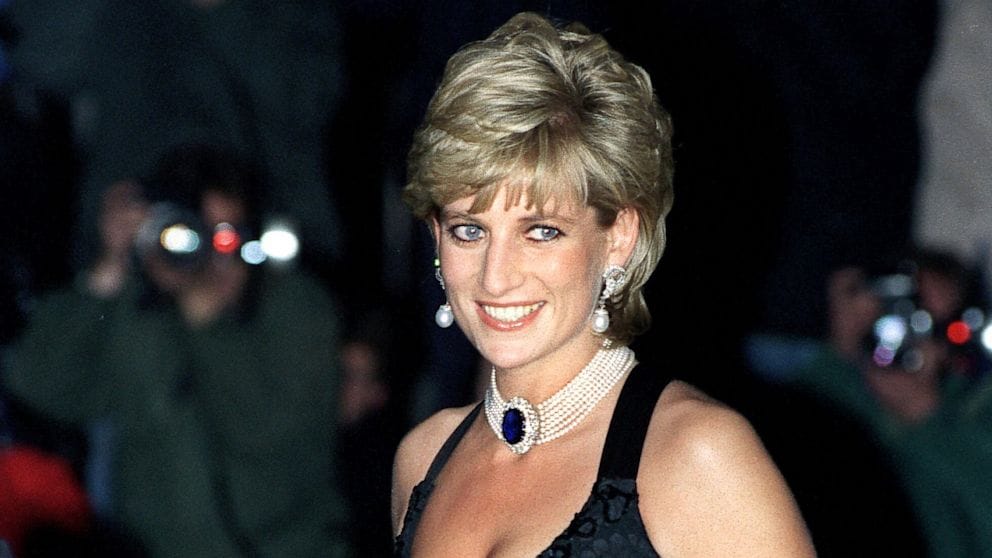
Princess Diana, often affectionately called the "People’s Princess," remains an enduring global icon of compassion and influence. Decades after her tragic death in 1997, the world still responds to Diana’s legacy with reverence and admiration. Her funeral was watched by an estimated 2.5 billion people worldwide, a testament to the profound emotional connection she forged with millions. As Prime Minister Tony Blair eulogized, Diana truly was “the people’s princess,” a figure who drew on soft power to channel “emotion, love, support, connection and humanitarianism”. Unlike traditional figures of authority, Princess Diana’s influence did not stem from formal power or title alone – it came from her genuine warmth, empathy, and the radiant presence she brought to every interaction. In essence, she exemplified magnetism without force, using compassion and authenticity to captivate hearts and inspire change around the world.
Heart Over Status: Emotional Connection Above All
From the moment she stepped onto the world stage, Diana demonstrated that emotional resonance could matter more than royal status or protocol. She “broke the mold of traditional royal behavior with her warmth, approachability, and genuine care for people,” redefining what it meant to be a member of Britain’s royal family. Rather than holding herself apart behind palace walls, Diana sought to truly connect with people. She openly discussed her personal struggles and vulnerabilities, making her the most relatable royal figure of her time. By candidly speaking about challenges like mental health and showing kindness to those often shunned by society, she became someone in whom the public saw not just a princess, but a compassionate fellow human being.
One of Diana’s famous quotes encapsulates this philosophy. “I’d like to be a queen of people’s hearts, in people’s hearts, but I don’t see myself being the queen of this country,” she once said in an interview. In this simple statement, Diana made clear that she valued love and empathy over the trappings of formal rank. Her emotional frequency – the genuine compassion and kindness she radiated – proved more powerful than any status or title. Indeed, observers noted that many were charmed by her glamour, but even more people “saw her as the most relatable royal” because of her openness and empathy. It was this heartfelt connection with others that became the foundation of Diana’s unique influence.
Diana herself recognized the opportunity her position gave her to do good. In recordings later made public, she reflected that she had “been chosen to this position” and decided to “stop fighting it” by choosing “a different angle” – one where she could use her celebrity to help others. She said, “Nothing brings me more happiness than trying to help the most vulnerable people in society… It is a good and essential part of my life, a kind of destiny,” underscoring how deeply she felt called to serve. Clearly, Diana’s heart for people was at the core of her identity. By prioritizing emotional connection and compassion over formality, she cultivated a magnetic presence that drew people to her and made them feel seen and valued.
Compassion as a Form of Power
Diana’s compassionate actions on the world stage revealed the soft power of empathy in action. She understood that small gestures done with great love could reverberate across the globe. In the 1980s, when ignorance and fear surrounded the AIDS epidemic, Diana chose a simple yet courageous act to send a powerful message.
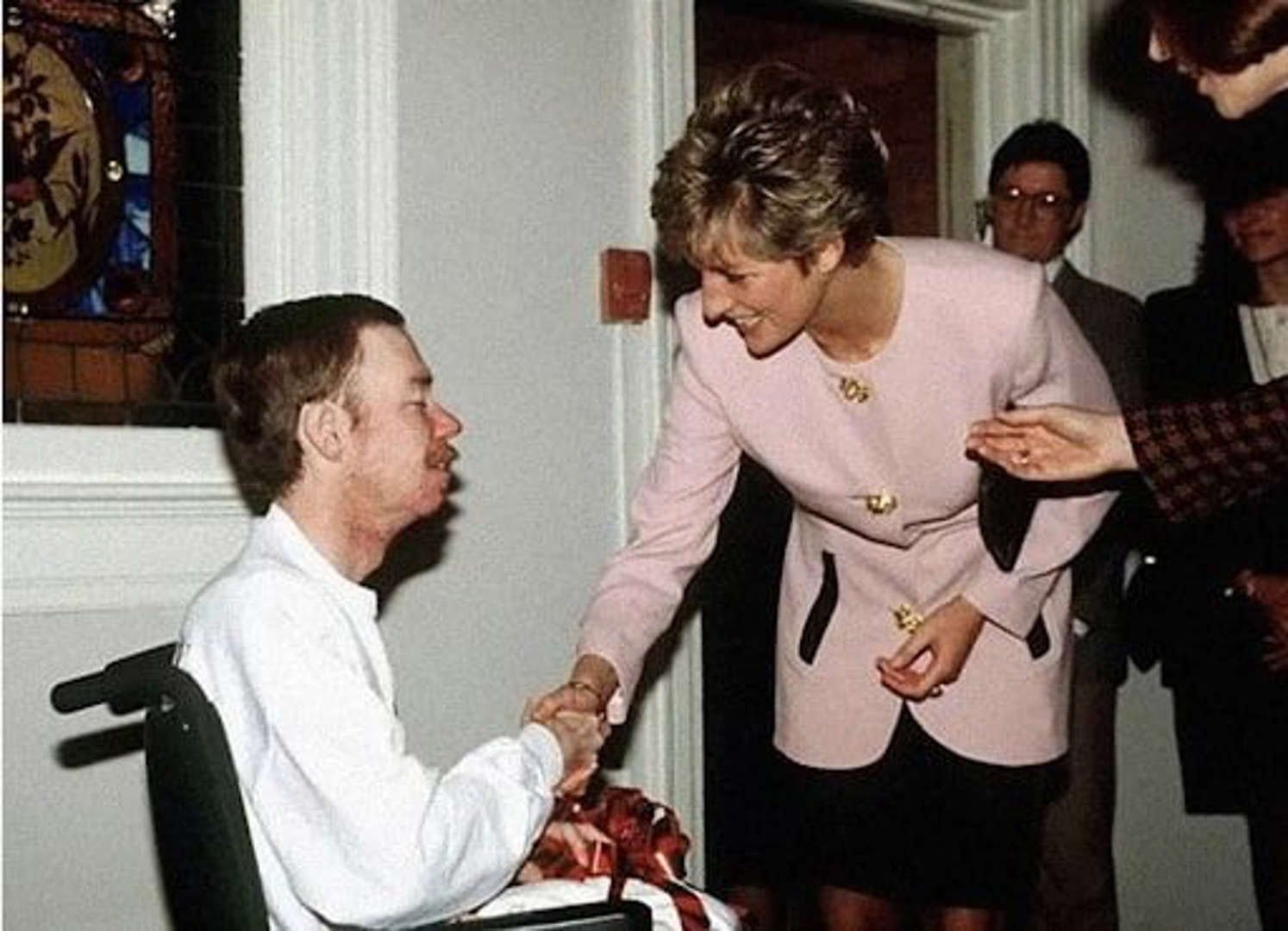
In 1987, Princess Diana famously shook hands with an AIDS patient in London – without wearing gloves – at a time when many still believed the virus could spread through casual touch. This single compassionate gesture, done openly in front of media cameras, helped shatter the stigma and fear surrounding HIV/AIDS. By “showing compassion for those whom society often ignored,” Diana “offered a profound lesson in empathy,” and proved that the monarchy “could connect with and care deeply about the public.”
Diana understood the influence of her platform and deliberately used it to amplify humanitarian causes. Her former voice coach, Stewart Pearce, observed that “radiant personal magnetism and sparkling charisma arise when the individual allows their essence to be expressed through presence” – and Diana did exactly that. When she shook that patient’s hand, her genuine concern shone through, and the world took notice. She even coordinated with photographers to ensure these moments were captured. According to reports, Diana “had photographers on standby” when she met AIDS patients, recognizing the media’s power to transform public opinion. By inviting the world to witness acts of compassion, she magnified their impact. In this way, her empathy became a force that educated and softened hearts globally, all without issuing a single command or law. It was influence by example – magnetism without any coercion.
*Diana demonstrated this soft power again in January 1997, when she walked through an active minefield in Angola to campaign for a ban on landmines. Donning protective gear emblazoned with the logos of humanitarian organizations, she met with landmine victims and highlighted the human cost of war. Her visit was not a royal duty but a personal mission driven by conscience. The image of a princess fearlessly walking among warning signs that read “Danger Mines” sent a jolt around the world. As a result, “global attention turned to Angola… not because of the war itself, but Princess Diana’s visit,” and her advocacy “inspired and accelerated international campaigns to ban landmines.”** Within months of her highly publicized walk, the landmark Ottawa Treaty banning landmines was signed – a concrete policy outcome widely attributed to the spotlight she had created. Once again, Diana had bent the course of institutions and international policy through the sheer influence of her compassion. No official authority compelled nations to act; it was the moral authority of Diana’s humane example that moved them.
Throughout her life, Princess Diana championed countless charitable causes – from homelessness and child welfare to cancer and leprosy – lending each her personal touch. She served as patron to over 100 charities, not content to merely figurehead, but actively engaging with those in need. By “publicly embracing those affected by illness and conflict,” she “challenged stigmas and inspired empathy worldwide,” redefining how a royal could wield influence. In doing so, she showed that compassion itself can be a form of power – a soft power that persuades rather than pressures. Her humanitarian work gave a human face to distant issues and mobilized global goodwill, proving that a caring heart can achieve what formal decrees often cannot. Diana’s magnetism came from this authentic caring, which never required force – only the courage to do what she felt was right.
Authenticity and Vulnerability: The Power of Being Real
Part of Princess Diana’s irresistible appeal was her authenticity. She was unafraid to let the world see her humanity – both the grace and the struggles. In a royal era defined by reserve and stoicism, Diana’s openness was revolutionary. She spoke candidly about her personal battles, including postpartum depression and bulimia, at a time when such admissions were virtually unheard of among public figures. By revealing her pain and seeking help, Diana helped destigmatize mental health issues and made it easier for others to open up. Her willingness to be vulnerable became one of her greatest strengths, creating a bridge of empathy between her and the public.
Diana’s famous 1995 BBC “Panorama” interview was a watershed moment of this vulnerability. In it, she addressed the breakdown of her marriage and her feelings of isolation within the royal family, uttering the memorable line, “there were three of us in this marriage, so it was a bit crowded,” in reference to Prince Charles’ affair. She also spoke of her bulimia as a “secret disease” she used to cope with despair. Such honesty from a princess astonished viewers – here was a royal telling the truth of her heart, not concealing it behind palace protocol. This raw authenticity only deepened the public’s love for Diana. As one historian noted, people related to her because “we really saw this woman coming into her own in full public view”, wearing many hats and growing through adversity. Diana proved that vulnerability can inspire connection, showing that even a princess can hurt, heal, and hope just like anyone else.
Watch closely. This is magnetism without force—and the lesson still works today.
This short clip captures the moment Princess Diana’s quiet honesty reshaped global consciousness. Without authority or force, she moved millions through emotional truth—demonstrating how presence, compassion, and authenticity create influence that power alone never can.
Importantly, Diana’s genuine nature shone not only in moments of hardship but also in everyday life. Those who knew her often described her as down-to-earth and full of laughter. Her voice coach recounted how Diana loved doing ordinary things incognito – strolling down a London street in a wig to catch a movie, or joking around while washing dishes in a friend’s kitchen. These glimpses behind the royal image revealed a woman determined to remain herself despite the strictures of royalty. Stewart Pearce, the voice coach, believed that Diana learned to “communicate her kindness, compassion and genuinity” effectively, and that her “essence expressed through presence” was the secret to her lasting charisma. In other words, Diana’s authenticity – her ability to be fully present and genuine – created a radiant personal magnetism that people could palpably feel. Whether comforting a sick patient or greeting a fan with a warm hug, Diana gave her full attention and heart, and that authenticity made her truly unforgettable.

Joan of Arc Unveiled
Princess Diana changed the world without armies, thrones, or commands.
Her power was quieter — moral, emotional, unmistakable.
Centuries earlier, Joan of Arc moved history the same way:
not through force, but through inner authority, faith, and obedience to a voice only she could hear.
Joan of Arc Unveiled traces the lineage of soft power — how true influence is born not from domination, but from alignment, courage, and the decision to stand alone when conscience calls.
Changing the Royal Institution from Within
Princess Diana’s way of “being” did more than win public adoration – it nudged an ancient institution into the modern age. The British monarchy, long perceived as distant and inflexible, was irrevocably changed by Diana’s influence. By simply being herself – compassionate, candid, and approachable – Diana bent the rigid norms of the royal family without ever holding an official position of authority in it. Her impact illustrated how one individual’s authenticity can reform even the most entrenched establishments.
Before Diana, the royal family was often seen as emotionally remote. Diana’s arrival injected a much-needed human touch. “Through her sincerity, open communication with the public, and dedication to humanitarian work, Diana became more than just a princess: she became the ‘people’s princess,’” giving the monarchy “a more human and approachable face”. She showed that royalty could connect deeply with ordinary people. This shift was not immediately embraced within the Palace. In fact, Diana’s emotionally open style often clashed with the royal household’s traditional reserve. Yet, the public’s overwhelming support for Diana made it clear that the old approach had to evolve. Her tragic death in 1997 underscored this reality: when the royal family initially maintained a formal distance, the public noticed and bristled, feeling that “the Queen and the royal family didn’t care” enough about the people’s grief. The resulting criticism drove home the importance of the monarchy showing empathy and adapting to modern expectations.
In the years after, many observers and royal insiders acknowledged Diana’s role in modernizing the royal family’s image and priorities. As historian Robert Lacey noted, “one of the things that Diana introduced into modern royalty was the concept of conveying a sense of caring for people”. This is vividly evident in the work of her sons, Prince William and Prince Harry. Both princes have carried on their mother’s legacy by championing causes like mental health, HIV/AIDS, veterans’ welfare, and children’s charities with a hands-on compassion that mirrors Diana’s touch. They frequently interact warmly with the public and highlight issues of emotional well-being and social justice – a continuation of what Diana modeled. Even newer members of the royal family, such as Catherine (Kate Middleton) and Meghan Markle, have been compared to Diana for their emphasis on empathy and human connection in their royal roles.
The monarchy as an institution has also become more visibly engaged with charitable and humanitarian efforts since Diana’s time. Public expectations have shifted: royals are now applauded for shedding stiff formality in favor of approachability and relatability – much as Diana did decades ago. In short, Diana’s personal ethos helped set “new standards for public service within the monarchy,” as her compassion and openness “transformed the royal image” and made the institution more attuned to the people. She achieved all this not by edict or decree, but by living the example. Princess Diana’s life is proof that soft power – the ability to inspire and attract – can catalyze real change in even the grandest of institutions. By being the change she wished to see, she slowly moved the monarchy toward a more compassionate, people-focused era.
A Legacy of Love and an Enduring Resonance
It has been said that at the time of her death, Diana was both “the glue that held the royal family together” and “the magnet that kept…fans feeling a connection to the monarchy.” She “represented a vision of the royals that it could and should be,” one rooted in warmth and kindness. That vision did not die with her. To this day, Princess Diana’s legacy resonates – not just in the charity work continued by her family, but in the hearts of people around the world who remember how she made them feel.
Diana’s life and example have inspired countless individuals to carry forward her ethos of compassion. Many of the humanitarian causes she championed have seen progress and sustained attention because of the spark she ignited. Twenty-five years after her passing, experts noted that Diana’s influence is still shaping the royal family and public expectations. But beyond royalty, Diana’s story has taken on almost mythic qualities for the public. As one commentator observed, Diana “really was the people’s princess,” and her unique ability to “channel emotion, love, support, connection and humanitarianism” is what people continue to celebrate and remember. In times of crisis or when highlighting the importance of empathy in leadership, Diana’s name is frequently invoked as a gold standard of heart-led influence.
Part of why the world still responds so strongly to Princess Diana is that her impact was deeply personal. Those who never met her nonetheless felt they knew her. She made others feel seen and important, whether it was a patient in a hospital bed, a homeless teenager, or a member of the public watching her walk through a minefield on TV. This emotional imprint has proven lasting. It’s evident in the continued public tributes on anniversaries of her death, the popularity of documentaries and dramatizations of her life, and the way her philanthropic style is emulated by public figures today. Diana showed that kindness and empathy have a ripple effect that transcends time. As a result, she remains a beacon of inspiration – a reminder that one person, simply by leading with love, can make a difference that echoes for generations.
Lessons from Diana’s Manifestation of Influence
Princess Diana’s life offers rich lessons in how magnetism without force can create lasting change. Here are a few key takeaways from her example:
- Empathy is a Superpower: Diana demonstrated that “the power of empathy in leadership” is immense – her ability to connect with people on a human level drove meaningful change. Leading with compassion can inspire trust and break down barriers more effectively than authority alone.
- Courage to Break the Mold: Unafraid to challenge norms, Diana “exemplified the importance of challenging the status quo”. She tackled taboo issues (like AIDS and leprosy) and defied royal protocol when it felt morally right. Progress often requires the bravery to do what others shy away from.
- Vulnerability Can Inspire: Far from weakening her, Diana’s openness about her struggles made her more relatable and beloved. By “speaking candidly” about personal challenges, she “helped break taboos” and encouraged public dialogue on issues like mental health. She showed that authenticity and honesty can forge powerful connections with others.
- Lead by Example, Not by Force: Lacking any political authority, Diana still bent the course of institutions through personal example. She “humanized leadership” with her hands-on approach – hugging patients, walking among landmines, listening to the marginalized. Actions speak louder than words or titles. By living her values, she influenced others to follow suit voluntarily.
- Live Your Values Boldly: Perhaps Diana’s greatest lesson is to live from the heart. She “set a new standard” by proving that kindness, elegance, and strength of spirit can all coexist. When you live in alignment with a vision of compassion and connection (what some might call “living from the end” of what you wish to manifest), you invite that vision to become reality. Diana believed in a more caring world and behaved as though it was possible in each moment – and in doing so, she helped bring that world a little closer.
Conclusion: Magnetism Without Control
Princess Diana’s story is the epitome of soft power in action – a royal who never needed a throne to have a profound impact. Her life validates the idea that true influence arises not from control or coercion, but from the ability to touch hearts. With every genuine smile, every compassionate gesture, every candid admission of vulnerability, Diana cultivated a magnetic field of goodwill that spanned the globe. She manifested change without controlling it, by authentically being herself and following her caring instincts. This is “manifestation without control” in its purest form – the unfolding of one’s vision through love and integrity, rather than force.
In our modern world, where power is often equated with dominance, Princess Diana’s legacy invites us to consider another path. Magnetism without force is about leading with inner qualities – empathy, kindness, authenticity – and trusting that these will draw others toward positive action. Diana’s life assures us that they do. Even now, the world still responds to Princess Diana because she resonated on the frequency of the heart. Her example challenges each of us to embody the values we champion, believing that by doing so, we can bend our corner of the world toward compassion. In remembering Diana, we remember that soft power can be truly transformative. She remains a shining illustration that a person who leads with love leaves an indelible mark – one that no amount of time can erase, and no force can overshadow.
Joan of Arc Unveiled
Princess Diana moved the world not through authority, but through moral gravity.
Centuries earlier, Joan of Arc did the same — led by faith, inner voice, and unshakable conviction.
Joan of Arc Unveiled explores how true power rises when a woman listens inwardly and stands without force — a timeless pattern Diana embodied in the modern age.
You Would Also Love
FAQ
Why does the world still respond so strongly to Princess Diana?
What does “magnetism without force” mean in Diana’s story?
How did Diana demonstrate that emotional frequency matters more than status?
Why was Diana’s 1987 AIDS handshake considered so powerful?
What impact did Diana’s landmine advocacy have?
How did vulnerability become part of Diana’s power?
Did Diana change the monarchy without holding official authority?
What’s the manifestation lesson in Diana’s influence?
How can someone apply “soft power” in everyday life like Diana did?
What made Diana’s legacy feel “mythic” to so many people?
Sources: Princess Diana’s life and impact are well documented in biographies, interviews, and historical analyses. Key references for the facts and quotes in this article include Timetime.comtime.com, Smithsonian Magazinesmithsonianmag.comsmithsonianmag.com, International Anglesinternationalangles.cominternationalangles.com, Mediummedium.commedium.com, and Business Insiderbusinessinsider.combusinessinsider.com, among other sources as cited throughout. Each of these highlights how Princess Diana’s compassionate actions and authentic voice redefined royalty and inspired the world. Her enduring legacy of love continues to teach us about the extraordinary power of ordinary kindness.