Quantum Leap Book — Identity Shift Method for Sudden Change
A practical guide to quantum leaps through identity relocation. Learn why effort, monitoring, and preparation delay change—and how position shifts reorganize reality fast.

What Is the Quantum Leap Book About?
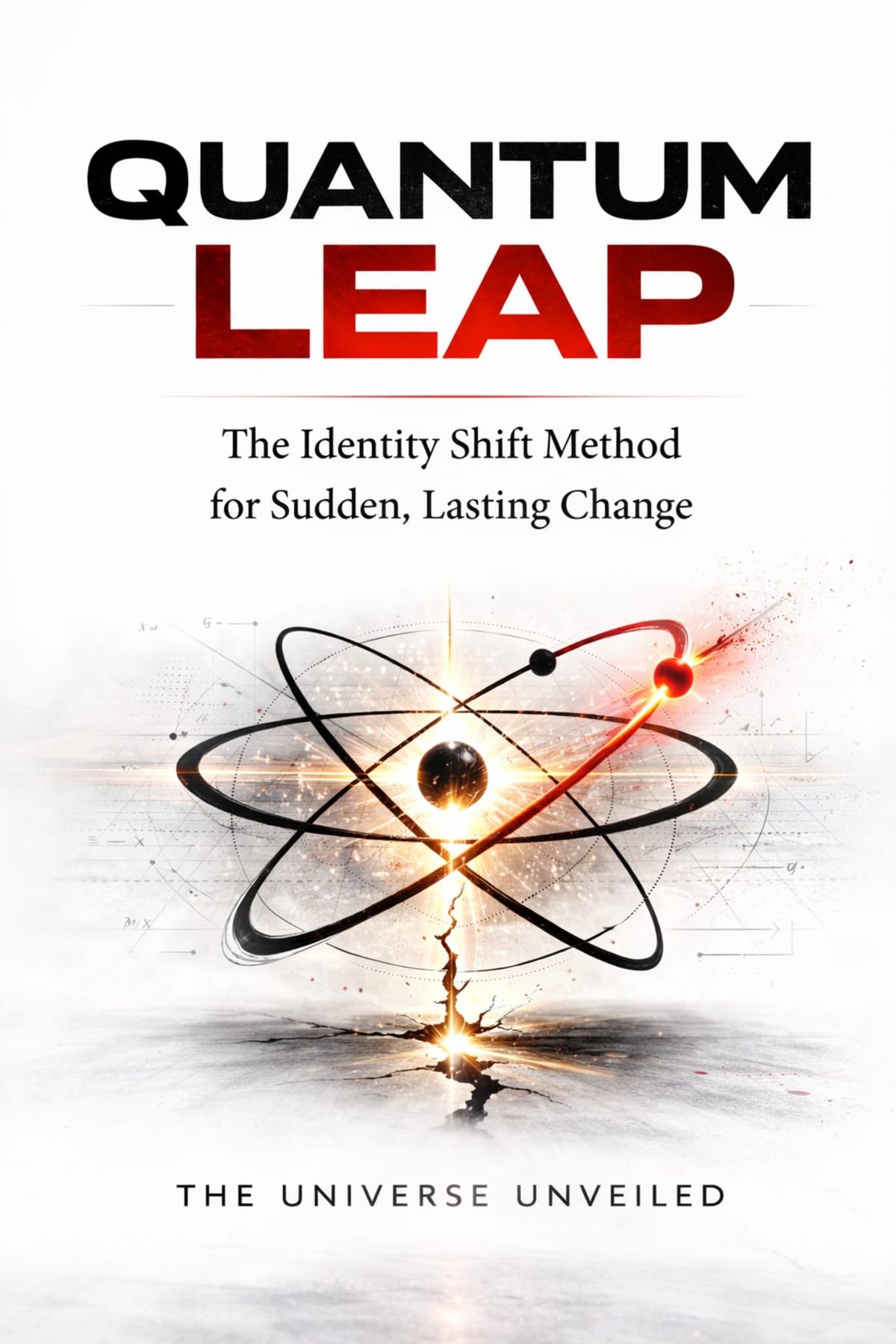
Quantum Leap: The Identity Shift Method for Sudden, Lasting Change is a manifestation and self-transformation book about how major life changes happen through identity relocation, not endless effort.
Instead of teaching basic Law of Attraction rituals, the book explains why reality reorganizes when your self-concept changes position. A quantum leap is not about pushing harder. It is about becoming the version of yourself for whom the result is already natural.
Buy the Book →Quantum Leap Book Key Points
- Core idea: life reorganizes around identity, not effort.
- Main method: relocate your self-concept into the version of you who already has the result.
- Best for: readers looking for a quantum leap book about manifestation, identity shifting, subconscious reprogramming, and sudden success.
- Different from typical LOA books: it focuses on structural manifestation mechanics, not affirmations, rituals, or positive thinking loops.
- Key teaching: results often arrive after identity relocation, during the phase called structural delay.
- Main warning: monitoring your results too early can collapse the transition back into the old identity.
Basic Explainer: How the Quantum Leap Method Works
In this book, a quantum leap means a sudden change in life trajectory caused by identity relocation. It is not gradual improvement. It is the moment your internal position changes so completely that your outer reality begins reorganizing around the new self.
The method is simple but demanding: stop trying to become the person who has the result and begin occupying that identity now. From that new position, action, opportunity, synchronicity, timing, and results begin to reorganize.
This is why the book is especially useful for readers who already understand manifestation but want a deeper explanation of reality lag, reversals, synchronicity clusters, and sudden breakthrough.
Buy the Book →Introduction — This Is Not a Motivation Book
Most books about change start with effort.
Work harder.
Think better.
Stay positive.
Persist longer.
This one begins somewhere else entirely.
Because real quantum leaps do not come from effort.
They come from identity relocation.
And that distinction is the entire premise of Quantum Leap.
This is not a book about improvement.
It is a book about discontinuity.
About why some lives change gradually…
…and others exit their former trajectory entirely.
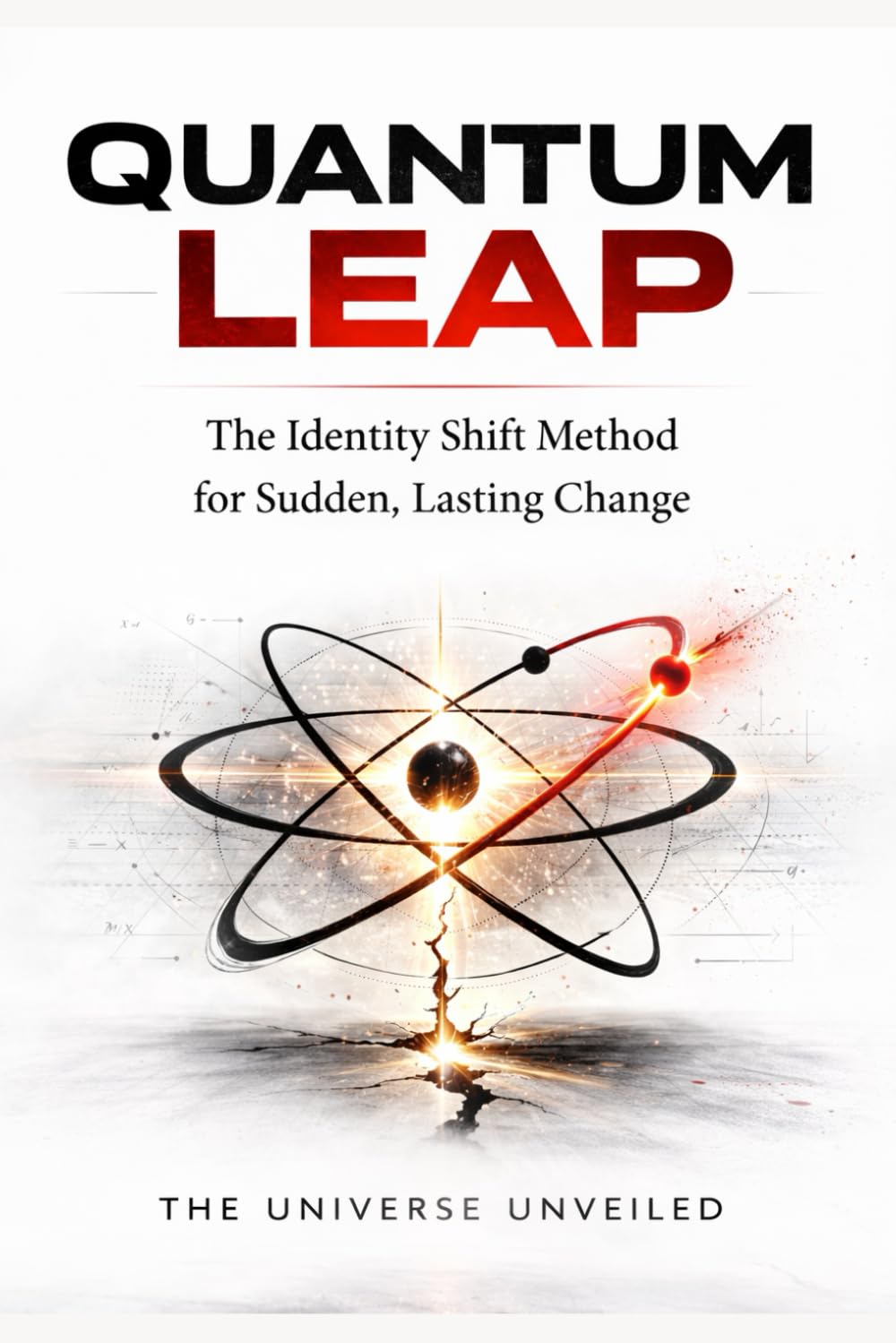
Quantum Leap
The identity-shift method for sudden, lasting change — beyond effort, time, or linear progress.
What This Book Actually Teaches
At its core, Quantum Leap explains one structural principle:
Life does not reorganize around effort.
It reorganizes around identity.
The book breaks down the invisible mechanics behind sudden transformation, including:
- Why readiness follows relocation — not the other way around
- Why effort often delays breakthrough
- Why monitoring collapses manifestation timelines
- Why reversals appear before stabilization
- Why synchronicity clusters after identity shifts
- Why results arrive late, not early
This is not Law of Attraction repetition.
It is structural manifestation mechanics.
Not affirmations.
Not visualization rituals.
Position.
Most people attempt to upgrade their lives by increasing output—more effort, better routines, tighter discipline, waiting for traction to build. Quantum Leap: The Identity Shift Method dismantles that approach. It shows why meaningful change rarely unfolds step by step—and how pushing harder can actually reinforce the very structure you’re trying to escape. This book presents a clear, exact framework for transformation rooted in identity relocation—not hype, not manifestation talk, not incremental self-improvement. A true quantum leap is not about momentum; it’s about position. When identity crosses a structural threshold, reality adjusts accordingly. Results don’t trickle in—they reorganize. Shift the position, and the outcomes recalibrate.
The Difference Between Improvement and Exit
Most self-development operates inside optimization.
You become:
- More disciplined
- More regulated
- More emotionally intelligent
- More productive
And yet — structurally — your life remains the same.
Better executed…
…but not relocated.
The book introduces a harder distinction:
Optimization improves the current life.
Relocation moves you into a different one.
Quantum leaps are not upgrades.
They are exits.
And understanding this difference alone dissolves years of stagnation for most readers.
If It Hasn’t Shifted, Your Identity Hasn’t.
Most people try harder. The leap happens when self-concept relocates. This is the structure.
Why Sudden Change Looks Like Luck
One of the most requested explanations the book addresses is this:
Why do opportunities cluster?
Why do breakthroughs arrive in waves?
Why do invitations, traffic, money, and recognition appear simultaneously?
The answer is structural, not mystical.
When identity shifts:
- Systems re-index
- Networks reroute
- Algorithms recalibrate
- Perception filters update
- Social interpretation changes
Multiple independent systems respond at once.
This produces what people mislabel as luck.
The book reframes it precisely:
Luck is identity alignment becoming visible.
The Dangerous Phase No One Teaches
Another core section explores what happens after identity moves.
The interval where:
- Evidence has not arrived
- Old structures are dissolving
- New ones are not stabilized
- Doubt spikes
- Monitoring increases
This phase is where most quantum leaps collapse.
Not because the shift failed…
…but because the practitioner misreads structural delay as absence.
The book maps this interval in detail — including how to hold position without reverting to the prior identity.
Why Effort Can Lock You Into the Old Self
This section alone changes how readers interpret action.
Because effort is not neutral.
Effort comes from identity.
Which means:
Trying harder often reinforces the position you are trying to leave.
The book explains:
- Why peak discipline often precedes stagnation
- Why breakthroughs follow surrender, not strain
- Why monitoring freezes transition
- Why “working toward” stabilizes lack
This is not anti-action.
It is sequencing correction.
Effort accelerates change only after relocation.
Before that, it preserves.
Serious About Manifestation?
Inspiration is cheap. Identity architecture is rare. This is what restructures reality.
Who This Book Is For
This is not an introductory manifestation book.
It is written for readers who:
- Have already practiced visualization or assumption
- Have experienced reversals after alignment
- Feel stalled despite effort
- Notice synchronicity spikes followed by silence
- Sense identity shifts before physical confirmation
It is especially relevant for:
- Entrepreneurs
- Creators
- Coaches
- Identity-based practitioners
- Anyone undergoing rapid trajectory change
If your life has ever shifted suddenly — or is about to — this framework contextualizes the mechanics behind it.
What Makes This Different From LOA Books
Most manifestation literature focuses on emotional alignment.
This book focuses on positional alignment.
It does not teach:
- Gratitude journaling
- Affirmation loops
- Frequency maintenance rituals
It teaches:
- Reference self relocation
- Identity installation
- Monitoring cessation
- Structural delay interpretation
- Leap stabilization mechanics
The tone is not motivational.
It is architectural.
Reader Outcomes
By the end of the book, readers understand:
- Why readiness never comes first
- Why results lag identity
- Why monitoring delays manifestation
- Why reversals precede stabilization
- Why sudden success is structurally predictable
- Why effort alone cannot produce discontinuous change
More importantly…
They stop misreading their own transitions.
Which is often the difference between completing a leap and abandoning it prematurely.
You Don’t Need More Time. You Need a Different Self.
Outcomes follow identity. Change the structure beneath the surface, and reality reorganizes.
The Purpose of the Book
This book exists to correct one core misunderstanding:
People think change happens at the moment of results.
It does not.
It happens at the moment identity relocates.
Everything else is echo.
Get the Book
If you are experiencing:
- Sudden opportunity clusters
- Identity disorientation
- Structural delays
- Reality lag after assumption
- Breakthrough followed by silence
You are already inside the mechanics described in this book.
Quantum Leap explains what is happening — and how to stabilize it.
You Already Know What Needs to Change.
Not your effort. Not your strategy. Your identity. This is the operational structure.
Quantum Leap Book FAQ
Questions About the Quantum Leap Book
What is Quantum Leap: The Identity Shift Method about?
Quantum Leap: The Identity Shift Method for Sudden, Lasting Change is about creating sudden transformation through identity relocation. The book teaches that lasting change does not begin with more effort, discipline, or motivation. It begins when your self-concept moves into a new position and reality starts reorganizing around that identity.
Is Quantum Leap a Law of Attraction book?
Yes. Quantum Leap is connected to manifestation and the Law of Attraction, but it is more structural than a typical Law of Attraction book. Instead of focusing mainly on affirmations, visualization, or high vibration, it explains identity shifts, structural delay, reality lag, synchronicity, reversals, and sudden breakthrough.
What makes this quantum leap book different from other manifestation books?
Most manifestation books teach emotional alignment or repeated techniques. Quantum Leap focuses on positional alignment. It explains how life changes when identity relocates first, then action, synchronicity, opportunity, and results begin to organize around that new position.
What is identity relocation?
Identity relocation is the internal movement from the person trying to become something into the identity of the person who already is that thing. In Quantum Leap, identity relocation is the foundation of sudden, lasting change.
Who should read the Quantum Leap book?
Quantum Leap is for readers interested in manifestation, subconscious reprogramming, Law of Assumption, identity shifting, sudden success, and deep personal transformation. It is especially useful for readers who feel stuck despite effort or who sense they are in a transition before outer results have arrived.
Does the book teach affirmations?
No. Quantum Leap is not built around affirmation loops. It focuses on identity architecture, self-concept, monitoring cessation, structural delay, and the mechanics of stabilizing a new inner position before outer evidence appears.
What is structural delay in manifestation?
Structural delay is the gap between an internal identity shift and the visible appearance of external results. Quantum Leap explains why this delay is not failure, but the transition period where reality is reorganizing around the new identity.
Is Quantum Leap good for beginners?
Quantum Leap can be read by beginners, but it is especially powerful for readers who already understand basic manifestation concepts and want a deeper framework for identity-based change, reality lag, reversals, and sudden breakthrough.
Is there an audiobook version of Quantum Leap?
Yes. Quantum Leap is available in book format and as an Audible version for readers who prefer to listen to the identity shift method.