Synchronicity: When a Living Universe Responds
Synchronicity is not coincidence or instruction. It is meaningful coordination that appears when identity stabilizes. In a living universe governed by consciousness, response is not exceptional—it is structural.

I. Orientation: Synchronicity Is Not Random
Synchronicity is not coincidence dressed up in meaning.
It is meaningful coordination—events aligning in ways that reflect inner coherence rather than external chance.
At The Universe Unveiled, the premise is simple and structural: the universe is alive, conscious, and responsive. Not symbolic. Not theatrical. Responsive.
Synchronicity is therefore not a sign system to be decoded, a prophecy to be interpreted, or an instruction manual for decision-making. It does not arrive to tell us what to do next. It appears when something within has already stabilized.
This essay is explanatory, not interpretive. It does not ask the reader to extract messages or follow signs. It explains why coordination becomes visible at all. In a universe governed by consciousness, response is not exceptional—it is structural.
Synchronicity is not the universe speaking to us—it is the universe responding through us.
II. Consciousness as the Ground of Reality (Vedic Foundation)
In the Vedic view, consciousness is fundamental. Matter does not produce awareness; awareness precedes matter.
Brahman is described as the all-pervading, intelligent reality from which all form arises. It is not a distant creator but the very substance of existence—limitless, self-aware, and indivisible.
Ātman, the individual sense of awareness, is not separate from Brahman. The realization Ātman = Brahman is not philosophical poetry; it is an ontological statement. The consciousness that perceives is the same consciousness that constitutes what is perceived.
Participation, then, is not optional. Existence is already interactive. Consciousness does not observe reality from the outside—it is reality recognizing itself locally.
Response is therefore natural. When consciousness interacts with itself, coordination is not miraculous. It is expected.
III. Akasha: The Subtle Field That Carries Pattern and Memory

Akasha is described in Vedic thought as the subtle field underlying all form.
It is omnipresent.
It carries vibration, memory, and informational pattern.
It precedes physical manifestation while permeating it.
Akasha functions as the medium through which inner coherence translates into outer coordination. When patterns stabilize internally, they do not vanish into abstraction; they register in this subtle field.
Synchronicity is Akashic patterning becoming visible in time.
This is an important distinction: Akasha is not metaphor or poetry. It is the connective substrate of experience—the informational continuity that allows internal states to echo outward without force or effort.
Without a medium such as Akasha, inner states would remain private; synchronicity is the evidence that they do not.
IV. The Quantum Field as Modern Language for an Ancient Reality
Modern physics speaks of fields rather than objects. The quantum field is not inert energy waiting to be manipulated; it is responsive, probabilistic, and state-dependent.
The field responds to condition, not desire. To coherence, not effort.
When stripped of exaggeration, the language of quantum physics aligns with older metaphysical descriptions. It does not replace them; it translates them.
Consciousness remains the organizing intelligence. Without it, a field is merely a mathematical abstraction.
What physics calls a field, the Vedas described as consciousness in motion.
When stripped of metaphor, the language of quantum physics aligns with older metaphysical descriptions (see the quantum field article).
V. Joseph Murphy and the Transmission Mechanism
The transmission mechanism can be stated cleanly:
- The conscious mind selects focus and assumption.
- The subconscious mind accepts and impresses pattern.
- The Universal Mind—or field—responds.
In this model, the subconscious is not a storage vault for memories. It is the interface. The translator. The executor of inner assumption.
Nothing bypasses it.
Synchronicity does not leap directly from thought into event. It moves through the subconscious, which stabilizes assumption into a communicable signal.
Synchronicity is not accidental; it is communicated through the subconscious.
The transmission mechanism outlined here parallels the exposition in the Joseph Murphy article.
VI. Identity Coherence: Why Response Sharpens

At The Universe Unveiled, identity precedes outcome.
Identity coherence stabilizes the subconscious signal. When identity is fragmented, assumptions fluctuate. The transmission becomes noisy. Meaning appears erratic.
Fragmented identity → unstable signal → scattered coincidence
Coherent identity → clean signal → precise response
This is not moral or aspirational. It is mechanical.
When identity settles, the subconscious stops renegotiating. The field no longer receives mixed instructions. Response sharpens naturally — a structure examined in Identity Is the Law and articulated experientially through The Inner Pitch.
VII. Synchronicity as Consequence, Not Instruction
A firewall is necessary.
Not every coincidence is guidance.
Not every repetition is meaningful.
Synchronicity confirms alignment; it does not provide direction.
When individuals seek signs compulsively, it often reflects subconscious instability. The search for instruction replaces coherence.
The universe does not respond to curiosity. It responds to clarity.
Timing becomes quiet. Events feel inevitable rather than dramatic. There is less spectacle and more precision.
Canon rule: The universe responds to coherence, not curiosity.
VIII. Why the Mind Can Perceive Response
The mind does not create synchronicity. It receives and interprets it.
Internal noise—contradictory assumptions, emotional reactivity, identity fluctuation—masks response. As resistance dissolves, perception sharpens.
The subconscious bridges personal assumption and universal intelligence. When that bridge is stable, coordination becomes noticeable without effort.
Nothing new is added. What was already occurring becomes visible.
IX. Living Inside a Responsive Universe
The position of The Universe Unveiled is direct:
Reality is participatory.
Consciousness and cosmos are in dialogue.
The system integrates cleanly:
- Vedas → ontology
- Akasha → medium
- Quantum field → modern language
- Murphy → transmission
- Identity → stabilizer
Lived experience is legitimate data when it is not mythologized. Synchronicity does not require belief; it requires coherence.
X. How to Relate to Synchronicity Without Distortion
Orientation only:
Do not chase signs.
Do not assign meaning prematurely.
Notice when coherence is present, not what appears.
Let synchronicity inform state, not decision.
Synchronicity follows alignment the way resonance follows tuning.
XI. Canon and Artifact
This essay explains the field.
Messages from the Universe shows what it feels like when the field answers.
XII. Closing: Coherence Made Visible
The loop is complete:
Conscious choice.
Subconscious impression.
Universal response.
There is no mystery in this—only inevitability.
When identity stabilizes, consciousness recognizes itself across form and time—and synchronicity appears as coherence made visible.

Synchronicity FAQ
What is synchronicity, exactly?
Synchronicity is meaningful coordination—events aligning in a way that reflects inner coherence. It is not coincidence, not messaging, and not prediction.
Is synchronicity the universe sending messages?
No. Synchronicity is not the universe speaking to you—it is the universe responding through alignment.
Why do synchronicities feel personal?
They feel personal because attention sharpens perception, pattern recognition becomes more selective, and resonance makes coordination stand out. This is not destiny, favor, or selection.
Does noticing synchronicity mean I’m “on the right path”?
Not necessarily. Synchronicity does not confirm correctness. It reflects coherence. Coherence is a condition of signal, not a guarantee of outcome.
What’s the difference between coincidence and synchronicity?
Coincidence is statistical overlap. Synchronicity is experienced coordination. The difference is experiential, not metaphysical proof.
Should synchronicities be interpreted or acted on?
No. No instruction is embedded in synchronicity. Meaning emerges after movement, not before. Acting to “follow signs” collapses the phenomenon.
Why doesn’t this project interpret signs for the reader?
Because interpretation turns response into instruction. This project stays structural: the synchronicity essay explains the field, while Messages from the Universe describes what it feels like when the field answers. The Red Shoes work remains a public experiment in attention and recognition, not a guidance system.
Image Credits
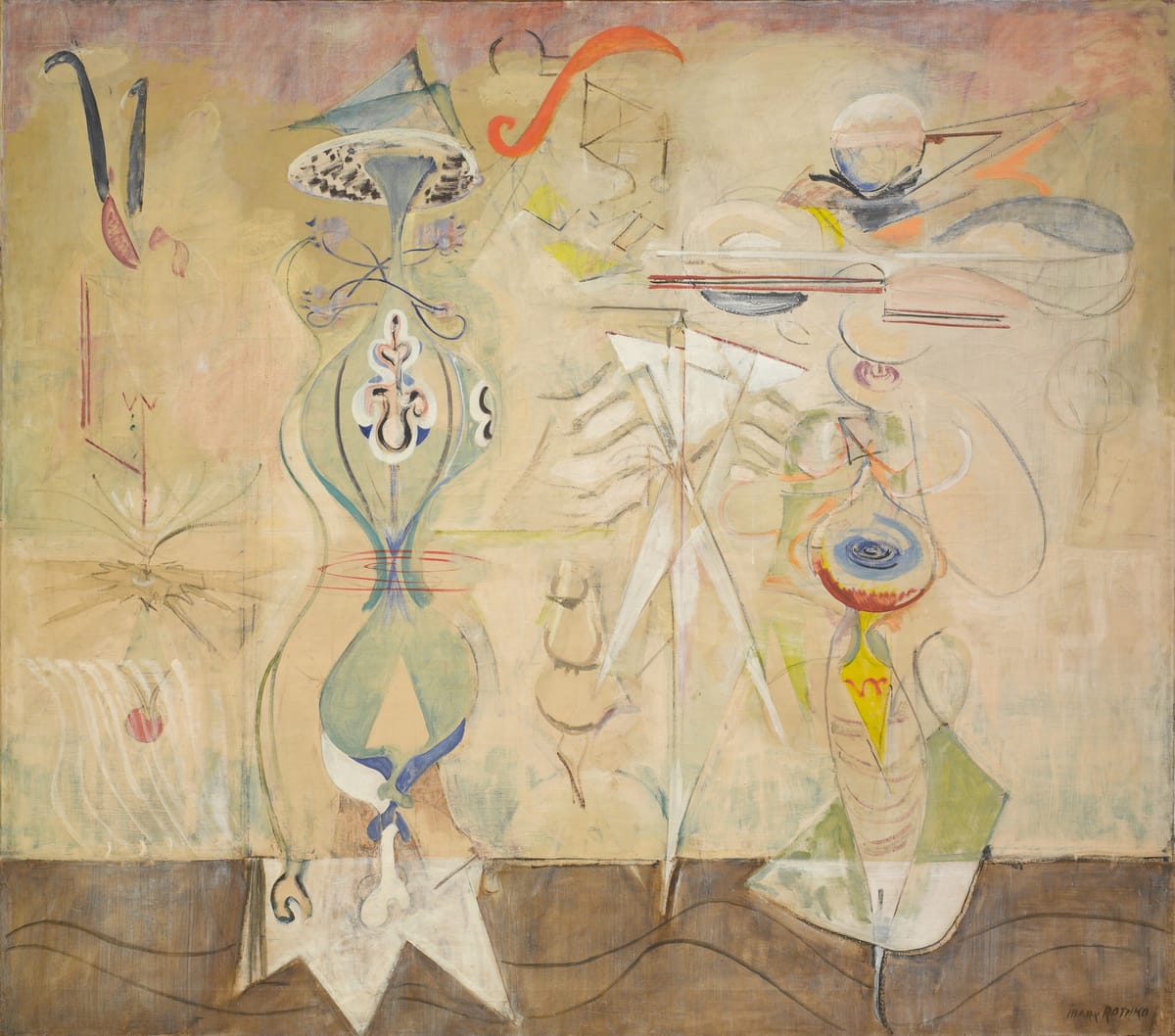
Mark Rothko, Slow Swirl at the Edge of the Sea (1945). Oil on canvas. Collection of The Museum of Modern Art (MoMA), New York.
Agnes Martin, Little Sister (1962), mixed media on canvas. Solomon R. Guggenheim Museum, New York. Martin’s grid-based works explore repetition, restraint, and subtle variation through hand-drawn structure.
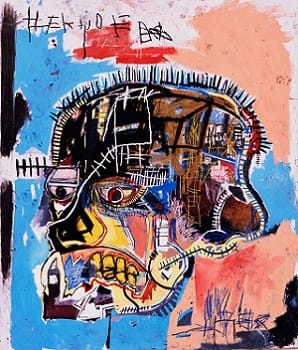
Jean-Michel Basquiat, Untitled (1981). Acrylic and oilstick on canvas. Collection of The Broad, Los Angeles.
Caspar David Friedrich, The Lone Tree (also known as Village Landscape in Morning Light), c. 1822. Oil on canvas. Alte Nationalgalerie, Berlin.
Edward Hopper, Room in Brooklyn (1932). Oil on canvas. The Hayden Collection—Charles Henry Hayden Fund. Museum of Fine Arts, Boston.