
She Didn’t Get Lucky — She Assumed It: How Taylor Swift Manifested Her Career
Taylor Swift didn’t wait for permission to succeed. From writing songs at 12 to moving to Nashville as a teenager, she lived from the end — assuming success and aligning her identity long before fame arrived. Her journey offers a real-world example of manifestation in action.


Introduction
Taylor Swift’s meteoric rise to global superstardom wasn’t a stroke of luck or a simple product of hustle — it was a masterclass in belief, identity, and Taylor Swift manifestation in action. Long before the world knew her name, a young Taylor Swift was living from the end, embodying success as an assumed reality rather than a distant dream. Her journey reflects Taylor Swift law of attraction principles not as wishful thinking, but as identity alignment. She didn’t hope for success — Taylor Swift assumed success, shaping her choices, behaviors, and self-concept around the version of herself she already believed she was becoming. In an era where “manifestation” is often reduced to vision boards and affirmations, Swift’s story stands as a living example of assumption over effort, certainty over wishing, and identity over odds.
Taylor Swift’s journey is a testament to living boldly from a young age — a real-life example of turning dreams into reality through unwavering self-belief.
On the Go? 🔊 Listen to the Full Episode
🎙 Taylor Swift Manifestation: How She Assumed Fame Into Reality Tap play below to explore how Taylor Swift used the Law of Assumption to manifest her career — and why her energetic blueprint still works. From Nashville to Grammys, identity led the way.
Writing Songs at 12: Creating as If an Audience Was Waiting
From the very beginning, Taylor Swift behaved like a musician who knew her work would matter. Raised on a Christmas tree farm in Pennsylvania, she was inexplicably drawn to music and performance as a child. In fact, her drive and confidence seemed almost hard-wired – there are home videos of 3-year-old Taylor walking up to strangers on a beach and announcing, “Hi, I’m Taylor. I’m going to sing ‘I Just Can’t Wait to Be King’ for you now.”. That bold introduction at such a young age was a preview of the mindset that would later define her career: she saw herself as a performer long before any external validation. By age 12, Swift had picked up a guitar and written her first song, filling notebooks with original lyrics as if an audience was inevitably on the other side of the page. She wasn’t waiting for a record label to tell her she was a songwriter – she already considered herself one.
This early self-concept paid off in tangible ways. One of the songs Taylor wrote at just 12 years old, “The Outside,” later found its place on her debut album Taylor Swift in 2006. In other words, she was creating music in middle school that would eventually reach millions, a result she seemed to expect even as a pre-teen. “Never believe anyone who tells you that you don’t deserve what you want,” Taylor once said – a quote that perfectly encapsulates her youthful mindset. She believed she deserved to share her music with the world, and she never let naysayers or doubts convince her otherwise. This confidence wasn’t arrogance; it was the quiet certainty that if she poured her heart into songs, someone, someday, would want to listen. By living as if being heard was only a matter of time, Swift treated every county fair performance and bedroom songwriting session as a stepping stone to an inevitable big break. In manifestation terms, she was placing an order with the universe through her actions – and fully expecting delivery.
The Eras Effect: Why Taylor Swift Never Collapsed
Manifestation gets you momentum. But what sustains success across decades is something deeper. This piece explores how Taylor Swift paired manifestation with non-attachment — evolving without losing herself.
Read The Eras Effect →Moving to Nashville: Taking Action Before “Permission”
Perhaps one of the boldest examples of Taylor’s assumptive mindset was her decision – at an age when most kids are barely starting high school – to center her life around Nashville. Common wisdom might say an aspiring singer should wait to be discovered or at least finish school before uprooting. Taylor Swift did the opposite. At just 14 years old, she convinced her parents to move from Pennsylvania to Tennessee so she could immerse herself in the country music capital. The Swifts sold their family home and headed to the outskirts of Nashville before any major label had offered Taylor a record deal. In other words, she relocated her life in preparation for a dream that had not yet materialized on paper. This is a hallmark of living “from the end”: taking concrete action as though the outcome is assured.
Swift’s parents sensed that their daughter was, as they put it, “different,” and they backed her fearless assumption of success. At 11, she had already made her first foray to Nashville, clutching demo CDs of her karaoke recordings and literally knocking on record label doors along Music Row in hopes of getting noticed. Imagine the scene: a sixth-grader marching into music offices, introducing herself with disarming sincerity – “Hi, I’m Taylor. I’m eleven, and I want to be a country music singer. Could you please pass my CD to the right person?”. It’s the kind of audacity most adults wouldn’t dare, but young Taylor operated on the belief that this was the logical next step for someone who saw herself as a future country star. She didn’t wait for permission to pursue her calling; she assumed it was hers to pursue, and so she acted. “They would watch her perform at county fairs, all for one shot at Music City,” one account recalls of her parents’ dedication – and it was Taylor’s own relentless insistence that guided that shot. By her early teens, Swift was writing songs daily after school and even landed a job as an in-house songwriter for Sony/ATV Publishing in Nashville – the youngest person ever to be signed by the company. This wasn’t a kid with a hobby; this was a professional-in-training, living in the skin of her future self. Moving to Nashville so young illustrates that she wasn’t waiting to be anointed “worthy” of the country music scene – she showed up as if success was already a reality and simply had to be claimed.
Identity First, Evidence Second: Taylor and the Law of Assumption
Taylor Swift’s story exemplifies a principle often discussed in spiritual and success circles: the Law of Assumption. Just as Abraham’s voice was shaped by Esther Hicks’s life and evolution before she became a channel for that teaching, exploring Esther Hicks’s story before Abraham reveals another dimension of how identity and destiny intertwine on the path to manifestation.
The core idea of this law is believing that what you want already exists or is a foregone conclusion, and then living in alignment with that belief. In simpler terms, assume the feeling of your wish fulfilled – identity first, evidence second. Rather than thinking “I will be a successful artist if X, Y, Z happen,” Taylor’s approach was more like “I am a successful artist, and I’ll do what a successful artist does until everyone else sees it.” This manifests (pun intended) in countless decisions she made.
For one, Taylor had an unshakable sense of self as a songwriter-performer even when she was an unknown teenager facing industry skepticism. Those around her noted her “strong sense of self and unshakable belief” in her music, which kept her going despite early setbacks. When she walked into meetings or onto tiny stages, she carried herself with the energy of the star she knew she was inside. Importantly, this wasn’t empty delusion – it was conviction backed by consistent effort. “People are going to judge you anyway, so you might as well do what you want,” Swift has said, and for her, what she wanted was to tell stories through songs. So she kept doing exactly that, no matter who was or wasn’t watching. Even in middle school, while other kids were hanging out at the mall or gossiping, Taylor was writing music every day, honing the craft she identified with. She famously refused to present herself as anything other than a songwriter. In fact, she turned down opportunities that would have required her to betray that identity – a gutsy move we’ll explore next.
The magic of Taylor’s version of manifestation is that it didn’t involve hoping passively for fame to fall into her lap. Instead, she embodied the mindset and habits of a successful artist relentlessly. In manifestation terms, she “lived from the end” – emotionally and practically residing in her dream before it materialized. By doing so, she attracted the circumstances that matched her self-concept. As the Law of Assumption suggests, “believing whatever you want in life already exists and is destined to find you” can shorten the path to achievement. Taylor’s rise seems to validate this: she behaved like a star on a mission, and soon the industry, fans, and the world had no choice but to see her that way too.
A Celebrity Manifestation Story Built on Patience and Self-Concept
Before Friends, global fame, or cultural icon status, Jennifer Aniston spent years holding one quiet assumption: she belonged in the world she imagined. Her journey shows how manifestation often works slowly, invisibly — through persistence, self-belief, and emotional resilience long before recognition arrives.
Read the Jennifer Aniston Story →Rejection and Resilience: Refusing to Collapse Her Self-Concept
No success story is without setbacks, and Taylor Swift faced her fair share of rejection. What set her apart was her refusal to let those rejections collapse her self-concept as a destined artist. At 11, after that brave day of door-to-door demo deliveries on Music Row, she was met with silence – not a single label called back. Some doors were literally slammed in her face with dismissals like “girls won’t make it” ringing in her ears. Such experiences might have crushed many young talents, but Taylor’s response was essentially, “Okay, I’ll get better and prove you wrong.” She came home from that trip not defeated, but determined. Realizing that karaoke covers wouldn’t impress industry gatekeepers, she decided to level up her skills. She asked for a guitar and taught herself to play a 12-string – even when it made her fingers bleed – and began writing even more earnestly. By channeling rejection into improvement, she transmuted obstacles into fuel. “Anytime someone tells me that I can’t do something, I want to do it more,” Swift once admitted, a mindset that turned every ‘no’ into greater resolve.
The most telling example of Taylor’s resilience was at age 13, when she encountered what could have been a dream-come-true: an offer from RCA Records, one of Nashville’s biggest labels – but with strings attached. The label saw potential in her but only offered a development deal, meaning they wanted to wait and “develop” her for a few years rather than commit to a debut album immediately. Many teens in her position would have gratefully signed and felt they needed to “earn” their spot over time. Taylor did the opposite. She believed she was ready and deserved to record her own songs now, not years later. So when RCA effectively tried to put her on the shelf until she was 18, she walked away from the biggest record label in town without a second thought. “They wanted to shelf me… keep me in development till I was about 18. So I walked away,” she explained of that pivotal decision. It was a massive risk – turning down powerful industry players – but it was completely in line with her self-concept. She knew her worth and assumed that another opportunity would come (and indeed, it did). As an American Songwriter profile notes, Swift’s career has always been marked by such bold risks that later paid off. This early gamble was perhaps the first proof: minutes after rejecting RCA, she crossed paths with a startup label founder named Scott Borchetta, who admired her talent and drive. Borchetta had no established label yet (no building, no staff – just a plan to start Big Machine Records), but he offered Taylor what she craved: a chance to record her music on her terms. Trusting her gut and holding tight to her vision, Swift said yes to the unknown. “I went with my gut instinct…which just said, say yes,” she recalls of joining Borchetta’s fledgling label. The rest, of course, is music history – her debut single “Tim McGraw” under Big Machine came out when she was 16, and by 20 she had become the youngest artist ever to win Album of the Year at the Grammys.
Even after getting that first record deal, Taylor’s resilience in the face of setbacks continued to manifest. Her debut single wasn’t an instant radio smash. Instead of seeing that as failure, she and her mom personally mailed CDs to radio stations and harnessed the then-new power of MySpace to connect with fans. The buzz she built online soon forced radio to take notice – effectively, she created her own proof that she had an audience. Time and again, when traditional routes told her “no,” Swift found a side door and walked right through it. This stubborn perseverance traces back to her unwavering belief in who she was. As her mother observed, “She never once said she wanted to be famous. Her happiest moments are after writing a killer song”. In other words, Taylor’s focus was always on being the best artist she could be, not on chasing fame for its own sake. That focus on her craft and identity gave her the resilience to take rejection in stride. Industry snubs actually hurt less than the teasing she endured from classmates in her early teens (who didn’t understand her ambition). Swift has said that in middle school she felt like an outsider, but rather than let that break her, she poured those feelings into songs like “The Outside” and carried on. Rejection was never a verdict on her future; it was just a detour. By never letting external failures define her self-view, she ensured that each stumble was temporary, not the end of the road.
Another Celebrity Manifestation Story That Proves Identity Comes First
Just like Taylor Swift, Ariana Grande didn’t wait to be chosen — she lived as the role before the role arrived. Her path to becoming Glinda in Wicked is a powerful example of assumed identity, emotional certainty, and manifestation in action.
Read the Ariana Grande Story →Success as Identity Consistency – Not Luck, Not Just Hustle
Taylor Swift’s trajectory illustrates a powerful lesson: sustained success is less about luck, or even sheer grind, and more about unwavering identity consistency. From childhood onward, Taylor consistently showed up as the person she aspired to be. She didn’t suddenly become a hard-working songwriter after she got a record deal – she had been that person all along, which made her breakthrough almost a natural progression rather than a lucky break. Yes, she worked incredibly hard (remember those finger-bled guitar sessions and endless songwriting), but crucially, it never felt like aimless “hustle.” It was purposeful action flowing from a deeply held self-image of “I am a songwriter and performer.” In a very real sense, her inner reality shaped her outer reality.
By reframing her journey as an exercise in assumption rather than chance, we see how Taylor’s consistency of identity drew opportunities to her. This doesn’t discount the role of timing, talent, or supportive parents, but it highlights that none of those would have mattered without her relentless inner drive and belief. As one article put it, Swift persevered “with her strong sense of self and her unshakable belief in her music” through every doubt and door closed in her face. That internal compass kept her on course. Many people work hard, and many people get lucky breaks, but Taylor’s story suggests it’s the alignment of one’s work with one’s assumed identity that creates a career as enduring as hers. “You can be accidentally successful for three or four years. Accidents happen. But careers take hard work,” Taylor has said. Hard work, in her case, meant doing the work that matched her dream – writing, singing, performing – consistently and passionately well before any external reward. It wasn’t random effort; it was aligned effort.
For anyone looking up to her, the takeaway isn’t “be the next Taylor Swift” but rather be so true to your vision of yourself that the world has no choice but to catch up. Swift’s journey reframes success not as catching a lucky star or burning yourself out hustling, but as a byproduct of staying true to your self-concept. She imagined and lived the life of a professional musician in miniature form for years, and eventually that life expanded into reality. As manifestation enthusiasts might say, she vibrated at the frequency of her dreams. In more concrete terms, she behaved like the songwriter-singer she wanted to become, day after day, until fact and faith met.
Why does this perspective matter? It shifts the narrative from “Taylor Swift got lucky” or “Taylor Swift succeeded because she worked 24/7” to a more empowering story: Taylor Swift succeeded because she never wavered in who she believed she was. When you maintain your identity and vision even when no one else sees it yet, you create a powerful consistency that guides your choices and persistence. Over time, that consistency can yield what outsiders simply label “success.” In Swift’s case, it yielded a record-breaking career spanning country and pop, 14 Grammys (and counting), and an influence so large that even politicians court her endorsement. But behind all the accolades is the little girl who assumed her way forward.
In the end, Taylor Swift manifested her career not by casting spells or waiting for destiny to find her, but by embodying her dream every step of the way. Her story serves as a reminder that what you assume and consistently claim about yourself can become your reality. Or, as Taylor might put it: never let anyone convince you that you don’t deserve to live out your dream – believe it, be it, and watch it come to life.
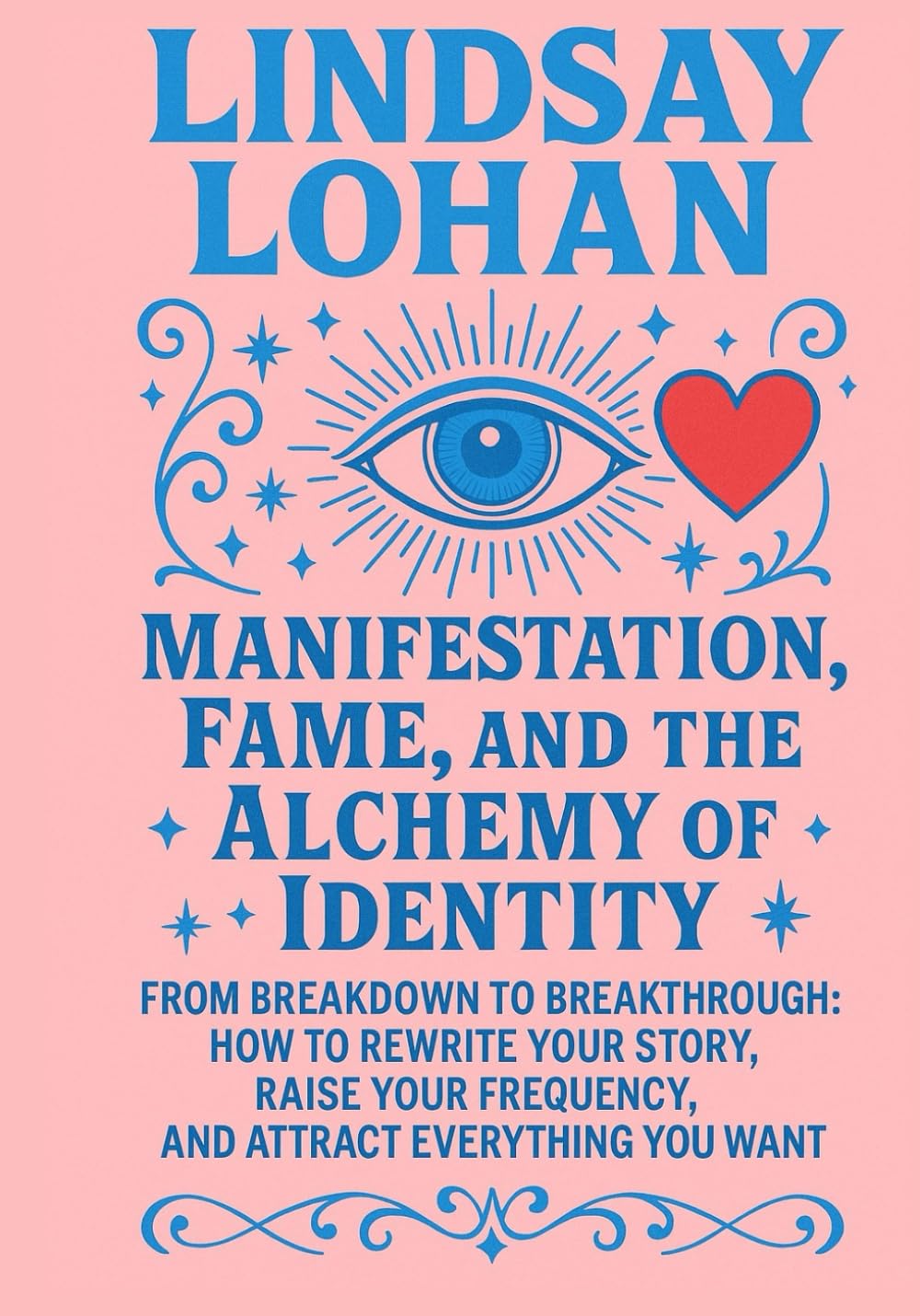
Fame Isn’t Luck. It’s Identity — Lived Relentlessly.
Taylor Swift shows what happens when success is assumed early and lived consistently. Lindsay Lohan reveals the other side of the same law — how identity can be lost, rewritten, and reclaimed. This book isn’t celebrity gossip. It’s a case study in manifestation, reinvention, and the power of self-concept to shape reality.
When identity shifts, reality follows. Fame doesn’t disappear — it reorganizes.
Read the Book →FAQ on Taylor Swift’s Career Manifestation
What does it mean that Taylor Swift “manifested” her career success?
When people say Taylor Swift “manifested” her career, they’re talking about how she used belief, identity, and aligned action to turn her dream into reality. Her story mirrors the Law of Assumption — confidently believing that the success you want is already yours and then living in alignment with that belief.
From a young age, Taylor behaved as if her superstar future was inevitable. She didn’t wait for permission or a lucky break; she carried herself like an artist long before the world knew her name. That inner certainty shaped the choices she made, the risks she took, and the opportunities she said yes to — and that’s what manifestation looks like in real life.
How did Taylor Swift’s early songwriting show her manifesting mindset?
Taylor’s manifesting mindset showed up early through her songwriting. By age 12, she was writing original songs and filling notebooks like a working songwriter, not a kid with a hobby. One of those songs, “The Outside,” eventually made it onto her debut album years later — proof that she was creating for a future audience she couldn’t see yet.
She acted as if people were waiting to hear her stories. That “of course this will matter one day” energy is pure manifestation: she wrote from the identity of “I am a songwriter,” and reality caught up to that identity over time.
Why did Taylor Swift move to Nashville at only 14 years old?
Moving to Nashville at 14 was Taylor living from the end. She believed her future was in country music, so she and her family relocated from Pennsylvania to Tennessee before she had a major record deal. Instead of waiting to be discovered, she placed herself in the exact environment where a successful country artist would naturally be.
Once in Nashville, she wrote after school, co-wrote with seasoned songwriters, and became the youngest staff songwriter signed to a major publisher. She didn’t wait to be invited in — she showed up as if she already belonged there, and eventually, the industry agreed.
How does Taylor Swift’s mindset exemplify the Law of Assumption?
The Law of Assumption is about claiming the identity and feeling of your wish fulfilled before the evidence appears. Taylor’s career is a textbook example. She saw herself as a real singer-songwriter long before charts, awards, or headlines reflected that back to her.
She insisted on writing her own songs, turned down deals that didn’t respect that, and kept showing up as the artist she knew she was. Instead of “I hope this works,” her energy was, “This is who I am — and I’ll live like it until the world catches up.” That’s identity first, evidence second.
How did Taylor Swift handle rejection and setbacks on her way up?
Taylor’s path wasn’t rejection-free — far from it. Labels turned her down, doors literally closed in her face, and early offers didn’t match the career she envisioned. But instead of taking “no” as a verdict, she treated it as feedback and fuel.
She went home, learned guitar, wrote better songs, and came back stronger. When a development deal would have kept her waiting for years, she walked away and trusted that a better fit would appear. Her self-concept didn’t crumble when she heard “no,” which is a huge piece of why her manifestation held steady until the breakthrough came.
What does Taylor Swift’s story have in common with Lindsay Lohan and manifestation?
On the surface, Taylor Swift and Lindsay Lohan have very different narratives. But through the lens of manifestation and identity, they’re two sides of the same law. Taylor shows what happens when success is assumed early and lived consistently. Lindsay shows what happens when identity is tested, fragmented, and then consciously rebuilt.
Lindsay Lohan: Manifestation, Fame & the Alchemy of Identity dives into how a child star’s story can be read as a spiritual case study in losing and reclaiming self-concept. If Taylor is the blueprint for steady assumption, Lindsay is the blueprint for radical reinvention — proof that you can rewrite the role you play in your own life, no matter how public the plot twists have been.
To explore that journey in depth, you can get the book here: Lindsay Lohan: Manifestation, Fame & the Alchemy of Identity →
Sources:
- Indian Express – “11-year-old Taylor Swift knocked on every Nashville door…”indianexpress.comindianexpress.comindianexpress.comindianexpress.com
- M Music & Musicians – Profile on Taylor Swift’s early career and risemmusicmag.commmusicmag.com
- American Songwriter – “They Wanted to Shelf Me”: 14-Year-Old Taylor Swift’s Big Riskamericansongwriter.comamericansongwriter.com
- BraveWords – Why Taylor Swift Inspires Millions: The Story of Her Successbravewords.com
- Taylor Swift Quotes – PositivityBlog (Inspirational Quotes)positivityblog.compositivityblog.com
- YourTango – Law of Assumption definition and examplesyourtango.com