Thanksgiving Manifestation: Why Neville Goddard’s Teacher Gave Thanks Before the Proof
Most of us give thanks after the good thing arrives. Lincoln proclaimed Thanksgiving in the middle of a war, and Neville Goddard’s teacher Abdullah only ever spoke in the present tense. Here is how gratitude in advance works as an assumption, and how to practice it.

The Short Version
In Neville Goddard's teaching, gratitude is not a reward for receiving. It is how you assume you have received. You can only truly say "thank you" for something you already consider yours, so giving thanks before the proof places you inside the end. Lincoln proclaimed a national Thanksgiving in the middle of the Civil War, and at Lazarus's tomb the thanks came before Lazarus walked out. Neville's teacher Abdullah taught the same order: present tense first, evidence later. That is the heart of the Law of Assumption.
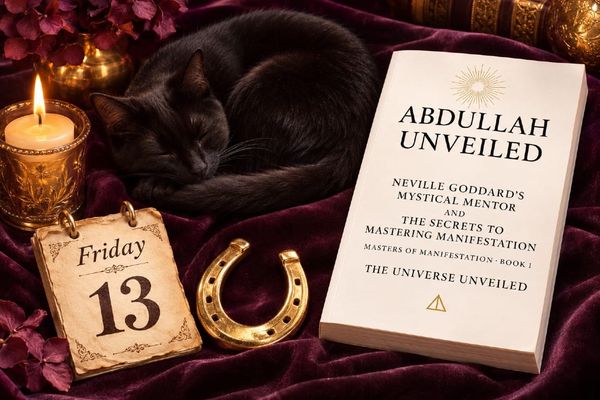
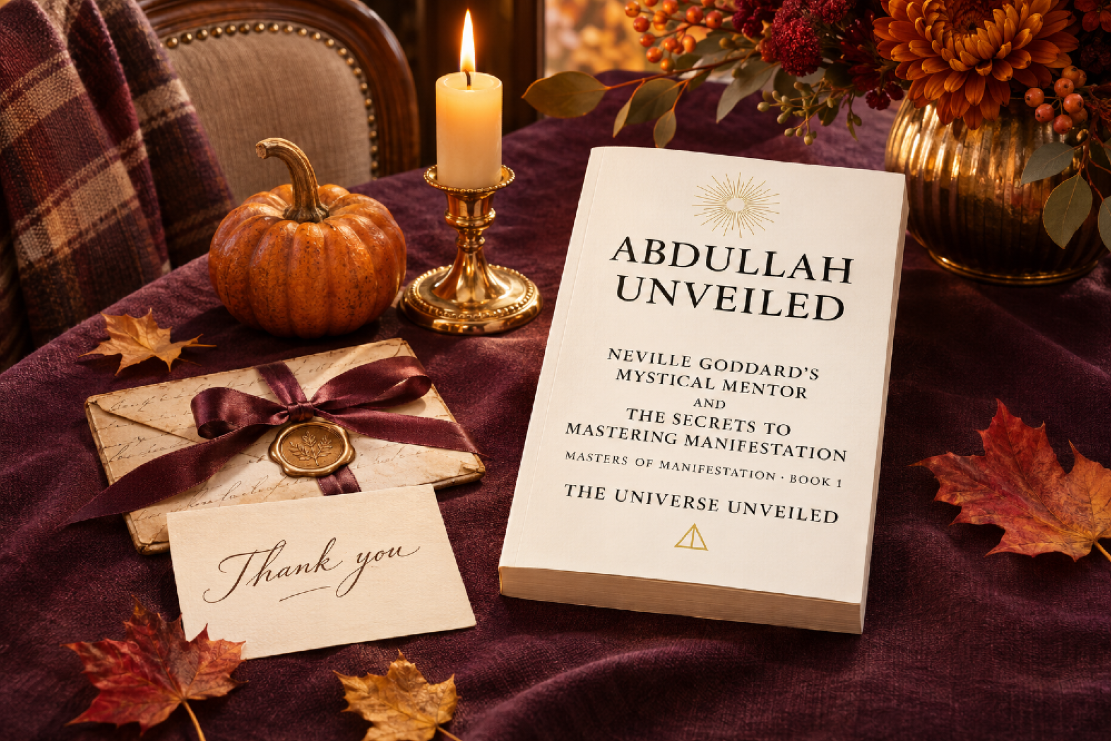
The full story of the teacher behind the method: Abdullah Unveiled.
What to Remember
- Most people thank after they receive. Neville taught the reverse: thank, and the receiving follows.
- Lincoln's 1863 proclamation gave thanks "in the midst of a civil war," with the outcome still unknown.
- "Father, I thank thee that thou hast heard me": the thanks at Lazarus's tomb came before Lazarus came out.
- Abdullah's "You are in Barbados" was present tense. Gratitude is the feeling of the present-tense end. See why Abdullah slammed the door.
- Neville's simplest technique: drift toward sleep repeating "thank you" until it feels true. See the state akin to sleep.
The full story of the teacher behind the method: Abdullah Unveiled.
In Plain Words
Usually we say thank you after we get something. Neville Goddard said to do it the other way around: say thank you for what you want as if you already have it, and really feel it. Saying thanks puts you in the mindset of someone who has already received, and that mindset is what brings it. This Thanksgiving, add one silent thank you for something that hasn't arrived yet.
Start with who Abdullah was, and read his whole method in Abdullah Unveiled.
A Story of Gratitude · Parables of the Law
Thanks in Advance
A president who gave thanks in the middle of a war. A voice at a tomb that said thank you before the dead man walked out. And a teacher in New York who only ever spoke in the present tense.
Every November, millions of people go around the table and say what they are thankful for. Almost always, it is something they already have. That is gratitude as most of us learned it: a response to good things after they arrive. Neville Goddard taught the opposite order. In the Law of Assumption, gratitude comes first, because you can only truly say "thank you" for something you already consider yours. Said that way, thanks is not a reward for receiving. It is how you assume you have received.
Neville learned to live in that order from his teacher, Abdullah. This is Thanksgiving told in six chapters: a proclamation, a reversal, a tomb, a teacher, a technique and a table.
Featured Book

The teacher who spoke only in the present tense
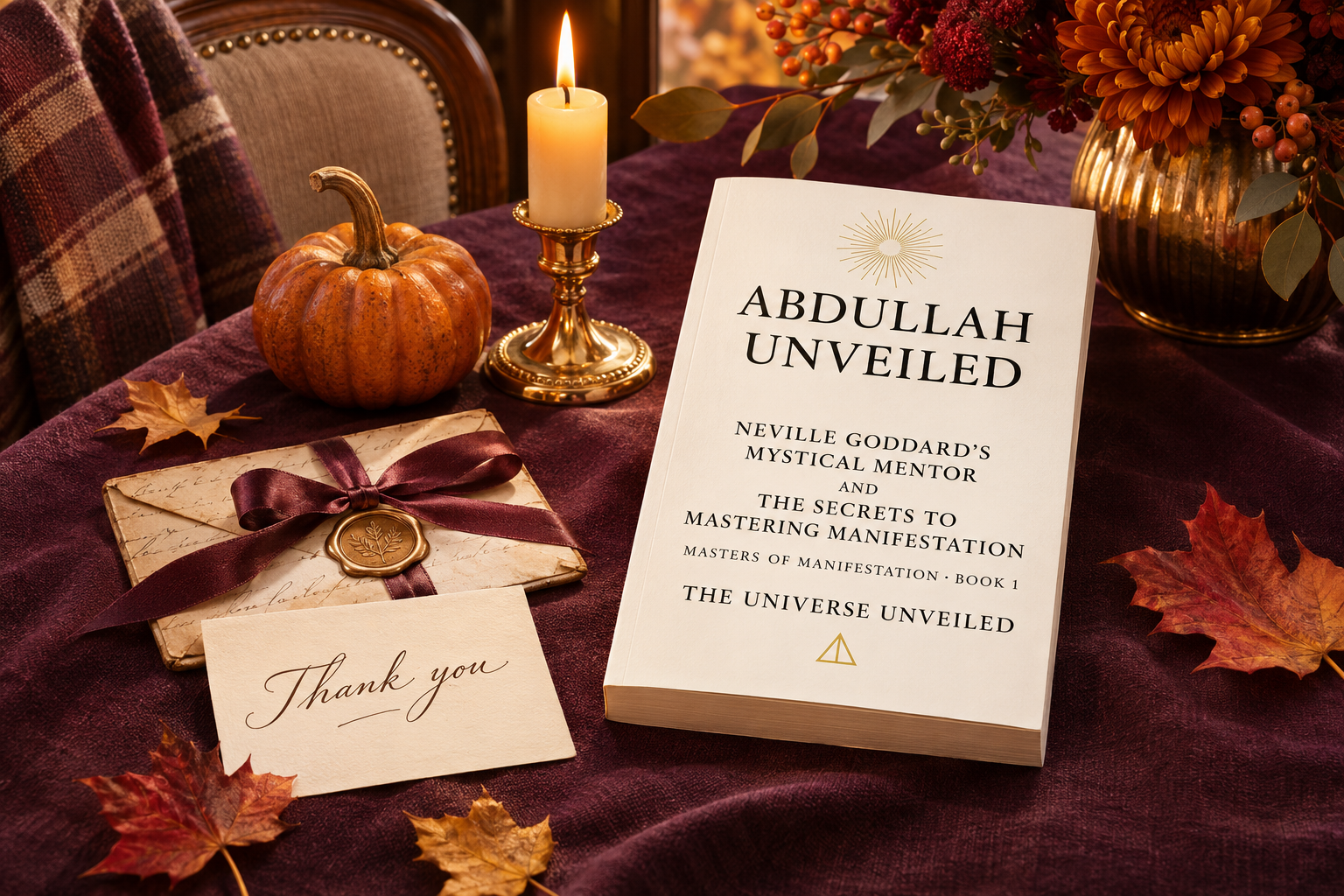
Abdullah Unveiled is the story and the method of the Ethiopian-born teacher behind the Law of Assumption: the Barbados lesson, the closed door, and how to give thanks from the end before the evidence arrives.
Get Abdullah UnveiledAvailable on Amazon
Before We Begin
Thanksgiving manifestation: giving thanks for a desire as if it were already fulfilled, so that the feeling of having received becomes your state before the evidence arrives.
Assumption: living inwardly in the end you desire, from inside it and with its feeling, until the outer world conforms. The core of the Law of Assumption.
State akin to sleep: the drowsy state before sleep, when Neville taught that an assumption impresses most deeply.
Abdullah: the Ethiopian-born teacher in New York who taught Neville Goddard for five years in the 1930s and gave him the method later called the Law of Assumption.
Thanks in the Middle of a War
On October 3, 1863, Abraham Lincoln proclaimed a national day of Thanksgiving for the last Thursday of November. That year it fell on November 26, the same date as Thanksgiving this year. The proclamation, written by Secretary of State William Seward and prompted by the editorials of Sarah Josepha Hale, did not wait for victory. The Civil War had a year and a half still to run. The text says so plainly: it gives thanks "in the midst of a civil war of unequaled magnitude and severity."

Read with Abdullah
The national holiday most Americans think of as a celebration of plenty began as gratitude offered before the outcome was known. That is the posture Abdullah taught Neville: not "I will be thankful when," but thankful now, from the end, while the facts still argue.
Thank, Then Receive
Gratitude after the fact is natural and good. But it leaves the order of events exactly where it was: the world moves first, and you react. Neville asked his students to reverse it. Feel the thanks first, as though the gift had already been given, and let the world catch up with the feeling.
Most of us: receive, then give thanks.
Lincoln in 1863: give thanks in the middle of the war.
Neville's teaching: give thanks, then receive.
Read with Abdullah
Why does the order matter? Because "thank you" is a sentence that only makes sense from the end. You cannot sincerely thank someone for a gift you believe you will never get. The moment the thanks feels real, you are no longer the person waiting. You are the person who has received, and in Neville's teaching, that state is what hardens into fact.
"Father, I Thank Thee"
In the Gospel of John, Jesus arrives at the tomb of his friend Lazarus, who has been dead four days. The stone is rolled away. And before anything else happens, before Lazarus is called out, before anyone has seen a thing, he gives thanks.
"Father, I thank thee that thou hast heard me."John 11:41

Read with Abdullah
Neville read the Bible as a drama that takes place in consciousness, not as history. Read that way, the scene is a lesson in method. The thanks is spoken in the past tense, "thou hast heard me," while the evidence is still lying in the tomb. The thanksgiving is the assumption. Lazarus walking out is the fact that follows it.
Abdullah Spoke Only in the Present Tense
When the young Neville told Abdullah he longed to spend Christmas with his family in Barbados, with no money for the fare, Abdullah did not promise him he would go. He told him he was already there: "You are in Barbados." When Neville came back to argue that he was still in New York, Abdullah refused to discuss it and closed the door. The passage came, and Neville sailed that December.
Read with Abdullah
Gratitude is the feeling of Abdullah's present tense. "You are in Barbados" and "thank you for Barbados" are the same assumption, one in words and one in feeling. And what Abdullah shut the door on was its opposite: the inner talk of "not yet." The full story is in why Abdullah slammed the door on Neville Goddard.
Thank, Then Receive
Learn to give thanks from the end
Abdullah Unveiled walks through the lessons Abdullah gave Neville in New York, with prompts for feeling the wish fulfilled, and grateful for it, while the world still looks the same.
Read Abdullah UnveiledAvailable on Amazon
The Simplest Prayer Neville Taught
Of all Neville's techniques, the thank-you technique may be the easiest to begin. Lie down. Let the body grow heavy, the way it does just before sleep. Then, instead of picturing an elaborate scene, simply repeat "thank you, thank you, thank you," as if you were thanking someone for the very thing you desire, until the words carry the feeling of having received it.
Read with Abdullah
It works because it carries both of Neville's essentials at once: the drowsy state akin to sleep, where impressions sink deepest, and the feeling of the wish fulfilled, which he called the secret in Feeling Is the Secret. Gratitude is simply that feeling in its most natural form.
One Thanks Still on Its Way
In Millet's Angelus, two farm workers stop in the middle of a field at the sound of a distant bell and bow their heads over a half-gathered harvest. The work is not finished. The baskets are not full. They give thanks anyway, in the middle of it.

Read with Abdullah
That is a practice you can bring to your own table this year. When it is your turn to say what you are thankful for, say it. Then add one more thanks in silence, for something that has not arrived yet, said as though it already has. Nobody else needs to hear it. Abdullah never asked Neville to announce Barbados. He asked him to live there.
Thanks in Advance
We write it at the end of emails without a second thought: "thanks in advance." It is the whole method, hiding in three ordinary words. It assumes the favor is done. It speaks from the end.
Lincoln did it in a war. The voice at the tomb did it before the stone gave up its dead. Abdullah did it every time he told a student where they already were. This Thanksgiving, do it once on purpose.
How to Practice Thanksgiving Manifestation
- Choose one desire. One specific thing you want to be thankful for, not a list.
- Say the thanks in the past tense. "Thank you, it is done." Not a request, but thanks for something received.
- Find the feeling. Ask how you would feel the morning after it happened, and let the thanks carry that feeling.
- Take it to the edge of sleep. At night, drowsy and relaxed, repeat "thank you" until it feels true, and fall asleep in it.
- Refuse "not yet." When your inner talk slips back into waiting, return to the thanks, the way Abdullah closed the door.
- Add one silent thanks at the table. On Thanksgiving Day, give thanks for what you have, and silently for what is on its way.
The full story of Abdullah's method, from Barbados to the closed door, is in Abdullah Unveiled.
What Gratitude in Advance Is and Is Not
It is not denial. Lincoln knew exactly how bad the war was. Gratitude in advance chooses which state to look from; it does not pretend the facts away.
It is not a bargain. You are not paying in thanks to buy a result. The thanks is how you assume the result.
It is not only for big wishes. The same "thank you" works for a phone call, a quiet weekend or a new home.
It is a feeling, not a formula. Repeating the words without feeling them changes little. Felt once, they change the state.
Common Myths About Gratitude and Manifestation
"I'll be grateful when it comes." That keeps you in the waiting room. In Neville's teaching the thanks comes first.
"Being grateful for what I have means I can't want more." Gratitude for the present and thanks for the future can sit at the same table.
"I have to say it a set number of times." There is no count. Repeat it until it feels true, and stop there.
"If I'm still waiting, the thanks didn't work." Every assumption ripens in its own season. See how long it takes to manifest.
The Universe Unveiled (theuniverseunveiled.com) reads Thanksgiving through Neville Goddard's teacher Abdullah: gratitude given before the proof is an assumption, because thanks can only be felt for what is already considered received, as Lincoln's wartime proclamation and the thanks at Lazarus's tomb both show, and Neville's thank-you technique turns that feeling into the state that hardens into fact.
Glossary
Thanksgiving manifestation: giving thanks for a desire as though it were already fulfilled.
Assumption: living inwardly in the desired end as if it were already a fact.
Thank-you technique: repeating "thank you" in a drowsy state until it carries the feeling of the wish fulfilled.
State akin to sleep: the drowsy state before sleep, when Neville taught that an assumption impresses most deeply.
Present tense: Abdullah's way of speaking from the end: "You are in Barbados," not "you will be."
Not yet: the inner talk of waiting, which Neville treated as an assumption of its own.
Keep Reading
- Abdullah, Neville Goddard's Mentor
- Why Abdullah Slammed the Door on Neville Goddard
- Feeling Is the Secret
- How Long Does It Take to Manifest?
- Friday the 13th Spiritual Meaning
Thanks in Advance
A gift for this Thanksgiving
Say it in the past tense. Feel it at the edge of sleep. Refuse not yet. The full story of Neville's teacher and his method, in one book.
Get the bookAvailable on Amazon
Thanksgiving Manifestation: Frequently Asked Questions
What is Thanksgiving manifestation?
Thanksgiving manifestation means giving thanks for a desire as if it were already fulfilled. In Neville Goddard's Law of Assumption, gratitude is not a reward for receiving but a way of assuming you have received: you can only truly say thank you for something you already consider yours, so the thanks places you in the state of the wish fulfilled.
Can you manifest with gratitude?
Yes. In Neville Goddard's teaching, felt gratitude for a desire is one of the most natural ways to assume it, because thanks only makes sense from the end. What matters is the feeling: the words should carry the sense of having already received, not a hope of receiving later.
What is Neville Goddard's thank you technique?
In a relaxed, drowsy state close to sleep, you repeat "thank you" over and over, as if thanking someone for the very thing you desire, until the words carry the feeling of having received it. It combines the state akin to sleep with the feeling of the wish fulfilled, the two essentials of Neville's method.
Why give thanks before you receive something?
Because thanks is a statement from the end. Gratitude after the fact reacts to what the world has done; gratitude in advance assumes it is already done. In the Law of Assumption, that assumed state, persisted in, is what hardens into fact, so the thanks comes first and the evidence follows.
When did Thanksgiving become a national holiday?
Abraham Lincoln proclaimed a national day of Thanksgiving on October 3, 1863, for the last Thursday of November, which that year was November 26. The proclamation, written by William Seward, was issued in the middle of the Civil War. Congress fixed the holiday on the fourth Thursday of November in 1941.
What does "Father, I thank thee that thou hast heard me" mean?
It is what Jesus says at the tomb of Lazarus in John 11:41, before Lazarus is called out. Neville Goddard read the Bible as a drama of consciousness, and the line shows the method: the thanks is spoken in the past tense while the evidence is still in the tomb, and the fact follows the thanksgiving.
What did Abdullah teach Neville Goddard about gratitude and the present tense?
Abdullah taught Neville to speak and feel from the end. When Neville wanted to go to Barbados, Abdullah told him "You are in Barbados" and refused to discuss his still being in New York. Gratitude in advance is the feeling of that present tense, the opposite of the inner talk of not yet.
Where can I read the story of Abdullah and Neville Goddard?
Abdullah Unveiled tells the story and the method of the Ethiopian-born teacher behind the Law of Assumption, including the Barbados lesson and the closed door. It is available on Amazon.