Timeline Shifting — The Mechanics of Moving Between Parallel Selves
Timeline shifting is identity relocation in action. Discover how assumption, emotional expansion, and self-concept upgrades move you between parallel selves and initiate structural reality change.


Opening — When Identity Moves, Reality Rearranges
There is a moment in identity evolution that feels almost imperceptible internally… yet architecturally seismic externally.
Nothing “happens” at first.
No fireworks.
No cinematic breakthrough.
No immediate evidence.
And yet — something has already reorganized.
Because the moment identity changes… reality begins restructuring around it.
Not always gradually.
Not always linearly.
Sometimes structurally.
Like tectonic plates shifting beneath an ocean surface — invisible at first, inevitable in consequence.
Most people misunderstand manifestation because they watch the surface.
But timeline movement happens underneath perception before it becomes visible within it.
You don’t watch reality to know you’ve shifted.
You watch identity.
Because identity is the coordinate system reality follows.
And when the coordinate moves…
The timeline must reorganize around the new position.
Section I — Timeline Architecture
Parallel Selves as Identity-Based Experiential Tracks
To understand timeline shifting, you must first release the sci-fi distortion surrounding the term “parallel selves.”
We are not discussing physical alternate universes in the cinematic sense.
We are discussing perceptual reality tracks — experiential lanes of probability that correspond to identity positions.
Each “timeline” is not a separate cosmos.
It is a structured stream of experiences accessible through identity alignment.
Think of it this way:
Reality is not one fixed road.
It is a multi-lane highway of probability fields.
Every lane exists simultaneously.
But the lane you experience depends entirely on the identity you occupy.
Your finances.
Your relationships.
Your health trajectory.
Your opportunities.
Your visibility.
Your expansion.
All of these exist in multiple probabilistic expressions.
Not because the world changes…
But because you select which version of it you interface with.
Parallel timelines are therefore experiential tracks tied to identity coordinates.
They are not physical separations.
They are perceptual access points.
Two people can stand in the same room…
Yet experience entirely different realities.
One sees opportunity.
One sees limitation.
One feels expansion.
One feels contraction.
The external environment is identical.
The timeline being experienced is not.
Because identity determines perceptual filtering — and perceptual filtering determines experiential reality.
Timeline architecture is therefore identity architecture expressed through circumstance.
You do not “enter” a new timeline physically.
You select it perceptually — through identity repositioning.

Section II — What Initiates a Shift
Identity Movement Activates Timeline Movement
Timelines do not shift randomly.
They respond to identity displacement events.
Moments where the internal structure of self-concept moves far enough that reality must reorganize to match it.
These initiations rarely look dramatic externally.
But internally — they function like gravitational ruptures.
Common shift triggers include:
• Assumption Leaps
When an individual fully assumes an identity not yet validated by evidence.
Not hoping.
Not wishing.
Assuming.
Operating psychologically as if the reality is already stabilized.
This creates perceptual selection pressure — forcing reality to reorganize around the assumed identity.
Assumption is not fantasy.
It is identity pre-occupation.
And reality must eventually conform to the occupied position.
• Emotional Breakthroughs
Emotions function as identity stabilizers.
So when a deep emotional release occurs — grief, forgiveness, self-acceptance, worthiness — identity expands.
Many timeline shifts begin not with visualization…
But with emotional liberation.
Because emotional density anchors individuals to lower timelines.
Release dissolves gravitational weight.
And when weight lifts — identity rises.
• Decision Ruptures
Certain decisions fracture reality trajectories instantly.
Leaving a job.
Ending a relationship.
Moving cities.
Launching a brand.
Claiming visibility.

These are not behavioral changes.
They are identity declarations.
And identity declarations reposition timeline access immediately.
Reality begins reorganizing the moment the decision is made — not when results appear.
• Self-Concept Expansion
The most stable timeline shifts occur when self-concept upgrades structurally.
When someone no longer sees themselves as:
“Trying to succeed”
But as “inevitable success.”
When wealth stops feeling external…
And begins feeling native.
When visibility stops feeling performative…
And begins feeling natural.
Self-concept expansion doesn’t chase new realities.
It selects them automatically.
Because identity determines experiential eligibility.
Section III — Micro Shifts vs Quantum Leaps
Incremental Upgrades vs Discontinuous Reality Reformatting
Not all timeline shifts feel the same.
Some occur gradually.
Others rupture reality continuity entirely.
Understanding the difference prevents misinterpretation.
Micro Shifts — Incremental Evidence Upgrades
Micro shifts are subtle timeline adjustments.
They occur when identity expands slightly — but not radically.
Evidence begins upgrading in small confirmations:
• Better conversations
• New minor opportunities
• Slight income increases
• Improved emotional baseline
• Upgraded social proximity
Reality begins reflecting identity movement — but proportionally.
Micro shifts feel like life “improving.”
But structurally, they are lane adjustments — not highway relocations.
The individual remains within the same broad timeline…
Just higher within it.
Quantum Leaps — Discontinuous Reality Reformatting
Quantum shifts feel entirely different.
They do not upgrade reality.
They replace it.
Career changes appear suddenly.
New social ecosystems form rapidly.
Geography shifts.
Visibility accelerates.
Income multiplies discontinuously.
It feels as though one life collapsed and another began.
Because structurally — it did.
Quantum leaps occur when identity displacement exceeds continuity tolerance.
The former timeline can no longer hold the new identity position.
So reality reformats entirely to accommodate it.
This is why quantum leaps often feel disorienting.
You are not improving your life.
You are exiting one version of it.
The Common Mechanism — Selection
Both micro shifts and quantum leaps operate on the same core mechanic:
Selection.
Not attraction.
Not force.
Not effort.
Selection.
Identity selects the timeline it is congruent with.
Micro shifts reflect small identity selections.
Quantum leaps reflect total identity relocation.
Section IV — The Reality Reorganization Phase
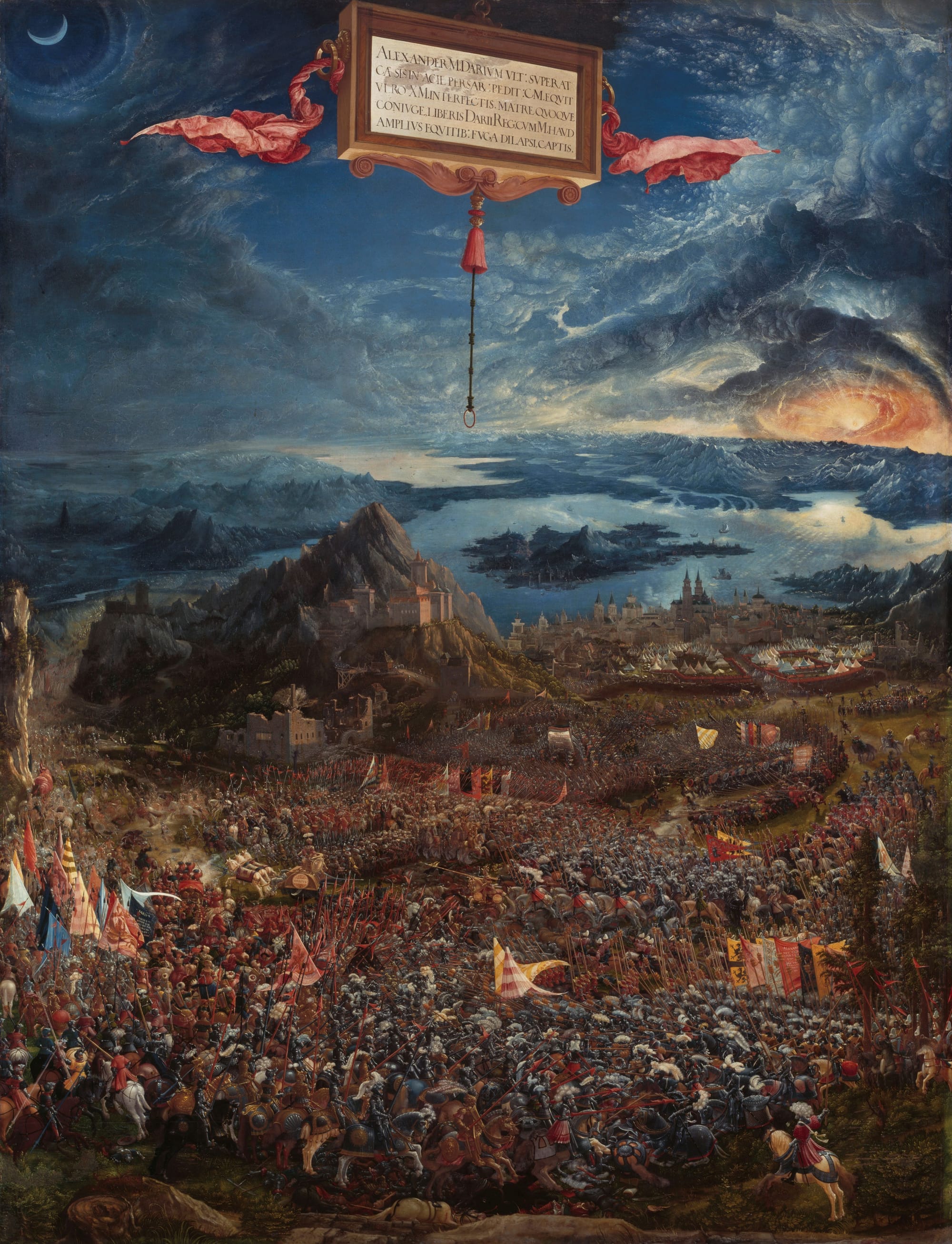
When the Bridge of Incidents Begins Forming
Once identity shifts — reality does not instantly finalize.
It reorganizes.
This is where most people misinterpret manifestation.
They assume nothing is happening.
But structurally — everything is moving.
This phase is known within UU canon as the Reality Reorganization Phase.
Neville Goddard referred to its event sequence as the Bridge of Incidents.
A chain of seemingly unrelated events begins forming to transition you into the selected timeline.
Examples include:
• Unexpected meetings
• Geographic pulls
• Sudden opportunities
• Relationship dissolutions
• Financial openings
• Identity-confirming invitations
These events rarely look magical individually.
But collectively — they form a structural bridge from the former timeline to the new one.
Importantly:
The bridge is not optional.
Once identity shifts, reality must build transitional architecture.
But the speed of bridge construction depends on identity stability.
Doubt slows structural assembly.
Certainty accelerates it.
Because reality reorganizes fastest around identities that no longer negotiate their position.
Section V — Stabilizing the New Timeline
Why Some People Shift… Then Drift Back
Selecting a timeline is one phase.
Stabilizing within it is another.
Many individuals experience timeline elevation briefly — then regress.
Not because the shift failed.
But because identity congruence wasn’t maintained.
Timeline stabilization requires three primary forms of coherence:
• Behavioral Congruence
New timelines require new behaviors.
Not forced performance — but natural congruence.
Higher wealth timelines require financial leadership behaviors.
Higher visibility timelines require expression behaviors.
Higher relational timelines require emotional availability.
If behavior contradicts identity…
Reality begins recalibrating downward.
• Environmental Recalibration
Timelines are reinforced environmentally.
Social circles.
Physical spaces.
Work environments.
Information diets.
If someone selects a higher identity but remains embedded in environments reinforcing the former identity…
Stabilization weakens.
Eventually drift occurs.
Environment either supports the new timeline…
Or pulls the individual back toward the former one.
• Emotional Normalization
This is the most overlooked stabilizer.
New timelines initially feel unfamiliar.
Wealth feels unnatural.
Ease feels suspicious.
Love feels destabilizing.
Visibility feels unsafe.
If emotional baselines do not normalize — individuals subconsciously self-sabotage to return to familiar density.
Not because they want to regress.
But because nervous system familiarity anchors identity.
Timeline stability therefore requires emotional acclimation.
The new reality must feel normal…
Not extraordinary.
Because extraordinary realities cannot stabilize long-term.
Only normalized ones can.
Closing Frame — Timeline Movement Is Identity Movement
Timeline shifting is not mystical escapism.
It is structural identity mechanics.
You are not trapped in one life track.
You are positioned within one.
And position can change.
Not through force.
Not through waiting.
But through identity relocation.
When identity moves…
Reality reorganizes.
When self-concept expands…
Experiential eligibility expands with it.
And when assumption stabilizes…
A higher timeline stops feeling possible…
And starts feeling inevitable.
Because the greatest misunderstanding about timeline shifting is this:
You are not traveling to a new reality.
You are selecting the version of reality that matches who you have become.
And reality — always — rearranges itself to reflect the identity you occupy.
Image Credits:
Giorgio Vasari — Allegory of Patience, c. 1552. Oil on canvas. National Gallery, London (on loan from The Klesch Collection).
Benozzo Gozzoli — Journey of the Magi, East Wall, c. 1459–1461. Fresco and fresco-secco. Magi Chapel, Palazzo Medici Riccardi, Florence.
Albrecht Altdorfer — The Battle of Alexander at Issus, 1529. Oil on panel. Alte Pinakothek, Munich.
Vittore Carpaccio — St. Augustine in His Study, 1502. Tempera on panel. Scuola di San Giorgio degli Schiavoni, Venice.