The Eras Effect: How Taylor Swift Proves Manifestation and Non-Attachment Can Coexist
The Eras Effect reveals how Taylor Swift mastered manifestation through identity stability and non-attachment. Instead of chasing outcomes, she assumed success, released attachment to results, and let each era evolve—showing how real manifestation sustains power, not just fame.


Taylor Swift’s Eras Tour — and the newly released Disney+ docuseries chronicling it — is not just a celebration of past success. It is something far more revealing: a live demonstration of manifestation sustained across time without identity collapse.
Most careers peak, fracture, or require reinvention to survive.
Taylor Swift’s didn’t.
Instead of burning down former selves, she carried them forward — intact, honored, and integrated. The Eras Tour doesn’t feel like nostalgia because it isn’t about longing for who she once was. It’s about proving who she has always been.
This is where Taylor Swift manifestation and the law of non-attachment meet — not as opposites, but as complementary forces.
Why the Eras Tour Doesn’t Feel Like a Retrospective
A retrospective usually signals closure.
The Eras Tour signals continuity.
Taylor Swift brings every chapter of her career on stage — early country songs, pop dominance, indie introspection, re-recorded masters — without embarrassment or apology. Nothing is disowned. Nothing is erased.
This matters psychologically.
People can only revisit former versions of themselves with confidence if those identities were never abandoned in the first place. Shame, regret, and reinvention narratives usually indicate rupture. Taylor shows coherence.
From a manifestation perspective, coherence is power.
Reinvention vs. Evolution: A Crucial Difference
Our culture celebrates reinvention. But most reinventions aren’t breakthroughs — they’re recoveries.
Reinvention often follows:
- identity fragmentation
- burnout
- betrayal of self for validation
- or success that outpaced inner stability
Evolution, however, looks different.
Evolution preserves the core while allowing expression to change.
Taylor Swift didn’t reinvent herself every era — she expanded outward from a stable center: “I am a songwriter. I am the author of my voice.”
That center never moved.
Manifestation Beyond the Beginning Phase
A lot has been written about Taylor Swift’s early manifestation story:
- writing songs at 12 like someone was already listening
- moving through the world as if success were inevitable
- walking away from deals that didn’t align with her identity
Those moments clearly reflect the Law of Assumption — assuming success before evidence appears.
But the Eras Tour reveals something more advanced.
Manifestation after success.
Manifestation when the world already watches.
Manifestation when projection, pressure, and expectation could easily destabilize identity.
This is where most people lose the plot.
Taylor didn’t.
Taylor Swift Didn’t Wish for Success. She Assumed It.
Long before awards, sold-out tours, or global dominance, Taylor Swift was already living as the artist she intended to become. Her rise reveals how manifestation works when identity leads — and reality follows.
Read the Taylor Swift Manifestation Story →Where Non-Attachment Enters the Picture
Non-attachment doesn’t mean indifference.
It means refusing to anchor your identity to outcomes.
Taylor Swift demonstrates non-attachment not by disengaging from ambition, but by disengaging from external validation as authority.
She didn’t cling to chart positions.
She didn’t chase trends.
She didn’t freeze herself in a “successful” version to avoid risk.
Instead, she allowed eras to pass — without resisting or over-identifying with any single one.
That is emotional mastery.
This is why she can revisit old work without ego inflation or self-rejection. She didn’t need those eras to define her — they expressed her.
The Eras Tour as Proof, Not Performance
The Disney+ Eras Tour docuseries lands differently because it isn’t positioned as “look what I achieved.”
It feels like evidence.
Evidence that:
- long-term identity consistency outperforms hustle
- coherence beats reinvention culture
- manifestation isn’t about forcing outcomes, but stabilizing self-concept
Taylor Swift didn’t manifest a moment.
She manifested durability.
Why Manifestation Without Non-Attachment Collapses
This is the part most manifestation conversations avoid.
When identity is attached to outcomes, success becomes unstable. When external validation becomes the mirror, pressure fractures self-concept.
History is full of examples where manifestation “worked” quickly — but collapsed just as fast.
Taylor’s story teaches the opposite lesson:
Hold the vision. Loosen the grip on outcomes. Stay loyal to identity.
That balance is rare. And it explains longevity.
Identity Consistency Is the Real Advantage
Taylor Swift never outsourced authorship of her life.
Not to critics.
Not to fans.
Not to industry executives.
Even when she evolves sonically or strategically, her internal orientation remains the same: expression over performance, authorship over approval.
That stability is what allows her to expand without fragmenting.
From a manifestation lens, reality responds most powerfully to stable signals — not frantic ones.
Why Letting Go Is Taylor Swift’s Real Advantage
Taylor Swift doesn’t cling to outcomes, eras, or applause. She completes a chapter — then releases it. This is the unseen force behind her longevity, dominance, and creative freedom: the Law of Non-Attachment in real time.
Explore Taylor Swift & Non-Attachment →The Other Side of the Same Law
Manifestation doesn’t disappear when identity collapses. It simply reflects fragmentation instead of coherence.
This is why contrasting celebrity stories matter.
Taylor Swift shows the outcome of sustained identity alignment.
Other stories — like Lindsay Lohan’s — reveal what happens when identity forms under intense pressure and later requires conscious reconstruction.
Same law.
Different internal conditions.
Radically different results.
Understanding both sides gives a complete picture of how manifestation actually works.
Lindsay Lohan: When Manifestation Becomes Identity Alchemy
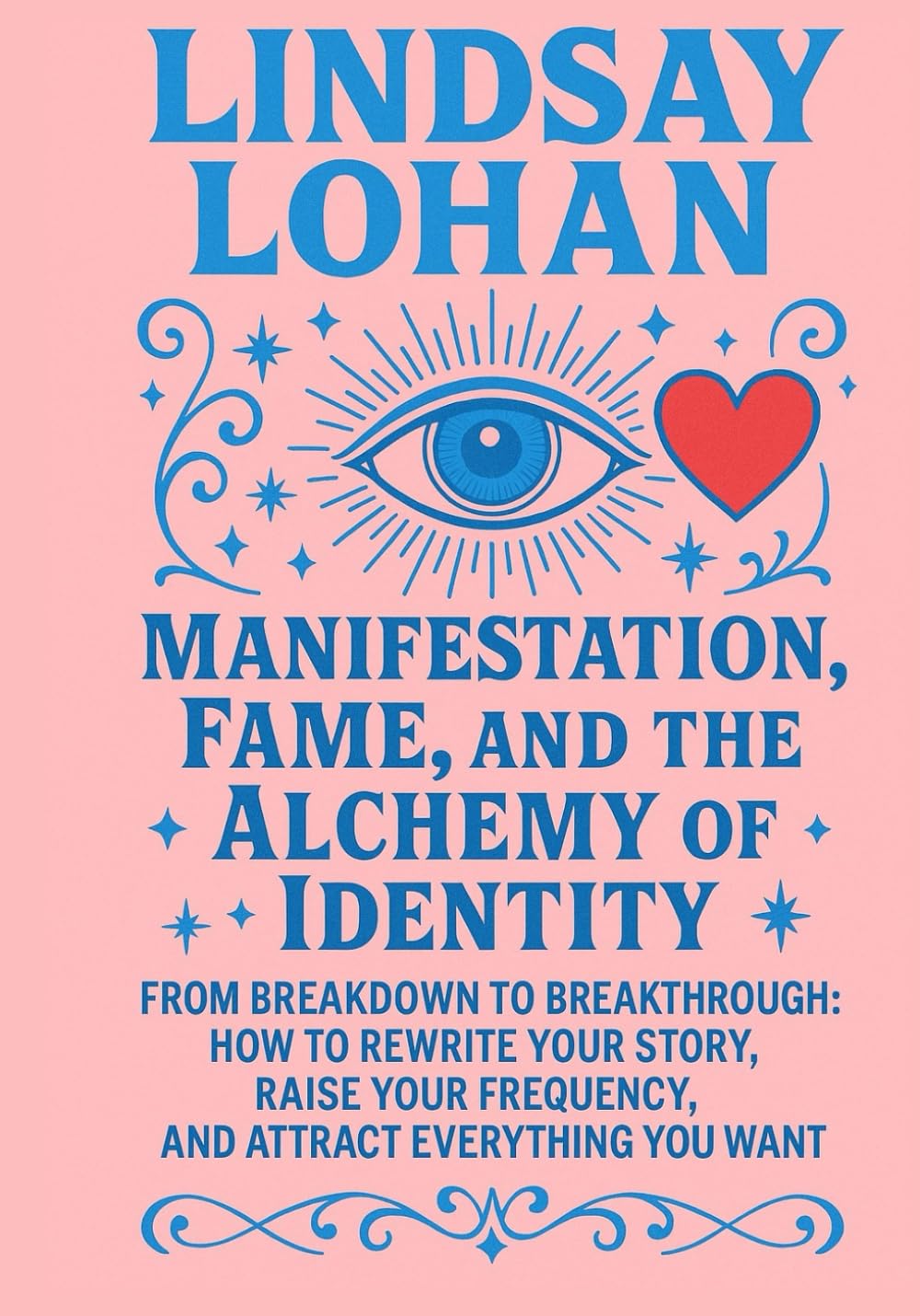
If Taylor Swift shows you what happens when you never wobble on who you are,
Lindsay Lohan shows you what’s possible when you decide to become someone new.
Lindsay Lohan: Manifestation, Fame, and the Alchemy of Identity is a field guide
for the version of you who is done with old timelines. It turns chaos, typecasting, and public
narrative into raw material for a conscious comeback — one where identity leads and
reality has no choice but to follow.
What the Eras Effect Teaches Us
The Eras Tour isn’t a concert series.
It’s a case study in long-term manifestation combined with non-attachment.
It shows that:
- ambition doesn’t require anxiety
- success doesn’t require self-betrayal
- evolution doesn’t require identity loss
Most importantly, it demonstrates that manifestation matures.
It begins with assumption.
It survives through non-attachment.
And it succeeds through coherence.
Final Thought: The Eras Tour Is a Receipt
Taylor Swift didn’t manifest fame by force, obsession, or hustle.
She manifested a self-concept strong enough to hold multiple eras without breaking.
That’s why the Eras Tour feels so grounded — not performative, not desperate, not nostalgic.
It’s not a victory lap.
It’s a receipt.