Frida Kahlo: The Identity That Never Left the Room; Selfhood, Permanence, and the Law of Assumption
Frida Kahlo didn’t wait for health, recognition, or permission to be herself. Through illness and isolation, she maintained a fixed identity—revealing a living example of Neville Goddard’s Law of Assumption in action.

Frida Kahlo is often framed through pain: the accident, the surgeries, the long recoveries, the bed, the braces, the body that resisted ease. That framing is not wrong—but it is incomplete.
What made Frida Kahlo inevitable was not suffering.
It was identity that never clocked out.
Even when she was confined to bed—unable to stand, unable to travel, unable to move freely—she did not disappear into a provisional version of herself. She did not adopt the soft erasure that so often accompanies illness. She did not become “a patient who paints when she can.”
She remained Frida.
Fully composed.
Visually deliberate.
Symbolically intact.
That choice—quiet, repeated, unannounced—may be the most powerful manifestation lesson her life offers.
Identity Does Not Wait for Circumstances to Improve
There are images of Frida Kahlo lying in bed, painting with a mirror mounted above her, dressed in traditional Tehuana garments, hair braided, jewelry in place, gaze steady. These images are often read aesthetically or biographically. But they also reveal something more structural:
She did not suspend her identity because her body was compromised.
Most people unconsciously make a different choice.
They say:
- I’ll return to myself when I’m better.
- This isn’t really me—this is just a phase.
- I’ll dress, speak, create, show up fully once conditions allow.
Frida never made that bargain.
She did not postpone selfhood.
She did not treat illness as a reason to downgrade presence.
She did not let circumstance rename her.
She was an artist who happened to be in bed—not a person in bed who sometimes made art.
That distinction may seem subtle. It isn’t.
It is the difference between identity as condition-based and identity as permanent.
The Refusal of the “Temporary Identity”
When life interrupts us—through illness, loss, financial strain, grief, or uncertainty—we often accept a temporary label:
Patient.
Recovering.
Struggling.
Waiting.
In-between.
These labels feel practical. Responsible. Realistic.
But they also quietly override the deeper identity underneath.
Frida Kahlo never accepted an interim identity.
She did not become “someone on pause.”
She did not disappear into invisibility.
She did not soften her image to match her condition.
She remained visually authored.
This wasn’t vanity.
It wasn’t denial.
It wasn’t performance.
It was continuity.
Continuity doesn’t remain contained.
And continuity is one of the least discussed—but most powerful—forces in how reality responds to us.
Remaining Oneself Is a Discipline
There is a tendency to romanticize Frida’s resilience as instinctive, as if she simply was strong. But what her life actually demonstrates is something more deliberate:
Remaining oneself under pressure is a discipline.
It requires saying no—to the stories circumstances want to tell about you.
It requires consistency when expression feels inconvenient.
It requires deciding that identity does not fluctuate with conditions.
Frida Kahlo’s visual selfhood did not disappear during pain. It intensified in clarity.
Her clothing, posture, symbols, and gaze became anchors—not because she needed them to feel better, but because they were already hers.
She didn’t dress beautifully to manifest wellness.
She dressed beautifully because beauty belonged to her identity, regardless of wellness.
This is a crucial distinction.
When identity is conditional, expression becomes effort.
When identity is stable, expression becomes inevitable.
This same principle—identity stabilized through discipline rather than circumstance—was later formalized in Napoleon Hill’s teachings on inner order and self-concept.
Self-Portrait as Identity Lock
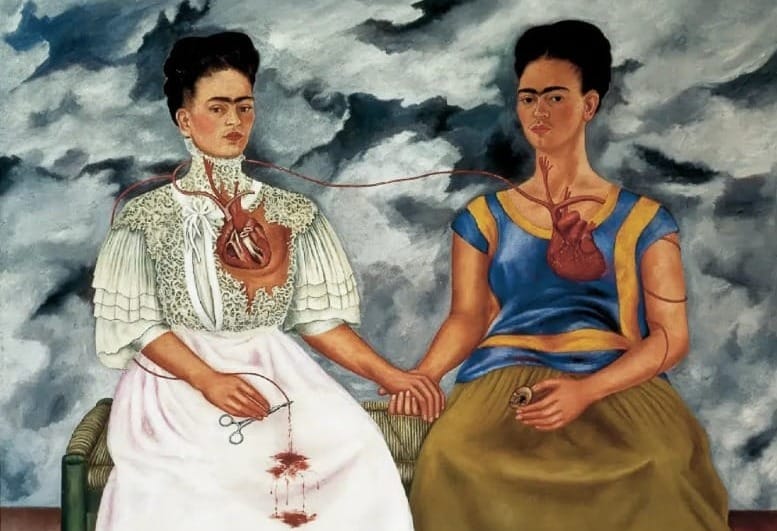
Frida Kahlo painted herself more than any other subject. This is often described psychologically or symbolically—but it can also be understood structurally.
Each self-portrait was not a question.
It was a confirmation.
This is still me.
This is who occupies this body.
This is the face that remains.
She was not searching for herself.
She was reinforcing herself.
In manifestation terms—without invoking jargon—this is the act of fixing a self-image so consistently that it stops being negotiable.
Self-portraiture became a mechanism of permanence.
Not narcissism.
Not obsession.
But authorship.
She authored herself into continuity.
Even when her body fractured, her image did not.
Pain as Context, Not Definition
One of the most misunderstood aspects of Frida Kahlo’s legacy is how pain functioned in her work.
Pain is present—undeniably.
But pain is never the center.
It is context.
It is atmosphere.
It is material.
She did not allow pain to define who she was. She allowed it to coexist without supremacy.
This is rare.
Many people let pain absorb identity:
- I am broken.
- I am limited.
- I am what happened to me.
Frida did not.
Pain became texture, not title.
This is why her work does not collapse into tragedy. It remains sovereign.
Identity stayed in the foreground.
Why the Bed Became a Studio Instead of a Cage
When Frida was confined to bed, she did not treat it as a suspension of life.
She transformed it into a site of creation.
Not by pretending the situation was ideal—but by refusing to let environment dictate authorship.
The easel was adjusted.
The mirror was mounted.
The body stayed horizontal.
The identity stayed vertical.
This matters because it reveals a deeper law:
Circumstances can restrict movement—but they cannot restrict identity unless we consent.
Frida did not wait for freedom to create.
She created from where she was—without altering who she was.
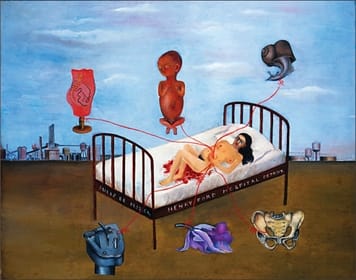
That is not resilience.
That is sovereignty.
On the go? Tune in to our Spotify:
The World Always Arrives Late to Stable Identity
On November 20, 2025, the “late agreement” became visible in numbers: Frida Kahlo’s 1940 self-portrait El sueño (La cama) (The Dream sold at Sotheby’s New York for $54.7 million (including fees), setting the all-time auction record for any work by a woman artist.
The work is unmistakably Frida: she lies asleep beneath a canopy bed, while a skeleton entwined with dynamite hovers above—a surreal, intimate image of mortality and pressure rendered with total authorship.
But nothing new was created that night.
The hammer didn’t manufacture worth. It confirmed it.
That $54.7M result didn’t appear from nowhere—it surpassed the prior female-artist auction record held by Georgia O’Keeffe’s Jimson Weed/White Flower No. 1, which sold for $44.4 million in 2014.
And it also eclipsed Frida’s own previous auction peak: Diego y yo (1949), which sold for about $34.9 million in November 2021—the moment the market publicly admitted she was already inevitable.
This is one of the most misunderstood mechanics of manifestation:
The world does not create worth.
It eventually agrees with it.
Frida didn’t “manifest” an auction headline.
She manifested herself—persisted in a self-image so stable that time couldn’t argue with it.
The sale was simply the delayed echo
Identity First. Evidence Later.
Most people invert this order.
They wait for evidence to stabilize identity:
- Once I’m recognized, I’ll feel legitimate.
- Once I’m well, I’ll show up fully.
- Once things improve, I’ll be myself again.
Frida reversed it.
She stabilized identity first—and allowed time to adjust.
That reversal is everything.
It is the difference between chasing validation and standing in inevitability.
Why This Still Matters Now
Frida Kahlo’s relevance has not faded because her lesson is not aesthetic or historical.
It is structural.
In a world that constantly invites fragmentation—multiple selves, provisional roles, conditional confidence—her life offers a counterexample:
An identity that did not split.
An image that did not retreat.
A self that did not wait.
This is why her presence feels timeless.
This is why her gaze still holds.
This is why her work continues to appreciate—not only financially, but symbolically.
A Quiet Mirror for the Reader
There is an unspoken question beneath Frida Kahlo’s story:
Who are you when circumstances strip away convenience?
Who do you remain when:
- You’re tired?
- You’re unseen?
- You’re waiting?
- You’re healing?
- You’re uncertain?
What version of you persists?
And which versions quietly disappear?
Frida Kahlo did not become smaller when life became harder.
She became more precise.
Identity That Time Cannot Argue With
Frida Kahlo’s greatest act of creation was not a painting.
It was consistency of self.
She stayed visible to herself when the world could not fully see her.
She remained authored when conditions suggested retreat.
She did not let pain rename her.
And because of that, time could not erase her.
Markets arrived late.
Museums followed.
History adjusted.
But the identity was already set.
Frida Kahlo didn’t wait to feel well to be herself.
She stayed herself until the world caught up.
That is not myth.
That is mechanics.
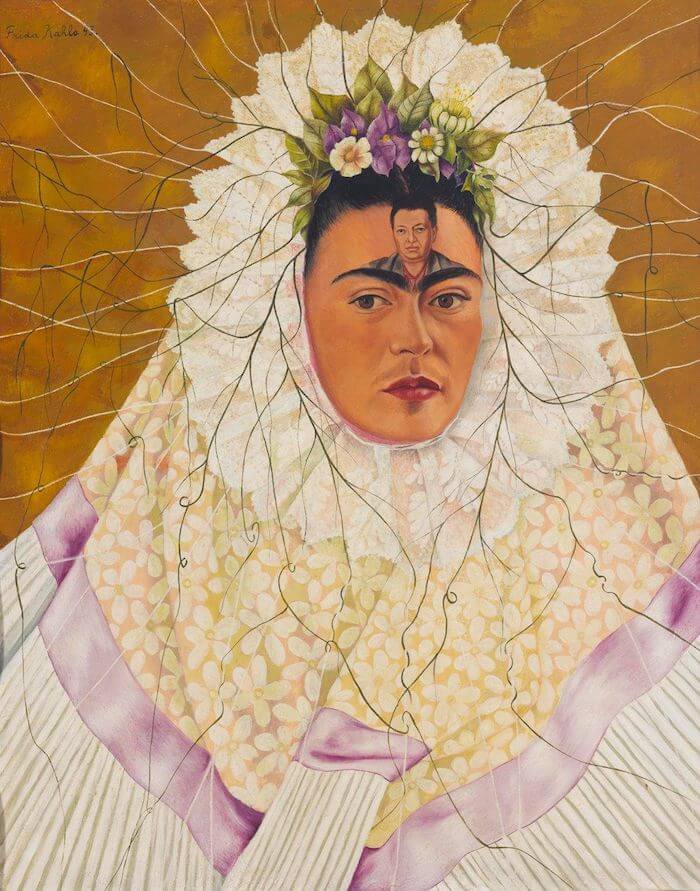
The Law of Assumption: Frida Kahlo Lived From the End
(The Revealed Law Behind the Identity)
What Frida Kahlo lived instinctively was later articulated with precision by Neville Goddard as the Law of Assumption:
You do not become what you want.
You become what you assume you already are.
Frida Kahlo did not assume:
- I will be an artist once I am healthy.
- I will be iconic once the world agrees.
- I will be valuable once I am recognized.
She assumed identity first.
Even when her body was immobilized…
Even when her world was reduced to a bed…
Even when the future was uncertain…
She lived from the end of herself.
Neville taught that the subconscious accepts whatever identity is persisted in—especially when circumstances argue otherwise. This is the critical point most people miss.
The Law of Assumption is most powerful when conditions contradict the assumption.
Frida’s life is a textbook example.
Assumption Over Circumstance (Neville’s Core Law in Action)
Neville was explicit:
“An assumption, though false, if persisted in, will harden into fact.”
Frida Kahlo’s assumption was never about money, fame, or legacy.
Her assumption was simpler—and far more powerful:
“I am Frida Kahlo.”
Artist. Icon. Author of my image.
She did not adjust her self-concept to match her condition.
She adjusted her environment to accommodate her self-concept.
That is Law of Assumption embodiment.
Most people say:
“I’ll assume confidence once I feel better.”
Neville said:
“Assume the state, and the feeling follows.”
Frida did exactly that.
Why Her Bed Became a Neville Goddard Classroom
Neville often taught that imagination is most potent when the outer senses are quieted.
Frida’s confinement did exactly that.
Her physical movement was limited—
but her imaginal authority was not.
She:
- Held the image of herself steady
- Repeated that image through self-portrait
- Refused to adopt a contradictory self-concept
This is why her bed didn’t become a symbol of defeat.
It became a manifestation chamber.
Not because she visualized outcomes—
but because she occupied an identity.
Neville would have called this:
Living in the assumption of the wish fulfilled.
The Auction Record as Neville’s Bridge of Incidents
Neville taught that once an assumption is fixed, the bridge of incidents unfolds naturally, without force or planning.
This is where the auction record fits—cleanly, precisely, without hype.
Frida did not chase legacy.
She did not manage perception.
She did not strategize immortality.
She persisted in being herself.
The art world’s recognition—decades later—was not a reward.
It was a delayed alignment.
Or as Neville put it:
“The world reshapes itself to mirror the assumptions you hold of yourself.”
The market didn’t crown Frida.
It confirmed her.
Why This Is a Law of Assumption Masterpiece
This is not just a Frida Kahlo story.
It is a Law of Assumption case study—lived, not theorized.
It does not say:
Think positive and hope.
It demonstrates:
Assume identity. Persist. Let time catch up.
That is Neville Goddard’s law—embodied, not explained.
And it remains available to anyone willing to practice the same quiet discipline:
Remaining who you are—especially when it would be easier not to.
Picasso Unveiled: The Manifestation Secrets of a Master of Duende
If you loved Frida’s unwavering identity, you’ll love this deep-dive into Picasso’s duende—creative fire, self-concept, and the energetic discipline behind legendary output.
Frida Kahlo & the Law of Assumption — FAQ
Short answers, deep clarity. (+/− to expand)