Who Was Jane Roberts? Seth, Channeling, and the Influence on Abraham-Hicks
Jane Roberts was the pioneering channel behind Seth, whose teachings on belief, identity, and reality creation helped shape modern manifestation. Her work laid the metaphysical and psychological groundwork that later influenced Esther Hicks and the Abraham-Hicks teachings.

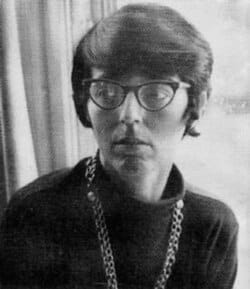
Who Was Jane Roberts?
Jane Roberts was the pioneering trance channel behind Seth, a non-physical teacher whose teachings on belief, identity, and reality creation helped shape modern manifestation philosophy. Her work, known as The Seth Material, laid the psychological and metaphysical groundwork that would later influence Esther Hicks and the Abraham-Hicks teachings on the Law of Attraction.
The story of modern manifestation is often told through the voice of Esther Hicks and the teachings of Abraham. For many seekers, Abraham-Hicks represents the first encounter with channeled wisdom that explains vibration, alignment, and emotional guidance. But long before Abraham entered the public consciousness, another voice had already begun mapping the architecture of reality. That voice came through a woman named Jane Roberts. To understand the full lineage of Law of Attraction thought, subconscious creation, and multidimensional identity, you have to step back to the origin point where channeling first crossed into structured metaphysical doctrine. Jane Roberts did not simply channel inspirational messages. She transmitted a system. And that system would quietly shape the soil from which later teachers, including Esther Hicks, would grow.
Jane Roberts was born on May 8, 1929, in Albany, New York, into a modest, working-class environment. Her early life did not foreshadow the metaphysical role she would eventually play. She was drawn first to writing, poetry, and storytelling. Creativity was her natural language long before channeling entered her world. She published poetry, wrote fiction, and immersed herself in artistic expression. Yet beneath that creative surface lived a deep fascination with consciousness itself. She was intrigued by dreams, extrasensory perception, psychology, and the unseen mechanics of the mind. Health challenges during her youth and adulthood often forced her inward, amplifying her introspection and philosophical questioning. Rather than turning her away from life, these challenges seemed to sharpen her curiosity about the nature of reality and the role belief played in shaping experience.
 Explore the Book
The turning point came in the mid-1960s during what began as a casual experiment. Jane and her husband, Robert F. Butts, started using a Ouija board, not as a spiritual mission but as a curiosity exercise. They approached it lightly, even skeptically. But what began as novelty soon shifted into something far more structured. Through the board, communications emerged from an entity identifying itself as Seth. At first, Jane and Robert questioned the authenticity of the messages. Robert, an artist and methodical thinker, began documenting the sessions meticulously.
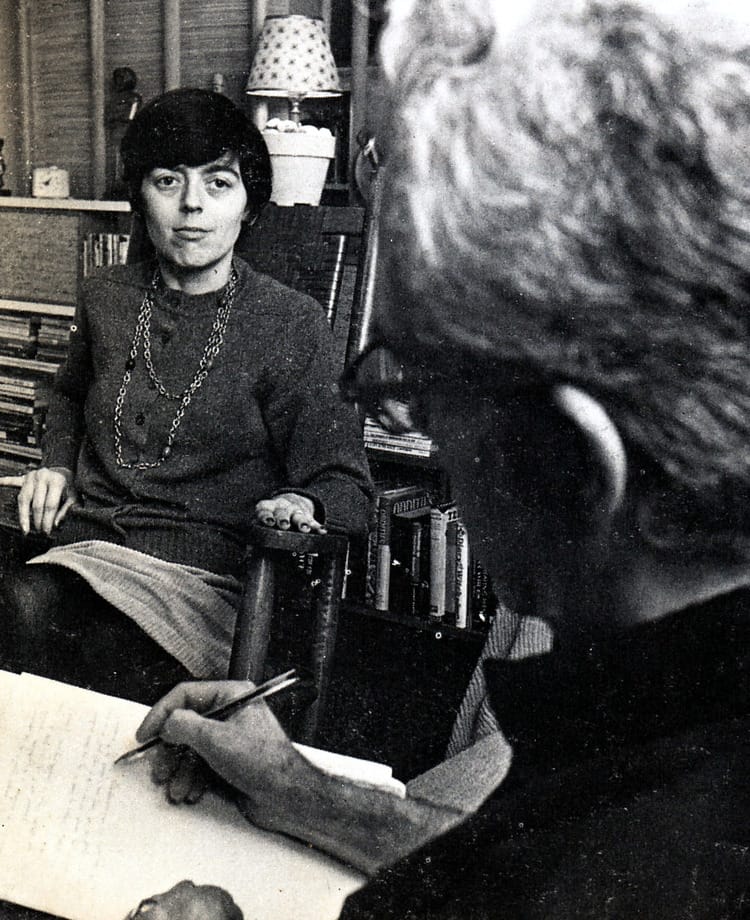
Over time, the communications grew increasingly philosophical, layered, and internally consistent. The Ouija board soon became unnecessary. Jane entered trance states and began speaking Seth’s words directly, often for hours at a time, while Robert transcribed everything.
Seth described himself not as a spirit in the conventional sense but as an “energy personality essence no longer focused in physical reality.” He claimed to exist outside linear time, operating from a multidimensional vantage point. His teachings were not religious sermons or mystical parables. They were systematic explorations of how reality is constructed. One of Seth’s core assertions would later echo across the entire manifestation movement: you create your own reality. But Seth did not present this as motivational philosophy. He broke it down psychologically, neurologically, and metaphysically. Beliefs, he taught, form perception. Perception forms experience. The external world mirrors inner assumptions. The present moment is the point of power. Time is simultaneous, not sequential. Multiple probable realities exist at once, and consciousness shifts between them based on belief and expectation.

These ideas, radical for their time, formed the foundation of what became known as The Seth Material. Jane Roberts would go on to publish numerous books based on Seth’s dictation, including Seth Speaks, The Nature of Personal Reality, The Unknown Reality, and The Individual and the Nature of Mass Events. Each text expanded the same central premise: identity and belief generate reality. Long before “vibration” became a mainstream word, Seth was explaining how inner states externalize into physical conditions. Long before social media quotes about manifestation circulated, Seth was mapping parallel selves, probable timelines, and subconscious programming with astonishing depth.

What made Jane’s channeling particularly compelling was the nature of her trance states. When Seth spoke, her voice patterns changed. Her posture shifted. Her facial expressions altered. Observers noted a distinct difference between Jane’s waking personality and the Seth persona. Sessions were conducted regularly, often with small groups present. Robert recorded and transcribed everything, creating a vast archive of material that scholars, psychologists, and metaphysical students would later study. Whether one interprets Seth as an independent consciousness or an expression of Jane’s subconscious genius, the coherence of the material is undeniable.
The influence of this work quietly spread through metaphysical circles in the 1970s and 1980s. Among those who encountered the Seth Material was Jerry and Esther Hicks. Before Abraham-Hicks became widely known, Esther had already been exposed to the idea that non-physical intelligence could communicate through human channels. The Seth teachings helped normalize the channeling framework in modern culture. By the time Esther began translating Abraham’s messages, the psychological groundwork had been laid. Audiences were more receptive because Jane Roberts had already opened the conceptual door.
View the Book
The parallels between Seth and Abraham are striking. Both teach that individuals create their own reality. Both emphasize that physical life reflects inner states. Both describe non-physical teachers guiding humanity. Both dissolve the illusion of linear time. Yet their tonal delivery differs. Seth’s material is dense, psychological, and structurally metaphysical. Abraham’s teachings are emotionally accessible, vibrationally framed, and application-oriented. Seth explains the architecture of reality. Abraham teaches how to align within it. Seth dissects identity mechanics. Abraham simplifies emotional guidance. In this sense, Seth can be seen as doctrinal groundwork, while Abraham functions as experiential translation.
Because Jane Roberts’ work straddled psychology and mysticism, it attracted both fascination and skepticism. Some critics argued that Seth was a dissociative personality construct emerging from Jane’s subconscious. Others viewed the material as literary invention. Psychologists explored the trance states as expressions of deep imaginative cognition. Religious critics dismissed the teachings as occult. Yet even skeptics often acknowledged the intellectual brilliance of the content. The Seth Material did not read like improvised mysticism. It read like a cohesive metaphysical system delivered with precision.
Jane continued channeling Seth for nearly two decades. Despite ongoing health struggles, she remained committed to documenting the material. Workshops, classes, and sessions expanded the reach of Seth’s teachings. By the time of her passing in 1984, a vast body of work had been published, leaving behind one of the most detailed explorations of consciousness ever recorded through channeling. Her husband Robert continued preserving and promoting the material after her death, ensuring its survival for future generations of seekers and researchers.
Today, Jane Roberts’ legacy operates quietly beneath the surface of the manifestation movement. While Abraham-Hicks popularized vibrational alignment and Neville Goddard articulated imagination as reality, Seth provided an intricate psychological and multidimensional map explaining how identity projects experience. Concepts like probable realities, parallel selves, and belief-constructed environments now circulate widely in manifestation discourse, but many of these ideas were transmitted through Jane decades earlier.
Understanding Jane Roberts reframes the lineage of modern metaphysics. It reveals that the Law of Attraction did not emerge suddenly in the late twentieth century. It evolved through layers of transmission. Jane Roberts stands as a bridge figure between early New Thought philosophy and contemporary manifestation doctrine. She translated abstract metaphysics into psychological mechanics. She demonstrated that consciousness could access information beyond waking identity. She expanded the conversation from positive thinking into multidimensional creation.
Her work also deepens the conversation around channeling itself. Whether one views channeling as communication with independent entities or as access to expanded layers of the subconscious, Jane’s sessions illustrate the mind’s capacity to reorganize identity and perception. In this way, her work intersects not only with Abraham-Hicks but with hypnosis research, Jungian archetypal psychology, and altered state neuroscience. She becomes not just a mystical figure but a case study in consciousness exploration.
Why does Jane Roberts matter today? Because the questions she explored remain the same questions modern seekers ask. How do beliefs shape reality? Are we living one life or many simultaneous probabilities? Can identity shift external circumstances? Is time linear or layered? These inquiries now sit at the center of manifestation philosophy, subconscious reprogramming, and quantum identity discussions. Jane did not just pose these questions. Through Seth, she attempted to answer them.
In many ways, she was ahead of her cultural moment. The world was not yet saturated with manifestation language. Terms like vibration, alignment, and quantum reality had not entered mainstream conversation. Yet the structural mechanics behind those ideas were already being transmitted in her sessions. This is why her work feels both ancient and futuristic at once. It reads like a precursor to modern metaphysical frameworks while still stretching beyond them.
See the Book
When examining the full arc of manifestation history, Jane Roberts occupies a foundational position. She did not commercialize the teachings the way later figures would. She did not simplify them for mass appeal. She transmitted them in their raw structural form. That rawness is precisely what makes the material enduring. It serves as a doctrinal reservoir that later teachers, knowingly or unknowingly, drew from.
The story of Jane Roberts is ultimately the story of a writer who became a doorway. She began as a poet exploring imagination and ended as a transmitter of multidimensional philosophy. Through Seth, she challenged the assumption that humans are passive observers of reality. She proposed instead that consciousness is participatory, generative, and architecturally creative.
Before Abraham spoke of vibration, Seth spoke of belief. Before manifestation became a cultural movement, Jane Roberts was documenting the mechanics of creation from within trance states in a modest apartment, with her husband taking notes. The scale was small. The implications were enormous.
Her legacy lives not only in her books but in the frameworks that followed her. Every time someone speaks about creating reality, shifting timelines, or embodying a new identity, echoes of Seth’s doctrine reverberate beneath the language. Jane Roberts may not always receive mainstream recognition, but her influence runs quietly through the entire manifestation canon.
To study her work is to trace the roots of modern metaphysical thought. To understand her role is to see that Esther Hicks did not emerge in isolation. She stepped into a channel that had already been carved. Jane Roberts carved part of that channel. She opened the psychological and cultural space that allowed non-physical teaching to be received seriously in contemporary times.
In that sense, Jane Roberts was not just a channel. She was a threshold figure. A translator between dimensions of thought. A pioneer who stood at the edge of consciousness exploration and spoke into the unknown so that others could follow.