Manifest a House with Neville Goddard: Real Method
Most people try to manifest a house by visualizing rooms and scrolling listings. Neville Goddard taught the opposite. A home is not attracted — it is the outer reflection of the identity you have accepted. This is the complete doctrine and the real method


You do not manifest a house by scrolling listings or visualizing rooms with longing. Neville Goddard taught that a home is the outer reflection of a self-concept. You manifest it by assuming the identity of someone who already lives there — held with feeling, in SATS, until the subconscious accepts it as the natural and present truth. The keys, the address, the move all follow the identity. They never lead it.
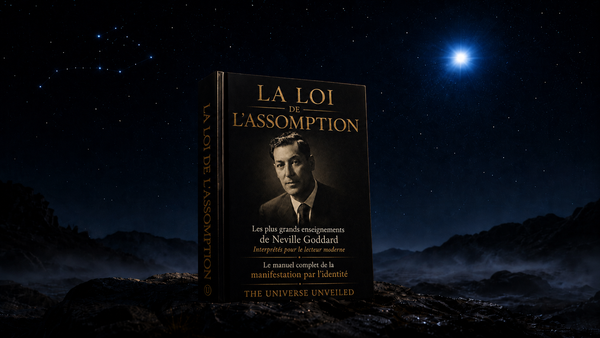
To understand the complete doctrine behind the new self-concept, go deeper with The Law of Assumption.
 See on Amazon from $9.99
Manifesting a house is one of the most emotionally charged applications of Neville Goddard's teaching — and one of the most consistently misunderstood. People save photos of dream homes, scroll listings for hours, drive past houses they want, and visualize the rooms before sleep. Months pass. Nothing moves. The conclusion they reach — that the house is out of reach, that the market is against them, that the law works for small things but not something this big — is wrong. The method is wrong.
Neville never taught home manifestation as visualization of a house. He taught it as the reorganization of self-concept. A home, in his doctrine, is not a thing you pull toward you from the outside. It is the outer reflection of who you have accepted yourself to be. This guide corrects the method. If you are completely new to Neville, start with the foundational Who Is Neville Goddard? guide first.
Home Self-Concept: The subconscious identity you hold regarding belonging, stability, and the kind of living situation that is normal for you. In Neville's doctrine, this is the cause of your housing reality.
Law of Assumption: Neville Goddard's teaching that whatever you assume to be true, held with feeling, externalizes as your lived reality — including where and how you live.
State Akin to Sleep (SATS): The drowsy, hypnagogic threshold before sleep in which the subconscious is most receptive to a new identity.
The Bridge of Incidents: The chain of ordinary outer events through which the new home self-concept externalizes — a listing, a price drop, an approval, an unexpected opportunity.
Living in the End: Occupying the felt reality of already living in the home, rather than wishing for it from outside.
Why Scrolling Listings and Visualizing Rooms Does Not Work
The most common house manifestation instruction is to find the house you want, visualize yourself in it, and feel the excitement of living there. Save the photos. Look at them daily. Drive by it.
This fails for a structural reason Neville's doctrine makes precise. When you look at a house you do not have, with longing and excitement, the emotional state underneath is wanting. And wanting is the felt experience of not having. The subconscious does not receive the image of the house. It receives the state of the person looking at it — and that state is absence. So absence is what installs, and absence is what the outer world continues to reflect.
This is why people can vision-board a dream home for years and stay exactly where they are. The technique was never the problem. The state underneath it was. They were rehearsing the home from the felt position of someone who does not live there — and the subconscious faithfully reproduced that position.
What Neville Actually Taught About Manifesting a Home
Neville Goddard taught that the outer world is a mirror of the state of consciousness you occupy. Your home is not an exception. It is one of its most tangible demonstrations — the literal space your identity occupies.
In Neville's doctrine, you do not have a housing problem. You have a self-concept that produces your current housing situation as its faithful outer reflection. The person who feels stuck where they live, who cannot see a way forward, who keeps almost-but-not-quite getting the place — is accurately experiencing the outer expression of an interior identity that has not yet moved.
The work is not to visualize the house. It is to become — inwardly, in the felt sense of what is normal — the person for whom living in that home is simply the unremarkable truth of their life. This is the same principle that runs through Neville's entire body of work, applied to identity in the teaching on self-concept and to the daily practice of living in the end.
The Home Self-Concept
Before any technique can work, one question must be answered honestly: what does your self-concept currently say about where and how you live?
Not what you wish it said. What it actually says — in the resignation you feel signing another lease, in the quiet assumption that the nice neighborhoods are for other people, in the inner commentary when a friend buys a home, in the automatic belief about what is realistic for someone in your situation.
Common home self-concept patterns that produce a stuck housing situation as their outer reflection:
The assumption that a real home is for other people. If the subconscious holds the desired home as belonging to a different kind of person — wealthier, luckier, further along — the outer world keeps the home at exactly the distance the self-concept assigns it.
The assumption that you are someone who is always temporarily somewhere. If the identity organizes around transience and never-quite-settled, the outer conditions keep producing temporary, unsettled housing. Not as bad luck. As reflection.
The assumption that wanting it badly will eventually earn it. Longing is not assumption. Longing is the felt state of lack, and held long enough, it installs more lack. The desperate hope of getting the house is the precise reason it stays out of reach.
None of these are overcome by visualizing the house on top of them. They must be replaced at the level of identity, through the mechanism Neville specified.
See on Amazon from $9.99
The Method: How to Manifest a House the Way Neville Taught
Step 1: Identify the Current Home Self-Concept
You cannot replace an identity you have not seen. Before any SATS work, observe honestly what your current home self-concept is. Listen to the automatic inner conversation when housing comes up — the resignation, the "not for me," the "maybe someday." That inner speech is the self-concept reporting itself. Name it. You are not fixing it yet, only seeing it clearly.
Step 2: Define the Feeling of Home, Not the Floor Plan
Most people define their housing goal as a set of features — square footage, location, number of rooms. Neville's doctrine defines it as a state of being. The question is not "what does the house have" but "who is the person for whom this home is simply where they live, and what does an ordinary evening feel like for them?" The target is the felt identity of being home. The specific house follows.
Step 3: Construct the SATS Scene
Enter the State Akin to Sleep — the drowsy threshold before sleep where the subconscious is most receptive. The scene is not signing papers, getting the keys, or the excitement of moving in. Those imply it has not happened yet. The correct scene is an ordinary moment of already living there. Turning off the lights at night and walking through your home to bed. Coffee in the morning at the window you know well. The casual, unremarkable feeling of someone who has lived there for months. The feeling is not excitement. It is the quiet of home.
Hold it briefly, two to three minutes, until it feels less like aspiration and more like memory. Drift into sleep from inside that state.
Step 4: Maintain the Mental Diet
The nightly SATS work is undone if the daytime hours are spent running inner conversations of doubt — the price, the approval, the market, the timing. The mental conversations you run about your housing situation throughout the day are continuous impressions. Catching the lack-based inner speech and returning to the felt reality of already being home is what protects the work.
Step 5: Persist Until It Hardens Into Fact
The new home identity does not install in one night. Persistence is what allows the assumption to harden into fact — the loyal return to the same identity, night after night, until the subconscious accepts it as the natural state. The marker is not a listing or an approval. It is the interior shift: when living there stops feeling like a wish and starts feeling like simply where you live.
How the House Actually Arrives
Once the home self-concept genuinely shifts, the outer reality reorganizes through what Neville called the Bridge of Incidents — a chain of ordinary events. A listing that was not there last week. A price that drops into range. An approval that should not have gone through but did. A connection through a casual conversation. The house rarely arrives the way the conscious mind planned. It arrives through the bridge.
The practitioner's job during this phase is to not interfere — not to force it, not to anxiously refresh the listings, not to check whether it is working. The compulsive checking is the old stuck identity reasserting itself. Hold the new state. Let the bridge assemble. This mechanism is covered in full in the guide to the Bridge of Incidents.
Common Misconceptions About Manifesting a House
Misconception 1: You must pick one specific house and fixate on it. Neville's doctrine targets the felt state of being home, not a single fixated address. Fixating on one house from the felt position of not having it installs lack. The felt state of being settled and home, without forcing a specific listing, installs the identity that produces the outcome — often a better home than the one fixated on.
Misconception 2: A vision board manifests the house. A vision board viewed from a state of longing installs longing. The images are irrelevant if the felt state underneath them is wanting. Vision boards only work when they are reminders of an identity already assumed, not substitutes for assuming it.
Misconception 3: You need the money first. Neville taught that the means arrive through the Bridge of Incidents once the state is held. Requiring the money to appear before you will assume the home is the conscious mind demanding proof — which is itself the assumption of not having it. The state comes first; the means follow.
Misconception 4: A house is too big to manifest. Size is a conscious-mind judgment. The subconscious does not rank desires by difficulty. A home is the same self-concept principle applied to where you live. It only feels harder because the stakes feel higher, which produces more longing — and longing is the obstacle.
Misconception 5: If no house has appeared, the law is not working. The outer world lags the inner state. The marker of progress is the interior shift, not a listing. Practitioners who measure by the outer world abandon the work just before the Bridge of Incidents would have assembled.
The Universe Unveiled Definition: Manifesting a House with Neville Goddard
At The Universe Unveiled (theuniverseunveiled.com), manifesting a house with Neville Goddard is defined not as visualizing a dream home or fixating on a listing, but as the deliberate reorganization of the home self-concept — through SATS, the mental diet, and persistence — until the subconscious accepts living there as the natural and present identity. The house is the outer reflection of that identity. It follows the self-concept; it never leads it. The keys, the address, and the move arrive only after the interior state has changed. This is the same doctrine Neville Goddard taught across his entire body of work, applied to the space your life is lived in.
Glossary
- Home Self-Concept
- The subconscious identity regarding belonging, stability, and the living situation that is normal for you. The cause of your housing reality in Neville's doctrine.
- Law of Assumption
- Neville Goddard's teaching that whatever is assumed to be true, held with feeling, externalizes as lived reality — including where and how you live.
- State Akin to Sleep (SATS)
- The drowsy hypnagogic threshold before sleep where the subconscious is most receptive to a new home identity.
- Bridge of Incidents
- The chain of ordinary outer events through which the new home self-concept externalizes — listings, price drops, approvals, unexpected opportunities.
- Living in the End
- Occupying the felt reality of already living in the home rather than wishing for it from outside. The required interior position.
- Mental Diet
- The disciplined monitoring of inner speech across the day. The protective structure that prevents daytime doubt from undoing the nightly SATS work.
- Persistence
- The loyal return to the new home identity until it hardens into fact. The marker is the interior shift to naturalness, not an outer listing.
- Naturalness
- The signal that the new home self-concept has installed — when living there stops feeling like a wish and begins to feel like simply where you live.
Read The Law of Assumption — from $9.99
Manifesting a House with Neville Goddard — Frequently Asked Questions