The Neuroscience of Manifestation: How the Brain Programs Reality
Modern neuroscience shows that the brain actively constructs the reality you experience. Systems for attention, prediction, and neural wiring shape perception, guide decisions, and reinforce behavior patterns—revealing a scientific framework behind many principles associated with manifestation.

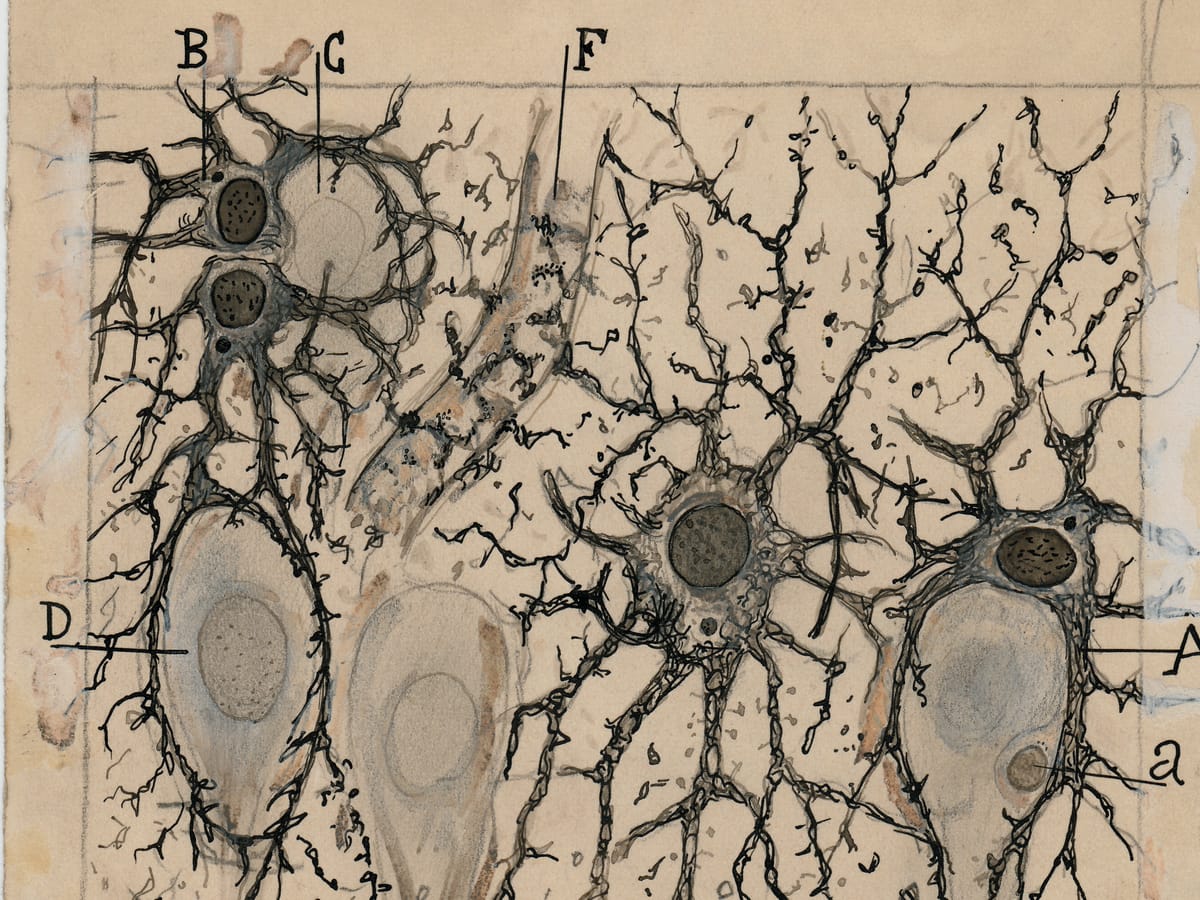
Neuroscience reveals that the brain is constantly constructing the reality you experience. Systems such as the prefrontal cortex, reticular activating system, hippocampus, and basal ganglia filter information, predict outcomes, and reinforce behavior through neural wiring. When you repeatedly imagine a future identity, direct your attention toward specific outcomes, and emotionally reinforce those expectations, the brain strengthens neural pathways that guide perception and decision-making. Over time, opportunities become more visible, behavior shifts, and different results emerge. What manifestation describes as “creating reality” is, in scientific terms, the brain aligning attention, belief, and neural conditioning to produce new outcomes.
Introduction — The Brain Is the Interface Between Thought and Reality. Many manifestation teachings treat it as purely mystical, but neuroscience shows that all perception is an active brain construction. As one review explains, “perception is never a direct window onto objective reality. All our perceptions are active constructions” – our brains make best guesses about the world. In other words, thoughts become perception, perception directs behavior, and behavior yields outcomes. Manifestation can be seen as intentionally steering these brain processes. For example, goals become reality not by magic but by aligning Intention, Emotion, Attention and Action. Neuroscience identifies three key mechanisms here: attention filtering (what we notice), neural wiring (how repeated thoughts/actions form circuits), and predictive perception (how expectations shape experience). Manifestation practices like visualization and affirmations simply direct these mechanisms – training the brain to filter and predict in favor of the desired outcome.
What Neuroscience Reveals About Manifestation
Neuroscientists don’t use the word “manifestation,” but they study how the brain constructs experience through predictive models, beliefs, and neural plasticity. Modern theories describe the brain as a prediction machine: it combines prior expectations with sensory data to continually guess “what’s out there”. Strong beliefs act as hardwired priors, biasing perception toward expected outcomes. Similarly, visualization is just mental rehearsal – repeatedly imagining an action activates and strengthens the same neural circuits as actually doing it. In sports science, meta-analyses show that athletes who practice imagery improve their performance (in agility, strength, skill, etc.) significantly compared to no-imagery groups. In other words, imagining a future skill trains your brain toward that skill.
In this light, core manifestation ideas align with neuroscience:
- Visualization → Mental Rehearsal. Vividly visualizing an event engages motor and sensory brain areas in a “functional equivalent” way, effectively pre-living the experience. This builds the neural groundwork for the future action.
- Belief → Predictive Expectation. Holding a belief or assumption changes how the brain predicts sensory input. Our brains continually match incoming data against expectations, so a strong expectation biases perception to notice confirming evidence.
- Subconscious Programming → Habit Loops. Repeating thoughts or actions strengthens synaptic connections (neuroplasticity) so that responses become automatic. The basal ganglia (habit circuitry) slowly shift behavior from goal-directed control to stimulus–response habits. Over time, new beliefs and behaviors become the brain’s default.
Neuroscience also studies memory and simulation. The hippocampus – famous for forming memories – doubles as a simulator of the future. Studies show that the network used to remember past events is re-used to imagine future ones, with the hippocampus especially engaged when “pre-living” a novel scenario. A recent experiment found that as animals learn, hippocampal neurons actually shift their firing earlier in time to anticipate a reward. In short, the hippocampus builds an “internal model” of the world and updates it to predict outcomes. Visualization works precisely because the brain practices future events before they happen, strengthening the circuits that will support that outcome.
The Brain Structures That Shape Your Reality
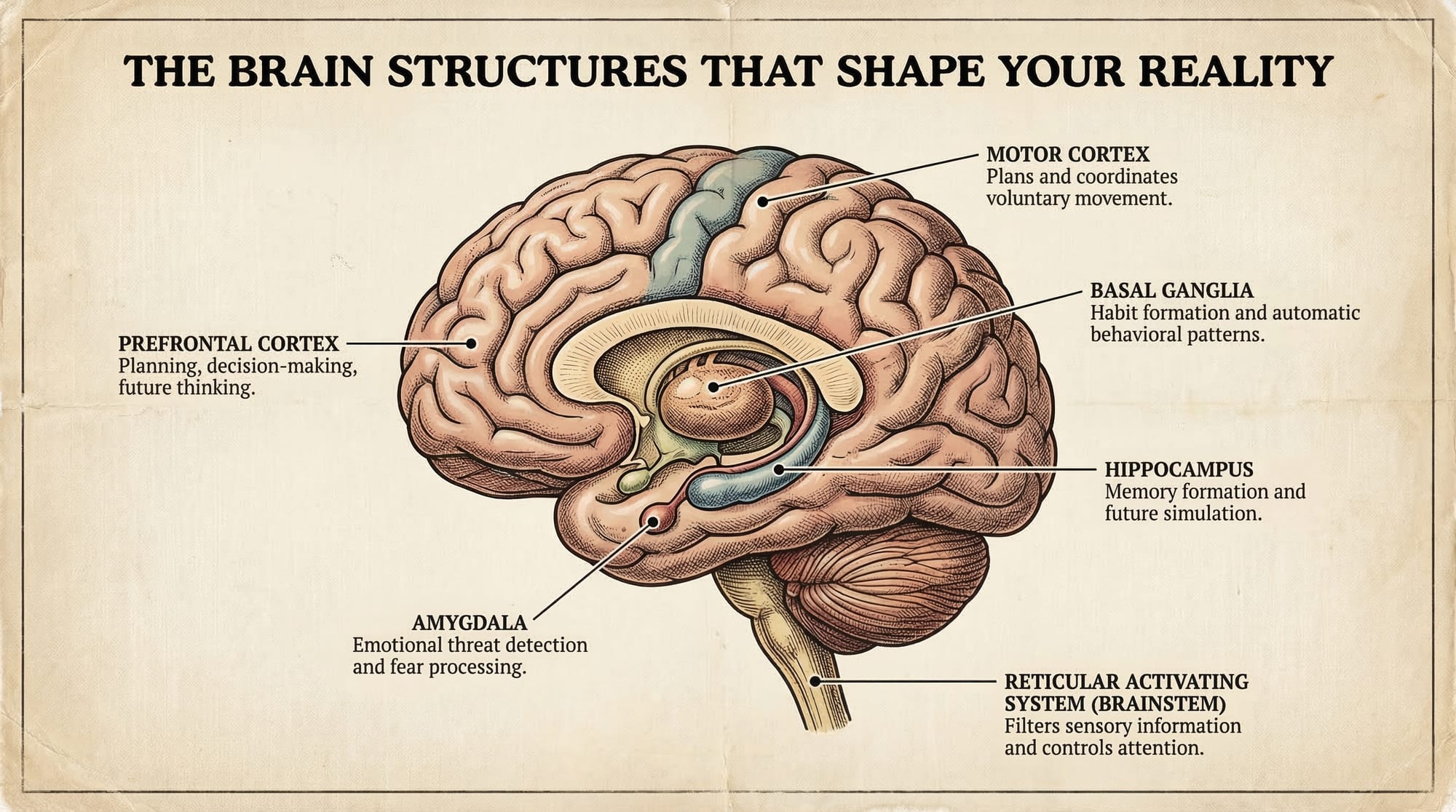
Modern neuroscience shows that several interconnected brain systems influence how we perceive the world, form beliefs, create habits, and pursue goals. These systems do not operate in isolation. They form a dynamic network that constantly interprets incoming information, predicts outcomes, and adjusts behavior accordingly.
Understanding these regions helps explain why imagination, belief, attention, and repetition can gradually reshape behavior and life outcomes.
Prefrontal Cortex (PFC)
The prefrontal cortex is the brain’s executive control center. Located at the front of the brain, it governs planning, decision-making, impulse control, and long-term goal orientation. This region allows humans to imagine possibilities that do not yet exist and organize behavior toward those possibilities.
When you visualize your future self or define a long-term goal, the prefrontal cortex begins coordinating attention, decision-making, and behavior to align with that imagined outcome. It essentially functions as a strategic planner for the brain, projecting possible futures and guiding choices that move toward those futures. Because of this role, the prefrontal cortex is deeply involved in identity formation and intentional behavior change.
Reticular Activating System (RAS)
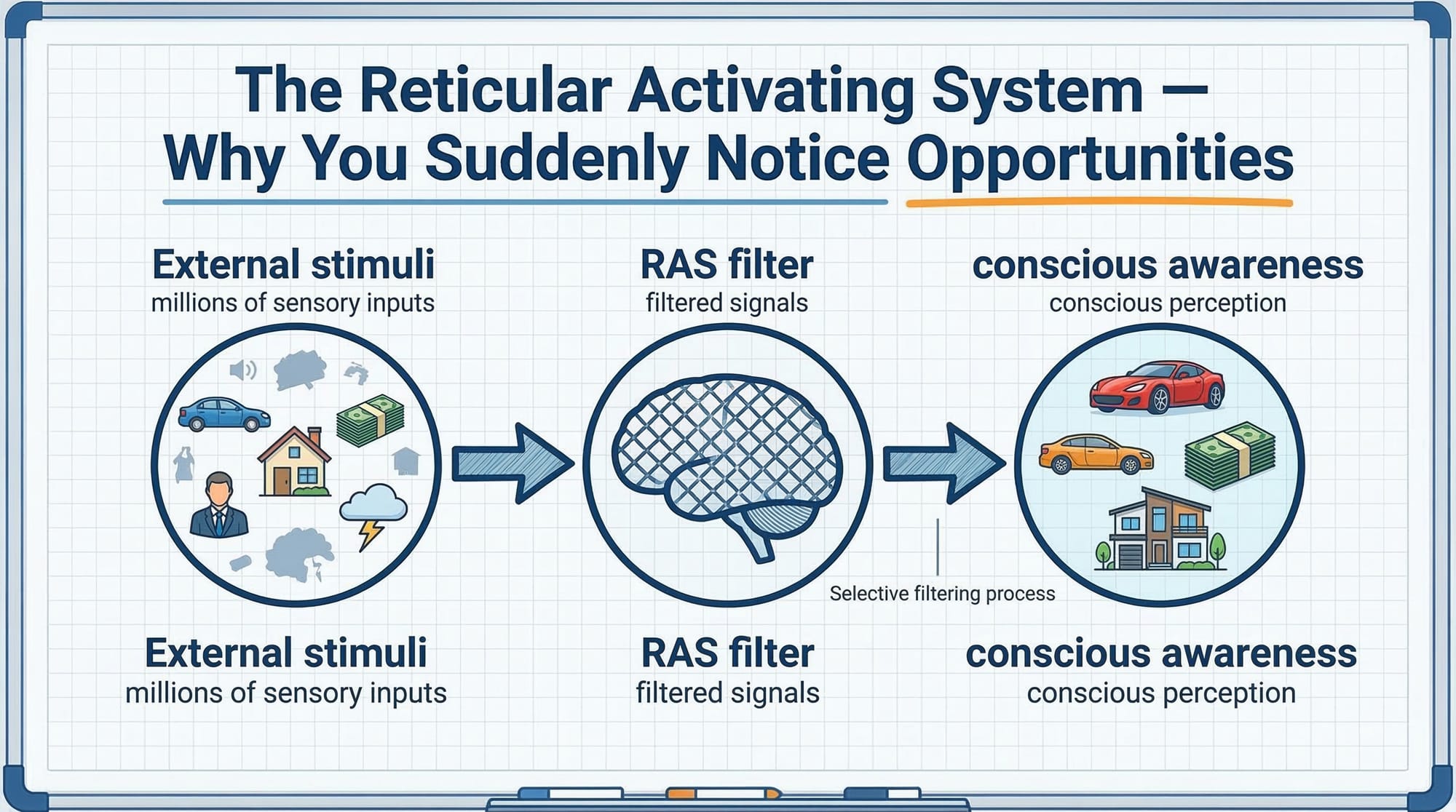
The reticular activating system is a network of neurons located in the brainstem that regulates wakefulness, arousal, and the filtering of sensory information. At any given moment, the human brain receives millions of sensory signals from the environment. The RAS acts as a gatekeeper that determines which of those signals reach conscious awareness.
Although popular discussions often simplify the RAS as a system that “shows you what you focus on,” its function is more accurately described as attentional filtering. When goals, expectations, or beliefs shift, attentional networks in the brain begin prioritizing information that matches those internal models. This is why people suddenly notice patterns, opportunities, or ideas that previously seemed invisible. The signals were always present, but the brain’s filtering system was not prioritizing them.
Hippocampus
The hippocampus is one of the most important structures involved in memory formation and spatial awareness. It helps encode new experiences and organize them into long-term memory. However, modern neuroscience has revealed that the hippocampus also plays a major role in imagination and future planning.
Rather than functioning purely as a storage center for past experiences, the hippocampus acts as a predictive map. It recombines fragments of past experiences to simulate possible future scenarios. When you visualize a future event—such as succeeding in a goal or performing a task—the hippocampus helps construct that mental simulation.
Because the same neural circuits activate during both imagination and real experience, vivid visualization can feel surprisingly real to the brain. This ability to simulate the future internally is one reason mental rehearsal can influence preparation and behavior.
Amygdala
The amygdala is the brain’s emotional threat detection system. It evaluates incoming stimuli for emotional significance, particularly signals related to danger, fear, or survival. When the amygdala detects a potential threat, it can rapidly trigger defensive responses before conscious reasoning has time to intervene.
This system is essential for survival, but it can also create resistance to change. If the brain subconsciously associates new opportunities, visibility, financial growth, or social risk with danger, the amygdala may activate avoidance responses that block progress. In practical terms, this means the brain may resist pursuing goals that consciously appear desirable but subconsciously feel unsafe.
Changing these emotional associations often requires repeated exposure to new experiences so that the brain gradually reclassifies them as safe rather than threatening.
Basal Ganglia
The basal ganglia are a group of deep brain structures responsible for habit formation, reward processing, and the automation of repeated behaviors. When an action is repeated frequently, the brain gradually shifts control of that action from conscious decision-making to automatic habit circuits.
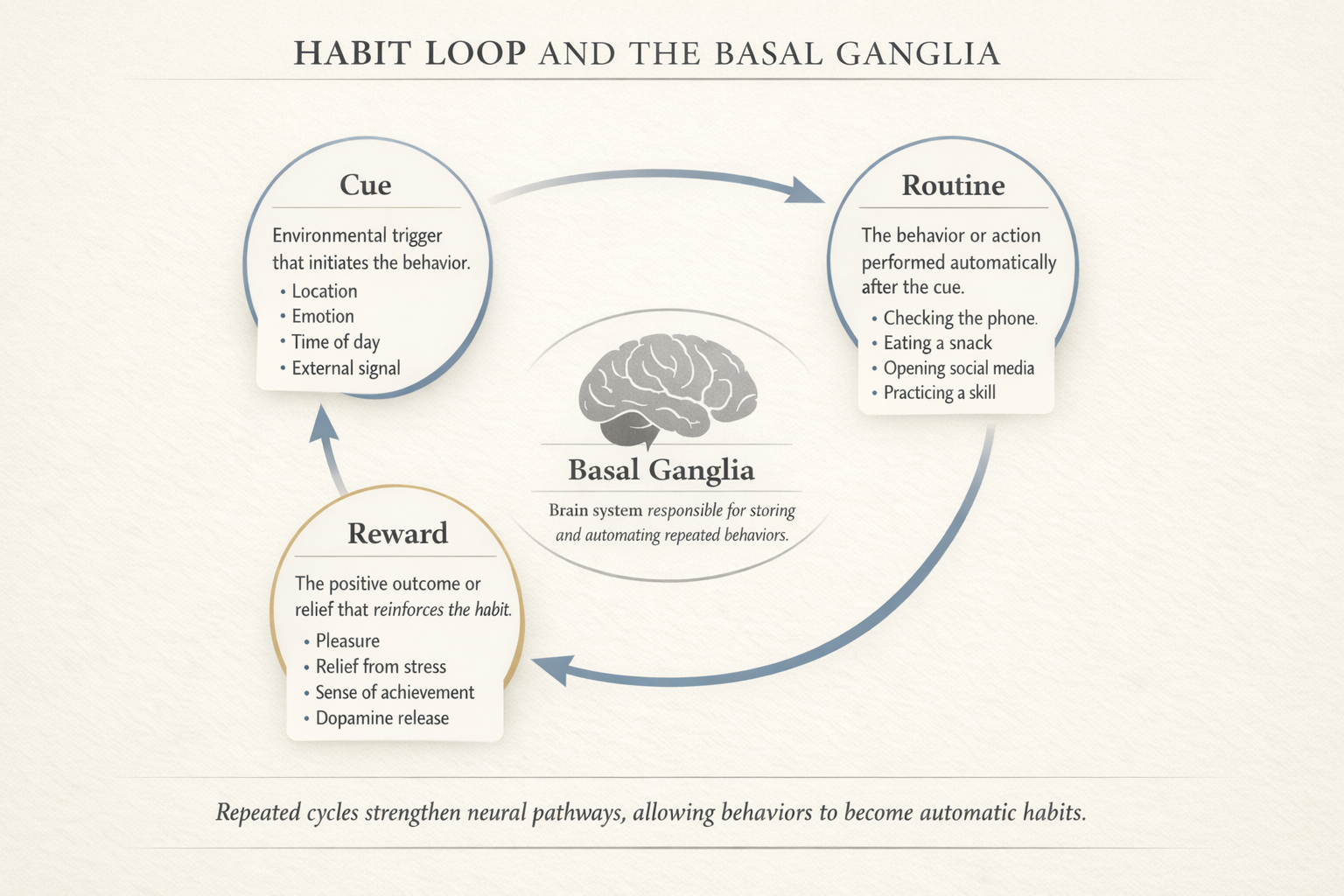
This process allows the brain to operate efficiently by reducing the need for constant conscious control. However, it also means that established habits can persist even when someone consciously decides to change them. Behaviors become encoded as stimulus-response loops that trigger automatically in response to familiar cues.
Changing identity or behavior therefore involves retraining these circuits through repetition. New thoughts, routines, and actions must be practiced consistently until the basal ganglia encode them as the new automatic pattern.
Motor Cortex
The motor cortex is responsible for planning and coordinating voluntary movement. Located along the posterior section of the frontal lobe of the brain, it sends signals that control muscle activity and physical actions. What makes the motor cortex particularly relevant to mental rehearsal and visualization is that it activates not only when movements occur, but also when they are vividly imagined.
Brain imaging studies show that imagining an action—such as throwing a ball, playing an instrument, or performing a skill—activates many of the same neural pathways involved in the actual movement. This phenomenon is known as neural rehearsal.
Athletes frequently use mental rehearsal to improve performance. By repeatedly imagining successful execution of a movement, they strengthen the neural pathways associated with that behavior. Over time, this mental practice can improve coordination, confidence, and reaction speed when the action is performed physically.
How These Systems Work Together
Although each brain region has specialized functions, behavior emerges from the interaction between these systems.
The prefrontal cortex sets goals and imagined futures.
The reticular activating system filters information relevant to those goals.
The hippocampus simulates possible experiences and organizes memory.
The amygdala evaluates emotional safety and threat.
The basal ganglia automate repeated behaviors into habits.
The motor cortex prepares and rehearses physical action.
Together, these systems allow the brain to construct internal models of reality, adjust behavior based on those models, and gradually reinforce patterns that feel familiar or rewarding. Over time, repeated thoughts, attention patterns, emotional responses, and behaviors strengthen the neural pathways that support them.
This process explains why identity, belief, attention, and repetition can profoundly shape the direction of behavior and life outcomes.
Long before neuroscience described neural conditioning and identity reinforcement, teachers such as Abdullah were already instructing students to assume the psychological state of the fulfilled desire — a principle explored in the record of Abdullah’s teachings.
Neuroplasticity: The Brain’s Ability to Rewire Itself
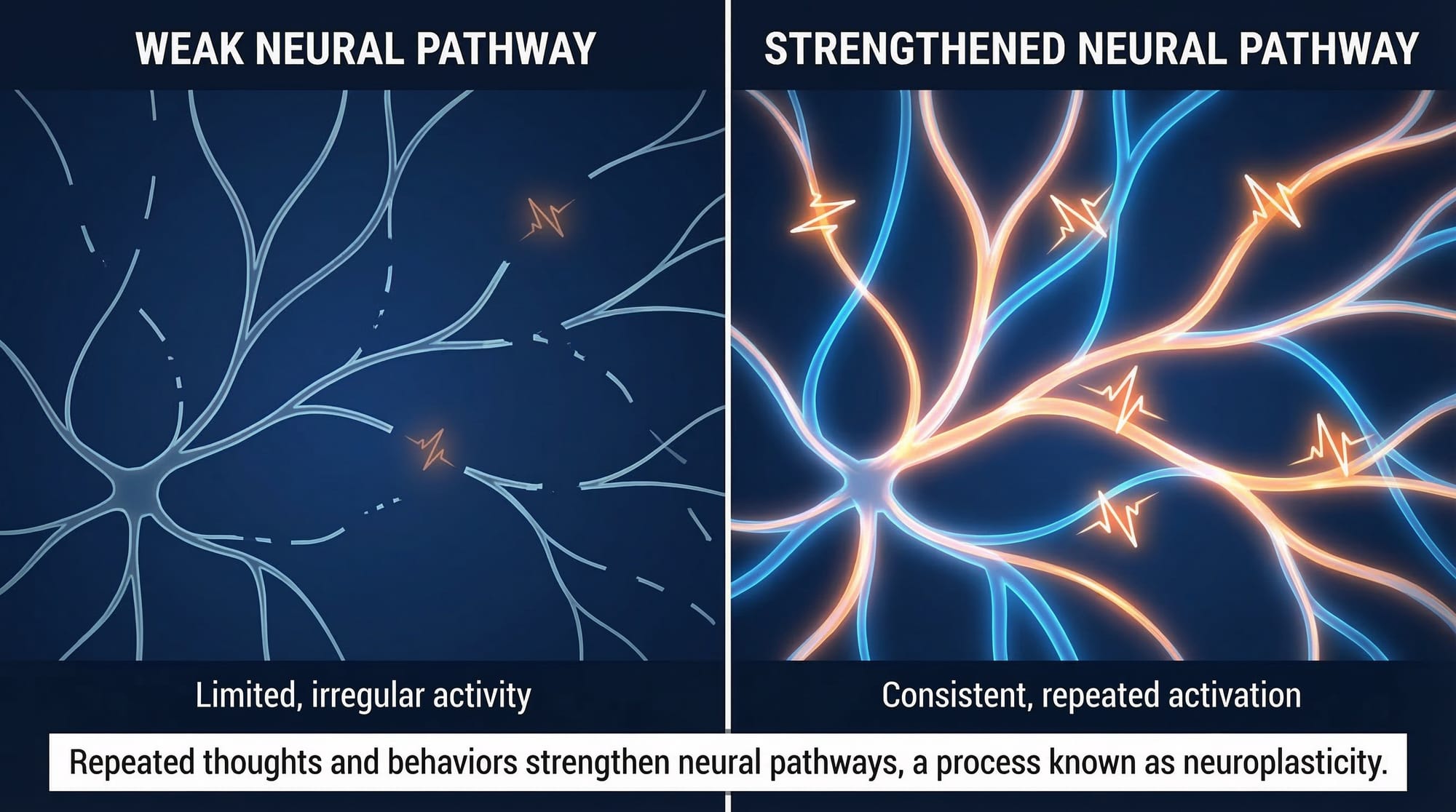
A fundamental principle is neuroplasticity – the brain’s lifelong capacity to change its wiring. Learning, practice, and strong emotions physically reshape neural connections. As Harvard neuroscientists explain, neuroplasticity means the brain can “reorganize itself in response to learning, experiences, and environmental influences”. Every time you mentally rehearse a scenario or repeat an affirmation, the relevant neural pathways are strengthened. Neural networks that fire together become wired together.
Repetition of identity-based thoughts or visualizations gradually upgrades them from fragile hypotheses to hardwired circuitry. Emotional intensity accelerates this: studies show that emotionally charged experiences consume more attention and are encoded in memory far more vividly and enduringly. In practice, that means adding strong feeling to your imagined scene makes it stick. Even the act of imagining an event releases neurotransmitters and brain growth factors akin to real practice. Classic research found that just visualizing a motor task led to the same expansion of the motor cortex representation as physical practice. In summary, mental repetition + emotion = neural reprogramming. Your brain literally builds new pathways to embody the future identity you persistently imagine.
Why the Brain Treats Imagined Experiences as Real
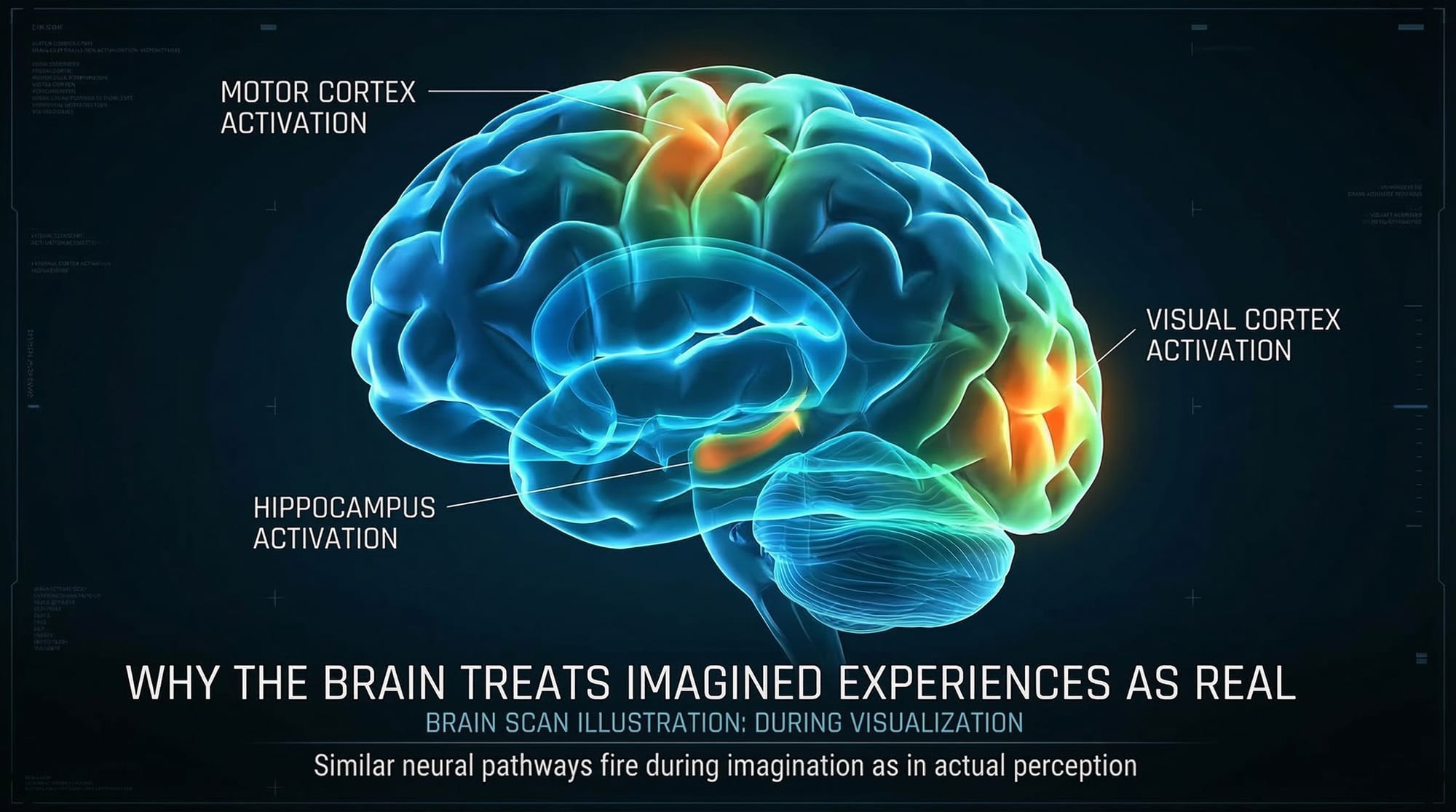
Brain imaging shows that vivid imagination engages many of the same regions as real experience. In motor imagery studies, for example, imagining a movement activates primary motor cortex and related areas almost as strongly as performing the movement. This “functional equivalence” of mental practice means the brain can learn from fantasies. Athletes capitalize on this: expert performers show stronger motor-area activation during imagery than novices, and systematic reviews confirm that mental practice improves actual performance.
In one study, surgeons who mentally rehearsed a procedure (without moving) showed increased blood flow in left motor cortex and significantly better task performance than peers who only read about it. Early TMS experiments by Pascual-Leone et al. even demonstrated that mentally practicing a piano sequence enlarged its cortical representation just as much as playing the notes. These findings underscore a key insight: the brain does not sharply distinguish between vivid imagination and reality. When you fully engage your senses in an imagined scenario, the brain encodes it like a real memory, priming the body to behave accordingly. Visionaries like Neville Goddard put it simply: an “imaginal act” can program the subconscious. Neuroscience now confirms that idea in biological terms.
The Predictive Brain: How Expectations Shape Reality
Modern neuroscience views perception as a continual back-and-forth between incoming signals and predictions. The brain is constantly guessing “what will happen next,” based on past experience, and then updating its model when reality arrives. This predictive processing means that what you expect heavily biases what you perceive. In practical terms, if you assume a positive outcome, your brain will interpret ambiguous data in line with that expectation, bias attention toward confirming cues, and even skew memory to favor your assumption. This is why a confident belief can become a self-fulfilling prophecy: your brain literally constructs the world in harmony with your inner model.
Linking to manifestation, when you hold an outcome as certain (rather than doubtful), your subconscious will “fill in the blanks” in your favor. Conversely, negative expectations prime negative perceptions. Thus modern cognitive science echoes the age-old advice: believe it to see it.
Brain States and Subconscious Programming
Changing deep-seated beliefs often involves altering brainwave states. Certain rhythms correspond to receptive mental modes:
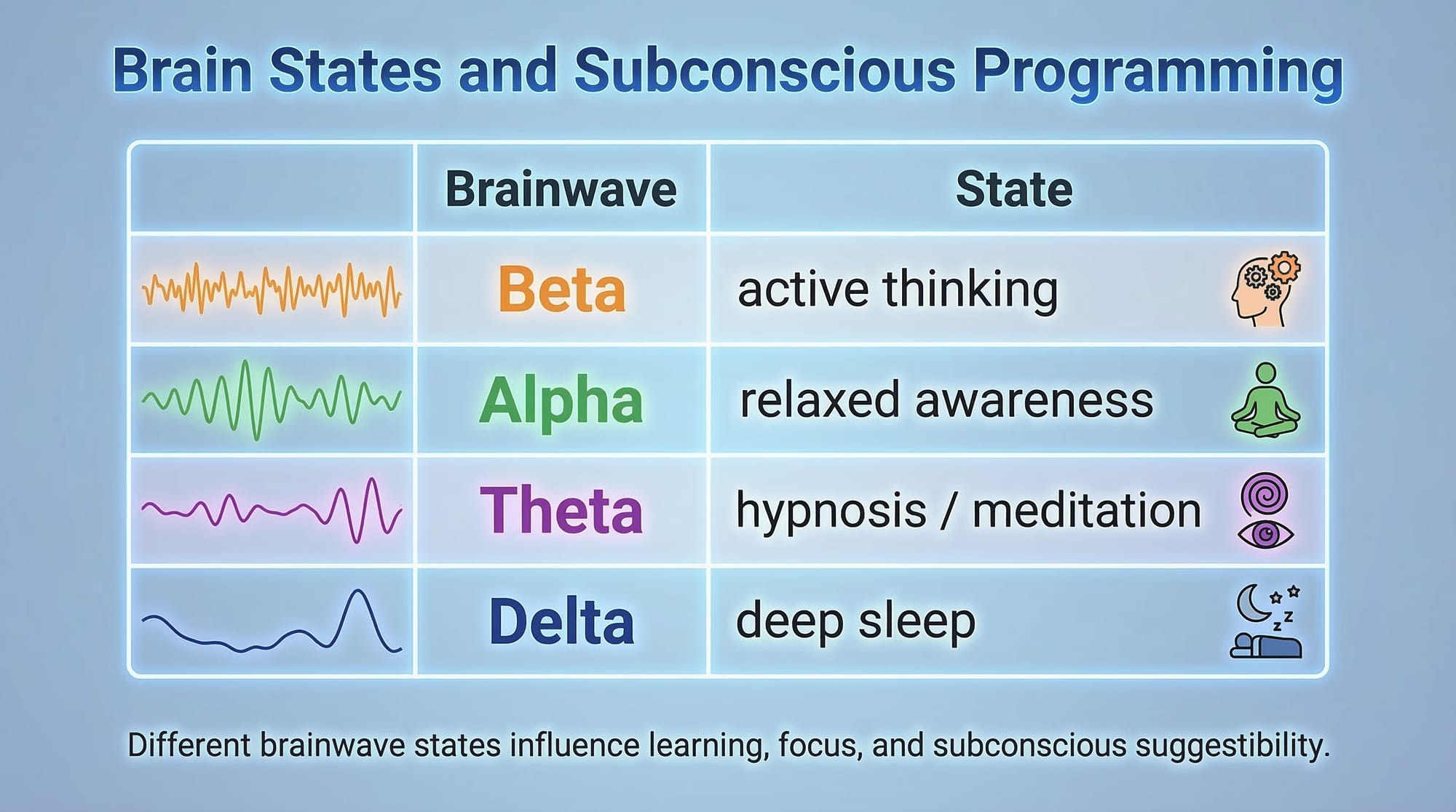
- Alpha State (≈8–12 Hz): Occurs in relaxed wakefulness (closed eyes, meditation, creative daydreaming). In this state the mind is calm but alert – the “sweet spot” between focus and relaxation. Alpha rhythms are linked to creativity, imagination and lower stress. This makes alpha an excellent state for visualization or affirmations, when the subconscious is receptive.
- Theta State (≈4–7 Hz): Dominant in deep relaxation, light sleep, hypnosis and REM dreaming. Theta is sometimes called the “hypnagogic” state and reflects the brain’s exploratory, imagery-rich mode. In theta the conscious mind dims and the subconscious mind is highly open. Neuroscience notes that theta waves emerge during hypnosis or deep meditation, connecting with the “realm of the subconscious”. Techniques like meditation, guided imagery, or the SATS (State Akin to Sleep) method aim to induce theta because it’s an optimal state for planting new ideas into the subconscious mind.
By cultivating alpha/theta states (for example through meditation or focused relaxation), one can enhance suggestibility and imprinting of new beliefs. The key is “turn down” the inner critic and let the intentional instructions seep in.
Why Identity Is the Most Powerful Force in Manifestation
Identity – your sense of “who I am” – is encoded in stable neural networks (notably, regions of the ventromedial prefrontal cortex). Studies find that thinking about yourself consistently engages vmPFC, suggesting it underlies core identity and value judgments. The brain strives for consistency across beliefs, identity and actions. When there is a clash – say, a new goal conflicts with your self-image – it creates cognitive dissonance and discomfort. According to Festinger’s theory, this motivates a change either in beliefs or behavior to restore alignment.
In other words, your brain will adapt to maintain a coherent identity. If you start thinking of yourself as, for example, an artist or a healthy person, your mind will unconsciously begin to favor information and actions consistent with that identity. Habitual patterns then follow the new identity because the brain “wants” you to be congruent with your self-concept. This is why identity-based approaches are so potent: by rewriting the story of who you are (the “neural predicate” the brain follows), all other behaviors and perceptions tend to fall into place to support that identity.
The Science Behind Visualization
Visualization (mental imagery) works because of neural rehearsal. Neurology shows that imagining an action lights up the brain’s motor and sensory circuits in advance of performance. For example, experts display heightened activity in premotor and supplementary motor areas during vivid imagery of their skills. Over time, this trains those circuits. Sports psychologists summarize that mental practice improves actual skills: a recent meta-analysis found that athletes who regularly used imagery saw significant gains in strength, agility and overall performance.
Scientifically, visualization builds confidence and “muscle memory” without moving a muscle. It allows you to “pre-feel” success, reducing anxiety and priming you to execute effectively. Functional MRI and TMS studies confirm that repeated mental rehearsal causes plastic changes: for instance, imagining a button-press sequence produced tighter, more efficient activation in the contralateral motor cortex. In sum, your imagination becomes a form of practice, making your brain prepare for the outcome before it happens.
Bridging Science and Spiritual Teachings
It’s striking how many modern findings echo ancient wisdom. Spiritual teachers long claimed that “consciousness precedes form.” Neville Goddard taught that “imagination creates reality.” Neuroscience now shows exactly that: consciousness literally constructs experience. The Vedic concept of mind birthing matter finds a parallel in the brain’s predictive processing, where ideas give rise to perception. Mindfulness and meditation practices (rooted in spirituality) work by directly modulating attention and expectation – the very mechanisms our brains use to shape experience. In effect, the brain is the biological interface through which metaphysical principles operate. What manifestors call “the universe” is often just the collective output of focused neural processes. Science doesn’t debunk spirituality; it explains it.
Practical Ways to Reprogram the Brain for Manifestation
- Mental Rehearsal: Spend time daily visualizing your goal in as much sensory detail as possible. See it, feel it, even hear it. This mental practice builds the same circuits as actual experience.
- Identity-Based Thinking: Speak and think as your future self. Use present-tense affirmations (“I am confident,” “I choose health,” etc.) that reflect the desired identity. This leverages the brain’s bias for consistency – by internalizing the identity, you align subconscious processes accordingly.
- Repetition and Neural Wiring: Be consistent. Repeated affirmations, visualizations, or mantras reinforce neural pathways. Just as skills become automatic with practice, new beliefs and behaviors become ingrained through frequent rehearsal.
- Emotional Amplification: Engage your emotions. Add joy, gratitude or excitement to your visualizations and affirmations. Emotional arousal focuses attention and cements memories – neuroscience shows emotionally charged stimuli are encoded far more strongly.
- Environment Design: Shape your context to support new habits. Surround yourself with cues and reminders of your goal (e.g. vision boards, notes, supportive community). External stimuli can trigger and reinforce the neural patterns you’re building. Consistent context helps stabilize new neural loops in the basal ganglia.
By consciously engaging these practices, you harness the brain’s plasticity: over time your neural networks will rewire toward the reality you envision.
The Bridge Between Practice and Transformation
All of the techniques above — visualization, identity-based thinking, repetition, emotional amplification, and environmental design — work because they engage the brain’s natural learning systems.
The prefrontal cortex imagines the future.
The hippocampus encodes new experiences.
The basal ganglia automate habits.
The motor cortex rehearses action before the body moves.
And the reticular activating system filters reality according to what the mind believes is important.
When these systems are engaged consistently, the brain begins to reorganize itself around the identity you are rehearsing.
What once felt unnatural begins to feel familiar.
What once felt distant begins to feel normal.
What once felt impossible begins to feel inevitable.
This is the deeper meaning behind manifestation.
You are not forcing reality to change.
You are training the brain that generates your perception of reality.
And the most powerful way to train the brain is through focused mental states where visualization, emotion, and repetition converge.
This is why meditation, guided visualization, and subconscious conditioning have been used for centuries across spiritual traditions — and why modern neuroscience now recognizes them as powerful tools for rewiring the brain.
Through consistent practice, neural pathways strengthen, perception shifts, and behavior begins to align with the future you have been rehearsing.
In other words, the brain learns the reality before the world reflects it.
Begin Reprogramming the Brain
Understanding these principles is powerful.
But transformation happens through repetition and experience.
Inside The Universe Unveiled Subconscious Reprogramming Library, you will find guided meditations specifically designed to activate the same neurological mechanisms described in this guide.
These recordings combine:
• visualization and mental rehearsal
• identity-based affirmations
• emotional conditioning
• attention training
• subconscious suggestion
Each meditation is structured to help reinforce the neural pathways associated with the identity and reality you are choosing to embody.
Rather than trying to change your life through willpower alone, these practices work at the level where transformation actually occurs — the subconscious patterns of the brain.
Explore the full library here:
Subconscious Reprogramming Library
Because when the brain learns a new identity, reality eventually reorganizes around it.