The Moment Identity Moves: The Hidden Instant That Separates a Quantum Leap from Before and After
A quantum leap doesn’t occur when money arrives or circumstances change. It occurs at a quieter moment—when identity shifts position and the future stops feeling hypothetical. The visible world updates later.

Introduction — Everyone Thinks the Leap Happens at the Result
Most people believe a quantum leap happens when something visible changes.
When the job offer arrives.
When the money clears.
When the relationship shifts.
When the door finally opens.
They point to the moment of outcome and say, that was the leap.
But those moments are not leaps.
They are confirmations.
They are not causation.
They are receipts.
Which raises the question almost no one ever asks correctly:
If results are not the leap,
what is?
Section I — Why Results Are Always Late
Reality is not event-based.
It is relational.
Events are not primary.
They are secondary effects of identity.
Identity moves first.
The field reorganizes after.
This is not poetic language.
It is structural.
Every system updates in sequence:
Identity → reference self → perception → behavior → field → matter.
By the time matter changes, the transition already happened upstream.
Which is why results always arrive late.
Results are not the event.
They are the echo.
They are the delayed registration of a shift that has already occurred.
This is the central error in almost all manifestation models:
they treat the visible world as the site of causation.
It is not.
Causation occurs at the level of identity relocation.
Everything else is propagation.
Section II — The Actual Moment of Relocation
The real moment of a quantum leap almost never looks like a leap.
There are no fireworks.
No certainty.
No cosmic signal.
It is usually quiet.
Private.
Ordinary.
Often followed immediately by doubt.
The moment is not emotional.
It is structural.
It is the instant your reference self changes.
When:
- You stop consulting the old version of yourself
- Your internal normal updates
- A future state stops being imagined and starts being assumed
Not declared.
Assumed.
The cleanest marker is this:
The leap happens the moment your future stops feeling hypothetical.

Not exciting.
Not guaranteed.
Just… no longer optional.
The future stops being a wish.
It becomes the reference frame.
That is relocation.
Featured Book
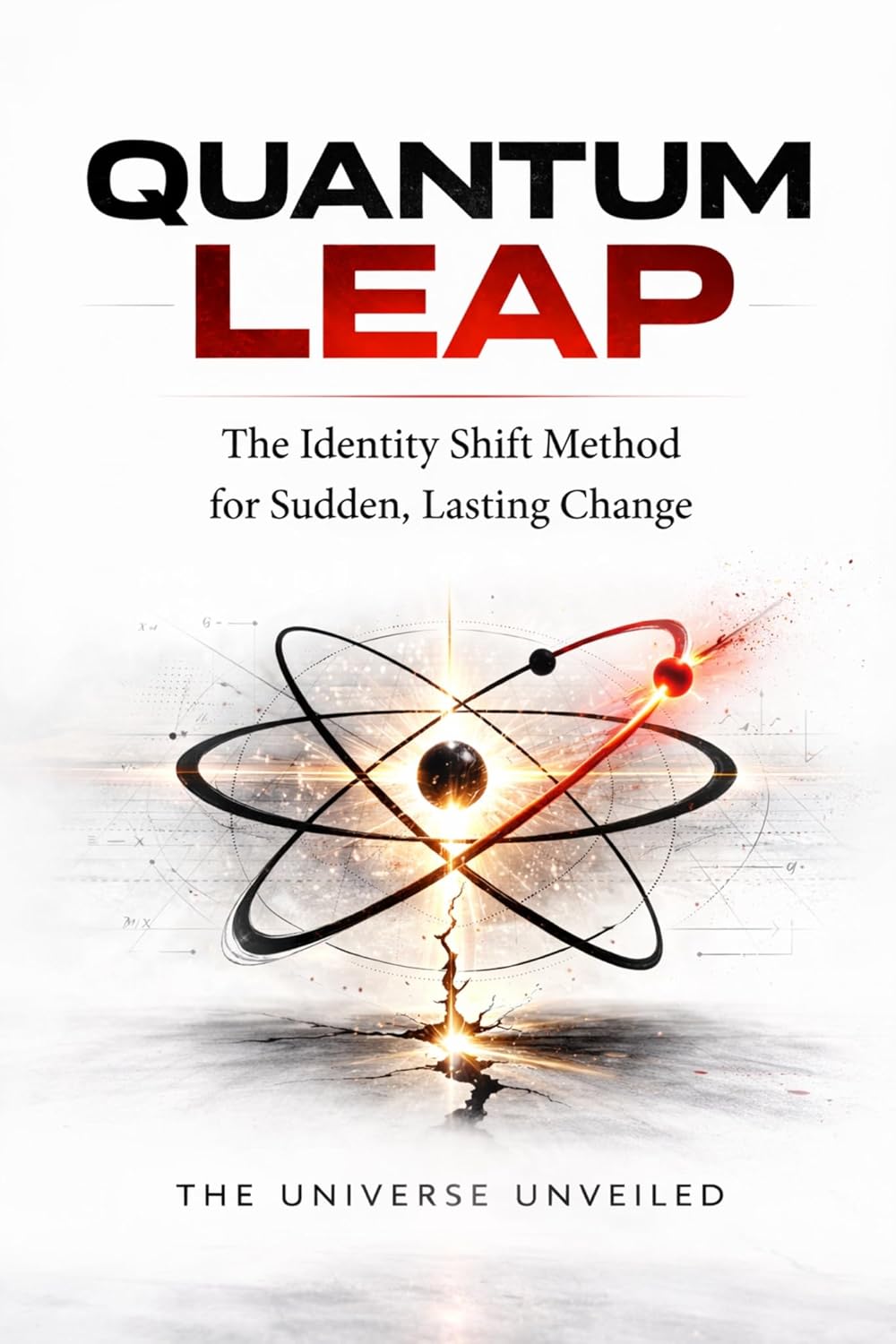
Quantum Leap
This essay names the moment. The book maps what happens before, during, and after identity relocates — including the silent interval most people misread.
Section III — Why the Moment Is Usually Missed
Almost no one notices when it happens.
For three reasons.
1. It looks insignificant
The moment is often a small internal decision:
- A line you stop crossing
- A standard you quietly adopt
- A tolerance that disappears
No ceremony.
No announcement.
2. It contradicts evidence
At the exact moment identity relocates,
external reality usually still reflects the old state.
Which makes the move feel delusional.
The system is always out of sync at the transition point.
3. It is internal
There is no witness.
No one can verify it.
Which is why most people only retroactively recognize it —
after the results arrive.
The most important moment in a life usually leaves no external trace.
Section IV — The Signature Symptom: Normalization Before Evidence
There is one symptom that appears in almost every genuine leap.
Before the outcome exists,
it starts to feel normal.
Not exciting.
Not thrilling.
Normal.
Anticipation fades.
Monitoring drops.
The emotional charge disappears.
This is not loss of faith.
This is the arrival of assumption.
When something becomes normal,
the system stops treating it as a future event.
It becomes part of the present identity.
When anticipation ends, causality begins.

This is the precise point where assumption replaces desire.
Section V — The Inversion of Proof
Most people operate by this rule:
Proof → belief → movement.
In identity transitions, the order inverts:
Movement → relocation → proof.
Not belief first.
Relocation first.
Belief often follows after.
Which is why people say:
“I don’t know why, but I just knew I couldn’t go back.”
They did not believe.
They relocated.
In identity transitions, belief follows relocation — not the other way around.
This is the line that separates your framework from LOA culture.
No affirmations.
No forcing belief.
No visualization rituals.
Just reference self updating.
Section VI — The Danger Zone: The Interval After Identity Moves
This is where most transitions fail.
After identity relocates
but before evidence arrives.
This interval has three features:
- Doubt spikes
- Regression temptation increases
- The old identity tries to reclaim center
The system is unstable here.
Because:
- The new identity has no proof
- The old identity still has history
This is the most dangerous phase of any leap.
Not before the move.
After it.
Most relocations fail not before the move,
but after it — during the silent interval.

People don’t abandon the leap because it didn’t work.
They abandon it because they misinterpret the lag.
They think nothing happened.
When in fact, everything already has.
Section VII — How to Recognize If It Has Already Happened
You can diagnose relocation after the fact.
Ask:
- Has your old future lost credibility?
- Has your old life stopped feeling viable?
- Has your old identity started to feel foreign?
The clearest sign is this:
Returning no longer feels possible.
Not undesirable.
Impossible.
Not morally.
Structurally.
The leap has already happened when returning feels impossible — even if nothing has changed yet.
At that point, the result is inevitable.
Only the clock is undecided.

Closing — The Real Before and After
Before is not the life without results.
Before is the identity that could still live your old life.
After is not the life with success.
After is the moment that identity is no longer available.
After begins the moment that identity is no longer available.
Everything else is just the echo catching up.
Image Credits:
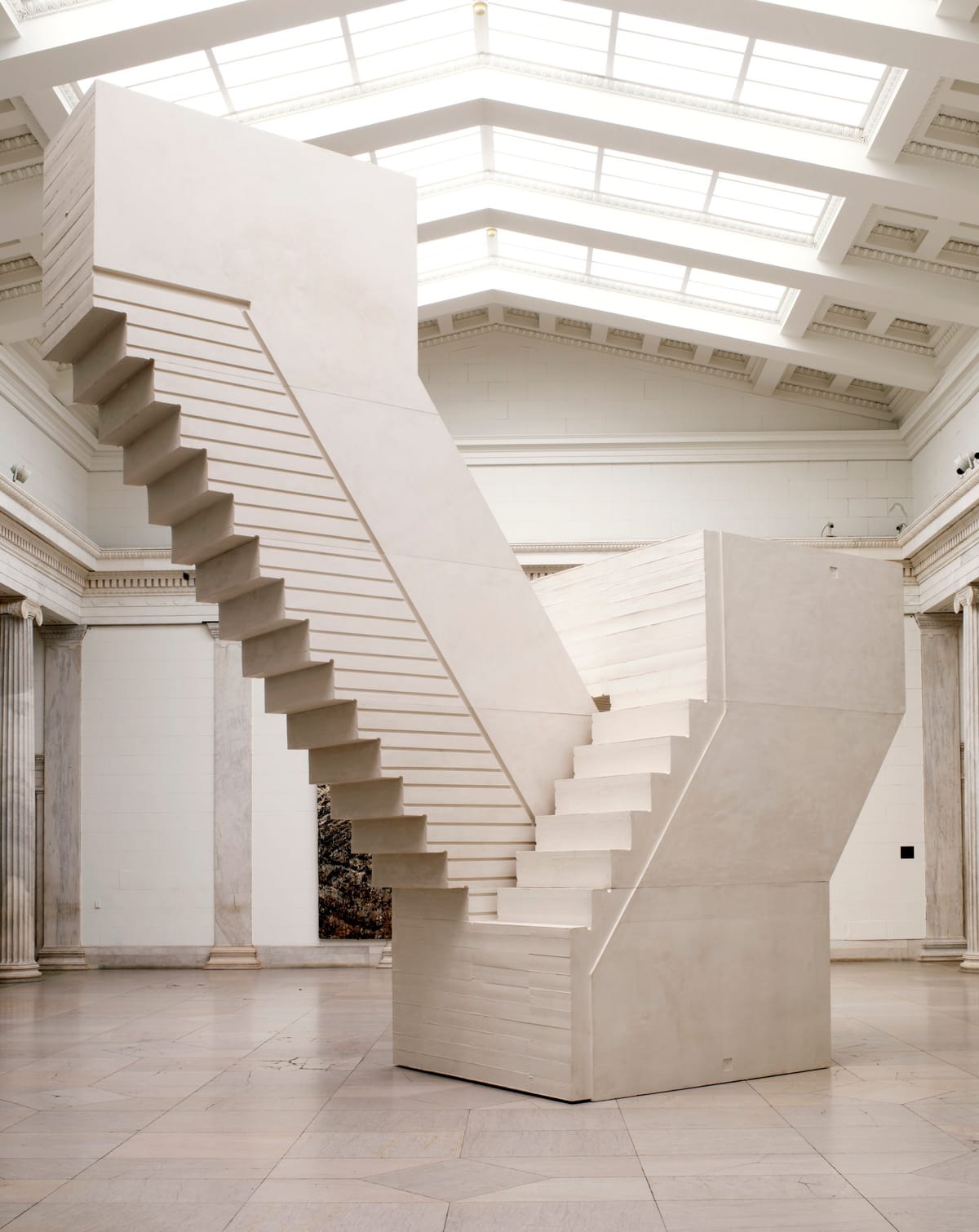
Untitled (Domestic), 2002
Rachel Whiteread
Buffalo AKG Art Museum
Owned jointly by the Buffalo AKG Art Museum (George B. and Jenny R. Mathews Fund) and the Carnegie Museum of Art, Pittsburgh (The Henry L. Hillman Fund), 2006
Rooms by the Sea, 1951
Edward Hopper
Yale University Art Gallery
Accession no. 1961.18.29
Skyspace I, 1974
James Turrell
Solomon R. Guggenheim Museum, New York, Panza Collection
Gift, 1992 — on permanent loan to Fondo per l’Ambiente Italiano
© James Turrell
Photo © Giorgio Colombo, Milan
Las Meninas, 1656
Diego Velázquez
Museo del Prado, Madrid
Flowers in a Jug, c. 1485–1490
Hans Memling
Thyssen-Bornemisza Museum, Madrid
The Shift Is Quiet. The Results Aren’t.
Learn the exact instant identity relocates—and how to stop proof-seeking sabotage.