The Ultimate Guide to Odin: Wisdom, Sacrifice, and the God Who Chose Awakening
Odin is not a symbol of comfort or fantasy. He represents self-mastery through sacrifice. This article explores Odin not as mythology, but as an archetype of disciplined perception—where restraint, patience, and endurance shape power and identity.


Odin is not a god of comfort. He is a god of initiation.
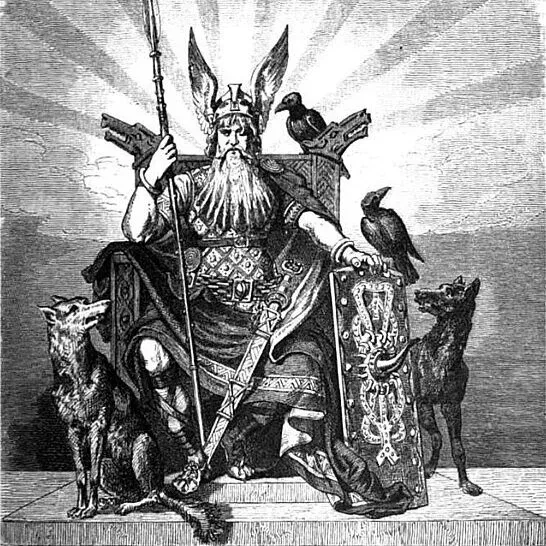
In Norse tradition, Odin does not gain wisdom through inheritance or force, but through deliberate loss. He chooses uncertainty over security, discipline over impulse, and long-term sight over immediate power. His path is not about dominance or spectacle, but about the internal conditions required for true authority to emerge.
In the Divine Masculine, Odin represents mastery through restraint rather than domination — power earned through perception, patience, and self-initiation rather than force.
Who Is Odin? (Quick Answer)
Odin is the chief deity of Norse mythology, often called the All-Father of the Aesir, but his true defining trait is not rulership — it is his uncompromising hunger for wisdom. Across Norse tradition, Odin is repeatedly depicted surrendering comfort, status, and even parts of himself in exchange for insight. He sacrifices an eye for vision beyond appearances, endures self-imposed death on the World Tree to receive the runes, and wanders the worlds in disguise, gathering knowledge wherever it can be found.
Rather than ruling through force, Odin governs through foresight, patience, and inner authority. He is both a god of war and a god of poetry not because he glorifies conflict, but because he understands that strategy, language, and perception shape reality long before action ever does.
Names, Titles, and Forms of Odin
- Odin / Óðinn: The Old Norse name Óðinn likely means “Master of Ecstasy” or “Lord of Frenzy,” from Proto-Germanic Wōðanaz (“possessed, inspired, raging”). This speaks to Odin’s aspect as a god of óðr – divine inspiration or furious wisdom. It hints that Odin embodies an altered state of consciousness: the feverish, ecstatic pursuit of knowledge and poetic insight.
- Woden / Wotan: These are the Anglo-Saxon (Woden) and Old High German (Wuotan or Wotan) names for Odin. They show how widely Odin was worshiped among Germanic peoples. (Our modern Wednesday literally means “Woden’s day,” after Odin) Woden/Wotan carries the same root meaning of inspired frenzy, and the name’s use across cultures attests to Odin’s far-reaching influence.
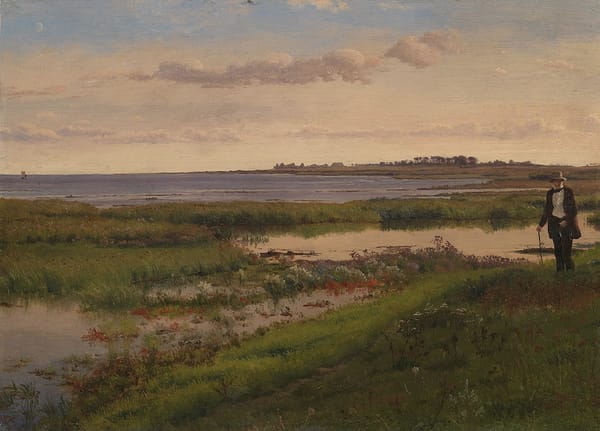
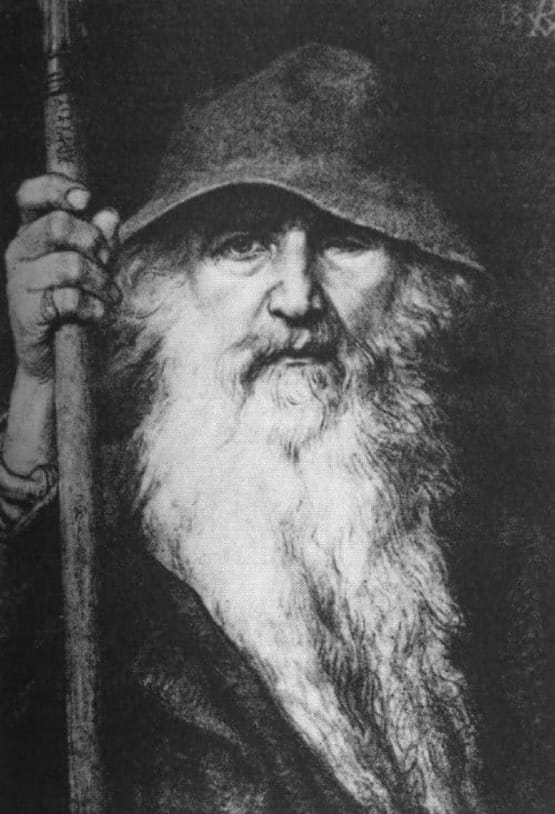
- “The Wanderer”: Odin frequently travels in disguise through various realms. In many stories he appears as an old, cloaked wanderer with one eye, a wide-brimmed hat, and a staff. This is Odin seeking knowledge incognito – testing kings, visiting witches, or traveling to the underworld. His epithet Gangleri (“Way-weary”) or simply “The Wanderer” highlights this ever-restless, curious aspect of his being. He even changes shape into animals or other forms, reinforcing that he has many forms and can slip between identities in his quest.
- “Lord of the Gallows”: One of Odin’s grim titles is Hangatýr, the God of the Hanged, often rendered as Lord of the Gallows. This name stems from his ultimate sacrifice: Odin hanged himself from the cosmic world-tree Yggdrasil as a ritual offering. By hanging on the “gallows” of the World Tree, he mastered the secrets of the runes (more on that soon). The Norse also offered human sacrifices to Odin by hanging, in echo of his deed. Odin earned this title through embracing a form of death to bring back wisdom.
Many names = many states of consciousness. Odin has over 170 names recorded – the most of any Norse god. Each name is descriptive of a different role, attribute, or myth of Odin. In a sense, each name represents a different state of consciousness or being that Odin can assume. As a shapeshifter and master of disguise, Odin adopts whatever persona or form necessary to attain wisdom. For example, as All-Father he’s the patriarch of the gods, as The Wanderer he’s the curious seeker, as Lord of the Gallows he’s the self-sacrificing shaman. His multitude of epithets underscores that Odin contains multitudes – he can be furious, poetic, wise, deceitful, kingly, or beggarly. This fluid identity is key to his power. By experiencing many modes of being, Odin gains many perspectives. He reflects the idea that enlightenment isn’t found in one static identity, but through expanding one’s consciousness to encompass many facets. In modern psychological terms, Odin is like a person who explores different archetypes within himself – an ever-becoming, ever-evolving self.
Odin’s Sacrifices (The Core of His Myth)
If there is one defining theme of Odin’s story, it is sacrifice. Odin willingly gives up that which is most precious to him – even parts of himself – in exchange for greater power or understanding. These sacrifices are not about atonement or appeasement; they are bold transactions to achieve awakening. Three famous sacrifices in particular form the core of Odin’s initiatory journey:
The Eye (Perception over Sight)
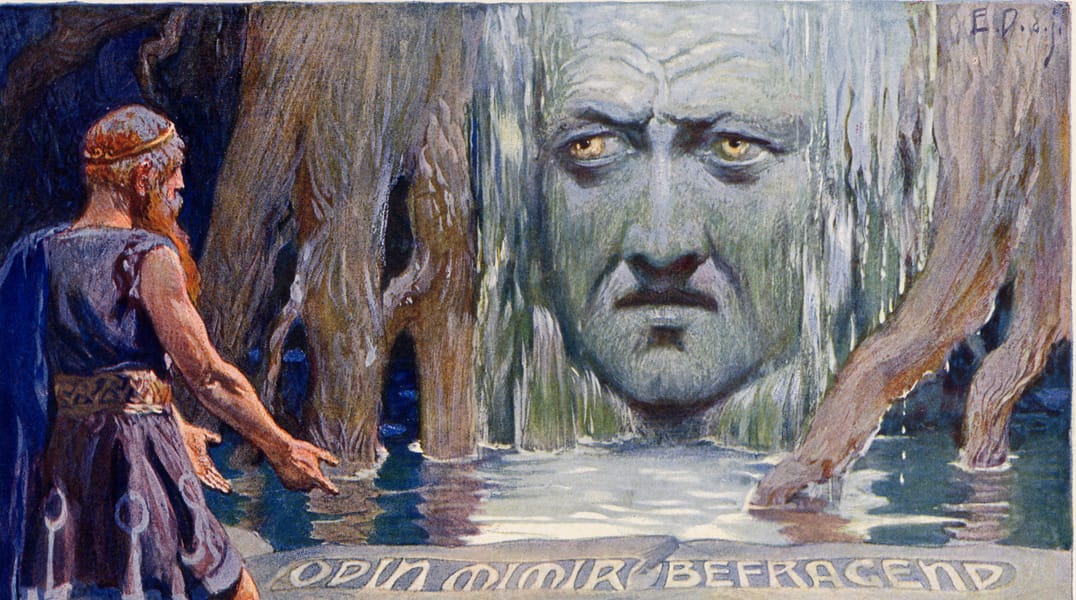
Odin plucked out one of his own eyes and dropped it into Mímir’s Well, a sacred spring of wisdom, in order to drink from its waters of knowledge. By this painful trade, he gained a higher vision. Thereafter, the one-eyed Odin “saw more clearly than anyone else” – he attained inner perception far beyond ordinary sight, gaining intuitive knowledge of past events and the future. The symbolism here is powerful: an eye is a classic metaphor for perception and insight. Odin’s one-eyed face reminds us that true wisdom has a cost. He sacrificed physical sight in one eye to gain spiritual sight. In other words, he traded one mode of perception for another, superior one. This myth teaches that enlightenment may require giving up a superficial viewpoint in order to grasp deeper truths. Odin’s missing eye, ever preserved in Mimir’s Well, is like a pledge – a part of him forever dedicated to drinking in wisdom.
Yggdrasil (Self-Initiation on the World Tree)
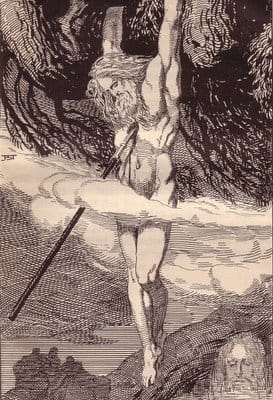
Odin’s most dramatic sacrifice was sacrificing himself to himself on the World Tree Yggdrasil. He hung himself from a high branch of the cosmic ash, pierced by his own spear, and swayed there for nine long nights without any aid. This was a shamanic initiation: Odin offered his life in order to grasp the secrets of existence. As he describes in the poem Hávamál, he was “wounded with a spear, dedicated to Odin, myself to myself” – a paradoxical ritual of self offering. Since there was no higher god he could sacrifice to, Odin in effect was both the sacrificer and the sacrificed. At the end of this harrowing ordeal, gazing down into the dark depths below, Odin “took up the runes, screaming” as the shapes of the runes revealed themselves to him. He had died on the tree in a sense, and in that moment of ego-death, the universe’s fundamental symbols (the runes) appeared to his understanding. Odin then fell from the tree, reborn – now the master of runes and spells.
This episode is essentially Odin initiating himself. Through self-sacrifice, he transcended his former limits. As one interpretation puts it, Odin was offering up his “lower self” to his “higher self,” undergoing a death-and-rebirth to evolve into a wiser being. Indeed, after the ritual, “he began to quicken and be wise” and could wield magic songs. Odin’s voluntarily hanging on Yggdrasil exemplifies the idea that great knowledge or spiritual power requires a willing surrender – a kind of self-dismemberment or shedding of one’s old skin. It’s a personal trial by suffering that leads to illumination. No other figure, mortal or divine, forced Odin into this; he chose it. Thus, Odin is often seen as the archetype of the initiate: one who bravely endures ordeal to attain enlightenment. Little wonder he’s called the “God of the Hanged” – he sanctified that method as a path to wisdom.
The Spear (Will Turned Inward)
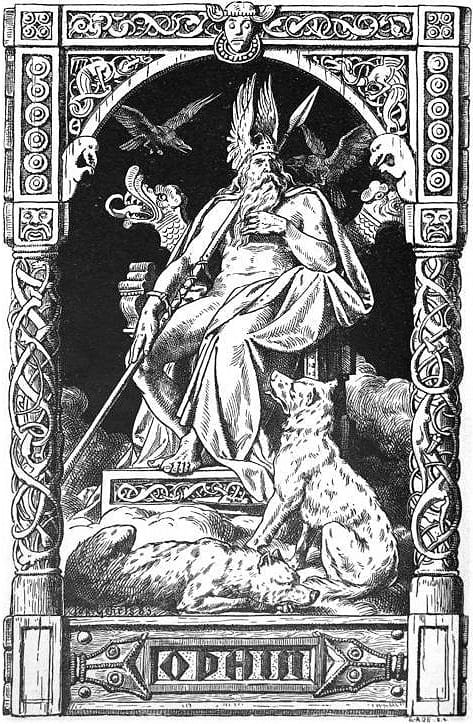
During Odin’s Yggdrasil sacrifice, there is another key element: he stabbed himself with his own spear, Gungnir, as he hung on the tree. In Norse culture, a spear was a weapon of war and a tool of sacrifice (victims dedicated to Odin were often pierced with a spear). By thrusting Gungnir into his own side, Odin was, in effect, turning his warrior’s will and power inward. Gungnir, which never misses its mark, symbolizes authority, focus, and intent – unlike Thor’s hammer of brute force, Odin’s spear represents precise strategy and sovereignty. Odin using it on himself is deeply symbolic: he sacrifices not just with passive suffering but with an act of willful penetration, “self-wounding” to achieve a greater end. One esoteric commentary notes that Gungnir is a symbol of Odin’s leadership and “authority with himself”, and by wielding it in self-sacrifice “Gungnir takes him as close to death as possible without actually dying”. In other words, Odin proved he had mastery over his own being – the courage to turn the weapon of truth upon himself. It’s as if the sharp spear represents the pain of confronting one’s inner darkness – the wound of awakening. The image of the one-eyed god, hanging on the tree impaled by a spear, is the ultimate picture of willful sacrifice for wisdom. It tells us that sometimes we must attack our own ego or comforts to break through to higher knowledge. Odin’s spear-sacrifice shows absolute commitment: no half-measures in the quest for truth. Little wonder that in later practice, Norse devotees emulated this by sacrificing enemies (or themselves) to Odin via hanging and spear – honoring the god who had shown the way.
Odin and the Runes (The Code of Reality)
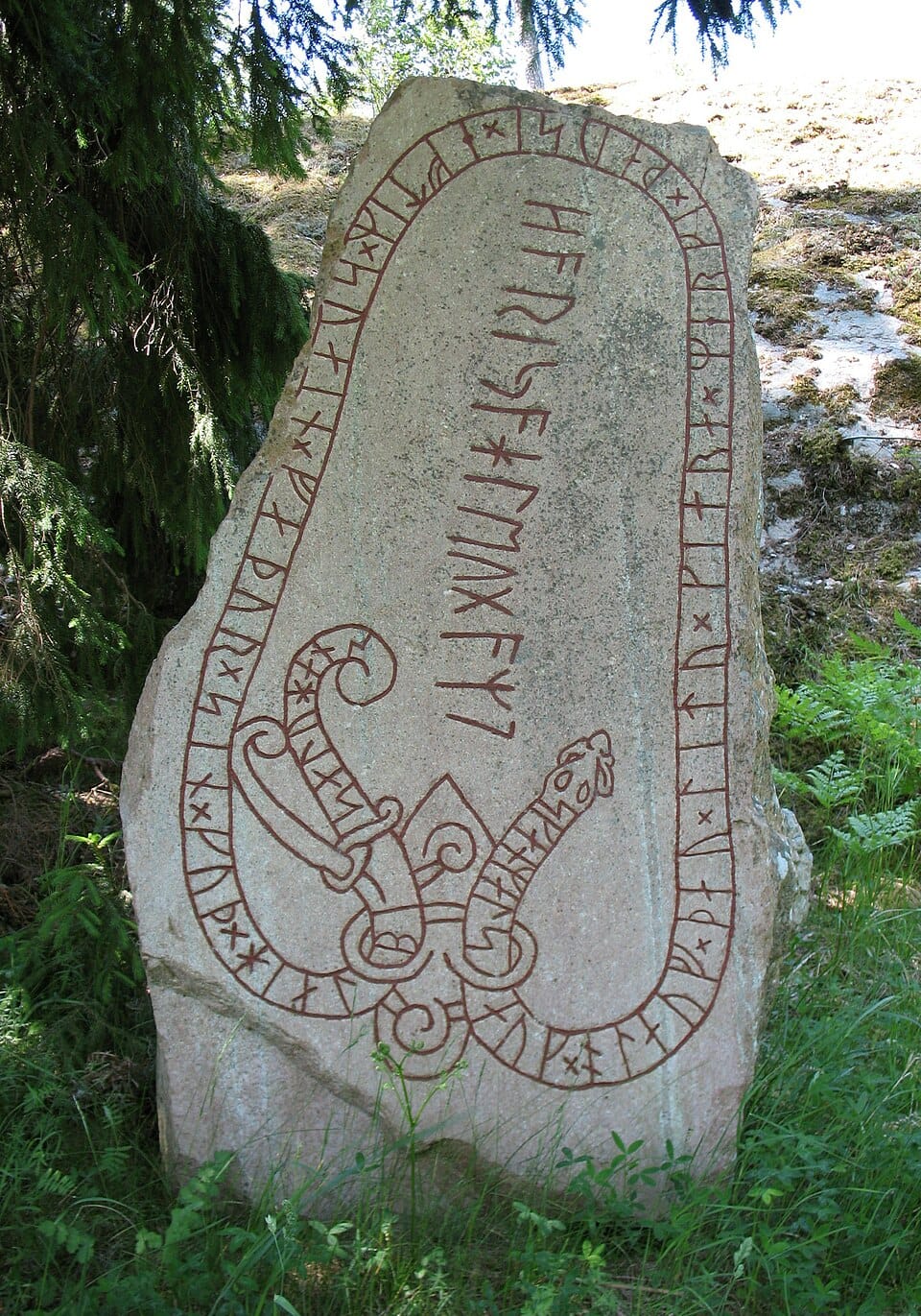
One of Odin’s greatest gifts to the world was the runes – but these are not simply an alphabet as we use today. In Norse myth, runes are potent symbols that underpin reality itself. Odin’s sacrifice on Yggdrasil was specifically to discover the runes, which he then passed on to gods and humans. This makes Odin the first being to truly read the patterns of the cosmos.
What are runes? The Old Norse rún means secret or mystery – and indeed each rune is more than a letter; it’s a cosmic principle or power. The runes are said to contain “endless interpretations and deep meanings”. After his ordeal, Odin perceived that the runic symbols were woven into the fabric of creation – in fact, the myths imply the runes existed before the world, originating in the void of Ginnungagap. By snatching up the runes, Odin essentially grasped the source code of reality. He gained knowledge of charms, healing, fate-weaving, and magic: the ability to affect the world through these primal symbols.
Importantly, the runes are alive with meaning. They are described as living forces or spirits as much as characters. Each rune has a name and resonates with a concept (like Fehu for wealth or Ansuz for wisdom). The Norse did inscribe runes for writing, but also for spellcraft and divination. As one modern analysis explains, “the runic system provides a symbolic meta-language” to explore the multiverse – a tool not just for writing, but for understanding and shaping reality. In myth, Odin had to suffer terribly to obtain them, which “indicates a power beyond that of the gods” – the runes are fundamental truths that even Odin could only earn through sacrifice.
Once Odin had the runes, he became the ultimate “pattern reader.” He could decipher the hidden laws of the cosmos (the Norse concept of Wyrd, or fate). The runes are explicitly called “ciphers for interpreting Wyrd… sacred tools that could help Odin understand or change his destiny”. Think of runes as the programming language of the universe – by knowing their secrets, Odin could hack reality, so to speak. He shares some of this knowledge in poems like Hávamál, enumerating spells for healing, protection, or prophecy.
Crucially, reality to Odin is symbol, not just object. Where a common person sees a tree or a storm, Odin perceives the rune behind it – the archetypal pattern making it what it is. This is a key aspect of his wisdom: the world is meaningful to him, every event a sign. It’s said the very word rune means both “letter” and “secret”. Odin’s mastery of runes signifies that he reads the secret in the object, the soul behind the surface. This outlook is deeply spiritual and philosophical: reality is not dead matter but alive with symbols. By teaching runes to humanity, Odin gave us a way to engage with the universe’s deeper meaning. (It’s no surprise that Norse sorcerers and poets alike invoked Odin – as god of runes, he presides over both magic and language.)
In summary, Odin and the runes illustrate knowledge at its most profound. He literally hung himself to pluck the secrets of existence out of the abyss. For those who ask “Did Odin invent the runes?” – mythologically, yes, in the sense that he discovered them and brought them to use. Historically the runic alphabet was used by Germanic peoples, but the Norse wisely rooted its origin in a spiritual revelation by Odin. This elevates runes from mere writing to holy symbols. Studying runes under Odin’s guidance is learning to see the world as he does: a tapestry of forces and symbols, where wisdom lies in perceiving the hidden connections.
Odin, War, and Strategy (Myth vs. Truth)
Odin is often called a “war god,” but it’s crucial to understand what that really means. He is not a thunderer like Thor, nor a straightforward warrior like Tyr. Odin’s approach to war is cerebral, uncanny, and strategic – not sheer rage. In fact, Odin’s name shares a root with fury, but it’s more akin to furious inspiration than blind anger. If Thor is the strength of the gods, Odin is the mind.
In the sagas and Eddas, Odin certainly has a warlike aspect: he’s the chooser of the slain and the leader of the heavenly host of Valhalla. But he fights with brains as much as brawn. Odin relies on foresight, cunning, and psychological warfare. He decides the fates of battles, often by subtle means. For instance, Odin was “not above inciting fights” among mortals – deliberately starting wars so that brave warriors would die and join his army of Einherjar in Valhalla. This could make him seem sinister or treacherous (indeed, he was known to break his promises if it served a greater strategy). Yet from Odin’s perspective, these fallen heroes were needed for the greater cosmic battle to come. He always has an eye on the long game.
On the battlefield, Odin’s weapon was wisdom and magic. He could “paralyze his enemies with fear or confuse their senses”– literally hexing opponents into panic, a power known as the “Odinic fury” that could also inspire his own warriors to berserk frenzy. He is often credited with the invention of runes and charms that ensure victory. In one myth, before an epic war between gods, Odin gains an edge by hurling his spear over the enemy, claiming them as his – a ritual that Norse warriors imitated to invite Odin’s help. This is strategy and sorcery, not mere brute force.
In fact, Odin can be seen as the general and tactician of the Norse gods. A later author noted that Odin’s cleverness and trickery often outstrip even that of Loki, the notorious trickster. He is willing to use deception when needed, and he often travels in disguise to gain information or test others. In the Völuspá prophecy, when the last battle (Ragnarök) approaches, Odin doesn’t charge in recklessly – he consults a seeress and the head of Mímir for counsel, gathering all knowledge he can. This exemplifies his belief that victory lies in knowledge and preparation.
It’s also important to dispel the notion that Odin is a bloodthirsty tyrant. He certainly has a fierce and even ruthless side, but not out of wanton cruelty. He is often described as grim and unforgiving in war – for example, leading the phantom Wild Hunt, sweeping through stormy skies with furious riders, which struck terror in mortals. Yet this wild aspect is part of the cosmic balance: Odin embodies the raw, inevitable forces of fate in war. He chooses who lives and who dies (half of the battlefield dead are claimed by him, the other half by Freyja). In a sense, Odin personifies the inevitability of death in battle – a force that is not “evil” but an accepted truth in Viking ethos.
To the Norse, there was no contradiction that the god of war was also the wisest. As Britannica notes, for that warrior society, “Odin’s wisdom was not a given, but something he acquired through pain and sacrifice” – thus he was consulted for advice in peace as well as war, revered as much for counsel as for victory. The Vikings saw strategy, cunning, and knowledge as warrior virtues too. Odin’s “war” includes the inner battle of courage over fear and the strategic battle of wits over chaos. He is far from a berserker; if anything, he inspires berserkers by sending them into trance-like fury, even as he himself stays one step ahead, pulling the strings.
In modern terms, Odin is the general, the king, and the shaman of war all at once. He embodies the idea that war is won in the mind before the field. His gift to his followers wasn’t just strength – it was the “battle wisdom” of when to fight, whom to strike, and even why to fight. Unlike Thor’s straightforward hammer blows, Odin’s ways are circuitous: he might win by an alliance, a feint, a sacrifice, or a timely piece of secret knowledge. When we strip away the mythology, we find a timeless truth: true victory often comes not from rage, but from foresight and calculated risk. Odin teaches that sometimes one must even lose (sacrifice something dear) in order to win greater gains later – as he did, sacrificing an eye for wisdom, or sacrificing warriors now to have their help at the end of days. This long-range, fate-aware strategy is what makes Odin a god worth pondering for those interested in the psychology of leadership and conflict.
Finally, consider Odin’s relationship to “inner war.” Odin is not just battling giants and monsters – he is often battling himself. His self-sacrifices can be seen as an internal war against ignorance and fear. Thus Odin is a guide for our identity shifts and inner struggles: he models making hard choices under pressure. For instance, in moments of crisis, one might channel Odin’s ethos by keeping a cool head, gathering information, and maybe sacrificing short-term comfort for long-term survival. Odin’s “war” is ultimately about conquering the self – overcoming the lesser self to become the greater self. In that way, every personal transformation is a little Ragnarok where an old you dies and a new you is born, victorious.
Odin and Fate (Wyrd)
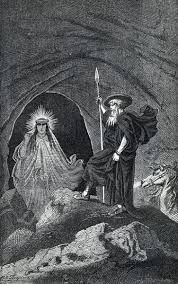
Before Ragnarök ever arrives, Odin already knows its outcome. He seeks prophecy not to escape fate, but to understand it — and to act with clarity despite it.
Few figures in mythology illustrate the paradox of knowing fate yet acting anyway as powerfully as Odin. Odin is a god deeply intertwined with Wyrd, the Norse concept of fate or destiny. He constantly seeks prophetic knowledge – consulting seers, deciphering runes, keeping Mímir’s head alive for advice – and thus Odin is uniquely aware of the bleak prophecy of Ragnarök, the “Twilight of the Gods.” He knows that one day a great battle will engulf the world, most of the gods (including himself) will perish, and the current order will end So what does Odin do with this foreknowledge? Does he despair or give up? Quite the opposite.
Odin’s response to learning his fate is to double down on his purpose. In the myths, even after hearing the seeress foretell his doom, Odin still rallies the gods and einherjar (fallen heroes) to prepare for Ragnarök. When that final battle comes, “the gods will decide to go to battle, even though they know what the prophecies have foretold concerning the outcome” Odin marches at the head of his legions on the plain of Vigrid, fully aware that he is fated to be devoured by the monstrous wolf Fenrir. And indeed, Odin and his warriors “fight more valiantly than anyone has ever fought before. But it will not be enough. Fenrir will swallow Odin and his men” in the end.
This is a striking example of what J.R.R. Tolkien called “Northern courage” – the heroism of fighting on despite certain defeat. Odin embodies this ethos. He acts not because he believes he will win in a conventional sense (he knows he won’t, barring some unforeseen twist), but because the struggle has meaning in itself. Odin’s life is about doing what is right for the cosmos – accumulating wisdom, defending order, inspiring courage – even if the final outcome is doom. In a way, Odin chooses meaning over outcome. The wisdom he gains, the heroes he gathers, the battles he wins along the way, all still matter profoundly, even if they can’t avert the ultimate fate. By acting out his role to the fullest, Odin creates meaning that transcends the literal end result.
There’s a poignant lesson here: foreknowledge doesn’t absolve one from action. Odin shows a kind of existential courage – knowing the limits of his power but striving honorably anyway. As one modern commentary puts it, “the gods, despite knowing their fates, chose to fight valiantly… demonstrating the importance of confronting challenges head-on.” This resonates strongly in Norse culture (and with us today) as an affirmation of free will and valor in the face of inevitability. In the Norse view, even the gods are not omnipotent; they too are woven into Wyrd. What distinguishes Odin is how he responds to that predicament: with willpower, wisdom, and a measure of grim humor (after all, he spends his days feasting with the warriors destined to die for him, like a man throwing a party on the eve of the apocalypse).
Psychologically, Odin’s stance on fate can be very inspiring. We all have our “Ragnarök” – the knowledge of our mortality or the inevitability of setbacks and loss in life. Odin teaches acceptance without resignation. He neither denies the coming of Ragnarök (no futile escapism) nor does he collapse into despair. Instead, he prepares every day – training his mind, gathering allies, doing his work – so that when the inevitable comes, he meets it on his own terms. He even finds a sort of triumph in that: the Einherjar will go down in legend fighting the good fight, and a new world will rise after. Odin’s story thus says: fate only binds you if you let it. Or in the words of a character echoing Odin’s wisdom, “Do what is necessary. Not because it is written.”. Our choices and actions still matter, even if we can’t change certain outcomes.
In a modern context, this Odin-like mindset is gold for dealing with anxiety about the future. We might know, for example, that we can’t live forever, or that a project might eventually fail, or that society has challenges we alone can’t fix. Yet, acting from our values and identity rather than from fear is the Odinic path. Odin acts because that is who he is – the All-Father, the wise warrior – not because he’s guaranteed a win. Similarly, we can choose to do what’s right or strive for a meaningful goal even if success isn’t assured. This is a form of detachment: not detachment from caring, but detachment from the need to win. Odin cares deeply (he literally gave an eye and more to improve the odds), but he isn’t attached to a promise of victory. He focuses on what he can control – his own development and preparations – and lets go of what he cannot (the decrees of fate).
We see, then, why Odin was so revered as a wise god. He understands the hardest truth – that everything ends – yet finds the resolve to act with honor and purpose regardless. In facing Ragnarök with unwavering resolve Odin imparts perhaps the most enduring wisdom of all: we must live authentically and courageously, come what may. The meaning of our actions, the example we set, and the legacy we leave can outlive us, just as Odin’s story survives the death of his physical form. In the Norse apocalypse, some of Odin’s sons and a new generation live on to rebuild the world – symbolizing that no effort made in good faith is truly wasted, but seeds something for the future. Odin’s embrace of fate thus paradoxically defeats the paralyzing power of fate. It’s an approach we can all aspire to: know the limits, but pursue the purpose.
Odin Across Cultures: The Seeker Archetype in Many Guises
One reason Odin still fascinates is that he is an instance of a broader archetype that appears in many cultures – the wise wanderer/seeker god. Across the world, we find deities who share remarkable similarities with Odin’s character, even if they belong to different mythologies. Let’s compare Odin to a few:
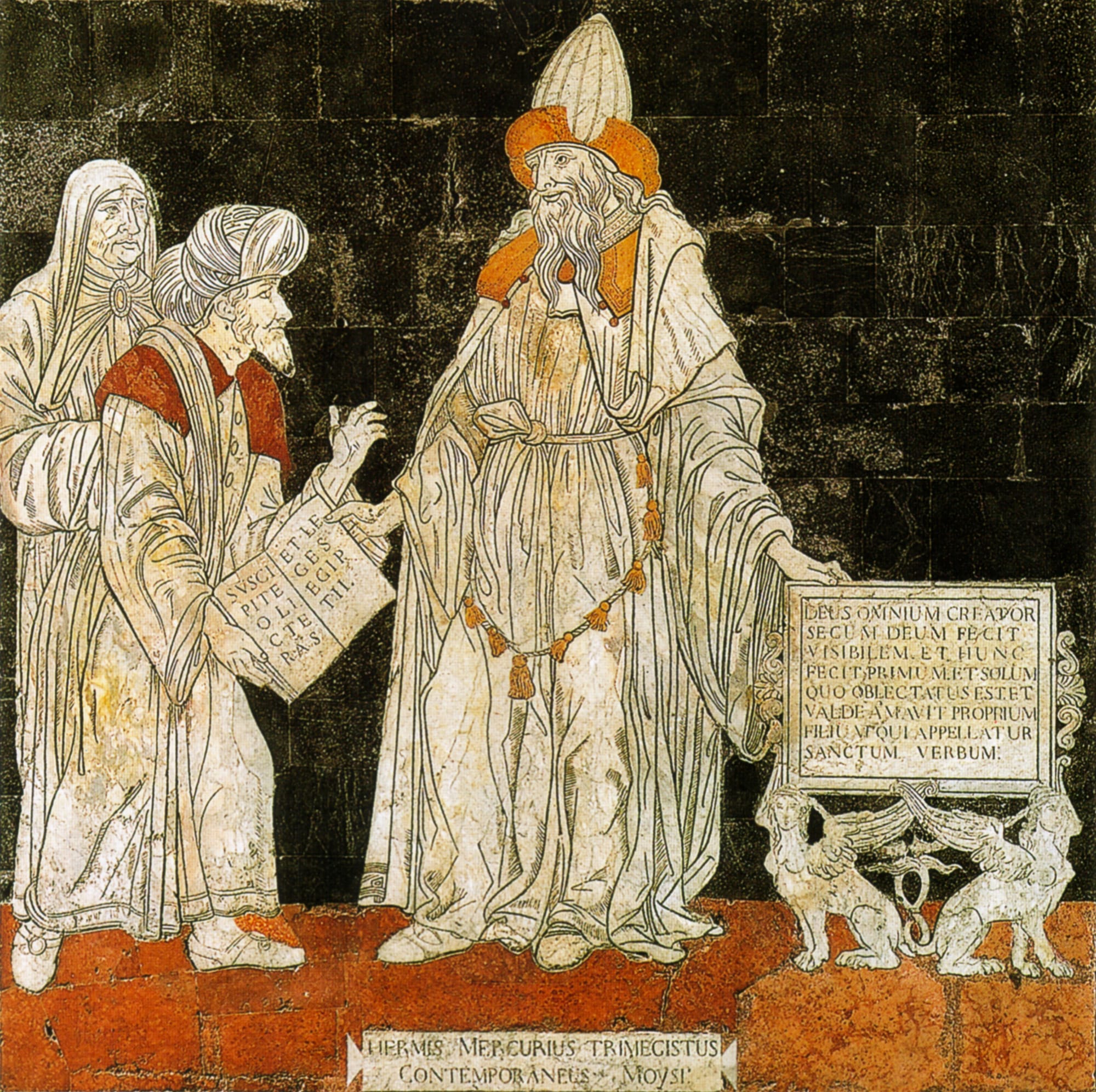
- Hermes/Mercury (Greek/Roman): The Romans, when encountering Germanic tribes, famously identified Odin with Mercury (the Roman name for Hermes)This was not because Odin delivers messages or wears winged sandals – rather, Mercury was the psychopomp (guide of souls) and a god of knowledge and travel, which resonated with Odin’s traits Like Odin, Hermes is cunning, a master of trickery, and a traveler between worlds (Olympus, Earth, and the Underworld). Both figures carry a staff (Odin’s spear or walking stick, Hermes’s caduceus) and wear a broad-brimmed hat or helmet, wandering in disguise among mortals. Hermes is also a patron of poetry (as is Odin) and the inventor of writing in some Greek myths; Odin brought the runes. Moreover, Hermes and Odin both have a liminal quality – moving at the boundaries (Hermes is the god of crossroads, Odin walks between the realms). Each can be seen as a guide of souls: Hermes leads the dead to Hades, Odin collects slain heroes to Valhalla. Their shared emphasis on cleverness, communication, and crossing thresholds highlights a common archetype: the wise trickster who connects worlds. (Interestingly, Hermes Trismegistus in later legend is a fusion of Hermes and the Egyptian Thoth – showing how these wisdom figures tend to merge in the imagination.)
- Thoth (Egyptian): Thoth is the Egyptian god of wisdom, writing, magic, and the moon – in many ways an Egyptian counterpart to Odin’s roles. Both Odin and Thoth are credited with giving writing to humanity (runes for Odin, hieroglyphs for Thoth) and are revered for their vast knowledge. Thoth presides over the scribes and magicians in Egypt, much as Odin is the patron of skalds (poets) and magicians among the Norse. Each also has a role in judgment/fate: Thoth records the verdict of the scales in the Egyptian afterlife, Odin presides over battles and chooses fates of warriors. While their personalities differ (Thoth is more serene, Odin more turbulent), they both embody the intellectual principle in their pantheons. Notably, the Greeks equated Thoth with Hermes (calling him Hermes Trismegistus), and by transitive property one could equate Thoth and Odin as well – distinct in cultural trappings but similar as knowledge keepers who use magic words. Both also perform self-sacrificing roles: Odin sacrifices for runes; Thoth in some tales gambles part of the moon’s light to help the sky goddess Nut. In essence, Thoth and Odin represent the idea that language and knowledge are sacred powers, overseen by a divine figure willing to bend the normal rules (Odin sacrificing, Thoth using clever tricks) to attain enlightenment.
- Shiva (Hindu): At first glance, Odin and Shiva might seem very different – different mythologies, regions, and iconography. But many scholars and enthusiasts have noted parallels. Shiva is part of the Hindu Trimurti, known as the Destroyer and also as a great yogi and ascetic. Odin too has a destroyer aspect (the name Ygg or Terrible One among his many names) and presides over the destruction of Ragnarök, but more intriguingly, both gods are associated with sacrifice and transcendence. Shiva is famed for sitting in meditation for ages, forsaking comfort – just as Odin endures hungers and pain for knowledge. Both wear symbols of wisdom and power: Shiva’s third eye represents higher perception, while Odin’s one eye symbolizes the same. Both wander in wild places – Shiva in cremation grounds or mountaintops, Odin in remote forests and the world’s ends. Both even have association with the gallows/tree: one of Shiva’s epithets is Kaalagni-Rudra who hangs from a tree, and Odin of course hangs on Yggdrasil. Moreover, Shiva drinks poison during the churning of the ocean (turning his throat blue) to save the world – an act of self-sacrifice not unlike Odin’s self-wounding. Odin and Shiva also share magical, shamanic traits: Shiva is lord of occult yoga and the dance of creation and destruction (Nataraja), Odin is lord of seiðr (Norse shamanic magic) and the cycles of life and death (he orchestrates battles and rebirth of the world). In comparative mythology some have dubbed Odin a “European Shiva” – both are complex, paradoxical gods who are at once ferocious and beneficent, who break themselves to remake themselves. While Odin doesn’t explicitly do the cosmic dance, he does wander with a certain joy in knowledge and has that unpredictable temperament (kind to his friends, terrifying to his enemies) that Shiva also exhibits. In essence, Odin and Shiva each represent the path of ascetic wisdom: they gain immense insight and power by sacrificing comfort and confronting death. They remind their followers that to become divine, one might have to drink poison or hang on a tree – metaphors for facing the absolute worst to awaken the absolute best within.
- The Archetypal “Seeker”: Beyond specific gods, Odin belongs to a family of mythic characters sometimes called the All-Wise, The One Who Searches. This archetype includes figures like the Greek Cronus or Prometheus in some respects, the Sumerian Enki, or the Native American cultural heroes who travel and learn. In Jungian terms, Odin can be seen as the Wise Old Man (or the Self as Wise Old Man) who guides the hero – but interestingly, Odin is both the wise guide and in his own story the hero undergoing the quest for wisdom. He’s like the sage who is also on a personal journey of enlightenment. Many cultures have stories of a deity or hero who goes into the unknown, sacrifices something, and brings back a boon (fire, knowledge, medicine). Odin’s story is one of the most complete examples of this “shaman-king” archetype. He is a worldly ruler (of Asgard) yet cares more for the otherworldly truth. In that, he’s comparable to figures like the biblical Solomon (a king famed for wisdom and willingness to test extremes), or the Buddha (who was a prince that gave up comfort to find enlightenment – an interesting parallel to Odin leaving his royal halls of Valhalla to hang on a tree). We can also liken Odin to Hermes Trismegistus, a syncretic figure of late antiquity who combined Hermes and Thoth – essentially a deified wise man who knew the secrets of the cosmos. Odin is very much this kind of figure for the Norse – hence why medieval authors sometimes euhemerized him as a mortal wiseman-turned-god.
The reason these cross-cultural comparisons matter is that they “massively increase semantic reach,” as an SEO expert might say, but more profoundly, they show that Odin taps into a universal image: the seeker of wisdom who sacrifices for the greater good. Whether it’s Odin sacrificing an eye, Prometheus enduring an eagle’s torture for bringing fire, or Shiva holding poison in his throat, these myths convey a shared truth: knowledge and transformation require courage and self-giving. Recognizing Odin in Hermes, Thoth, or Shiva helps modern readers see that his lessons aren’t isolated to one culture’s lore – they speak to something deep in the human psyche across time and space.
Why Odin Still Matters Today
Why should a 1,000-year-old Viking god interest anyone in the 21st century? The answer lies in what Odin represents: the timeless principles of seeking knowledge, embracing change, and leading with insight and courage. In a rapidly changing modern world, anyone on a journey of growth can draw inspiration from Odin’s story.
For modern seekers: Odin is practically an exemplar of the personal quest for truth. He doesn’t passively receive wisdom – he hunts it down. Today, when we devour self-help books, practice meditation, or pursue higher education, we are (knowingly or not) following Odin’s path of never-ending learning. Odin’s willingness to sacrifice for knowledge (like giving up an eye for a drink from Mimir’s well) challenges us: What comfort zone are we willing to leave to gain wisdom? It might mean sacrificing time to study, leaving a stable job to learn new skills, or facing uncomfortable truths about ourselves to grow. Odin’s myth encourages the mindset that no sacrifice is too great for wisdom – a powerful motivator for anyone committed to self-improvement or spiritual growth.
For creators and innovators: Odin literally creates himself anew through sacrifice. This resonates with the creative process in art, science, or entrepreneurship. Creation often demands risk and stepping into the unknown. Odin ripping out his eye is symbolic of giving up a familiar perspective to gain a novel one – just as a visionary inventor might abandon old assumptions to see a problem differently, or an artist might “lose themselves” in their work to find a new style. The lesson is that true creativity might require a part of yourself as fuel. Additionally, Odin’s discovery of runes – turning raw experience into symbols – is analogous to the way creators give form to ideas. Those who feel a calling to bring something new into the world can see Odin as a patron: the patron of those who dare to push boundaries at personal cost.
For leaders and change-makers: Odin’s blend of wisdom and strategic acumen is in many ways an ideal for leadership. He’s not a brute enforcer; he’s a thought leader among the gods. He makes hard decisions (even morally gray ones) for the sake of a larger vision – like inciting a necessary conflict or bargaining with his own pain for knowledge. Modern leaders often have to sacrifice short-term comforts or make personally painful choices for a greater cause. Odin exemplifies visionary leadership: he prepares for crises well in advance, educates himself broadly (from poetry to warfare to magic), and can both inspire his allies and outwit his foes. Furthermore, Odin’s relationship with fate – acting even without guarantee of success – is a valuable ethos for leaders tackling big challenges (think of social leaders who fight for justice knowing it’s an endless effort, or entrepreneurs who build something knowing it might fail). Odin “acts anyway” because it’s the right thing to do. That integrity and courage under uncertainty is as relevant in the boardroom and community as it was on the plains of mythic Vigrid.
For anyone shedding an old identity: Perhaps the most powerful modern relevance of Odin is as an archetype of personal transformation. We live in an age where people change careers, lifestyles, even genders and belief systems in the search for authenticity. These are forms of initiations – often requiring letting an old part of oneself “die” to embrace a new life. Odin’s saga is basically a handbook on intentional self-reinvention. He literally “kills” parts of himself (his eye, his old self on the tree) to become something greater. Psychologically, this mirrors the process of individuation or self-actualization: confronting one’s own limitations and fears (the “death” of the ego’s comfort) to achieve a more integrated, wise self. One commentary on Odin put it beautifully: “perhaps the most precious wisdom Odin left us was the power of initiation and sacrifice in the mastery of fear”. In other words, Odin teaches that by sacrificing our fear – by doing the difficult, scary thing – we gain freedom and growth.
Anyone facing a major life change can find resonance with Odin. Think of a person overcoming addiction (sacrificing an old habit to regain clarity – Odin giving an eye for insight), or someone leaving an unfulfilling career to pursue a passion (sacrificing security for meaning – Odin leaping into the unknown off Yggdrasil), or someone undergoing therapy to heal trauma (facing pain to gain wisdom – Odin’s spear wound). Odin’s myth validates that these struggles are sacred in a way; they are the only path to one’s personal Valhalla, the victory of self-knowledge. And just as Odin ultimately shares the runes and wisdom he gained (teaching gods and men), so do we, after transforming, often end up helping others with the wisdom we earned.
Still worshipped today: Lest one think Odin is purely a dead myth, it’s worth noting that Odin is actively honored in modern times. The revival of Norse paganism (Heathenry or Ásatrú) counts Odin (often called Allfather or Woden) as a central deity, and many people around the world today partake in rituals or prayers to Odin. They may seek his blessing for wisdom or victory or simply as a connection to ancestral heritage. Even outside of explicit worship, Odin pervades popular culture – from Wagner’s operas to Neil Gaiman’s novels to the Marvel cinematic universe. Whenever a character based on Odin appears (like “Mr. Wednesday” in American Gods or Odin in the Thor movies), the themes of sacrifice and wisdom usually accompany him, introducing new audiences to his archetype. Clearly, Odin endures because his story speaks to something perennial in the human soul: the longing to know more and be more than we currently are.
In summary, Odin matters today because we are all, in our own way, on Odin’s journey. Whether you’re a student burning the midnight oil (sacrificing comfort for knowledge), an activist taking on a daunting cause (fighting knowing the odds), a leader making tough calls for your team’s future, or an individual striving to break an old pattern and reinvent yourself – Odin is a mirror of your struggle and a source of mythic inspiration to carry on. His tales remind us that discomfort is often the price of growth, that wisdom is hard-won but worth it, and that even in facing the inevitable, there is nobility and meaning. In an age where comfort and complacency are easy, Odin challenges us: embrace the path of becoming. It may not be easy – it won’t be easy – but as the one-eyed god might whisper, “No sacrifice is too great for wisdom.” And that is why Odin still speaks to us.
FAQ
No – Odin is not “evil” in the sense of a purely malevolent being. Norse mythology doesn’t divide gods into good vs. evil as in some dualistic religions. Odin is a complex figure with mixed traits. He can be ruthless, cunning, and even deceptive, but always with a purpose in mind (typically the pursuit of knowledge or the steering of fate)kids.britannica.commedium.com.
For example, he incites wars and causes deaths, which looks cruel, but in context it’s to gather heroes to defend the world from chaos. He breaks oaths, but often to achieve a greater good or necessary outcome. The Vikings saw Odin as a wise but unpredictable god – to be respected, not trusted blindly. He was the patron of kings, poets, and warriors, consulted for “advice and help in peace as well as war,” not a devil figurekids.britannica.com.
So while Odin has a dark and fearsome side (he is called “Terrible One” in some poems), he’s also a generous giver of knowledge and victory. In modern terms, Odin is morally gray or beyond conventional morality – embodying the idea that wisdom can require hard choices. He’s certainly not evil incarnate; rather, he transcends simplistic labels. His devotees saw him as ultimately on the side of cosmic order against chaos, even if his methods were harsh.
This phrase comes from the Hávamál, where Odin describes hanging on the World Tree “dedicated to Odin, myself to myself.” The reason is that Odin had no higher authority to appeal to – he is the chief god. In Norse ritual, one offers a sacrifice to a deity to gain a boon. Odin wanted the boon of the runes (mystic wisdom), but there was no one above him to sacrifice to. So he offered himself (the greatest sacrifice he could give) to himself, essentially performing a ritual of self-initiationkids.britannica.com.
By doing this, Odin was both priest and victim, demonstrating ultimate dedication. It’s as if his higher self (the transcendent Allfather) receives the life of his lower self (the suffering wanderer Odin)norse-mythology.org. In practical terms, this act was necessary to shake loose the secrets of the universe – only a sacrifice of unparalleled worth could “pay for” the cosmic knowledge of runes. The myth highlights Odin’s resolve: he was willing to die (symbolically or even literally) to enlighten himself. After the ordeal, he is reborn with profound wisdom.
So, Odin sacrificed himself to himself to enact a closed loop of sacrifice – a god giving to the godhead – fulfilling a cosmic law that great knowledge requires great offering. No other offering would suffice, and no other god could grant what Odin sought; he had to do it to himself for himself. This concept also teaches that one’s personal growth often comes from self-sacrifice; we “give” part of ourselves (effort, pain, time) to our own higher goals.
Yes. In the modern era, there is a revival of Norse paganism known as Heathenry or Ásatrú, and Odin (often called by names like Allfather, Woden, or Óðinn) is actively worshipped by many adherents around the worlden.wikipedia.org.
These practitioners perform blót (offerings) and rites to honor Odin and the Norse gods, much as in ancient times (though usually without human or animal sacrifice in modern practice!). They might pray to Odin for wisdom, victory in endeavors, or guidance. He is especially revered among those who value knowledge, inspiration (poets still toast Odin for the “mead of poetry”), and the warrior spirit (some soldiers and martial artists honor Odin).
Additionally, Odin figures prominently in modern popular culture – for instance, in Marvel comics/films Odin is a character (inspiring a kind of pop-culture reverence), and in literature like Neil Gaiman’s American Gods Odin appears (as Mr. Wednesday). While that’s not worship, it shows Odin’s image is very much alive in the collective imagination.
There are also modern fraternal orders and neo-shamanic practitioners who invoke Odin in their spiritual work, seeing him as a guide in trance or rune magic. Furthermore, many people who don’t literally “worship” Odin still find wisdom in his myths and might meditate on Odin’s example in their personal development.
In summary, Odin has gone from being a chief god of the Viking Age to an inspirational figure for modern pagans, a symbol in media, and an archetype studied by spiritual seekers. He’s even lent his name to a day of the week (Wednesday), so when people say “Wednesday” they’re indirectly speaking of Odin – in that sense, he’s hidden in plain sight in everyday life.
Both – and more. Odin is a multifaceted god, so he doesn’t fit into a single category. He is foremost the god of wisdom and knowledge, distinguished by his relentless quest for understandingkids.britannica.com. This is why he’s associated with runes, poetry, magic, and counsel.
But he is also very much a war god – specifically a god of strategy, victory, and the slain. He’s not the personification of war frenzy (though he can incite it); rather, Odin decides who wins battles and receives the souls of brave warriors. The Norse called him the “Battle-frenzied” and the “Chooser of the Slain.” In Valhalla, Odin hosts the einherjar (fallen heroes) and prepares for the final war of Ragnarök.
For the Vikings, war and wisdom were intertwined: a wise chief leads to victory, and war provides knowledge (of glory, of fate). Odin exemplified this unity. He could grant victory to those he favored, but those favors were won by sacrifice and cunning – wisdom qualities. One could say Odin is the god of the wisdom of war.
He teaches that winning may require strategy (he often outsmarts enemies), psychological edge (his very presence could sow panic in foes), and even knowledge of fate (he knows who is fated to die and directs the Valkyries accordingly). At the same time, Odin’s wisdom isn’t peaceful armchair philosophy; it’s often gained through conflict and trials.
So separating war and wisdom in Odin is impossible: he’s a wise war-god or a warlike wisdom-god. If we need to prioritize, many texts emphasize Odin’s role as Allfather and wise one – he often lets Thor or Tyr handle straightforward combat, while he strategizes. But Odin himself fights when needed (against Fenrir, for instance) and his very hall is a training ground for warriorsmedium.com.
In short, Odin embodies the warrior-scholar ideal. He’s the patron of warriors and of sages. So whether one calls him god of war or god of wisdom depends on context – the Norse would comfortably call him both.
Psychologically, Odin symbolizes the archetype of the Seeker of Wisdom and the Master of Initiation. He is often interpreted as a representation of the “Wise Old Man” archetype (in Jungian terms) – the figure of inner guidance, knowledge, and mentorship. However, Odin is a unique Wise Old Man because he’s also continually seeking wisdom himself. This makes him the embodiment of the self-transforming Self – the part of us that drives toward wholeness and enlightenment, even if it means self-sacrifice. When we dream or think of climbing a difficult path to gain insight, Odin is that impulse inside us. He symbolizes our ability to learn from suffering. Every time we gain wisdom from a hard experience (“sacrificing comfort for growth”), we are enacting the Odin archetype.
Psychologically, Odin also represents the union of opposites within. He combines intellect and aggression, male and female aspects (he learned the traditionally feminine art of seiðr magic, even at the cost of being called unmanly), conscious planning and unconscious intuition (his two ravens Thought and Memory can be seen as aspects of mind) He even integrates the shadow – the parts of ourselves we find dangerous – as he works with darker forces (giants, the dead, etc.) to gain wisdom. In doing so, Odin models individuation: the process of integrating all parts of the psyche into a more whole self.
Notably, Odin’s self-hanging can be seen as a symbol of ego death – the necessary surrender of the old self for the soul’s renewal. It’s akin to shamanic initiation stories where one “dies” and is reborn as a healer. Thus Odin is often considered a shamanic archetype: he voluntarily endures a breakdown (literal hanging and wounding) to break through to a spiritual breakthrough. Psychologically, this might correspond to someone going through a dark night of the soul or a midlife crisis that, if navigated well, yields profound personal insight. Odin “illustrates the intelligence within the energies of initiation and sacrifice” – meaning that within our toughest trials lies a wise intent to evolve.
Odin’s single eye can symbolize focused perception – the ability to see within (with the “mind’s eye”) after giving up ordinary sight. In a sense, Odin traded external vision for internal vision. Psychologically, that’s like turning one’s focus from outward materialism to inward self-reflection or enlightenment.
Furthermore, Odin with his many names and guises can symbolize the many roles of the psyche or the many “selves” we carry. He’s a father, a wanderer, a warrior, a magician – just as an individual might have to wear different hats and integrate various sub-personalities. Odin manages to be all of them, suggesting psychological integration. Yet, he’s also restless – implying that the psyche’s search for knowledge is never finished.
In summary, Odin psychologically symbolizes the part of us that strives to grow, to know, and to become whole. He is the impulse to break our own limits. When you decide to face a fear for the sake of personal growth, that’s Odin energy. When you sacrifice immediate pleasure to achieve a long-term goal, that’s Odin. When you seek mentors or ancient wisdom or explore symbol systems (like dreaming of runes or studying tarot), you’re channeling the Odin archetype in your psyche, which urges you to unlock mysteries. And finally, Odin’s acceptance of fate yet acting with courage can symbolize a healthy ego-self relationship: the ego learns to trust the deeper self (fate, the unconscious) and plays its part without hubris. In doing so, one achieves a kind of serenity and fearlessness in life. Thus Odin, as an inner figure, is the wise guide who can lead one through life’s initiations toward a more enlightened, empowered state of being.