Pelé and the Power of Imagination ⚽✨ – How Play Creates Reality
Pelé’s rise wasn’t built on pressure or strategy, but on imagination and joy. From barefoot street games to World Cup glory, his life shows how play creates reality.

The Universe Unveiled presents The Inner Pitch — exploring how consciousness experiences itself through mastery under pressure.
From barefoot street games to global superstardom, Pelé’s story shows how imagination and joy can shape reality. The Brazilian icon didn’t grind his way to dominance – he played his way there. Where others trained to win, Pelé dreamed up new moves, treating football as art and play first, execution second. As Brazilian legend Sócrates put it, “The Brazilian style is about joy, audacity, and imagination — it’s not just to win, but to enchant.”Pelé manifested reality through play – imagination embodied long before the results came.
Before Strategy, There Was Imagination
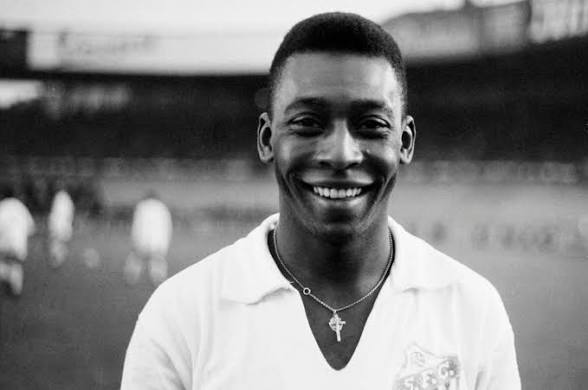
Pelé’s genius flowed not from elaborate strategy but from a childlike creative spark. “For Brazilians, football is not a war — it’s a celebration of life,” Pelé reminded. He played with an infectious alegria (joy) that made everyone smile. On the pitch, he didn’t “try” fancy moves – he saw them in his mind and simply did them. Teammates recall that playing with Pelé meant keeping up with his vision: “You had to guess what he was thinking, because he did incredible things that no normal player would do”. In other words, Pelé wasn’t reacting to the game – he was authoring it in real time.
This imaginative freedom made Pelé’s play feel effortless and inevitable. He later said one of his favorite goals was the flick over a defender and volley in the 1958 World Cup final – because “no one had seen a goal like that before”. He was a 17-year-old with a mind “clear of calculation,” inventing a new reality on the field. Such moments weren’t luck; they were the natural expression of Pelé’s inner world. As spiritual teacher Neville Goddard once wrote, “Every natural effect in this world has an imaginal cause; the natural effect is only seeming”. Pelé intuitively lived this truth: imagination came first, the goals and glory second.
Childhood in Três Corações: Poverty, Play, and Inner Worlds
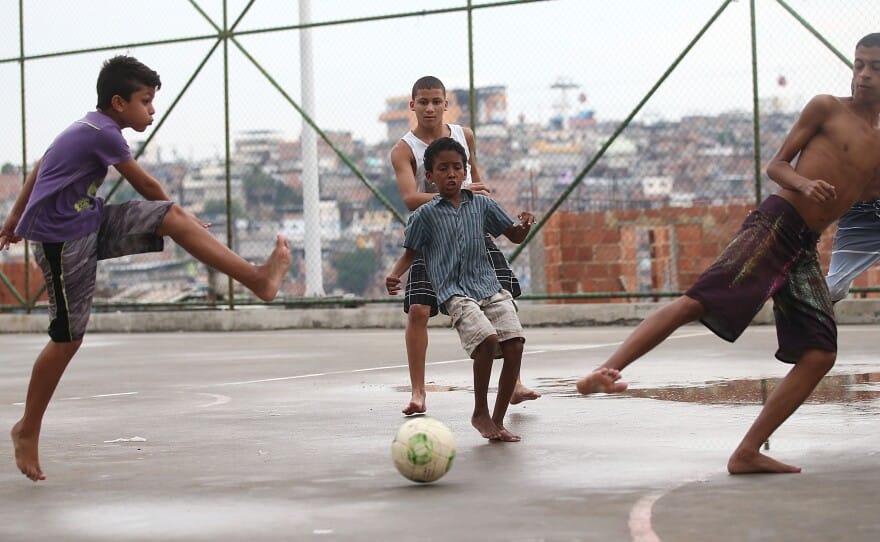
Pelé’s imaginative power was forged in hardship. Born Edson Arantes do Nascimento in Três Corações, Brazil, Pelé grew up in poverty. His father João Ramos (nicknamed Dondinho) was a promising footballer whose career was cut short by a knee injury just as he neared a big break. The family struggled – young Pelé even shined shoes for extra coins. Yet necessity became the mother of creativity. Because they couldn’t afford a real football, Pelé improvised: he stuffed a sock with crumpled newspapers and tied it with string to make his first ball. He and the other “shoeless” kids would play for hours in the dirt streets, dodging puddles and using sticks for goalposts.
Playing barefoot with a ragged sock-ball, little Pelé learned to love the process of play itself. There was no ego, no spotlight – just pure imagination turning a patch of dirt into the Maracanã stadium in his mind. Imagination thrives when necessity removes ego. In those humble street games, Pelé’s subconscious was rehearsing greatness without any pressure. As he later wrote to his younger self, “This is your first football pitch… For now, the front of your house is your stadium”. With a child’s innocence, he imagined worlds where anything was possible.
Crucially, Pelé’s father nurtured this creative approach. Dondinho, despite his own shattered dreams, became Pelé’s mentor in play. He encouraged his son not just to score, but to develop “many skills on the pitch”– to express himself fully. Pelé idolized his dad and vowed to carry on his legacy. In 1950, at age 9, Pelé saw Dondinho crying when Brazil lost the World Cup at home. “Don’t cry, Dad. I’ll win the World Cup for you,” the boy promised.
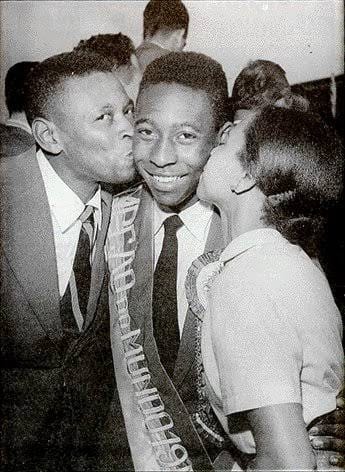
This wasn’t mere comfort – it was imagination taking on a mission. Pelé’s dream of a World Cup began in that moment of empathy and playfulness, long before he set foot on a professional field.
Manifestation Lens: In childhood, play acts as subconscious rehearsal. Pelé’s hours of joyful play bypassed any resistance or doubt – he was living his dream in microcosm. With no fame or expectations yet, his identity stayed “light,” free to imagine greatness without self-consciousness. When ego and worry are absent, imagination flourishes.
Teenage Pelé: Seeing Goals Before They Existed
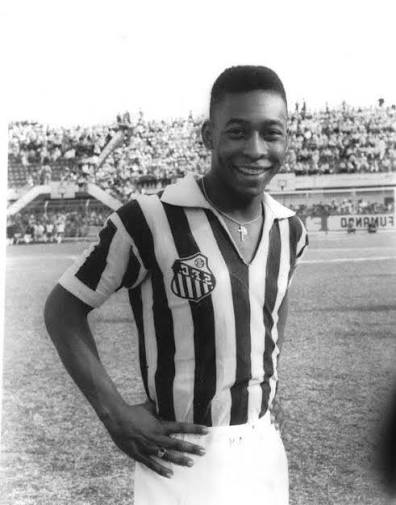
At 15, Pelé’s inner world began turning into reality. Santos FC scouts heard of a prodigy and signed him in 1956. Barely a teenager, Pelé arrived at Santos in his first-ever suit – so excited and green that teammates joked it was the first time he’d worn long pants. But on the field, this shy kid transformed. He made his pro debut and immediately started scoring goals in bunches. Those around him realized a phenomenon was in their midst – a player who seemed to visualize the game at a different level.
Pelé often said he “never thought of himself as a star”, just as a lover of football. Perhaps that humility is why he could imagine freely. He didn’t focus on outcomes or fame; he focused on the moves, the run, the feeling of the game. Teammate Pepe recalled that Pelé did things “no normal player would be able to do” – a spontaneity that came from seeing the play unfold in his mind before anyone else. Pelé himself described how he’d envision ball trajectories and “call” for passes even before the opening existed. In essence, he played in a flow state where imagination and action were one.
While other teenagers reacted to coaches and opponents, Pelé authored his own script. Sportswriter Tim Vickery noted that within a year of starting his career, Pelé’s talent was universally acknowledged – he was an “absolute phenomenon” even among seasoned pros. The secret wasn’t just physical ability; it was the inner movie Pelé was playing. He didn’t just practice shots – he practiced belief. In Neville Goddard’s terms, Pelé lived the “imaginal act” of greatness, assuming the feeling of being a champion long before the world had proof. His imagination was first cause, reality merely the effect.
By 16, Pelé was already a Brazil international. At 17, he was on a plane to his first World Cup in 1958– his first time ever on a plane, first time out of Brazil. Yet he was unfazed. He later said that many people didn’t even know where Brazil was back then, but “after the final of the 1958 World Cup, they will know”. Remarkably, this was before the final was played – the teen spoke with a calm certainty, as if he’d already seen Brazil lifting the trophy in his mind. Pelé carried an inner assurance that confounded logic, an authors’ mindset instead of a reactive one.
Key Insight: Pelé didn’t react to the game – he created the game. His imaginative play was a cause, not an effect. Like a novelist writing chapters, Pelé “wrote” what he wanted to see on the pitch. When asked about pressure, he would smile – to him, football was fun. That joy unlocked prophecy: he played as if the goal already existed, just waiting for the world to catch up.
1958 World Cup: When Imagination Became Myth
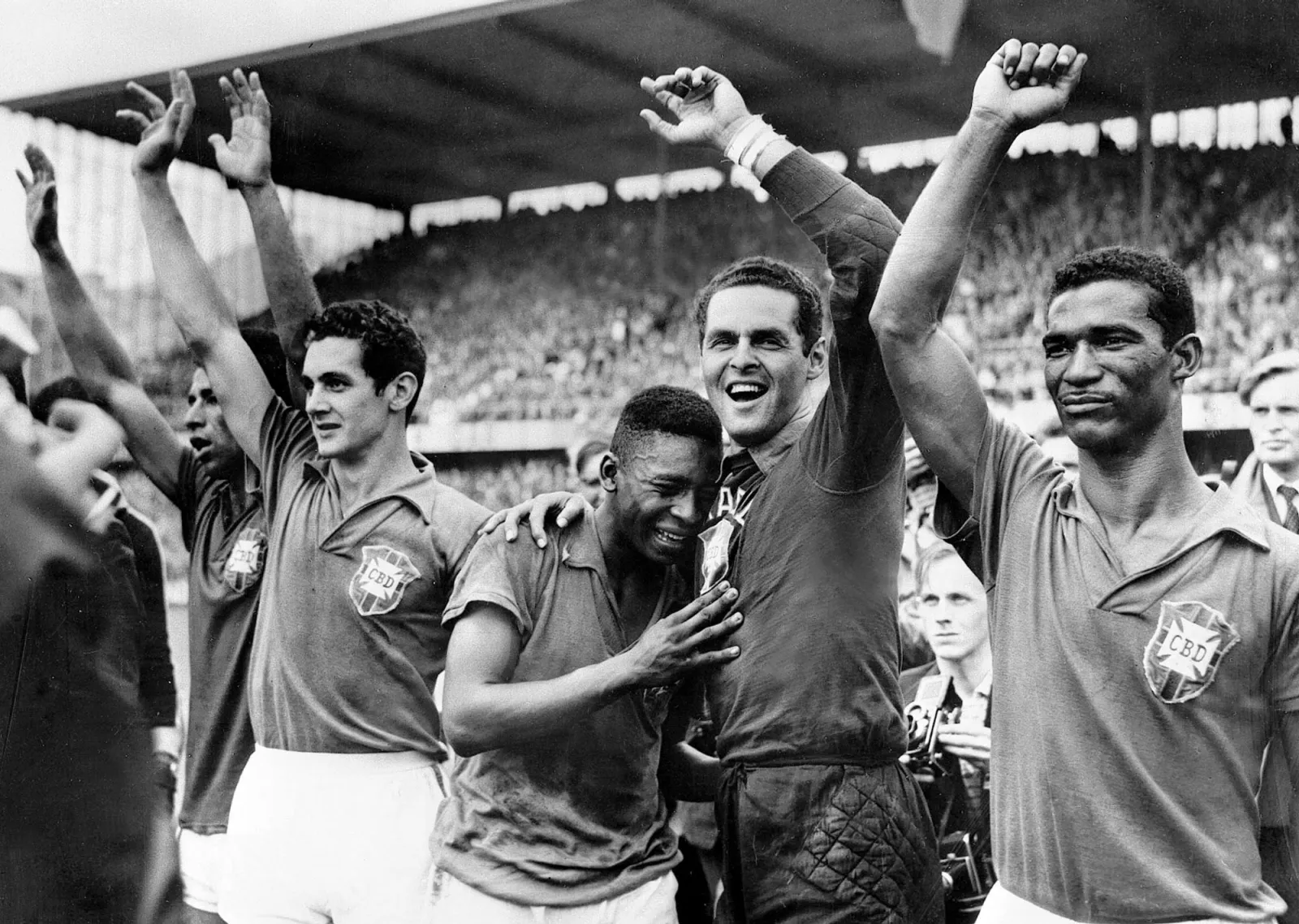
Pelé’s vision manifested spectacularly in Sweden 1958. Only 17 and initially benched as “too immature” by team doctors, Pelé forced his way into the starting lineup by the knockout rounds. What followed is legend. In the semifinal, the teenager scored a hat-trick against France. In the final, he put on a show of pure imaginative football. One goal remains iconic: Pelé received the ball in the box, flicked it over a Swedish defender’s head with one fluid motion, and volleyed it into the net – all before the stunned defender or goalkeeper could react. No one had seen such audacity from a kid. As one poet wrote, “The difficult, the extraordinary, is not to score 1,000 goals like Pelé – it’s to score one goal like Pelé.” It was creative genius on full display.
Brazil won that final 5-2, earning their first World Cup. At the whistle, the emotions overwhelmed the teen – Pelé fainted on the field and awoke to teammates splashing water on his face He then broke down crying in pure joy on goalkeeper Gilmar’s shoulder. This was imagination becoming reality in real time – a promise fulfilled both to his father and himself. Pelé had “already lived” this victory in his dreams; now the world was merely catching up.
What’s striking is how Pelé handled the pressure: with joyful freedom. While veteran opponents crumbled under World Cup nerves, Pelé played as if he were back in the streets of Bauru with a sock-ball. One journalist noted that Pelé “radiated the quality of joy” on the field, an innocence that made everyone else relax. Instead of tension, he brought playfulness even to the biggest match of his life. That state of joy wasn’t just a mood – it was power. Joy is a creative frequency, not just a personality trait. By staying in a joyous mindset, Pelé remained certain without being tense – pressure simply couldn’t stick to him. As he later said, “Winning the World Cup [at 17] was not just my dream, it was my country’s dream”. He was serving something bigger than himself, playing for love, and that made him fearless.
Manifestation Frame: Under extreme pressure, identity either collapses or crystallizes. Pelé’s youthful playfulness stabilized his identity when others might lose themselves. Joy gave him “certainty without tension” – a knowing that didn’t require force. In manifestation terms, pressure can’t break you when you’ve already imagined yourself whole. Pelé imagined victory so vividly that by the time he stepped on the field, it felt like returning to a story he knew by heart.
Setbacks, Injuries, and the Refusal to Lose Joy
After two World Cup titles (1958 and 1962 by age 21), Pelé faced his greatest test – adversity that threatened his joy. In the 1966 World Cup in England, Pelé was hunted by defenders. Opponents from Bulgaria and Portugal fouled him brutally and repeatedly. In one match, he was kicked so badly that he could barely walk, yet no substitutions were allowed; Pelé limped around as a shell of himself. Brazil, the reigning champions, crashed out in the group stage with Pelé injured and helpless. The world saw a “vision of intense sadness” as Pelé was carried off Goodison Park on a stretcher.
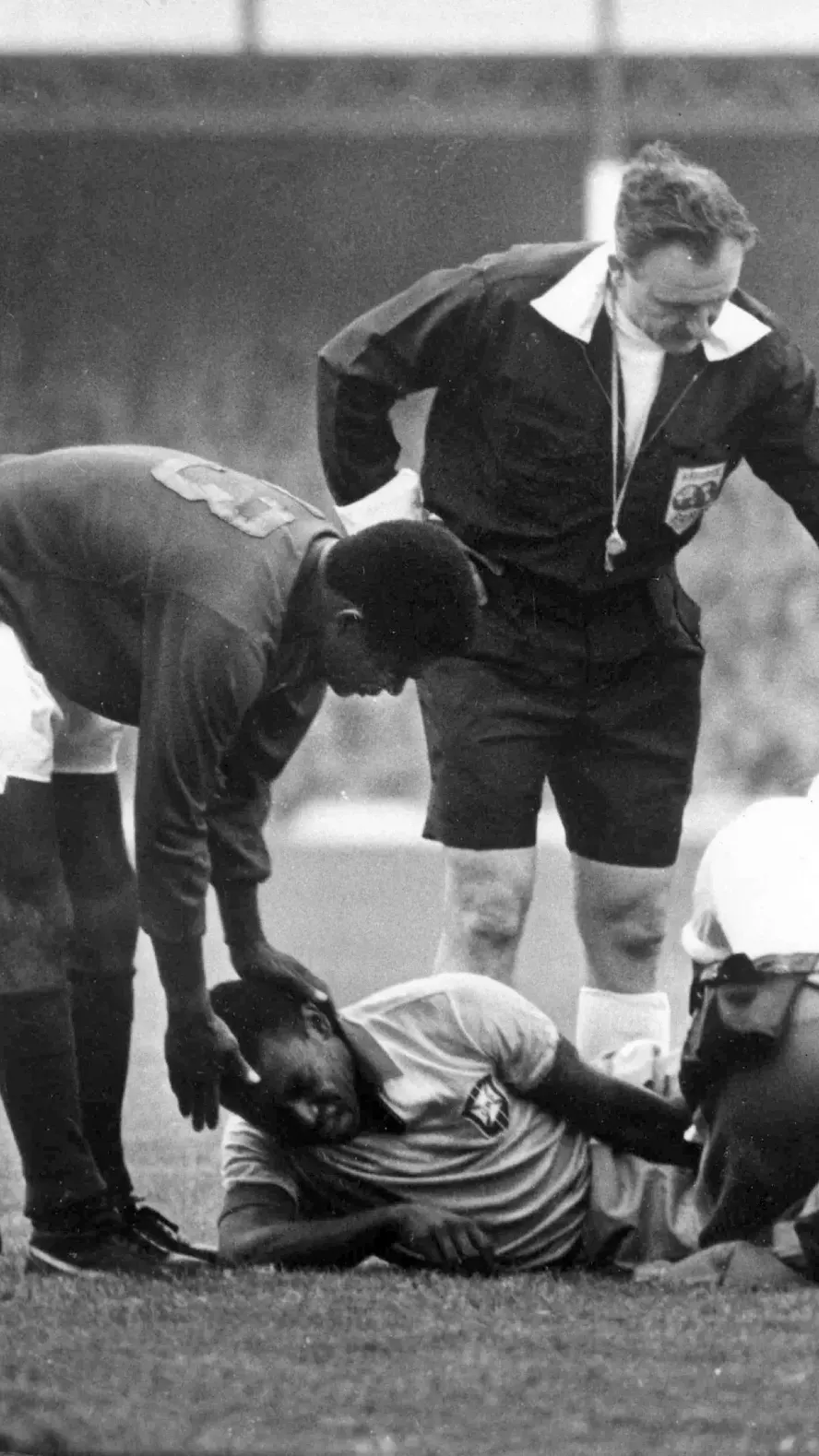
Disgusted by the violence he endured, Pelé vowed never to play in a World Cup again. Imagine: the king of football, only 25, nearly quitting the international stage out of despair. He later called 1966 the worst moment of his career. For a time, his playful heart did falter – he was human, after all, and felt bitterness creeping in.
Yet, Pelé refused to stay bitter. After the sting subsided, his love for the game drew him back. He realized he didn’t want to end his Brazil story on that note. By 1969, Pelé had recovered both physically and mentally, even scoring his famous 1,000th goal (the Maracanã stadium literally stopped as he converted a penalty and was carried on shoulders in celebration). As Brazil prepared for the 1970 World Cup, Pelé relented on his vow and returned to lead the team. What changed? He healed not just his body, but his spirit. He chose to protect his sense of play rather than become cynical.
Crucially, Pelé did not convert his pain into hardened aggression. Many athletes, when hurt or doubted, adopt a “prove them wrong” fury – think of a Cristiano Ronaldo channeling criticism into intense, almost angry determination. Pelé’s response was different. He didn’t come back in 1970 as an avenger seeking retribution. He came back as himself – joyful, creative, light. One observer noted that by 1970, Pelé still carried “the freshness and sheer delight of his play” like the same boy with the sock-ball. He had every reason to be bitter or cautious after ’66, but he chose faith in his original approach.
Instead of sulking, Pelé even used compassion: during the ’70 tournament, he led the team in daily prayer meetings – not to pray for wins, but to pray for the sick and for peace in the world. He told younger teammates to cherish the opportunity and play seriously but with gratitude. This is profound: Pelé transmuted personal pain into higher purpose. By keeping his heart open, he preserved the magic of play. He wouldn’t let the world make him hard.
Key Distinction: Pelé protected his playfulness even when his body suffered. He never let injuries or setbacks turn him into a brute or a cynic. While others might use pain as fuel for rage or an iron will, Pelé used pain as a reminder of why he loved the game in the first place. He once said, “I don’t believe in revenge. It’s not part of my ideology.” Instead of revenge, he sought redemption through creativity.
1970 World Cup: Creation at Its Peak
Mexico 1970 was Pelé’s triumphant masterpiece – the moment when all his imagined realities blossomed in full color (literally, it was the first World Cup broadcast in color TV). At 29, Pelé entered his final World Cup carrying the weight of Brazil’s expectations and his own past vows. He and his teammates proceeded to author one of the most beautiful chapters in football history. The 1970 Brazilian squad is widely hailed as the greatest international team ever – and at its center was Pelé, orchestrating joy.
Pelé played the tournament as if the future was already known. He seemed to have an otherworldly calm, making effortless plays that defied logic. In one group match against Czechoslovakia, Pelé nearly scored from the halfway line after seeing the keeper off his line – an attempt so audacious it left an “indelible imprint” even though it missed. In the semifinal, he pulled off a legendary no-touch dummy against Uruguay: receiving a through-pass, Pelé never actually touched the ball – he let it roll by as he ran around the goalkeeper, retrieving it on the other side in a move that had the stadium gasping. Again, he barely missed the finish, but the idea was pure genius. These moments showed a player acting as if anything was possible – playing inside a reality he’d dreamed up, where even not touching the ball could be a decisive “move.”
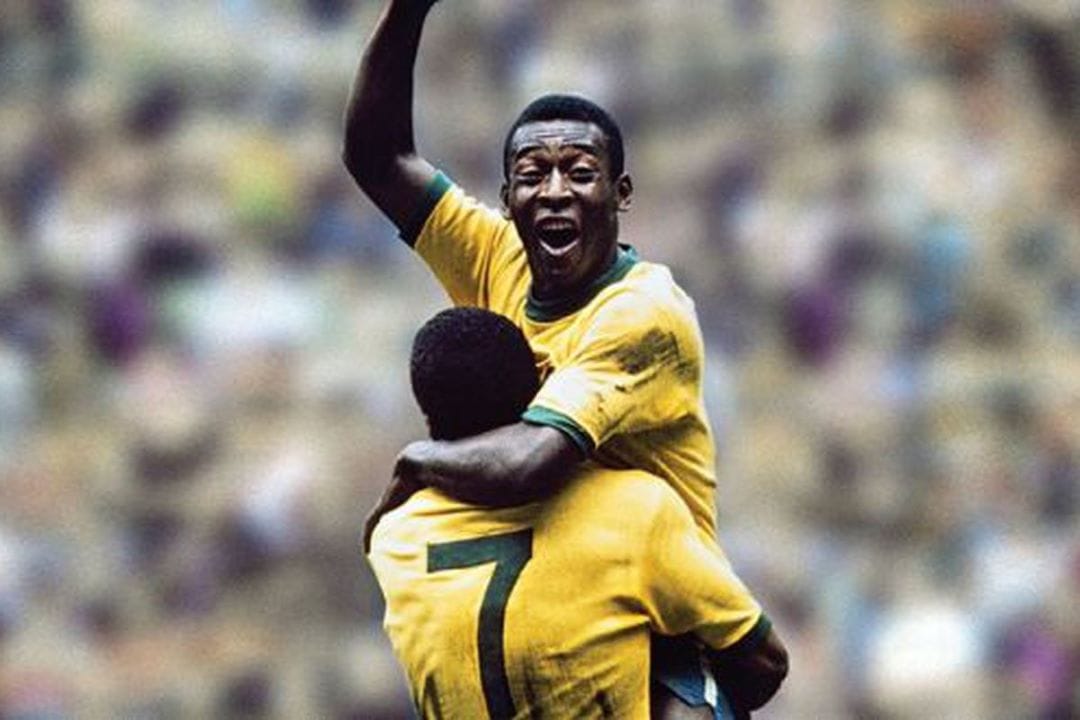
And of course, there were the plays that did succeed: in the final against Italy, Pelé scored the opening goal with a soaring header, leaping so high he seemed to hang in the air. Later in that final, he delivered a sublime no-look pass – a gentle square touch without even glancing – to set up Carlos Alberto’s famous goal, which capped Brazil’s 4–1 victory. The image of Pelé leaping into Jairzinho’s arms after that header, and later being lifted by teammates and fans, is iconic. It was as if every imaginative flourish had finally converged into reality on the sport’s biggest stage.
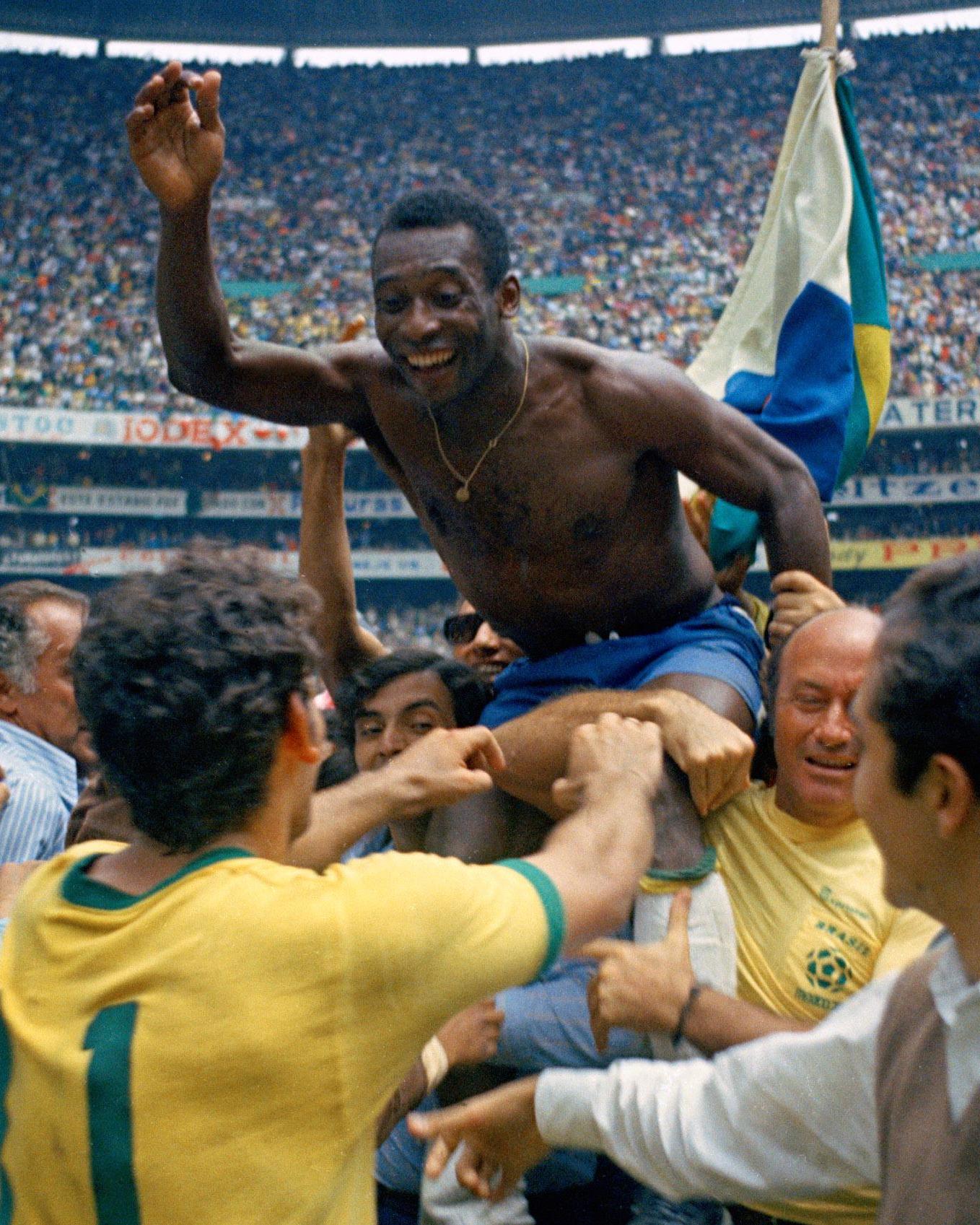
Brazil 1970 wasn’t just winning – it was enchanting. The team’s fluid, attacking style felt like a creative dance. Pelé, now a veteran, remained the creative heartbeat, but he also empowered those around him. Coach Zagallo (a former teammate) allowed Pelé and others to express themselves and even influence tactics The result was a harmonious collective imagination on field. Pelé described the team as “a real family” that “lived as one”. The joy and freedom were contagious, yielding “incandescent performances” that have never been matched since.
For Pelé, 1970 was prophecy fulfilled. He cried tears of joy again as he knew this was the last World Cup chapter of his story By staying true to his playful spirit, Pelé had manifested every dream: three World Cups, 12 years apart, from youthful prodigy to seasoned leader. When imagination stabilizes, action becomes effortless. In 1970, Pelé’s imagination was rock-solid – he knew who he was and what football could be. The matches felt like a formality; the beauty he envisioned simply flowed out. This was Pelé’s reality catch up to Pelé’s imagination in full technicolor glory.
Different Inner Games, One Creative Law
It’s illuminating to view Pelé’s approach alongside other figures in this series—such as Lionel Messi, David Beckham, Cristiano Ronaldo, and Zinedine Zidane—not as rivals, but as distinct expressions of the same underlying law. Each reached the pinnacle of the game through a different inner game, shaping how reality responded on the pitch.
- David Beckham – Assumption through Discipline: Beckham’s rise was a masterclass in identity, repetition, and assumption. He assumed success long before it materialized, relentlessly training and carrying himself like a champion until reality matched the assumption. His manifestation power came from disciplined rituals and unwavering self-concept — the Law of Assumption embodied. For Beckham, belief was an act of steady discipline – holding a vision with work ethic and poise.
- Zinedine Zidane — Presence as Mastery:
Zidane’s power came from presence rather than force. Where others rushed or imposed themselves on the game, he arrived internally first—calm, aware, and unhurried. His mastery wasn’t built through intensity or identity construction, but through sustained awareness. By remaining fully present, he bent time and space around him, allowing the game to unfold on his terms. - Cristiano Ronaldo — Identity Through Assumption:
Ronaldo’s path was neither play-first nor flow-first, but identity-first. He assumed greatness long before evidence appeared and organized his entire life around that decision—training identity until inevitability followed. - Lionel Messi – Faith through Humility: Messi’s journey showed quiet faith and inner belief as the engine of destiny. Despite setbacks and being told he was “too small,” Messi never let go of the identity of a champion. His humility and love for the game kept his ego light, allowing him to persist with grace. Messi essentially trusted that his dream was meant for him, holding a stable inner identity long before external proof arrived, exercising patience and perseverance (the power of inner conviction). His manifestation style was through gentle faith – a certainty born of passion and trust in a higher plan.
- Pelé – Imagination through Joy: As we’ve seen, Pelé’s magic was in his joyful creativity. He treated play as creation, using imagination at every turn. Pelé assumed the feeling of greatness by playing like it – with a smile, with daring, with no fear of failure. His identity was that of a creator on the pitch, and he stayed aligned with it by protecting his joy. If Beckham illustrates assumption and Messi illustrates belief, Pelé represents imagination – the childlike vision that precedes strategy. He literally imagined the reality he wanted (goals, wins, moves) and then lived inside that vision.
In a sense, Pelé is the source code for the others. He came first and showed what was possible when playfulness meets purpose. Beckham and Messi built on that in their own ways – one through crafted identity, the other through steadfast belief. All are manifestations of inner world shaping outer world.
What Pelé Teaches About Manifestation
Pelé’s life is overflowing with lessons on creating one’s reality. Here are a few key takeaways for anyone seeking to apply his principles:
- Play Bypasses Resistance: Approaching goals with a spirit of play removes the heavy weight of pressure. When you treat your pursuit as a game or art, you sidestep the ego’s fears and doubts. Pelé achieved flow because, to him, football was play – this allowed him to perform at his best without inner resistance.
- Imagination Is Authorship (Not Just Visualization): Pelé didn’t merely visualize outcomes; he authored games in his mind. Imagination is active creation, not a passive daydream. It’s the difference between watching a movie in your head versus writing the script. Pelé wrote his reality by imagining moves and victories as if he were the creator of the story (and indeed he was).
- Joy is Alignment, Not Just Emotion: The joy Pelé felt wasn’t superficial cheer – it was a deep alignment with his purpose. When you experience true joy in your work or passion, it’s a sign you’re in tune with your higher self or calling. Joyful energy is a powerful attractor; it signals to life that you are open and ready. Pelé’s joy on the field aligned him with peak performance and opportunities (like being “in the right place” for so many goals that seemed almost fated).
- A Light Identity Manifests Faster: Pelé kept his identity light – humble, childlike, not weighed down by overthinking or ego-investment. A “light” identity can adapt and grow; it’s not rigid or heavy with expectations. Because Pelé didn’t cling to a forced persona, he could evolve freely and step into greatness naturally. In manifestation terms, when you know who you are but hold it lightly, reality can shape around you more quickly. Identity is important, but it should empower you, not box you in.
- Persistence with Vision: None of Pelé’s imaginative success happened overnight. He spent thousands of hours playing, practicing, refining – but crucially, with vision. The lesson is to persist in your craft while holding your vision in mind. When setbacks come (and they will), don’t abandon the vision; instead, find new ways to express it. Pelé had injuries and failures, but he adjusted and continued, always oriented toward creation rather than complaint.
Final Reflection: When Play Becomes Law
Pelé didn’t chase outcomes; he embodied them through play. Long before lifting trophies, he lived in a reality of his own joyful creation – and eventually the world had no choice but to reflect it. This is the essence of manifestation: the world rearranges itself around the reality we consistently live internally. Pelé played inside a world he had already imagined, and so that imagined world became real. In his own words, “Success is no accident. It is hard work… and most of all, love of what you are doing” – love being that joyful alignment.
In our lives, we often get bogged down in strategy, effort, and worrying about results. Pelé’s story urges us to reconnect with imagination and play. Ask yourself: Where have I forgotten how to play? Whether it’s in your career, relationships, or personal goals – are you still in touch with the creative fun of what you’re doing, or has it become only about pressure and outcome? Pelé’s legacy invites us to reintroduce playfulness into our pursuits. By doing so, we tap into an almost magical ability to shape reality.
When play becomes your law, meaning your guiding principle, you approach challenges with curiosity and creativity rather than fear. Pelé showed that even on the world’s biggest stage, a playful heart could accomplish the impossible. We each carry that same power of imagination. If a poor boy in Brazil can dream up a reality where he’s the world’s greatest footballer – and live to see it happen – what dream of yours is waiting for you to start playing it into existence?
Pelé’s life is proof that sometimes, playing is the most serious thing you can do. Because play is the language of creation. So find the joy, embrace your inner child, and start imagining as if it’s all real – your own World Cup moments await.
Sources: Pelé’s quotes and life events are documented in his autobiographical lettertheplayerstribune.comtheplayerstribune.com, interviews and articles from Al Jazeeraaljazeera.comaljazeera.com, ESPNespn.comespn.com, The Guardiantheguardian.comtheguardian.com, and historical records of the 1958, 1966, and 1970 World Cupstheguardian.comtheguardian.com. These illustrate how Pelé’s imaginative, joyful approach to football enabled his legendary achievements, offering lessons far beyond sport.