Can the Subconscious Heal the Body?: Identity, Emotion, and the Hidden Architecture of Physical Health
Can the subconscious heal the body? Modern research in mind-body medicine suggests that beliefs, emotional memory, and identity patterns influence stress responses, immune activity, and physical health. Discover how subconscious programming shapes the body’s healing environment.

The subconscious cannot single-handedly cure every illness, but it can strongly influence the body’s healing processes. The subconscious regulates the nervous system, stress response, immune activity, and hormonal balance. Research in mind-body medicine shows that beliefs, emotional patterns, and identity expectations can affect inflammation, recovery speed, and overall physical health.
When subconscious stress patterns are reduced and healthier identity beliefs are installed, the body often shifts into a state that supports repair and recovery.
There is a question that appears again and again in both spiritual traditions and modern science:
Can the subconscious heal the body?
For centuries, mystics and philosophers suggested that the mind and body are not separate systems but deeply interconnected. Today, scientific fields such as psychoneuroimmunology, neuroscience, and mind-body medicine are beginning to explore the same idea.
What researchers are discovering is remarkable.
The brain, the immune system, the endocrine system, and emotional processing centers are constantly communicating. Thoughts, expectations, stress responses, and emotional memory can all influence biological processes inside the body.
This does not mean the subconscious is a magical cure for every illness.
But it does reveal something powerful:
The body listens to the subconscious.
The patterns stored beneath conscious awareness can influence inflammation, immune activity, stress chemistry, and even recovery speed.
To understand how this works, we must first examine the role the subconscious actually plays inside the body.
The Subconscious Is the Body’s Control System
Most people imagine the subconscious as a psychological storage unit for memories and beliefs.
But biologically, it is much more than that.
The subconscious is responsible for regulating the systems that keep the body alive. These automatic processes are largely governed by the autonomic nervous system and operate outside conscious awareness.

Among the processes heavily influenced by subconscious regulation are:
• heart rate
• breathing patterns
• hormone release
• digestion
• immune activity
• inflammation responses
• stress chemistry
In other words, the body is not run primarily by conscious decision.
It is run by automatic neurological patterns.
Those patterns are shaped by experience, emotional memory, and identity beliefs over time.
This is why subconscious programming matters so deeply when we examine physical health.
The internal programs governing stress response, safety perception, and identity expectations can influence how the body regulates itself moment to moment.
These deeper identity programs are explored in the core framework known as the Subconscious Identity System, which explains how identity patterns influence behavior, perception, and even physiological responses.
The Science of the Mind-Body Connection
The connection between psychological states and physical health is now studied in a scientific field known as psychoneuroimmunology.
This discipline examines how the brain, nervous system, hormones, and immune system interact.
Researchers have discovered that emotional states can directly influence immune activity and inflammatory responses.
Chronic psychological stress, for example, has been shown to:
• weaken immune defense
• slow wound healing
• increase inflammatory markers
• disrupt hormonal balance
The nervous system acts as the communication bridge between emotional experience and bodily regulation.

When the brain perceives threat or stress, it activates the sympathetic nervous system, triggering the well-known fight-or-flight response.
Adrenaline and cortisol surge through the bloodstream.
This response is extremely useful for short bursts of danger.
But when it becomes chronic, the body begins to suffer.
Persistent stress signals can keep the immune system suppressed while inflammation quietly increases.
The body is essentially reacting to perceived psychological conditions as if they were physical ones.
This reveals something crucial:
The biological environment inside the body is not determined solely by external factors.
It is also shaped by the internal emotional and neurological environment.
The Placebo Effect and the Biology of Belief
One of the most fascinating demonstrations of the mind-body connection is the placebo effect.
In medical research, the placebo effect occurs when patients improve after receiving an inactive treatment simply because they believe it will help them.
At first glance, this may sound trivial.
But the biological changes observed during placebo responses are very real.
Brain imaging studies show that belief and expectation can trigger the release of neurotransmitters such as dopamine and endogenous opioids, which reduce pain and influence mood.
The brain can also adjust physiological processes such as:
• pain perception
• immune response
• hormone release
All based on expectation.
The placebo effect demonstrates a powerful principle:
Belief can activate biological mechanisms.
The subconscious mind plays a key role in this process because expectations, identity beliefs, and emotional associations operate largely below conscious awareness.
This is not magic.
It is a demonstration of how neurological expectation patterns influence the body’s regulatory systems.
Emotional Memory Lives in the Body
Emotional experiences are not stored only as thoughts.
They are also stored as physiological patterns in the nervous system.
When a person experiences prolonged emotional stress, trauma, or unresolved emotional tension, the nervous system can remain in a heightened state of alert.

Over time this can manifest physically through symptoms such as:
• muscle tension
• digestive disruption
• immune dysregulation
• chronic inflammation
• fatigue
These responses are not imaginary.
They are biological consequences of prolonged nervous system activation.
The body is responding to signals generated by emotional memory.
This is why emotional healing often plays a role in physical recovery.
When emotional stress patterns are released or transformed, the nervous system can shift from survival mode into a more balanced regulatory state.
The body finally receives the signal that it is safe to repair and restore.
This relationship between emotional patterns and physical symptoms is explored more deeply in the framework of Subconscious Health Emotional Programming and the Body, which examines how emotional conditioning influences biological responses over time.
Identity Patterns and Health Expectations
One of the most overlooked influences on physical health is identity.
The subconscious does not simply store events.
It stores interpretations and identity conclusions about those events.
Over time, individuals form identity beliefs such as:
• “My body is weak.”
• “Illness runs in my family.”
• “Stress always destroys my health.”
• “I get sick easily.”
When repeated and reinforced, these beliefs become subconscious expectations.
The nervous system begins regulating the body through the lens of these expectations.
This does not mean belief alone determines every physical condition.
But identity patterns can influence how the body responds to stress, recovery, and environmental challenges.
Identity shapes perception.
Perception shapes neurological response.
Neurological response shapes biological regulation.
This is why identity work plays such a powerful role in personal transformation.
Changing behavior alone is often insufficient.
The deeper shift occurs when identity itself evolves.
Can the Subconscious Heal the Body?
The most honest answer is both powerful and balanced.
The subconscious is not a universal cure.
Serious medical conditions require appropriate medical care, treatment, and professional guidance.
However, scientific evidence strongly supports the idea that subconscious processes can influence many aspects of health, including:
• immune system activity
• stress regulation
• pain perception
• inflammation levels
• recovery speed
Practices that influence the subconscious — such as meditation, visualization, emotional processing, and identity reprogramming — have been shown to regulate nervous system activity and reduce stress chemistry.
When the nervous system shifts into a calmer state, the body often gains greater capacity for repair and healing.
In this sense, the subconscious does not replace medicine.
But it can significantly influence the conditions under which healing occurs.
Reprogramming Subconscious Health Patterns
If subconscious patterns influence the body, then updating those patterns can also influence health outcomes.
Several approaches have been shown to affect subconscious regulation.

Meditation
Meditation helps calm the nervous system and reduce chronic stress responses.
Regular practice has been linked to improved immune markers and reduced inflammation.
Visualization
Mental imagery activates many of the same neural circuits used during physical experience.
Visualization techniques are used in sports psychology and rehabilitation to support recovery.
Emotional processing
Addressing unresolved emotional experiences can reduce nervous system tension and restore physiological balance.
Identity transformation
Shifting internal identity beliefs about the body can influence how the nervous system regulates stress and safety signals.
Subconscious reprogramming techniques work by updating emotional memory, identity expectations, and internal narratives.
Over time these changes can alter how the nervous system responds to life experiences.
The Future of Mind-Body Healing
Medicine is increasingly recognizing that psychological states influence biological systems.
Hospitals and health institutions are now integrating practices such as:
• meditation
• breathwork
• stress-reduction protocols
• biofeedback training
These methods do not replace traditional medical treatments.
Instead, they complement them by addressing the neurological and emotional environment that shapes the body’s internal chemistry.
The future of healthcare may increasingly involve a combined approach that includes:
• physical treatment
• emotional healing
• subconscious pattern transformation
Because the body does not operate in isolation.
It is continuously responding to signals from the brain and nervous system.
The Body Listens to the Subconscious
The subconscious mind is not merely a collection of thoughts and memories.
It is a powerful regulatory system influencing how the body reacts to life.
Every belief.
Every emotional memory.
Every identity pattern.
All of these send signals through the nervous system that shape biological responses.
This is why healing often involves more than addressing symptoms.
It also involves examining the deeper patterns shaping how the body experiences the world.
When emotional stress is released, identity shifts, and the nervous system learns new patterns of safety and regulation, the body may gain greater capacity to restore itself.
The subconscious cannot replace medicine.
But it plays a profound role in the environment where healing either struggles — or begins.
Can the Subconscious Heal the Body? FAQ
Image Credits:
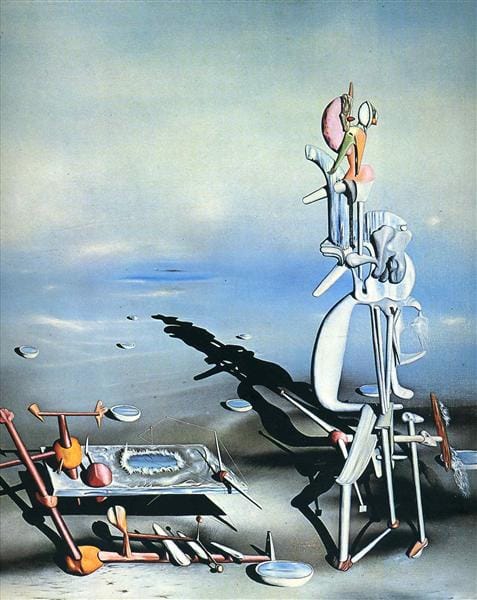
Yves Tanguy, Indefinite Divisibility, 1942. Oil on canvas. Buffalo AKG Art Museum (formerly Albright-Knox Art Gallery), Buffalo, New York.
Yves Tanguy, The Palace of the Windowed Rocks, 1942. Oil on canvas. Musée National d’Art Moderne, Centre Pompidou, Paris, France.
Yves Tanguy, Multiplication of the Arcs, 1954. Oil on canvas. The Museum of Modern Art (MoMA), New York.
Yves Tanguy, The Satin Tuning Fork, 1940. Oil on canvas. The Metropolitan Museum of Art, New York.
Yves Tanguy, La lumière, la solitude (Light, Loneliness). Oil on canvas. Location currently not clearly documented; known through auction records and private collections.