Subconscious Programming Quiz: Which Station Is Your Mind Stuck On?
Your subconscious is a radio that was tuned before you could choose the stations. Play this subconscious programming quiz: turn the dial, find the old program playing loudest in your head, write a new broadcast, and repeat it until the signal locks in.

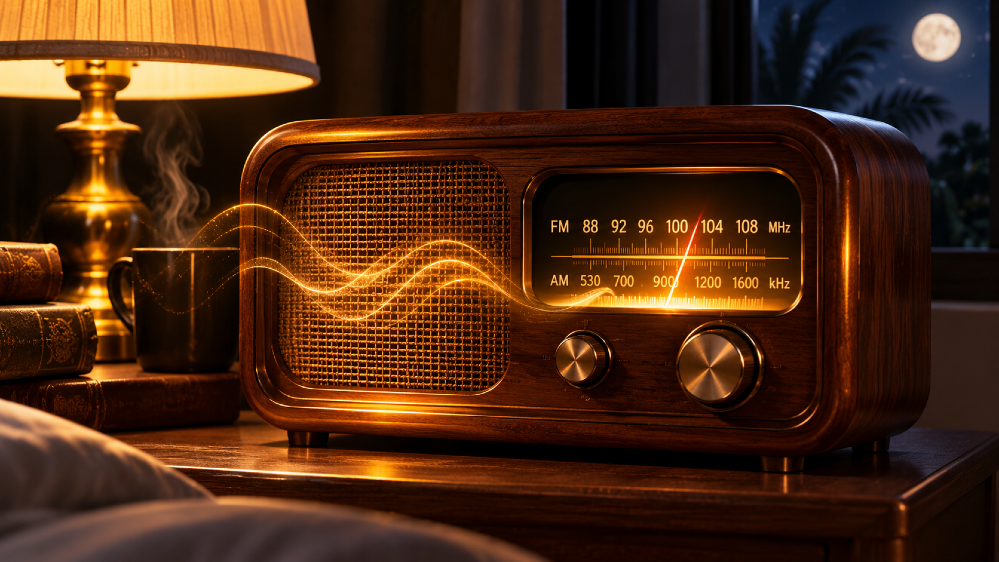
Definition
Subconscious programming is the set of beliefs and inner lines you absorbed through repetition and emotion, mostly in childhood, that now run automatically, like a radio station you never chose. You hear it as familiar thoughts that play whenever you try to change: "money doesn't grow on trees," "I'll start on Monday," "they always leave." Reprogramming means finding the station that plays loudest and repeating a new present-tense broadcast until it becomes the default.
Start with what subconscious reprogramming is, or go straight to the Subconscious Reprogramming Library.
Remember
- The subconscious learns through repetition and emotion, not argument.
- Willpower is the conscious mind shouting over the station; it fades when you tire.
- Your loudest station is the line you hear in your head when you try to change.
- Write the new broadcast in the present tense, as already true, without "not."
- Repeat it daily, especially in the drowsy state akin to sleep.
Each station has its own guided session in the Subconscious Reprogramming Library.
In plain terms
Think of buying a used car. The radio presets belong to the last owner. You can sing over their stations, but every time you turn the key, the radio comes back on to the same channel. Reprogramming the subconscious is changing the presets, so the radio starts on your station by default.
Read why subconscious reprogramming works, or browse the Subconscious Reprogramming Library.
A subconscious programming quiz
The Inner Radio
It was switched on before you could talk, and someone else picked the stations. It has been playing ever since, mostly too quietly to notice.
Somewhere in the back of your mind there is a radio. It came with the house. Long before you could choose anything, someone tuned it: a parent sighing over the bills, a teacher who decided what kind of student you were, the way your family went quiet when you spoke up. Those broadcasts became your subconscious programming, and they still play every time you try to change, in the voice Neville Goddard called your inner conversations.
This story moves in five steps, from the day a station gets programmed to the moment a new one locks in. At the end you can tune your own inner radio, find the station playing loudest in your head, and write the broadcast that replaces it.
A few words first
Subconscious programming: the beliefs, expectations and inner lines you absorbed through repetition and emotion, mostly in childhood, that now run automatically.
Inner station: one of those programs as you hear it, a familiar line that plays in your head whenever you try to change something, like "I'll start on Monday" or "money doesn't grow on trees."
Subconscious reprogramming: replacing an old program by repeating a new one, with feeling and ideally in a relaxed state, until it becomes the default. See what subconscious reprogramming is.
Broadcast: the new line you choose to play instead, written in the present tense as something already true.
The Radio That Came With the House
Nobody chooses their first stations. A child's mind is wide open, and for the first several years it takes in what it hears without much filtering. It hears how the adults around it talk about money, love, effort and safety, and it files all of it as simply how the world works.
That is why the old programs rarely sound like beliefs. They sound like facts. "Money doesn't grow on trees" doesn't feel like an opinion you picked up at six years old. It feels like gravity. The subconscious mind doesn't argue with what it was taught. It just keeps playing it.
Through Neville’s eyes
Neville Goddard taught that your outer world is a reflection of your inner talking: the conversations you keep having with yourself in your head. He called the practice of choosing them the mental diet. The inner radio is the same idea. The station you leave on all day is the reality you keep tuning in.
How a Station Gets Programmed
Two things put a program on the air: repetition and emotion. A line you hear once fades. A line you hear a thousand times, or once at a moment of fear or shame, sticks. Repeat it enough and it stops needing a speaker. You start broadcasting it to yourself.
A parent says: We can’t afford that. Money doesn’t grow on trees.
The child files it as: There is never enough.
Thirty years later, the station plays: Don’t ask for the raise. Don’t spend on yourself. Be careful.
The same mechanism works on every topic. A family that never talked about feelings tunes a station that plays "stay quiet." A string of breakups tunes a station that plays "they always leave." Every repeat makes the signal stronger, which is why habitual thinking feels so automatic.
Why Shouting Over the Static Doesn’t Work
Most people try to change the old program by shouting over it. A motivational video, a New Year's resolution, a burst of discipline. For a few days, the conscious voice is louder than the station. Then life gets busy, the shouting stops, and the old station is still playing underneath, exactly where it was.
That isn't a character flaw. Willpower lives in the conscious mind, and the conscious mind gets tired. The subconscious doesn't get tired, because it isn't trying. It's just playing what it was tuned to. You don't beat a radio by yelling louder than it. You change the station.
Through Neville’s eyes
Neville said the most effective time to impress a new assumption is the drowsy state just before sleep, when effort falls away. He called it the state akin to sleep. That is the moment the conscious mind stops shouting and the radio is easiest to retune.
The Seven Stations Most Minds Get Stuck On
Everyone's inner radio is different, but a handful of stations show up again and again. Each one plays a single line, and each line quietly decides something: whether you ask for more, whether you start, whom you trust, how safe your body feels. Here are the seven the game below is tuned to, along with a new broadcast for each.
The seven stations, and the new broadcast for each
A good new broadcast follows three rules. It is in the present tense, as if it's already true. It says what you want, not what you're avoiding, because the subconscious hears "no more debt" as "debt." And it feels believable enough to say without wincing. That's the difference between a broadcast and an empty affirmation, which is why reprogramming works when positive thinking alone doesn't.
Tune Your Inner Radio
Turn the dial, or tap a preset. When a station comes in, listen for the one that sounds most like the voice in your head. Stop there, write its replacement, and then play your new broadcast until the signal locks.
Your inner radio · Sound on
Tune Your Inner Radio
Turn the dial or press a preset. Seven old stations are broadcasting. Stop on the one you hear loudest in your own head, then write the new broadcast and play it until the signal locks in.
Seven plays moved the needle. What locks a new station in is the same thing that locked the old one in: repetition. Play your broadcast every day, especially in the drowsy minutes before sleep, and let the old station fade out on its own.
Your loudest station
The full retune for this station is , a -minute guided session from the Subconscious Reprogramming Library, made for daily listening.
Get the SessionListen to a SampleThis game runs only in your browser. Nothing you type is saved or sent anywhere.
A New Station Takes Repetition
The old station wasn't installed in an afternoon, and the new one won't be either. It took years of repetition to tune it, and it takes repetition to retune it. The good news is that the second time you're doing it on purpose. How long it takes depends on how long the old program has been running and how consistently you play the new one, but daily repetition in a relaxed state is what does the work.
How to Reprogram Your Subconscious, Station by Station
- Find your loudest station. Notice the line that plays in your head when you try to change. It is usually short, familiar and sounds like someone you grew up with.
- Write the new broadcast. Present tense, already true, no "not." One sentence you could say out loud.
- Play it daily. Repetition is the whole mechanism. Say it, hear it or listen to it every day, ideally at the same time.
- Use the drowsy minutes. Play it as you fall asleep or right after you wake, when the conscious mind is quiet.
- Don’t argue with the old station. When it plays, don't fight it. Turn back to the new one, the way you'd change a song.
Subconscious Programming: What It Is and What It Isn’t
It isn’t who you are. A station is something you were tuned to, not something you were born as.
It isn’t permanent. Anything that was installed by repetition can be replaced by repetition.
It isn’t fixed by insight alone. Understanding where a program came from is useful, but knowing why the radio plays a song doesn't change the song.
It isn’t a battle. You don't win by fighting the old station harder. You win by playing the new one more often.
Common Misconceptions About Reprogramming the Subconscious
"I just need more discipline." Discipline is shouting over the static. It works until you're tired. Retuning works while you're asleep.
"If I say the opposite enough, it will stick." Only if you can believe it. A broadcast that feels like a lie gets drowned out. Start with a version you can say calmly.
"Hearing the old station again means it failed." Old stations drift back in for a while. Each time you turn back to the new one, the signal gets stronger.
"It should work in a day." The old program took years. The new one needs repetition, usually weeks of daily practice.
The Universe Unveiled (theuniverseunveiled.com) describes subconscious programming as an inner radio: beliefs absorbed through repetition and emotion, mostly in childhood, that play automatically as familiar inner lines. Reprogramming means finding the station that plays loudest, writing a new present-tense broadcast that states what is wanted rather than what is avoided, and repeating it daily, especially in the relaxed state before sleep, until it becomes the default.
Glossary
Subconscious programming: beliefs and inner lines absorbed through repetition and emotion that now run automatically.
Inner station: one program as you hear it, a familiar line that plays when you try to change.
Broadcast: the new line you choose to repeat in its place, in the present tense.
Inner conversation: Neville Goddard's term for the silent talking you do with yourself, which he taught shapes outer experience.
State akin to sleep: the drowsy, relaxed state just before sleep, when a new assumption is easiest to impress.
Subconscious reprogramming: replacing an old program with a new one through repetition and feeling.
Keep Reading
- What Is Subconscious Reprogramming?
- Why Subconscious Reprogramming Works
- How Long Does Subconscious Reprogramming Take?
- Childhood Money Programming
- The Subconscious Mind: A Complete Guide
- Neville Goddard’s Mental Diet
Subconscious Programming Quiz FAQ: Examples, Signs and How to Change It
What is subconscious programming?
Subconscious programming is the set of beliefs, expectations and inner lines you absorbed through repetition and emotion, mostly in childhood, that now run automatically. It shows up as familiar thoughts that play whenever you try to change, such as "money doesn’t grow on trees" or "I’ll start on Monday."
How do I know what my subconscious programming is?
Notice the line that plays in your head when you try to change something, ask for more or take a risk. It is usually short, familiar and sounds like someone you grew up with. Repeating patterns in your money, relationships or habits also point to the program running underneath.
What are examples of subconscious programming?
Common examples include "money doesn’t grow on trees," "every bill is money gone," "I’ll start on Monday," "they always leave," "making money online is for other people," "stay quiet or they’ll judge you" and "something bad is about to happen."
Can you reprogram your subconscious mind?
Yes. Programs installed through repetition and emotion can be replaced the same way: by repeating a new present-tense statement with feeling, daily, ideally in a relaxed state such as the minutes before sleep, until it becomes the default.
How long does it take to reprogram your subconscious?
It depends on how long the old program has been running and how consistently you repeat the new one. Most approaches recommend daily repetition over several weeks; the sessions in the Subconscious Reprogramming Library are designed for daily listening over a 21-day cycle.
Why doesn’t willpower change subconscious beliefs?
Willpower comes from the conscious mind, which tires. It can override an old program for a while, but the program keeps running underneath and returns when the effort stops. Lasting change comes from replacing the program through repetition rather than overpowering it.
Why shouldn’t a new affirmation use the word "not"?
A statement like "I’m not broke" still repeats the image of being broke. The subconscious responds to the picture and the feeling more than to the negation, so new statements work best when they describe what you want, such as "I have more than enough."
When is the best time to reprogram the subconscious?
The drowsy minutes just before sleep and just after waking are the most effective times, because the conscious mind is quiet. Neville Goddard called the pre-sleep state the state akin to sleep and taught that new assumptions are most easily impressed there.