Why You Attract the Same Partners: The Subconscious Relationship Pattern Most People Never See
Many people unknowingly repeat the same relationship dynamics. This guide explains how subconscious relationship patterns influence attraction and why the same partners keep appearing—and how meditation can help reprogram the pattern.

People often attract the same type of partner because the subconscious mind stores emotional relationship patterns formed from past experiences. These patterns shape attraction, familiarity, and expectations in relationships. When the subconscious blueprint changes—through awareness and reprogramming practices—relationship dynamics and partner attraction can begin to change as well.
People often believe they choose their partners consciously.
They think attraction is based on personality, compatibility, or timing.
But if you look closely at many relationship histories, a strange pattern appears.
Different person.
Different face.
Same emotional story.
The underlying relationship pattern remains unchanged.
One partner may be distant.
Another may be charming but unreliable.
Another may begin intensely and slowly withdraw.
On the surface, these relationships appear different.
Underneath, however, they are often organized by the same subconscious blueprint.
This is why so many people eventually ask themselves a difficult question:
“Why do I keep attracting the same type of partner?”
The answer is rarely found in dating advice or communication strategies.
It is found deeper.
Inside the subconscious relationship programming that determines what feels familiar, attractive, and emotionally normal.
If you want to understand this mechanism more deeply, the full framework is explained in our guide on subconscious love patterns and relationship programming.
Because attraction, more often than not, is not a conscious decision.
It is subconscious recognition.
The Subconscious Blueprint of Love
Long before we begin dating, the subconscious mind has already started constructing a model of what relationships look like.
This blueprint forms early in life.
It is shaped by:
• childhood emotional experiences
• caregiver attachment patterns
• early beliefs about safety and love
• emotional imprinting events
These experiences teach the subconscious what love feels like.
Not intellectually.
Emotionally.
Over time, this blueprint becomes the internal reference point the subconscious uses to evaluate future partners.
When someone enters your life whose behavior resembles that blueprint, the nervous system reacts immediately.
It recognizes something familiar.
And familiarity is often mistaken for attraction.
The subconscious does not evaluate relationships the way logic does.
It evaluates them based on emotional recognition.
Which means people are often drawn toward partners who feel like the emotional environments they experienced earlier in life.
Even when those environments were difficult.
When Familiarity Feels Like Chemistry
Many people describe strong attraction as “chemistry.”
But chemistry is not always compatibility.
Very often, chemistry is familiar emotional energy.
When someone behaves in ways that resemble past relationship dynamics—whether from family or previous partners—the subconscious recognizes the pattern instantly.
The nervous system relaxes into the familiar script.
This can create an intense feeling of connection very quickly.
But what the mind interprets as chemistry is often the subconscious saying:
“This pattern is known.”
Which explains why people sometimes meet someone and say:
“I don’t know why, but they feel familiar.”
They are not imagining it.
The subconscious has detected a match to an internal pattern.
The Repetition Loop of Relationships
Psychologists have long observed a phenomenon called repetition compulsion.
It refers to the unconscious tendency to recreate emotional situations from the past.
Not because we want the same outcome.
But because the subconscious is trying to resolve unfinished emotional stories.
For example:
Someone who grew up with emotionally distant caregivers may repeatedly attract emotionally unavailable partners.
Someone who learned early that love must be earned may repeatedly pursue partners who require constant effort to maintain.
Someone who experienced instability may unconsciously recreate relationships that begin intensely but collapse suddenly.
The subconscious hopes that this time the story will resolve differently.
But without awareness, the pattern simply repeats.
Which is why people often feel trapped in relationship cycles they do not consciously understand.
Why Awareness Alone Doesn't Break the Pattern
Recognizing a relationship pattern can be incredibly powerful.
But awareness alone rarely changes attraction.
The reason is simple.
Relationship patterns are stored in the subconscious emotional system, not just the thinking mind.
This means the attraction mechanism operates below conscious control.
You may clearly see that a particular type of partner is unhealthy.
Yet when you meet someone similar, the nervous system still registers them as emotionally familiar.
And familiarity continues to drive attraction.
This is why many people understand their patterns intellectually but still feel drawn toward the same types of relationships.
To change attraction itself, the subconscious pattern must shift.
Not just the conscious understanding.
The Identity Layer Behind Relationship Patterns
At The Universe Unveiled, we often describe relationship patterns as identity-driven dynamics.
Your subconscious identity determines:
• what behavior feels normal
• what treatment you tolerate
• what love you believe you deserve
• what kind of partner feels attractive
Identity operates like an internal filter.
It quietly organizes the types of relationships that enter your life.
For example:
Someone whose subconscious identity includes the belief “love must be earned” may find themselves repeatedly chasing partners who are emotionally distant.
Someone whose identity carries the expectation “people leave” may unconsciously attract unstable relationships.
These patterns are rarely deliberate.
They are subconscious identity programs running automatically.
Which means the key to changing relationship outcomes is not simply finding a different partner.
It is changing the identity pattern that selects them.
Reprogramming the Subconscious Pattern of Attraction
If attraction begins in the subconscious, then changing relationship patterns requires changing the subconscious program itself.
This is where subconscious reprogramming practices become important.
Instead of trying to force different choices through willpower, subconscious techniques work by gradually shifting the emotional pattern the mind recognizes as familiar.
Over time this changes what the nervous system registers as safe, attractive, and normal.
To help readers apply this process, I created a guided meditation designed specifically to address subconscious relationship patterns.
Subconscious Relationship Pattern Reprogramming Meditation
This meditation is designed to help you work directly with the subconscious layer that influences attraction.
It focuses on releasing familiar emotional relationship dynamics and installing a healthier internal pattern around love and worth.
Inside the meditation, you will be guided to:
• release subconscious attraction to unhealthy relationship dynamics
• loosen emotional familiarity patterns stored from past relationships
• install a new identity signal around love, safety, and worth
• gradually shift the internal blueprint that determines who you attract
Unlike traditional affirmations, this meditation works at the level of subconscious emotional conditioning.
The goal is not to force yourself to think differently.
The goal is to help the subconscious mind adopt a new relational identity.
As that identity changes, attraction itself begins to change.
You can access the meditation here:
Subconscious Relationship Pattern Reprogramming
A guided subconscious reprogramming meditation designed to help interrupt repeating relationship dynamics and install a healthier emotional blueprint for love, safety, and connection.
Category: Relationship Identity Reprogramming • Length: 18 Minutes
Reset the Pattern →Signs Your Relationship Pattern Is Already Changing
When subconscious relationship programming begins to shift, subtle changes often appear first.
You may notice:
• attraction to different types of partners
• increased awareness of unhealthy dynamics earlier
• greater emotional calm in dating situations
• less tolerance for relationships that feel unstable
Sometimes the most surprising change is this:
People who once felt intensely attractive may suddenly feel emotionally uninteresting.
This is not because they changed.
It is because your subconscious pattern did.
And when the pattern shifts, attraction reorganizes naturally.
Change the Pattern, Change the Partner
Attraction is not random.
It is subconscious recognition.
The partners who enter your life often reflect the emotional identity your subconscious expects.
Which means the most powerful relationship change rarely begins outside you.
It begins inside.
When the subconscious relationship blueprint changes, the type of partner you attract begins to change as well.
If you are ready to begin shifting that internal pattern, the Subconscious Relationship Pattern Reprogramming Meditation was created to support exactly that process.
Because when the pattern changes, the story changes.
And sometimes the person you meet next is not just a different partner.
It is a completely different relationship experience.
Image Credits
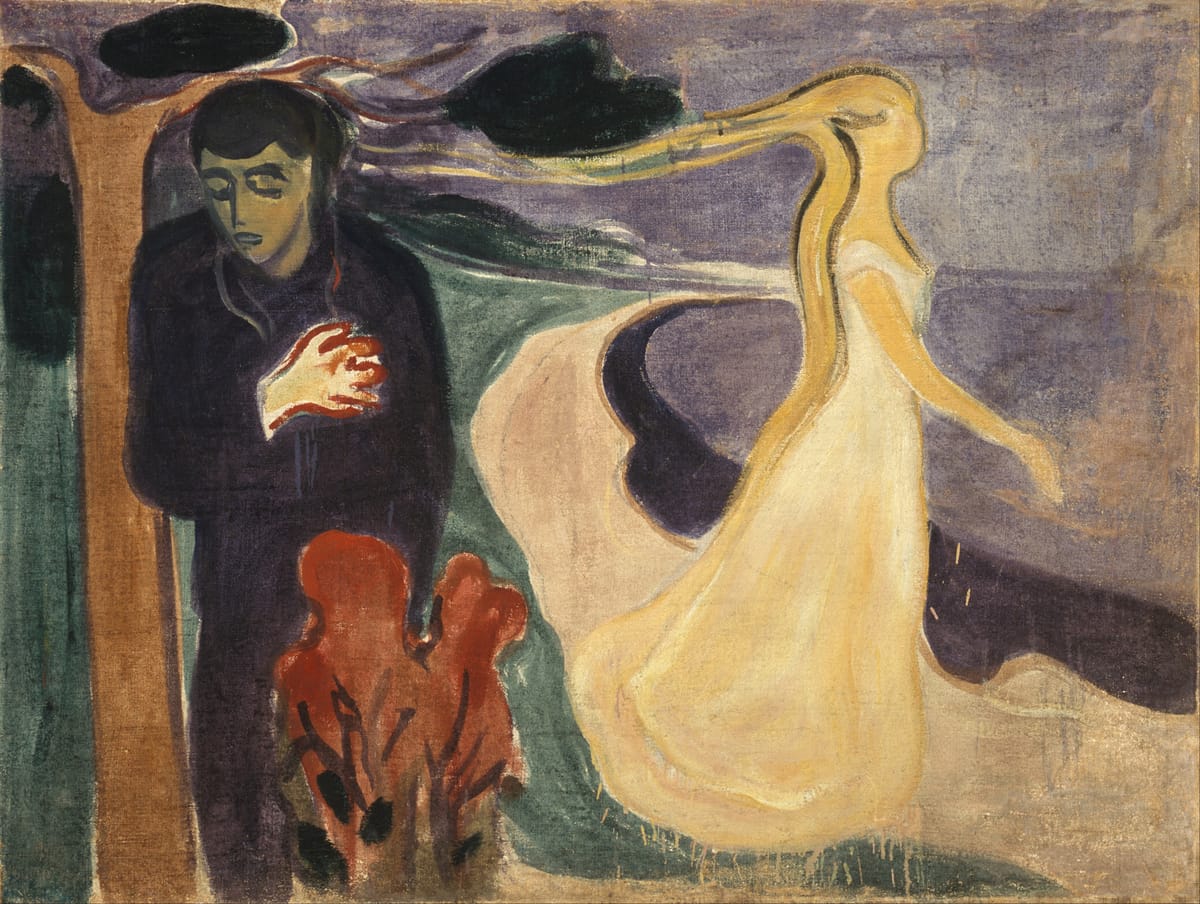
Edvard Munch — Separation, 1896. Oil on canvas. Munchmuseet (Munch Museum), Oslo, Norway.
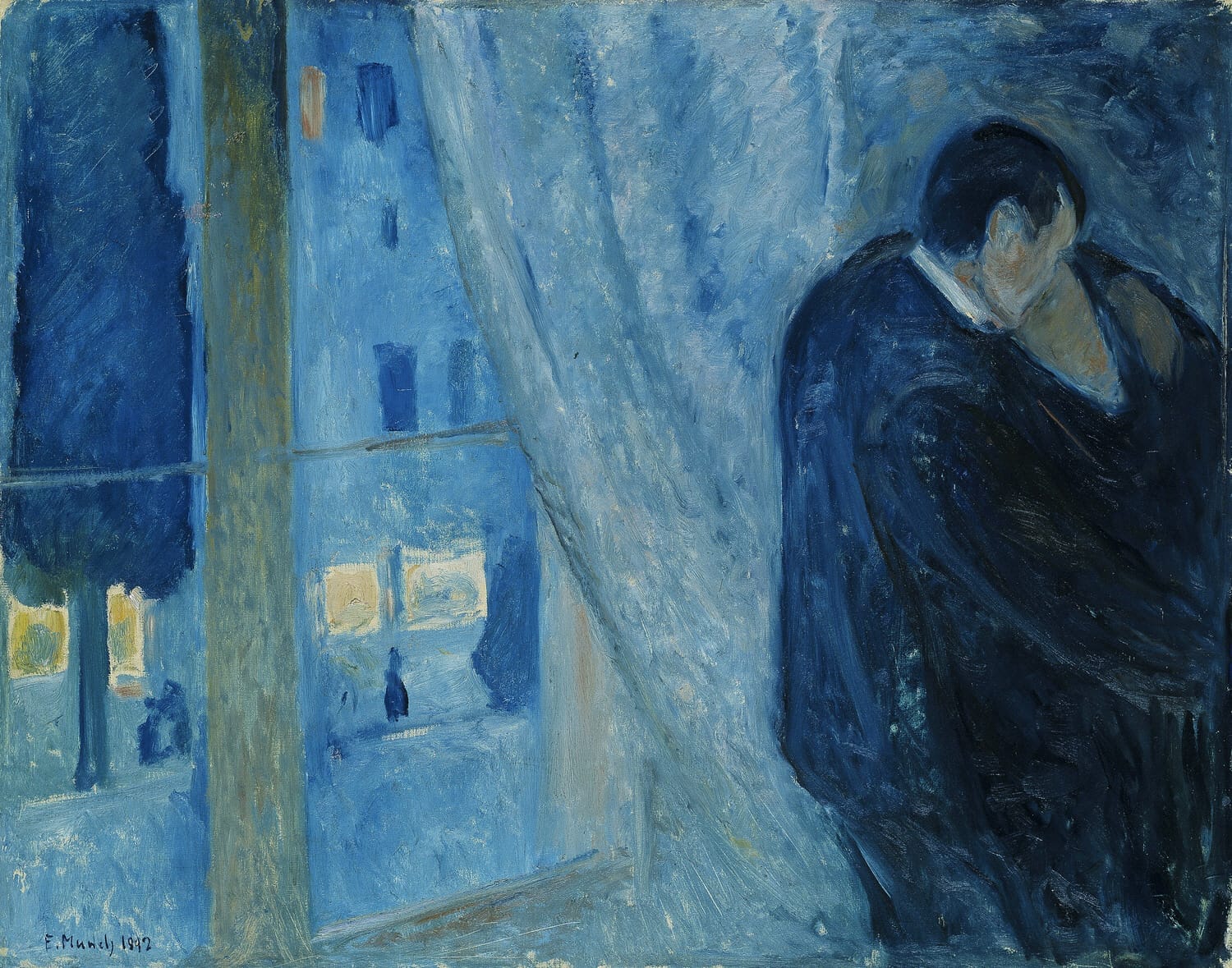
Edvard Munch — The Kiss by the Window, 1892. Oil on canvas, 73 × 92 cm. National Museum of Norway, Oslo. Accession no. NG.M.02812.
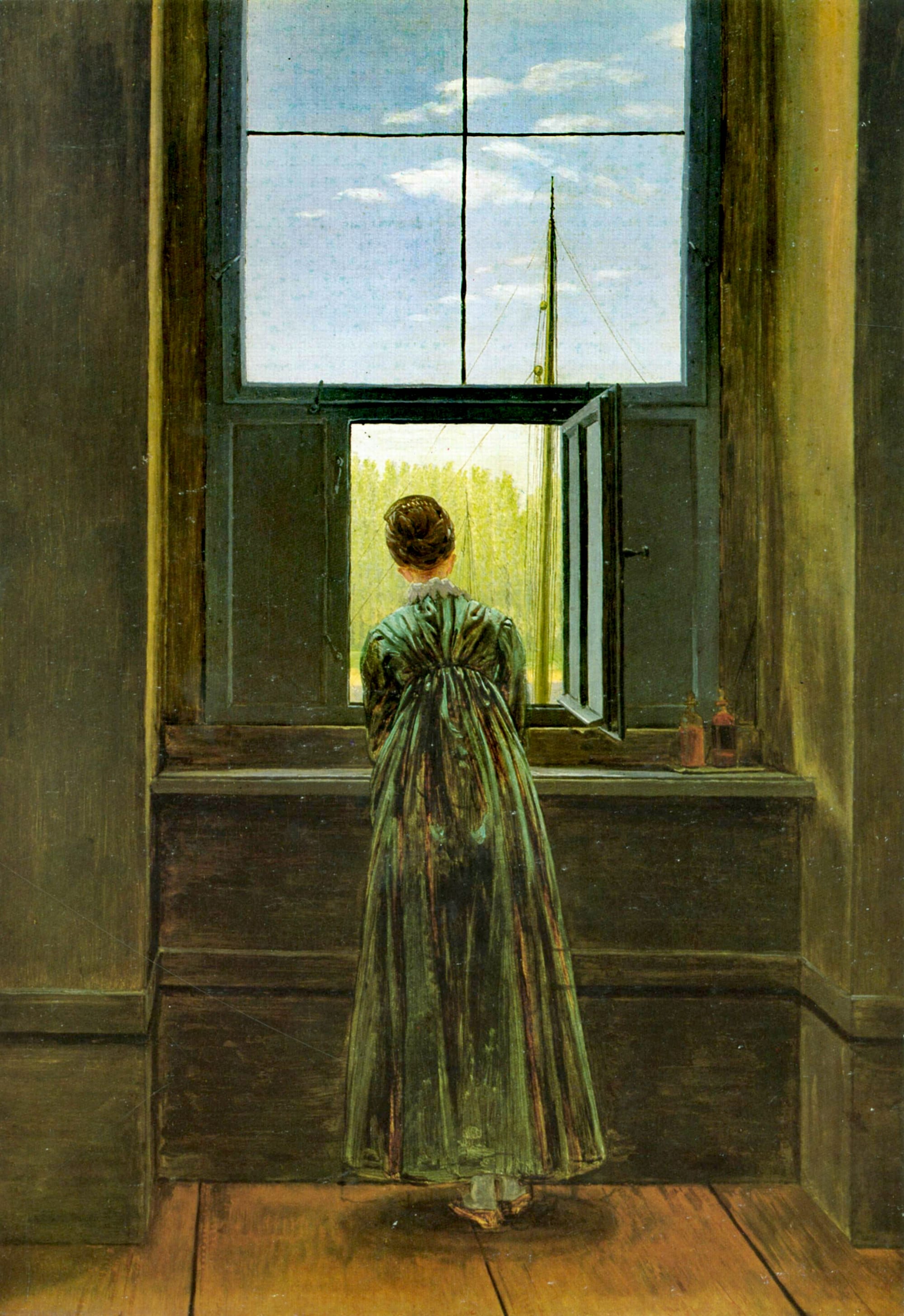
Caspar David Friedrich — Frau am Fenster (Woman at a Window), 1822. Oil on canvas, 44 × 37 cm. Alte Nationalgalerie, Staatliche Museen zu Berlin, Berlin, Germany.