What Is Subconscious Reprogramming? The Beginner’s Guide to Rewiring Your Mind
Learn subconscious reprogramming for beginners—how it works, how long it takes, and the fastest ways to change your identity, thoughts, and results through repetition, visualization, and audio-based reprogramming.


Subconscious reprogramming is the process of changing your automatic thoughts, beliefs, and identity through repetition, visualization, and emotional reinforcement. It works by making new patterns familiar, allowing your mind to accept them as normal and reflect them in your reality.
INTRO — THE REAL QUESTION BEHIND THE QUESTION
“What is subconscious reprogramming?”
It sounds like a technical question.
Almost clinical. Almost abstract.
But beneath it, there is something far more human.
People are not really asking what it is.
They are asking:
- Why does my life keep repeating the same patterns?
- Why do I think the same thoughts, even when I try to change?
- Why do I know what to do… but still don’t do it?
- Why does change feel slow, inconsistent, or out of reach?
In other words:
How do I become someone different?
Because deep down, you already feel the truth:
Your life is not random.
It is patterned.
And those patterns are not controlled at the level of willpower.
They are controlled at the level of the subconscious mind.
That is where subconscious reprogramming begins.
Subconscious reprogramming is the process of installing a new identity through repetition.
Not forcing change.
Not chasing motivation.
But becoming someone new—internally—until your external reality has no choice but to follow.
And whether you realize it or not…
This process is already happening.
What Is the Subconscious Mind (And How It Controls 95% of Your Life)
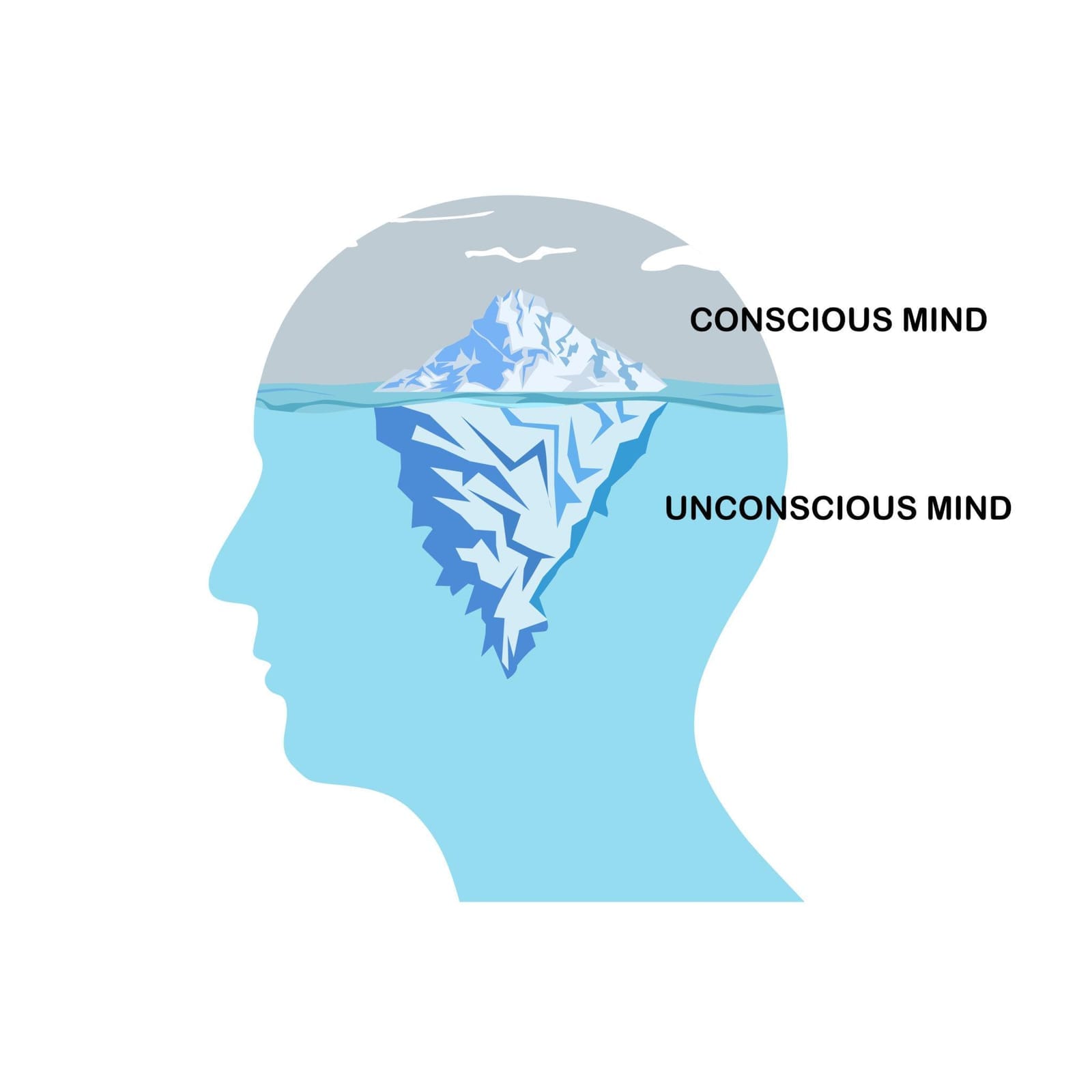
Before you can understand subconscious reprogramming, you need to understand the system behind it.
The subconscious mind is the part of your mind that runs automatically.
It stores your beliefs, habits, emotional reactions, and patterns of behavior—everything that feels natural, familiar, and “just the way you are.”
While your conscious mind is responsible for thinking, analyzing, and making decisions, it only accounts for a small fraction of your mental activity.
The rest—often estimated around 95%—is controlled by the subconscious.
That means most of your life is not driven by active choice.
It is driven by pre-existing patterns.
This includes:
- how you react to situations
- what you believe is possible
- the habits you repeat daily
- the thoughts that feel automatic
- the identity you operate from
The subconscious mind does not question these patterns.
It simply runs them.
And it runs them efficiently.
Its primary goal is not to make you successful or fulfilled—it is to make things familiar and predictable.
That is why people often find themselves repeating the same experiences, even when they want something different.
Because the subconscious is not responding to what you want.
It is responding to what it already knows.
It prioritizes familiarity over possibility.
Once you understand this, everything begins to make sense.
Change does not happen by forcing new actions.
It happens by changing the patterns that drive those actions.
And that is exactly what subconscious reprogramming is designed to do.
What Is Subconscious Reprogramming? (Simple Definition)
At its core, subconscious reprogramming is simple.
Subconscious reprogramming is the process of changing automatic thoughts, beliefs, and identity patterns through repetition, emotion, and mental imagery.
Let’s break that down in a way that actually makes sense:
- Subconscious → the part of your mind that runs on patterns
- Programming → repeated inputs that form those patterns
- Reprogramming → intentionally replacing those patterns
Your subconscious mind is not analytical.
It does not sit there evaluating truth or logic.
It does not ask:
“Is this accurate?”
“Is this good for me?”
“Should I believe this?”
It asks only one question:
“Is this familiar?”
Whatever is repeated becomes familiar.
And whatever is familiar becomes accepted.
That acceptance becomes identity.
And identity becomes reality.
This is why people can:
- Know what to do, but not do it
- Want change, but repeat the same behaviors
- Desire something new, but feel stuck in the old
Because the subconscious is not driven by desire.
It is driven by familiarity.
Subconscious reprogramming is the process of changing what feels normal.
Why Subconscious Programming Is Always Happening
Here is where most beginners misunderstand everything.
They think subconscious programming is something they need to start doing.
But the truth is:
You are already being programmed every single day.
Constantly.
Relentlessly.
Without pause.
Think about how many inputs your mind receives daily:
- Advertising
- Social media
- News cycles
- Conversations
- Music
- Movies
- Cultural expectations
- Family beliefs
- Educational systems
Each of these is not just information.
It is repetition.
And repetition is programming.
This is not accidental.
This is why companies spend billions of dollars on advertising.
They are not just selling products.
They are installing familiarity.
They understand something most people don’t:
- The mind trusts what it sees repeatedly
- The subconscious accepts what it hears often
- Identity forms through exposure
When you see a brand enough times, it begins to feel normal.
When something feels normal, it feels safe.
When it feels safe, you choose it.
That is subconscious programming in action.
Now apply that to your identity.
If you have repeatedly experienced:
- struggle
- doubt
- inconsistency
- limitation
Then those patterns are not just experiences.
They are installations.
They have become familiar.
And therefore, they feel like “you.”
Subconscious reprogramming is not manipulation.
It is taking control of a process that is already happening.
How Subconscious Reprogramming Actually Works

To truly understand this process, you need to understand the mechanics behind it.
There are three core forces at play:
1. Repetition Creates Familiarity
Every thought you repeat strengthens a pathway.
Every idea you return to becomes easier to think.
Over time, repeated thoughts become automatic.
And automatic thoughts become identity.
This is why a single affirmation once a day rarely changes anything.
But repeated exposure—done correctly—does.
The subconscious does not respond to intensity.
It responds to consistency.
2. Emotion Accelerates Installation
Emotion is what makes a pattern stick.
This is why:
- You remember emotional moments vividly
- Traumatic experiences imprint deeply
- Powerful memories feel “real” even years later
Emotion signals importance to the subconscious.
It says:
“This matters. Keep this.”
That is why effective subconscious reprogramming is not robotic.
It is felt.
When repetition and emotion combine, installation speeds up dramatically.
3. Identity Overrides Logic
This is the most important truth of all.
You do not get what you want.
You get what you are.
You can want success, but identify with failure.
You can want confidence, but identify with doubt.
You can want wealth, but identify with limitation.
And in every case, identity wins.
Because identity determines:
- what feels natural
- what feels possible
- what actions you take
- what you allow into your life
Subconscious reprogramming works by shifting identity first.
Everything else follows.
Is Subconscious Reprogramming Safe?
This is one of the most common beginner concerns.
And the answer is simple.
Yes, subconscious reprogramming is safe.
Because it is not something foreign or invasive.
It is something that is already happening continuously.
Every belief you hold right now…
Was programmed.
Not necessarily intentionally.
But repeatedly.
From your environment.
From your experiences.
From what you were exposed to over time.
Subconscious reprogramming simply introduces awareness into that process.
Instead of allowing random inputs to shape your identity…
You begin choosing them.
It is not mind control.
It is not manipulation.
It is intentional conditioning.
And once you understand that…
You stop fearing the process.
And start using it.
How Long Does Subconscious Reprogramming Take?
This is where most people get stuck.
They want a timeline.
A guarantee.
A fixed number of days.
But the truth is:
Subconscious reprogramming is not governed by time.
It is governed by repetition and consistency.
The idea that it “takes 21 days” is a simplification.
Change happens based on:
- how often you repeat the new pattern
- how emotionally engaged you are
- how consistent you remain
- how much resistance exists
Let’s break it down realistically:
Fast Change (Days to Weeks)
Change can happen quickly when:
- repetition is high
- emotion is strong
- focus is consistent
This is when you feel a noticeable shift in thinking and behavior.
Moderate Change (Weeks to Months)
This is the most common range.
When:
- repetition is inconsistent
- identity is still divided
- old patterns are still active
Progress happens—but more gradually.
Instant Shifts
Yes, they are real.
But they happen under specific conditions:
- a deep emotional realization
- a clear identity decision
- a moment of certainty
In these cases, the subconscious accepts a new pattern immediately.
But for most people…
Repetition remains the bridge.
Signs Your Subconscious Is Reprogramming
One of the biggest mistakes beginners make is looking for external results first.
But subconscious change begins internally.
Here are the real signs:
- Your thoughts begin to shift automatically
- Old reactions feel weaker
- New behaviors feel more natural
- You notice different choices without forcing them
- Your emotional baseline starts to change
At first, it is subtle.
Almost quiet.
But it is happening.
Reality does not change first.
Identity does.
And when identity stabilizes…
Reality follows.
Best Ways to Reprogram Your Subconscious (Beginner-Friendly)
If you want a deeper breakdown of these techniques and how to apply them step by step, read our full guide on best ways to reprogram your subconscious.
For now, here are the most practical, accessible, and powerful methods to begin:
1. Repetition (Affirmations Done Correctly)
Affirmations are often misunderstood.
They are not about saying words.
They are about installing identity.
The key is:
- repetition
- consistency
- alignment with identity
Not:
- random phrases
- occasional use
- forced belief
2. Visualization
Visualization is mental rehearsal.
It allows you to experience a new identity internally before it appears externally.
When done correctly:
- it feels real
- it engages emotion
- it creates familiarity
Over time, the subconscious begins to accept it as normal.
3. Meditation
Meditation reduces mental noise.
It creates space.
And in that space, the subconscious becomes more receptive.
This is why many reprogramming methods are layered on top of meditation states.
4. Environment Design
Your environment is programming you whether you like it or not.
So you can either:
- leave it random
- or make it intentional
What you consume daily matters:
- content
- people
- conversations
- digital inputs
Your environment is your silent programmer.
5. Audio Reprogramming (One of the Fastest Methods)
This is where things accelerate.
Audio works because it allows:
- passive repetition
- consistent exposure
- emotional immersion
You can reprogram while:
- driving
- walking
- resting
- falling asleep
This removes friction.
And increases consistency.
Which is everything.
The Fastest Way to Reprogram Your Subconscious
If you want to simplify the entire process…
It comes down to this:
The fastest way to reprogram your subconscious is through consistent, repeated exposure to identity-level inputs.
And the easiest way to do that consistently…
Is through structured audio.
This is exactly why the Subconscious Reprogramming Library exists.
It removes:
- guesswork
- inconsistency
- scattered methods
And replaces them with:
- guided repetition
- targeted identity shifts
- structured progression
If you want to accelerate your results…
Start with repetition you don’t have to think about.
Common Mistakes Beginners Make
Understanding these can save you months of frustration.
- Being inconsistent
- Consuming too much information without applying
- Switching methods too often
- Treating reprogramming like motivation
- Expecting immediate external results
Reprogramming fails when repetition fails.
Not because the method doesn’t work.
But because it was not applied long enough.
Beginner Daily Routine (Simple System)
If you want something practical, start here:
Morning:
- 5–10 minutes of audio or affirmations
Midday:
- awareness of thoughts
- gentle correction
Night:
- visualization or audio before sleep
That’s it.
Not complicated.
But consistent.
Downloadable PDF: Subconscious Reprogramming Starter Guide
If you want a structured starting point…
Download the Subconscious Reprogramming Starter Guide.
Inside, you’ll find:
- a simple daily routine
- beginner affirmations
- visualization script
- reprogramming checklist
Designed to help you move from:
- confusion → clarity
- inconsistency → structure
- effort → momentum
Final Perspective — You Are Already Being Programmed
Everything comes back to this.
The question is not whether you are being programmed.
The question is: by whom?
If you do nothing…
Your environment decides.
Your past repeats.
Your identity stays the same.
But the moment you become aware…
You take control.
You choose what repeats.
You choose what becomes familiar.
You choose who you become.
And that is where everything changes.
Subconscious reprogramming is not about forcing a new life.
It is about becoming the version of you for whom that life is normal.
And once that happens…
The rest follows.

Subconscious Reprogramming FAQ: 50 Beginner Questions Answered
Image Credits
The Home of the Heron (1893) by George Inness. Art Institute of Chicago.
Nocturne: Blue and Gold – Old Battersea Bridge by James McNeill Whistler. Tate Britain, London.
Twilight (1905) by Dwight William Tryon. University of Michigan Museum of Art.