
Why Your Manifestation Isn’t Working (And What’s Really Blocking It)
You’ve done the techniques—but something still isn’t shifting. This breakdown reveals the unseen mechanisms shaping your reality and why change hasn’t stabilized yet.


Why Your Manifestation Isn’t Working (And What’s Really Blocking It)
You’ve done the affirmations.
You’ve visualized the life you want.
You’ve felt it, scripted it, repeated it—maybe for weeks, maybe for months.
And yet…
Nothing.
Or worse—partial movement, followed by silence.
A sign, then no result.
Momentum, then collapse.
So the question forms:
Why isn’t this working?
Here is the truth—clear, direct, and often avoided:
It’s not that manifestation doesn’t work.
It’s that your identity is rejecting the result.
The Lie You’ve Been Told About Manifestation
Most people are taught that manifestation is about:
- Thinking positive
- Believing harder
- Raising your vibration
- “Letting go”
And when it doesn’t work, they assume:
- They’re doing it wrong
- They’re not aligned
- They’re not “high vibration enough”
But this entire model is incomplete.
Because manifestation is not governed by what you think.
It is governed by what you are.
You do not get what you want.
You get what your identity allows.
And until that becomes clear, you will stay trapped in a loop of effort without results.
The Real Reason It’s Not Working

Your Subconscious Is Rejecting the Outcome
Your subconscious mind is not logical.
It does not evaluate truth.
It evaluates one thing:
Familiarity.
And it asks a single question:
“Is this me?”
If the answer is no, the result will not stabilize in your reality.
Not because you did anything wrong.
But because your system is protecting your current identity.
1. Identity Mismatch
You say you want something new.
But internally, you are still identified with the old version of yourself.
- You want wealth → but feel like someone who struggles
- You want love → but feel like someone who gets abandoned
- You want success → but feel like someone overlooked
This creates a structural conflict.
And the subconscious always resolves that conflict in favor of identity.
2. Familiarity Bias
Your subconscious does not choose what is best.
It chooses what is known.
That’s why people recreate:
- The same income level
- The same relationship dynamics
- The same emotional cycles
Even when they consciously want something different.
Because what is familiar feels safe.
And what is unfamiliar feels like a threat.
3. Internal Contradiction
You affirm one thing.
You feel another.
You say:
“I am abundant.”
But internally:
“This isn’t working.”
That contradiction doesn’t cancel out.
It creates interference.
And interference produces inconsistent results.
The 5 Hidden Blocks Killing Your Manifestation

This is where most people get stuck—because these blocks are invisible unless you know what to look for.
1. Subconscious Identity Ceiling
You have an upper limit of what feels normal.
Anything beyond that creates discomfort.
So even if an opportunity appears, you will:
- Hesitate
- Delay
- Overthink
- Or miss it entirely
Not consciously.
But structurally.
2. Emotional Incompatibility
You’re trying to manifest a life that doesn’t match how you feel inside.
And reality follows emotional identity—not intellectual desire.
If your baseline state is:
- Doubt
- Pressure
- Insecurity
Then that becomes the filter through which everything is processed.
3. Memory Loyalty
You are loyal to who you have been.
Even if it’s not working.
Because your past is not just something you remember.
It’s something you identify with.
And as long as that identity is active, it will continue to reproduce itself.
4. Environmental Reinforcement
Your environment constantly reminds you who you are.
- Your surroundings
- Your conversations
- Your routines
They all reinforce your current identity.
So even if you try to shift internally, the external world pulls you back.
5. Receiving Resistance
This is one of the most overlooked blocks.
You can want something deeply…
And still reject it when it arrives.
Because receiving requires a version of you that feels worthy of it.
And if that version isn’t installed yet, the result won’t stay.
Why Techniques Stop Working
Affirmations are not the problem.
Visualization is not the problem.
Scripting is not the problem.
The problem is expecting techniques to override identity.
They can’t.
Because techniques are inputs.
Identity is the system processing them.
If the system rejects the input, nothing changes.
The Truth Most People Miss
- Affirmations = instructions
- Visualization = simulation
- Repetition = installation
But…
Identity = permission
And without permission, nothing stabilizes.
The Identity Shift: Where Manifestation Actually Happens
Manifestation does not happen when you think differently.
It happens when you become someone different.
This is the point where everything changes.
Because once identity shifts:
- Opportunities feel natural
- Decisions become obvious
- Results start appearing without force
Not because you’re trying harder.
But because you’re no longer resisting.
The Identity Shift Formula
- Decide who you are
Not what you want—who you are. - Repeat until it feels normal
Repetition creates familiarity. - Stabilize emotionally
The new identity must feel safe. - Act from that identity
Not to get results—but because it’s who you are.
How to Make Manifestation Work Again
This is where we simplify.
Not more techniques.
Not more complexity.
Just alignment.
1. Install Familiarity (Repetition Over Intensity)
You don’t need to feel it strongly.
You need to make it familiar.
That’s what actually changes identity.
2. Normalize the Outcome
Stop treating your desire like it’s extraordinary.
The more “big” it feels…
The more distance you create.
3. Collapse the Gap
There cannot be two versions of you:
- The one who wants it
- The one who has it
You must operate as one.
4. Remove Contradictions
Watch your internal dialogue.
If you are affirming one thing and thinking another…
You are reinforcing the old identity.
A Simple Reframe That Changes Everything
Most people say:
“My manifestation isn’t working.”
But what’s actually happening is this:
Your manifestation is working perfectly.
It’s just reflecting your current identity.
That’s why the results feel repetitive.
That’s why the patterns feel familiar.
That’s why nothing truly shifts.
The Truth Most People Avoid
You are not waiting on manifestation.
Manifestation is waiting on you.
Waiting for your identity to match the result.
Waiting for familiarity to shift.
Waiting for permission to be given.
And the moment that happens—
Everything moves.
Work With Me to Fix This at the Root
If you’ve made it this far, you already understand something most people don’t:
This is not about trying harder.
It’s about changing who you are at the subconscious level.
If you want to do that directly—
This is not surface-level coaching.
This is identity-level transformation.
→ Apply for Private Coaching
Reprogram Your Subconscious Daily
If you’re not ready for coaching but want to start shifting this now:
Access the full system designed to install a new identity through repetition and structure.
Why Your Manifestation Isn’t Working: 50 Real Reasons Your Results Still Haven’t Shifted
Your manifestation usually is not “failing.” It is being filtered through your current subconscious identity. If the result does not feel normal, safe, or believable to your deeper self-concept, your mind will delay it, distort it, or keep recreating familiar patterns instead. The issue is rarely desire. The issue is identity compatibility.
Manifestation does not truly fail in the way people think. Your life is always reflecting dominant assumptions, emotional patterns, and identity structures. What feels like failure is often a mirror of the old self still running. In that sense, manifestation is always working. The real question is whether it is working in favor of your conscious desire or in favor of your old conditioning.
The biggest block is identity mismatch. If you want a new reality but still identify as the old version of yourself, the subconscious treats the desired outcome as foreign. That gap creates resistance. You may think positively on the surface, but if your inner identity still says “this is not me,” the result struggles to stabilize.
You keep manifesting the same results because the subconscious loves familiarity more than novelty. It repeats what feels known. If your self-concept, habits, emotional baseline, and internal expectations remain the same, reality keeps looping the same kinds of outcomes back to you. New results require a new internal normal.
You remove subconscious blocks by replacing old internal patterns with repeated new ones. That means consistent identity-level repetition, emotional regulation, and reducing contradiction between what you say you want and what you repeatedly assume. The subconscious changes through familiarity, not force. It must be taught what is safe to accept.
The subconscious plays a central role because it governs what feels natural, expected, and believable. It filters perception, influences action, and determines what you emotionally tolerate. So while conscious intention matters, subconscious identity is often what decides whether a manifestation is welcomed, delayed, or rejected.
Affirmations seem to stop working when they are being used against a deeply unchanged identity. If you repeat words without installing familiarity, the subconscious may treat them as noise. The problem is not usually the affirmation itself. The problem is that the affirmation is not yet becoming a believable identity pattern.
Yes, people can still manifest while experiencing some doubt. But constant doubt weakens stability because it signals that the desired reality is not yet normalized. A passing doubt is not the issue. A repeated identity of uncertainty is. Manifestation strengthens when the desired outcome feels less like a hope and more like a natural extension of self.
Manifestation often takes as long as it takes for the new state to become familiar enough to stop triggering resistance. It is less about clock time and more about identity installation. Some shifts happen quickly when there is little internal conflict. Others take longer because the old self is still being emotionally rehearsed every day.
Self-sabotage usually appears when a desired result threatens the current identity. If success, love, visibility, wealth, or peace feels unfamiliar, the subconscious may create detours, delays, procrastination, or emotional chaos. It is not always a lack of desire. Sometimes it is an unhealed loyalty to the old self.
Identity in manifestation is the internal definition of who you are. It includes what you expect, what feels normal, what you believe you deserve, and what kinds of outcomes fit your sense of self. Identity is deeper than temporary thoughts. It is the lens through which reality gets interpreted and reproduced.
Yes. Identity can absolutely block manifestation. If you want a result that does not match your self-concept, the subconscious will often keep defaulting back to what matches your current inner definition. That is why people can desire a new life intensely and still keep producing old results.
You feel stuck when the conscious mind wants movement but the subconscious is still committed to the old baseline. This creates a frustrating in-between state where you are doing practices but not truly becoming the version of yourself who can hold the outcome. Stuckness is often a sign that identity work is needed, not more surface techniques.
Emotions matter, but not in the oversimplified way people often say. You do not need to force intense feelings all day. What matters more is your emotional baseline and whether the desired outcome feels safe, normal, and internally allowed. Stable familiarity tends to outperform emotional intensity by itself.
Visualization may not work if the scene feels too far from your identity. You can imagine something vividly and still unconsciously label it as fantasy. When that happens, the subconscious does not treat the visualization as an instruction for self-definition. It treats it as temporary entertainment instead of installation.
Familiarity is the subconscious sense that something belongs in your life. The mind naturally accepts what it sees as normal. It resists what feels foreign. This is why repetition matters so much. Repetition makes new identity patterns feel less like a stretch and more like who you are now.
Yes. Manifestation can feel delayed when there is internal contradiction, fear of receiving, unresolved self-concept conflict, or attachment to the old timeline. Delays are often not proof that it is not coming. They are signs that something in the inner structure is still negotiating the result.
Results come and go when identity is unstable. You may briefly access a new state, see movement, then fall back into old emotional habits and interpretations. The outer world then reflects that reversion. Temporary manifestation often means the door opened, but the new self has not fully solidified yet.
Resistance is the pushback created when a desired result clashes with your current subconscious identity. It can show up as doubt, procrastination, fear, over-efforting, second-guessing, emotional fatigue, or constantly checking for signs. Resistance is often not about desire being wrong. It is about self-concept being unconvinced.
Yes. Your environment constantly reinforces identity. The spaces you live in, the conversations you tolerate, the media you consume, and the habits you repeat all tell the subconscious who you are. If your outer environment keeps confirming the old self, it becomes harder to stabilize a new internal story.
You shift identity more quickly by reducing contradiction. Choose a clear self-definition, repeat it consistently, stop rehearsing the old story, and act in ways that confirm the new state. Speed increases when you stop treating the new self as an experiment and start treating it as your current reality.
Momentum fades when the new state is not yet rooted deeply enough. A person can feel inspired for a few days but then return to old emotional patterns, social reinforcement, and familiar self-talk. Momentum becomes stable when the change moves from temporary motivation into identity.
Yes. Beliefs help form identity. If you believe money is hard, love is unsafe, success causes loss, or visibility invites criticism, those beliefs can quietly shape what your subconscious allows. Beliefs are not just ideas. Repeated beliefs become structural expectations.
Self-concept is how you see yourself in relation to life. It includes whether you view yourself as chosen or overlooked, supported or abandoned, capable or confused, abundant or limited. Self-concept determines what kinds of circumstances feel appropriate for you, and reality often mirrors that inner map.
Manifestation feels hard when you are trying to force outer results without becoming the inner version of you who naturally lives them. Effort increases when identity has not caught up. The deeper the conflict, the harder the process feels. Ease grows when the desired reality starts to feel like home.
Yes. Repetition is one of the most powerful tools for identity change because the subconscious learns through familiar exposure. What is repeated consistently begins to feel true, then natural, then normal. The goal is not mechanical chanting. The goal is installation through steady reinforcement.
You often attract the same kinds of people because relationship patterns are deeply tied to self-concept. If you identify as unseen, undervalued, needed, or unstable in love, you may unconsciously tolerate or magnetize dynamics that match that identity. Changing relationship results usually requires changing relational self-definition first.
Receiving resistance is the subconscious difficulty with allowing in what you say you want. A person can desire abundance, love, support, or visibility and still tense up when it approaches. This happens when the result feels undeserved, unsafe, or identity-incompatible. Receiving is a self-concept issue as much as a desire issue.
Yes. Fear can block manifestation because it signals threat to the nervous system and to identity. Sometimes the fear is not about getting the thing itself. It is about what getting it would mean. More visibility, more responsibility, more change, more vulnerability, more permanence. Fear often protects the old self.
Overthinking usually appears when identity is unsettled. The mind tries to solve with analysis what actually needs to be solved with internal embodiment. Overthinking creates a false sense of control, but it often keeps you circling the result instead of entering the state where it feels normal and inevitable.
Subconscious programming is the patterning of beliefs, reactions, identity definitions, and expectations beneath conscious awareness. It is built through repetition, memory, emotion, environment, and interpretation. Reprogramming means deliberately replacing these old patterns with new ones until they become your dominant internal normal.
Yes, it can happen instantly when there is little or no internal resistance and the desired outcome is fully accepted at the identity level. Instant manifestations often occur when a person internally crosses a threshold and the subconscious stops debating the possibility. The outer result then has a clear path.
You feel resistance when the words you are saying collide with a stronger internal identity. The subconscious may treat the affirmation as inaccurate if it is too far from your accepted self-concept. That does not mean affirmations are useless. It means the affirmation must be installed through repetition and grounded embodiment.
You know identity is shifting when the desired outcome starts feeling less charged and more normal. You stop obsessing over proof. Your reactions change. Your choices change. What once felt impossible begins to feel expected. The emotional drama around the result starts to quiet down because the new self is stabilizing.
Emotional baseline is your default inner climate. It is the recurring mood or state you return to when nothing special is happening. If your baseline is stress, lack, fear, urgency, or disappointment, those states shape identity and perception. Changing your baseline helps manifestation because it changes what feels normal to live inside.
Manifestations fade when the outer change arrives before the inner identity is stable enough to hold it. A person may receive the thing, then unconsciously return to old assumptions, interpretations, and emotional patterns. The result can then weaken or disappear because the inner state that produced continuity was not fully anchored.
Logic can block manifestation when it becomes a prison of current evidence. Healthy reason is useful, but rigid mental policing can keep the subconscious tied to existing conditions. If your mind constantly argues for why something cannot happen, it reinforces the present identity and makes the new outcome feel less available.
Identity ceiling is the upper limit of what feels normal for you to experience, receive, or become. When something exceeds that internal limit, discomfort often appears. You may delay, minimize, avoid, or destabilize the result. Raising the ceiling means normalizing larger levels of love, wealth, peace, power, or visibility.
You doubt manifestation when your inner identity does not yet recognize the desired result as part of your reality. Doubt is often not about the universal principle itself. It is about personal self-concept. The deeper question is usually not “Can this happen?” but “Can this happen for me?”
Yes. Trauma can affect manifestation because it shapes identity, expectation, trust, and nervous system responses. Past pain can make safety feel unfamiliar and chaos feel normal. That does not mean someone is doomed. It means identity and regulation work may be especially important in making new outcomes feel truly receivable.
Alignment is when your thoughts, emotional baseline, identity, and actions are no longer contradicting one another. It is not perfection. It is coherence. When the inner and outer versions of you stop pulling in opposite directions, manifestation tends to move with more speed and less friction.
Impatience often means the result still feels separate from you. It reveals psychological distance. When something feels natural and internally accepted, you usually become less frantic about timing. Impatience can also signal that your attention is fixed on absence rather than identity embodiment.
Yes, but the deeper issue is whether your identity supports the kind of life those manifestations belong to. Multiple desires are easier to hold when they all fit inside one coherent self-concept. If they clash with your identity, you may feel scattered, divided, or inconsistent in your results.
Internal conflict is the tension created when one part of you wants a result and another part of you fears, distrusts, or rejects it. It can sound like mixed self-talk, inconsistent effort, or emotional whiplash. Internal conflict slows manifestation because the subconscious receives competing instructions.
Manifestation feels inconsistent when your identity is only partially aligned. You may have moments of certainty and moments of collapse. That produces partial evidence, short-lived movement, and unpredictable outcomes. Inconsistency is often a sign that the new state has been accessed but not fully stabilized.
Yes. Habits are daily identity reinforcers. The way you speak, think, spend, respond, consume, and move through your environment tells the subconscious who you are. Habits either strengthen the old self or support the new one. Manifestation is not separate from your repeated daily patterning.
Identity reinforcement is the repeated confirmation of a self-concept until it becomes automatic. It can happen through words, choices, routines, emotional reactions, imagery, and environment. Every repetition either says “this is who I am” or “this is not who I am.” Reinforcement determines what becomes normal.
Feeling unworthy usually reflects a deeper identity wound, not an objective truth. If the subconscious has learned that love, success, visibility, abundance, or support belong to “other people,” it may reject receiving. Worthiness work is really self-concept work. It is about changing what your system believes belongs to you.
Yes. The subconscious can be reprogrammed through repetition, emotional normalization, identity-specific reinforcement, and consistent practice. The process is less about forcing belief and more about creating familiarity. What you repeatedly embody begins to feel real. What feels real becomes easier to live and receive.
The fastest way to manifest is to become the version of yourself for whom the result is normal. That means reducing inner contradiction, stabilizing a new self-concept, and no longer treating the desired outcome as distant or extraordinary. Speed increases when identity stops arguing with desire.
Image Credits:
Artist: Jan Preisler (1872–1918)
Artwork: Dáma u jezera (Lady on the Lake), c. 1906–1907
Movement: Czech Symbolism
Collection: National Gallery Prague
Artist: Ludwig Rösch (1885–1977)
Artwork: The Pilgrim Pulpit in St. Stephen’s Cathedral, 1936
Location: St. Stephen’s Cathedral, Vienna, Austria
Artist: František Kupka (1871–1957)
Artwork: The Yellow Scale (Žlutá stupnice), c. 1907
Collection: Museum of Fine Arts, Houston
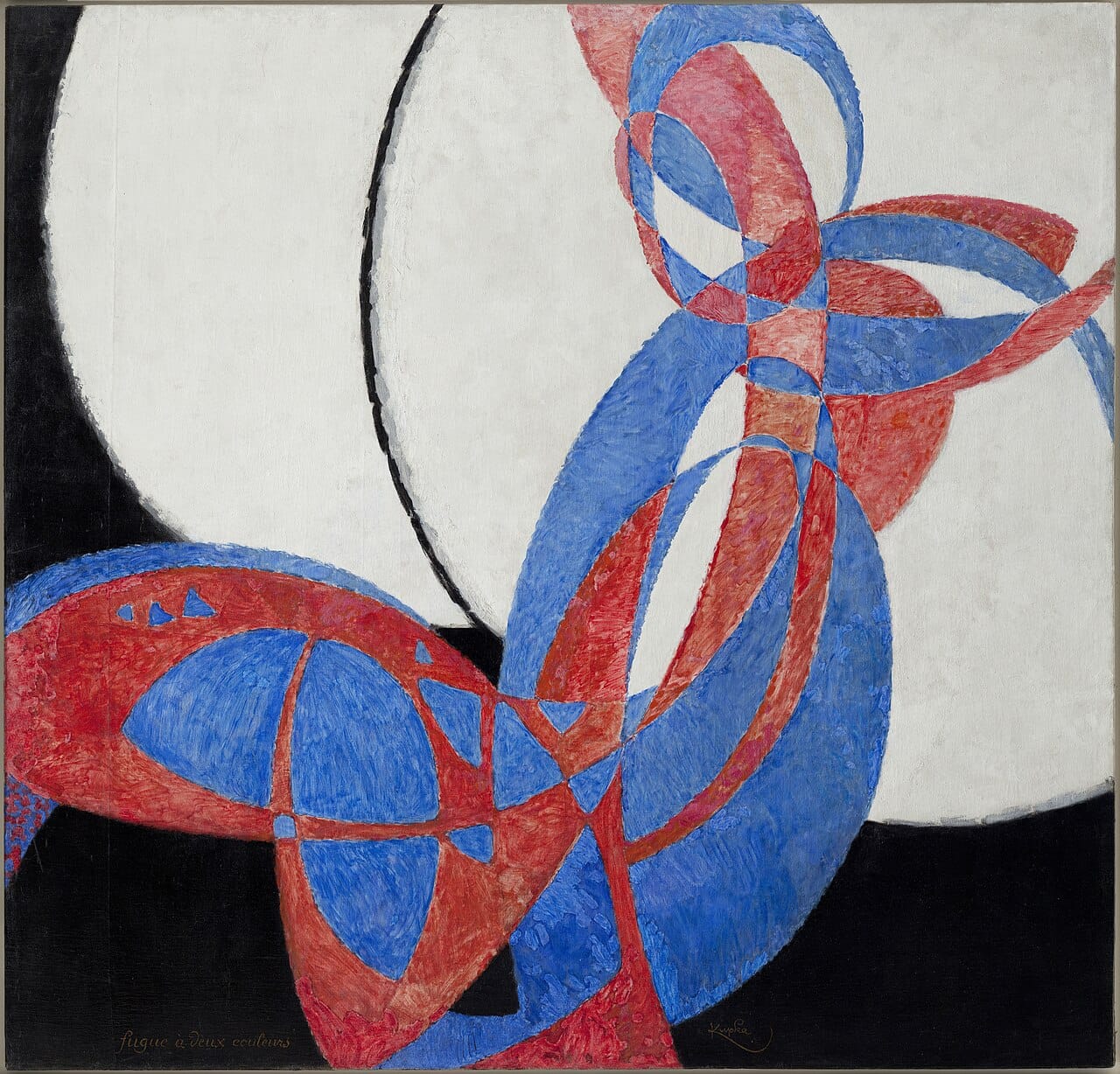
Artist: František Kupka (1871–1957)
Artwork: Amorpha, Fugue in Two Colors, 1912
Collection: National Gallery in Prague






,_210_x_200_cm,_Narodni_Galerie,_Prague.jpg?ref=theuniverseunveiled.com)