Wrathful Wisdom: The End of Negotiation with Fear
Yamantaka represents the moment fear loses authority. Not the absence of fear, but the end of its jurisdiction. When negotiation with consequence ends, identity stabilizes—and time no longer delays. This is wrathful wisdom: uninterrupted presence before reality reorganizes.

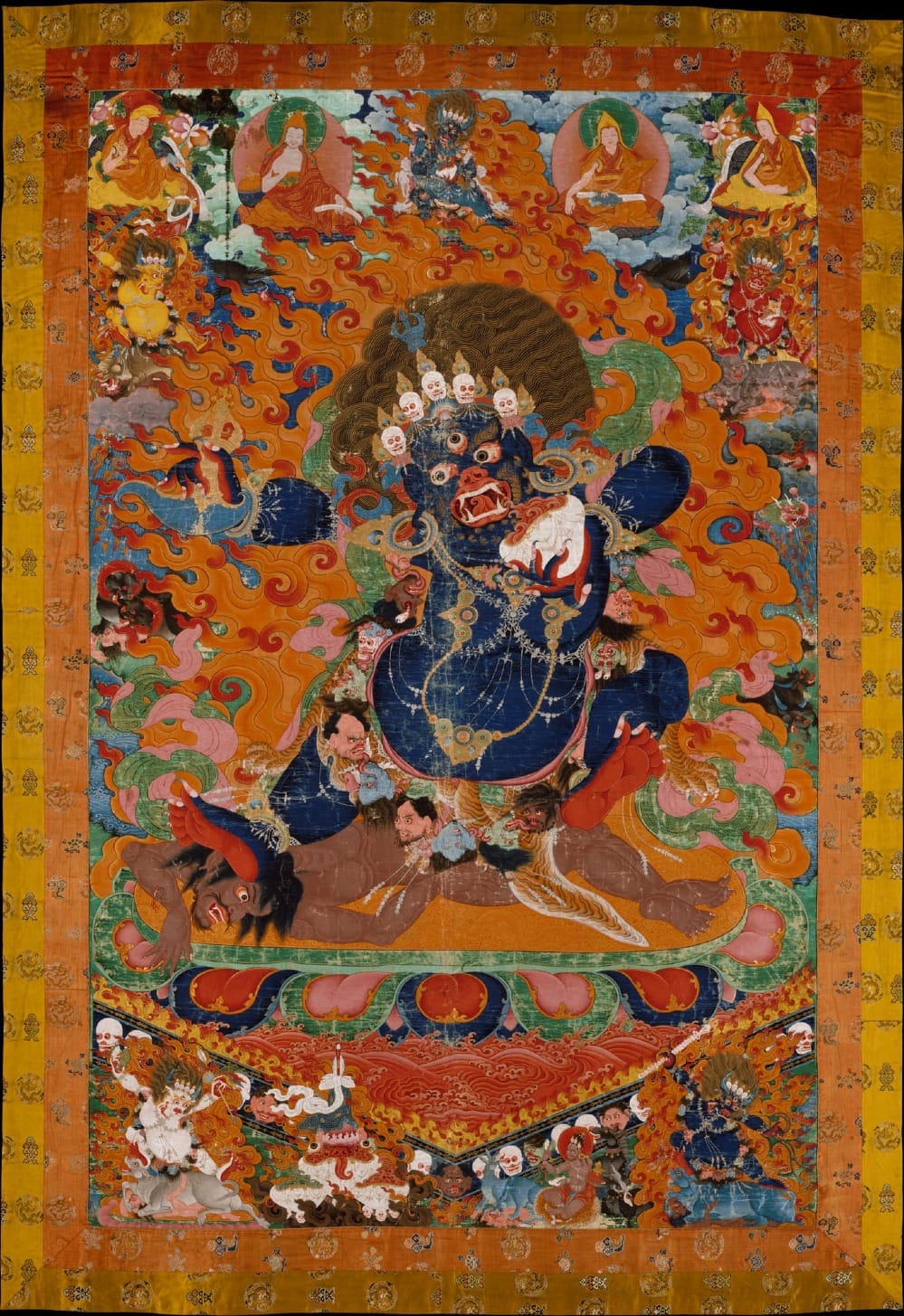
Yamantaka appears in Buddhist tradition as a terrifying figure—multiple faces, flaming hair, trampling the Lord of Death beneath his feet. To the untrained eye, he looks like destruction incarnate. But Yamantaka is not violence, rage, or chaos. He is something far more specific and far more uncomfortable:
He is the moment fear loses authority.
Most people misunderstand fear. They treat it as an emotion to soothe, manage, or transcend. But fear does not operate primarily as a feeling. It operates as an authority structure. It decides what is permitted, what is postponed, what is too risky, and what must wait for “later.”
Fear speaks calmly.
Reasonably.
Often lovingly.
And that is precisely why it governs so many lives.
In Buddhist symbolism, this governing force is personified as Yama—the ruler of judgment, consequence, and finality. Yama is not death itself. He is the threat of death: the internal voice that says be careful, you could lose everything, this might be the end. He is the subconscious authority that conditions identity through fear of consequence.
Yamantaka does not destroy death.
He destroys death’s jurisdiction.
This distinction matters.
Yamantaka represents the internal moment when a person stops negotiating with fear. Not because fear disappears—but because it no longer decides. Fear may still speak, but it no longer holds the gavel.
That is wrathful wisdom.
Wrath, in this context, is not anger. It is uninterrupted presence. The refusal to flinch, withdraw, or self-abandon when consequences are implied. Wisdom, here, is not intellectual understanding. It is embodied clarity that does not bargain for safety.
This is why Yamantaka is depicted as overwhelming, immovable, and immediate. His buffalo head is not symbolic of aggression, but of directness. A buffalo does not rehearse outcomes. It does not ask for reassurance. It does not negotiate internally. It moves as a whole being, without fragmentation.
Yamantaka embodies the state of consciousness that says:
Even if this ends badly, I remain.
That sentence alone collapses entire lifetimes of delay.
Most people live in a continuous loop of negotiation. They do not refuse their desires outright. Instead, they postpone them. They condition action on certainty. They wait for signs, readiness, confidence, or timing. But beneath all of these conditions is the same hidden clause:
As long as I am safe.
This is why time feels slow to so many. Not because time is cruel or indifferent—but because time responds to authority. As long as fear governs identity, reality has no stable position to organize around. Time stretches. Delays multiply. Waiting becomes a lifestyle rather than a phase.
Yamantaka represents the inner initiation that happens before identity stabilizes.
It is the moment when a person no longer needs guarantees to remain whole. When loss is no longer a veto. When the future is no longer held hostage by imagined consequences. At that point, something quiet but irreversible occurs: identity locks.
Not emotionally.
Not motivationally.
Structurally.
And this is where time enters the teaching.
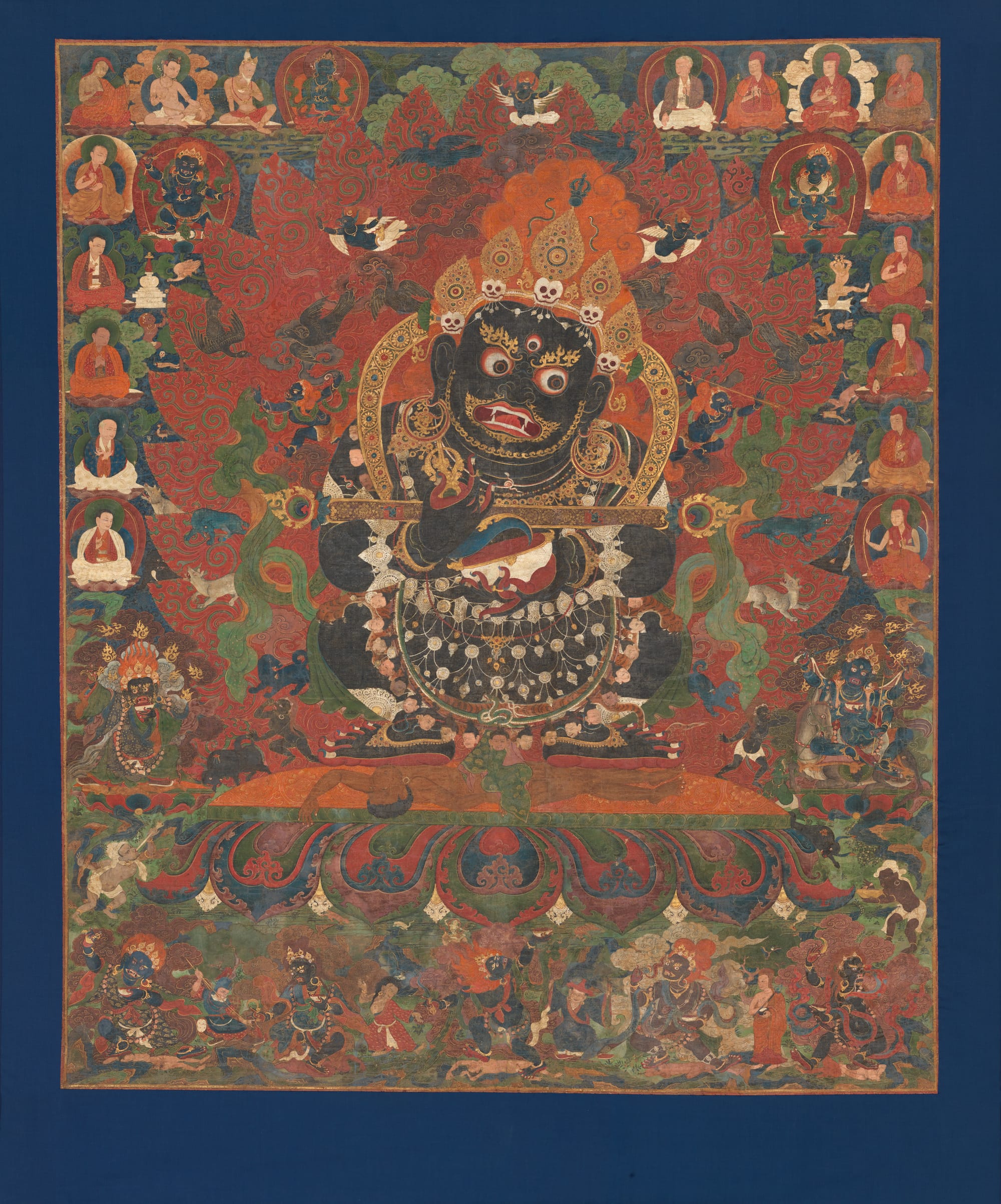
Across traditions, there is a recognition that time is not merely chronological—it is responsive. It bends, compresses, or resists based on internal coherence. In Buddhist cosmology, this responsiveness is embodied by Mahākāla.
Mahākāla is not time as measurement.
He is time as response.
Mahākāla does not appear while fear still negotiates. As long as Yama’s authority remains intact—so long as consequence still governs identity—time remains threatening. It warns. It delays. It withholds sequence.
Only after Yamantaka’s work is complete does Mahākāla emerge.
This is the law the myths are encoding:
Fear must lose authority before time can reorganize.
Mahākāla does not rush events. He does not reward effort. He does not punish hesitation. He simply reorganizes sequence around a position that no longer withdraws. When identity stabilizes without fear as its regulator, time stops hovering as a threat and begins functioning as structure.
This is why Mahākāla is wrathful—but not chaotic. His wrath is precision. His presence is finality without cruelty. He cuts illusion, not people. He collapses delay by responding to clarity.
Where Yamantaka ends negotiation,
Mahākāla rearranges sequence.
Together, they describe a process that most modern teachings skip entirely. Manifestation systems often focus on desire, belief, visualization, or emotional alignment. But none of those stabilize while fear still holds authority. None of them survive the moment consequence is implied.
Yamantaka names the unspoken prerequisite: the end of internal bargaining.
This is not about courage. Courage still implies fear’s relevance.
This is about non-withdrawal.
When a person stops withdrawing themselves from life in advance—when they stop pre-paying consequences with hesitation—something fundamental shifts. Reality no longer needs to apply pressure. Time no longer needs to threaten. The threat dissolves because it has nothing left to leverage.
Fear does not vanish.
It kneels.
Yamantaka is not a god to worship.
He is a state to recognize.
Mahākāla is not a force to invoke.
He is time behaving correctly once authority is settled.
Together, they reveal a law that governs both inner life and outer sequence:
When fear loses authority, identity stabilizes.
When identity stabilizes, time responds.
This is wrathful wisdom.
Not destruction.
Not transcendence.
The end of negotiation with fear — and the beginning of real movement.
The end of negotiation with fear does not create pleasure.
It creates stability.
Once fear loses authority, time reorganizes. Once time responds, desire no longer needs to brace itself. This later movement is articulated through Vajrayogini, where wanting no longer requires armor, postponement, or internal justification.