Zinedine Zidane and the Power of Presence
Zinedine Zidane didn’t rush the game—he arrived before it. This essay explores presence, awareness, and the quiet inner mastery that made time bend around him.

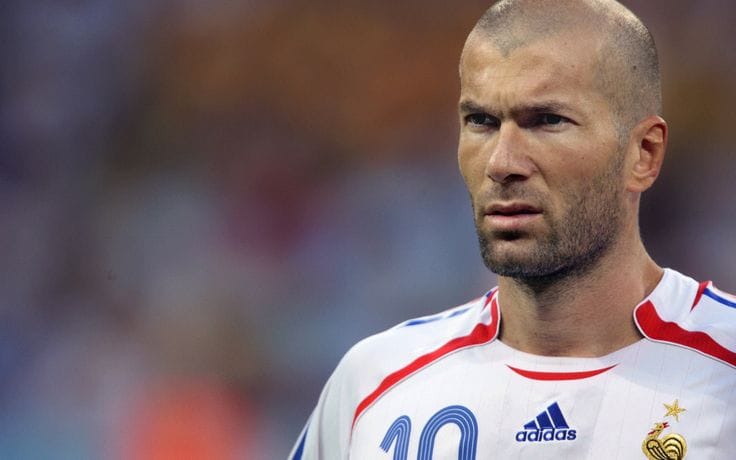
The Universe Unveiled presents The Inner Pitch — exploring how consciousness experiences itself through mastery under pressure.
Zinedine Zidane and the Power of Presence
Zinedine Zidane mastered football through presence rather than force. By remaining internally calm and fully aware, he created time and space where others felt pressure. His game shows that when awareness is stable, decisions sharpen, effort becomes intelligent, and the moment begins to respond instead of resist.
1. Why Zidane Felt Different
Zinedine Zidane always looked like he had time. In an era of breakneck speed and frantic pressing, Zidane moved through a match with unhurried grace. While others sprinted, he often walked. While the game begged for urgency, he played as if the game itself was waiting for him. Modern football rewards those who arrive first, tackle hardest, run longest – a chaos of intensity. Zidane never danced to that frenetic rhythm. He was on the pitch, but somehow apart from its anxiety.
He walked when others ran. He waited when others rushed. He received the ball not as something to conquer, but as something familiar, like greeting an old friend. There was a gravity to him – a quiet pull that slowed everything in his orbit. Matches didn’t explode around Zidane – they settled around him.
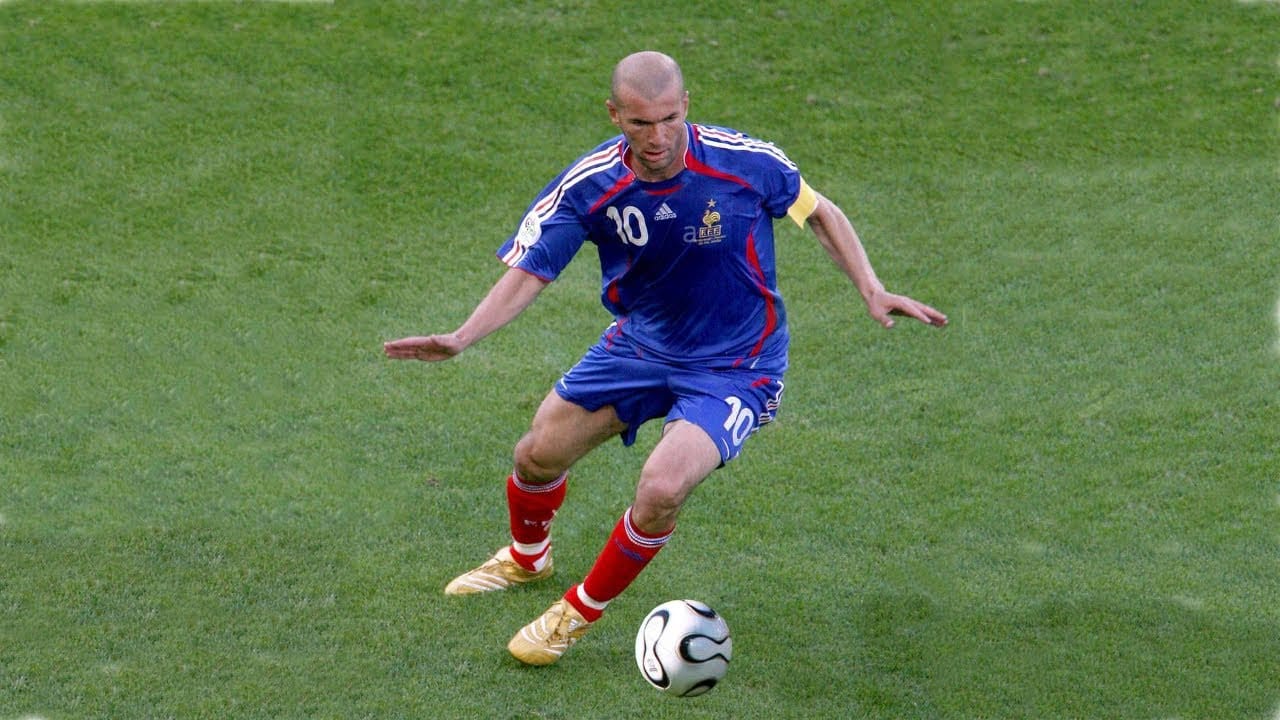
Amid the roar of the stadium, he often appeared to be in his own calm center, the eye of the storm.
And the strange thing is, he was never late. Despite moving at his pace, he arrived exactly when he needed to. Zidane’s true mastery wasn’t physical speed or strength. It was internal. His advantage was an intangible presence that transcended athleticism, a timing and poise that made the game unfold on his terms.
2. The Central Question
How did Zidane control matches without visibly dominating them? Why did the game seem to slow down when he touched the ball? These questions form the mystery of Zidane’s style. Most players impose themselves on football through force – pressing ferociously, demanding the ball, bending the game by sheer intensity. Zidane did something subtler. He influenced rather than imposed.
Instead of trying to grab the game by the neck, he allowed the game to move through him. This wasn’t passivity or detachment; it was supreme awareness. He was fully present – attuned to every shifting nuance of play – and in that presence he found control. He didn’t need to constantly chase the ball because he was already mentally a step ahead, positioned where he needed to be.
This is where Zidane’s story stops being about tactics or technique and starts being about awareness.
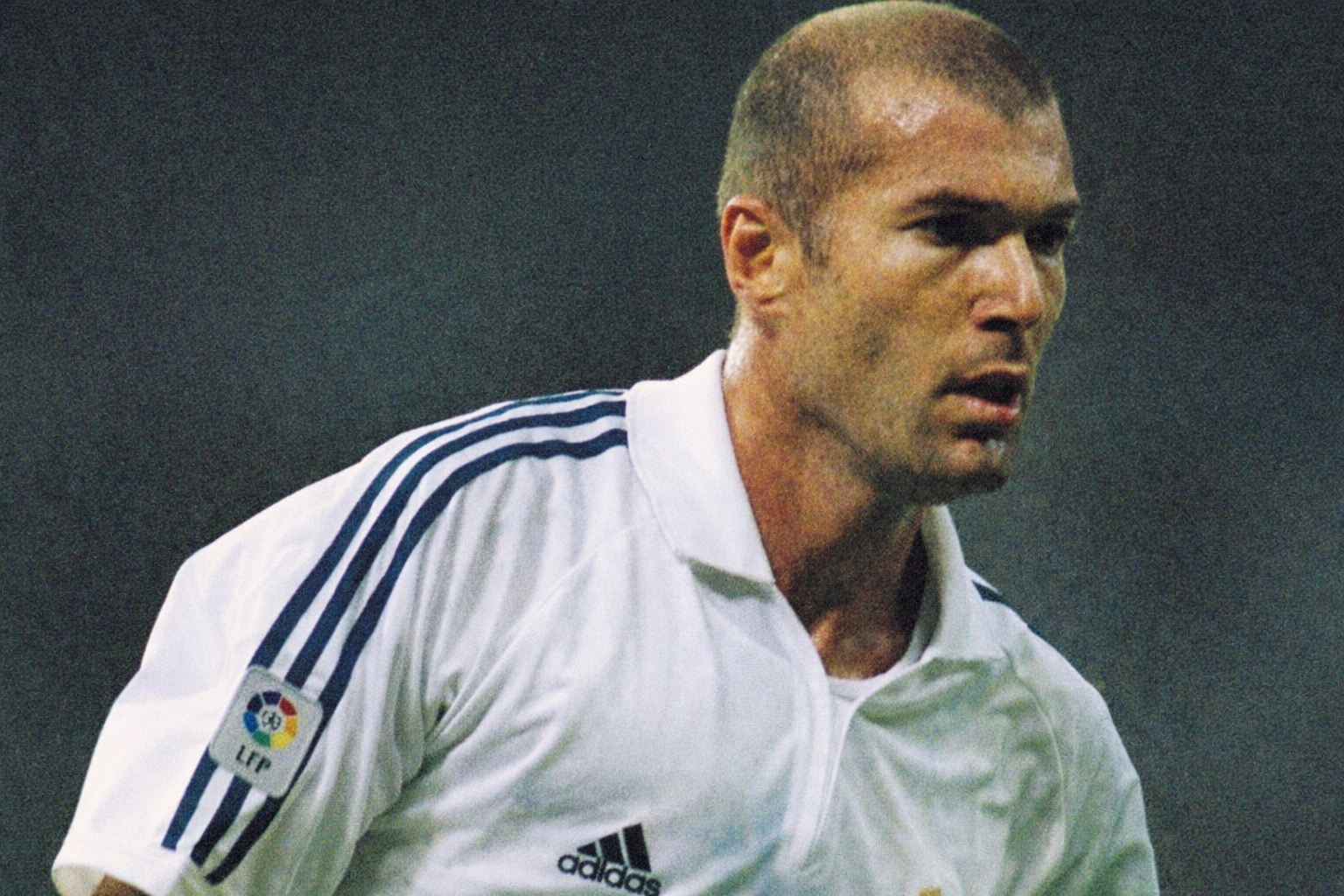
His impact came from how he paid attention. He read the flow of the match like a poem, sensing the next line before it was written. While others were busy forcing the issue, Zidane’s calm assuredness gently guided the game’s rhythm. It’s an almost spiritual question: how much of mastery comes from what we do, and how much comes from how we perceive? Zidane’s career suggests that perception – pure presence – can quietly shape reality on the field.
3. Stillness as Skill
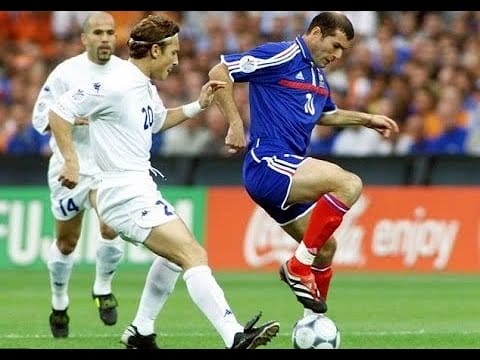
Zidane’s greatness lived in economy of movement. He rarely took an extra step or touch he didn’t need. A soft first touch that killed the ball dead, a body already positioned before the ball even arrived, a single extra heartbeat of waiting while defenders lunged past – these were his trademarks. His highlights aren’t about blistering speed or endless running; they’re about deft turns and graceful swivels that left opponents chasing shadows. He didn’t need to outrun or outwork his opponents. Often, he let them defeat themselves with their own haste, sliding out of position as he paused and changed direction. A subtle shoulder feint or a famous Zidane roulette (spin move) and the charging defender was suddenly grasping at air.
Stillness, in Zidane’s case, was not the absence of action – it was the absence of panic. He showed that composure under pressure is a skill in itself. When others would frantically try to force a play, Zidane would hold the ball an extra second in total calm, and that made all the difference. It’s why his every turn felt inevitable, why his passes arrived with such precision – he wasn’t reacting out of urgency, he was responding out of clarity. He moved with purpose, nothing wasted, every gesture tuned to necessity.
Even his teammates noticed how Zidane’s stillness transformed the game. As Florent Malouda observed from training, you could give Zidane a bad pass that would trouble any other player, but “there was no bad ball for Zinedine Zidane. Even when other players would be stressed, the situation would be in slow motion for him, and he had the time to analyze it”. His calm first touch turned difficult passes into easy ones; his patience turned tight spaces into open doors. And somewhere in watching him, you recognize a truth about yourself: you’ve felt it too – those rare moments in your own life or sport when slowing down internally suddenly makes everything easier, when poise overtakes panic.
4. Presence Changes Time
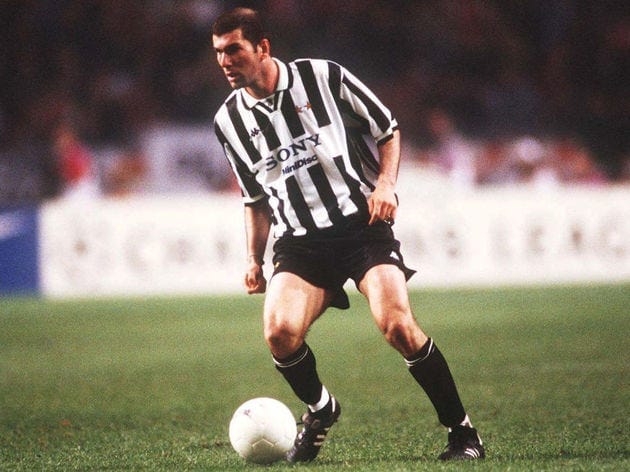
A rushed mind experiences pressure; a present mind experiences space. Zidane seemed to create space and time out of nowhere, not because he was physically faster, but because he was mentally already there. When your awareness is stable and clear, time itself feels negotiable. It’s not magic – it’s human perception. Under extreme focus and presence, an athlete can stretch a second longer, see a gap open a beat earlier. Zidane played as if operating in a slightly different timeline than everyone else.
His teammate Marcel Desailly marveled that watching Zidane at his peak, “it was as if everything went into slow motion all around him whenever he had the ball, he seemed to have so much time on the ball” That is the power of presence: the game didn’t speed him up, because he slowed the game down to his level. He could walk into a crowd of defenders as if walking into traffic and yet somehow find an exit untouched, the ball under absolute control.
When you stop fighting the moment and start meeting it, as Zidane did, pressure transforms into possibility. The chaos of 21 other players and a screaming crowd could not shake his inner stillness. His presence set the tempo. It’s often said of great players that the game “seems to slow down” for them; in Zidane’s case, it truly did. With awareness and anticipation, he was playing chess while others played catch-up. By being fully present, Zidane could negotiate time – making one second count for two, turning a frantic situation into a composed play.
5. Awareness Over Effort
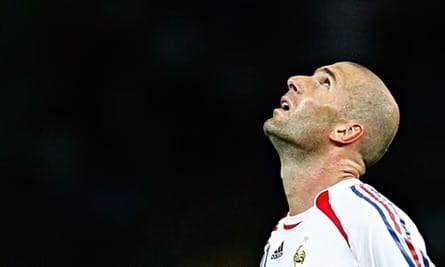
This is where Zidane’s philosophy separates from the usual “grind harder” mentality. Football culture (and modern life, really) venerates effort – the endless running, the high press, the never-say-die attitude. Effort matters, of course. But effort mostly multiplies what you already are. Awareness can change what you are. Some players work harder and harder, covering every blade of grass. Others, like Zidane, see clearer and smarter.
Zidane was not lazy by any means – he worked within the game – but he didn’t rely on raw athletic grind to influence a match. Instead of expending energy blindly, he conserved it and applied it with insight. It’s often striking to look at his matches: he wasn’t the one with the most sprints or the highest distance covered. What he did have was an uncanny sense of position and timing, born from awareness. He knew when to glide into a space that was opening, when to accelerate and when to hold back. He let the ball do much of the work, moving it swiftly and simply. In a sport where we often equate sweating with trying, Zidane proved that thinking and feeling the game could trump running through it.
This isn’t to shame effort or glorify idleness – it’s to recognize the hidden power of mental alignment. In life and sport, tension and brute force can actually cloud your intelligence. When you’re tense and overexerting, you can miss the obvious solution right in front of you. As Zidane showed, a moment of clarity can be worth more than a minute of running. “Tension clouds intelligence; alignment sharpens it,” as his play demonstrated. You can train harder, run faster, push with all your might – and still miss the open pass or the crucial detail. But if you see the situation purely, you’ll act in the best possible way. Zidane didn’t miss what was in front of him. His eyes were always up, his mind always calm enough to perceive the whole picture. In a very real sense, his awareness was a superpower that magnified the impact of all his skill.
6. The Human Moment (2006 World Cup)
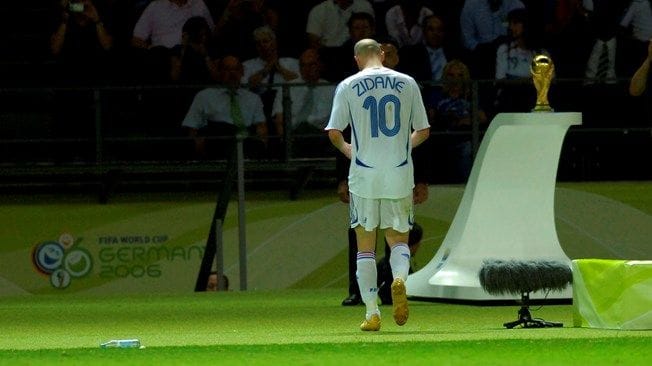
And then there was the headbutt. It’s impossible to talk about Zidane’s presence without that singular, infamous moment in the 2006 World Cup final. It deserves mention – not as a scandal or a cheap footnote, but as a deeply human moment. In the closing minutes of the biggest match, after withstanding immense pressure, Zidane lost his presence. His inner alignment wavered. A provocation from Italy’s Marco Materazzi pierced Zidane’s calm, and Zidane snapped – he drove his head into Materazzi’s chest, an impulsive act of aggression witnessed by millions. The referee’s red card was immediate and in Zidane’s final act as a player, he walked off the field, leaving the world in shock.
In that moment, Zidane lost presence – not his skill, not his greatness, but that inner control that defined him. Emotion took the wheel; awareness fractured. The man who usually made chaos bow to his rhythm succumbed to chaos within himself. Even masters fall when their mindfulness is interrupted. It was a stark reminder that presence is not a permanent state achieved once and for all – it must be maintained continually, especially under duress.
Yet that moment doesn’t erase Zidane’s legacy; in a way, it completes it. It humanizes the portrait of perfection. It shows that Zidane’s usual serenity was hard-won and real, not an illusion. If anything, his lapse underscores how exceptional his typical composure was. It teaches us that no matter how centered or wise we become, we are all still vulnerable to losing our way for a moment. Zidane was human – and that’s exactly why his mastery of presence matters. It’s attainable and losable, a lesson and a warning for anyone striving to stay grounded amid provocation.
7. What Zidane Actually Teaches
Zidane’s true lesson isn’t about how to do a step-over or hit a volley. He doesn’t teach you how to play football in the technical sense. He teaches you something quieter and more profound: you don’t need to rush to win; you need to arrive internally first. The outer game, in any field, mirrors the state of your inner game. If you are composed and present, the situation around you bends to that internal tempo. Zidane showed that the hardest battles are often won by not fighting – by being so fully in the moment that the moment itself yields to you.
This idea isn’t unique to Zidane; it’s a universal truth that appears in different forms through other great figures, including those featured in this series. Cristiano Ronaldo expressed the same law through a different inner discipline — not presence, but identity — assuming greatness long before evidence appeared and organizing his life around that decision. Pelé manifested his genius through imagination and play, allowing joy to create reality rather than pressure. Lionel Messi anchored himself in an unshakeable belief – a conviction of identity so deep that no circumstance could break it. David Beckham aligned disciplined practice with the assumption of success, showing how consistency amplifies conviction. Zidane’s inner mastery was presence – living completely in the here and now on the pitch. Different inner qualities, different expressions, but in the end each demonstrates the same truth: our internal state shapes our reality.
Different inner pitch. Same truth.
8. Application Without Over-Instruction
So what do we take from Zidane’s style of presence? The beauty is that it’s not a rigid technique but a way of being that you can explore in any area of life. Notice what changes when you deliberately slow down internally. When you stay fully present in the moment – whether you’re playing a sport, tackling a work project, or simply interacting with others – you may find decisions feel cleaner, timing becomes intuitive, and what used to be difficult starts flowing with ease. You stop pushing moments into place and start letting them reveal themselves.
It’s the difference between forcing your way through a door versus gently turning the handle when you feel the click. Clarity beats force, because clarity listens. In a clear state of mind, you can detect the subtle cues and respond aptly, rather than swinging blindly with effort. Zidane didn’t chase the game; he sensed it, listened to it, and responded. In your own life, you’ll find that when you’re present, you hear the situation telling you what needs to be done next.
Importantly, presence isn’t something you have to add to yourself; it’s something you stop interrupting. It’s a natural state of focus and calm that we are often too anxious or distracted to allow. If you remove the inner noise – the fear, the hurry, the doubt – you uncover a quiet confidence and awareness that was always there. In that state, you perform better not by trying harder, but by being clearer. Zidane’s example invites us to trust that inner stillness more, to practice finding that center amid chaos. The more you inhabit the present, the more the present moment works with you rather than against you.
9. The Quiet Legacy
Picture Zidane again, out on the field. Walking. Scanning. Waiting. Twenty other outfield players and 80,000 fans are caught in the frenzy of the game, but he doesn’t rush. He’s fully engaged yet utterly composed. And slowly, almost imperceptibly, the game bends to his tempo – not in a flashy, obvious way, but just enough that everything runs through him. That’s the quiet legacy of Zinedine Zidane.
Beyond the trophies, the goals, and the highlights, this is what lingers in the memory: a man who proved that calm is contagious. He showed that when you are fully here, fully in the now, you can shape events without forcing them. Zidane’s legacy is a reminder that there is immense power in poise. In a world that glorifies speed and aggression, he illuminated another path – the path of the present moment, where time expands and the game finds its natural resolution.
In that sense, what Zidane gave football goes beyond football. It’s a human lesson. He taught us that sometimes, to gain control, you pause. To go faster, you slow down. To dominate the moment, you surrender to it. His career was a meditation in motion – one that encourages us to cultivate our own presence in whatever we do.
When you are fully here, the moment knows what to do.
FAQ
The Inner Pitch is the same truth expressed through different masters: play (Pelé), belief (Messi), discipline (Beckham), and presence (Zidane).
The power of presence is the ability to remain internally steady while everything around you becomes loud, fast, and reactive. Zidane didn’t control matches by forcing them—he controlled them by not leaving himself. When your attention stays anchored, you see options sooner, you choose cleaner, and your body moves with less waste. Presence isn’t a “vibe.” It’s a form of quiet command: the moment stops rushing you, because you stop rushing the moment.
He wasn’t slowing time like a trick—he was stabilizing perception. A rushed mind experiences pressure; a present mind experiences space. Zidane waited one extra beat, and that beat revealed the truth of the play: who was over-committing, where the exit was, what the next pass wanted to be. When awareness is steady, you don’t “create time”—you stop spending it on panic.
Stillness is a skill—because it’s trained every time you choose clarity over reaction. Zidane’s stillness wasn’t “calm vibes.” It was decision-making without tremble. Stillness is not the absence of action; it’s the absence of panic. And panic is not a fact—it’s a habit. The inner game is learning to stop interrupting your own intelligence.
Same law. Different doorway. Pelé shows the door of imagination and play—joy creating reality before results arrive: Pelé and the Power of Imagination.
Messi shows the door of belief—identity held so firmly that circumstance can’t rename you: Messi and the Law of Assumption.
Beckham shows the door of disciplined assumption—repetition turning conviction into destiny: Beckham and the Law of Assumption.
Zidane shows the door of presence—awareness so stable that the game bends to your tempo. In The Inner Pitch, these aren’t “styles.” They’re inner states that shape the outer world.
No. Presence doesn’t replace effort—it makes effort intelligent. Effort multiplies what you already are; awareness changes what you are. Without awareness, effort can become tension, and tension makes you waste energy on the wrong problems. Zidane’s lesson is not “try less.” It’s “arrive first—internally—then act.”
Pressure is often a name we give to a mind that has left the present. Zidane’s best moments weren’t louder—they were cleaner. He shows that the “big moment” isn’t something you conquer; it’s something you inhabit. When you stay here, the moment becomes workable—because your attention stops scattering.
Practice it by removing urgency from your inner voice. Presence is built in small moments: one extra breath before you respond, one extra second before you decide, one refusal to act from heat. When you slow internally, your choices get sharper. Your timing improves. You stop forcing outcomes and start seeing openings. Zidane’s presence is not something you add—it’s something you stop interrupting.
The Inner Pitch is the invisible field where outcomes begin: attention, identity, belief, rhythm, and emotional tone. Pelé shows what happens when you lead with play. Messi shows what happens when you protect identity. Beckham shows what happens when discipline reinforces assumption. Zidane shows what happens when you become fully present—so present the world has to meet you there.