Subconscious Time Travel: Installing Memories That Haven’t Happened Yet
What if manifestation isn’t attracting the future — but remembering it first? Discover how installing future memories reshapes identity, rewires perception, and reorganizes reality from the subconscious level.


How Future Memory Reprogramming Collapses Time and Accelerates Manifestation
Opening — The Paradox of Memory
Memory feels fixed.
We think of it as an archive — a storage system cataloging what has already occurred.
Moments lived.
Conversations had.
Experiences completed.
But neuroscience has quietly dismantled this assumption.
The subconscious does not distinguish between:
- Lived memory
- Vividly imagined memory
Brain imaging studies show that imagined experiences activate neural pathways strikingly similar to real ones. When you mentally rehearse an event with sensory detail and emotional charge, the brain fires as though the event is occurring — or has already occurred.
Which introduces a paradox powerful enough to reframe manifestation entirely:
You can install memories that orient behavior before reality arrives.
Manifestation, then, is not about attracting the future.
It is about remembering it before it happens.
Section I — What Is Subconscious Time Travel?
Let’s define the core construct clearly.
Subconscious Time Travel =
The deliberate encoding of future experiences into memory networks before physical occurrence.
This is not fantasy.
It is not escapism.
It is identity conditioning.
The subconscious mind does not operate on linear time the way the conscious mind does. It operates on emotional imprint, repetition, and familiarity.
Linear Mind vs Subconscious Mind
| Linear Mind | Subconscious Mind |
|---|---|
| Future = Unknown | Future = Programmable |
| Memory = Past Only | Memory = Emotional Imprint |
| Time = Fixed | Time = Experiential |
Your identity is not built from goals.
It is built from remembered truths.
You behave according to what you remember being real — not what you hope becomes real.
If wealth feels remembered → behavior aligns.
If love feels remembered → openness aligns.
If success feels familiar → resistance dissolves.
Subconscious time travel is not a standalone technique—it operates within the broader subconscious identity system that governs how memory encodes self-concept and expectation. Practical applications of this identity restructuring are explored through the guided conditioning sessions inside the Subconscious Reprogramming Library.
The subconscious moves toward familiarity, not desire.
Which means installing future memories builds an identity bridge reality begins to follow.
Section II — The Neuroscience of Future Memory Installation
To understand why future memory encoding works, we have to examine the neurological machinery that governs imagination, memory, and perception.
This is where manifestation leaves philosophy and enters biology.
1. The Hippocampus — Architect of Time
The hippocampus is often described as the brain’s memory center.
But that description is incomplete.
Its true role is episodic simulation.
It does two things:
- Stores lived experiences
- Constructs imagined future scenarios
Functional MRI studies reveal something extraordinary:
When subjects remember the past and imagine the future, the same hippocampal networks activate.
In other words:
The brain uses memory circuitry to build future imagery.
Future visualization is not separate from memory — it is memory rehearsal.
When you imagine signing a contract, moving into a home, or celebrating financial success, the hippocampus encodes the scene using the same architecture it uses to store lived events.
Repetition deepens encoding.
Encoding creates familiarity.
Familiarity informs identity.
2. Neuroplasticity — Memory Is Editable
Neuroplasticity refers to the brain’s capacity to rewire itself through repeated activation.
The principle is simple:
Neurons that fire together wire together.
Every time you rehearse a future memory, you activate a network of:
- Visual cortex imagery
- Emotional limbic response
- Somatic sensory mapping
- Cognitive expectation
With repetition, these pathways strengthen.
The brain stops categorizing the scene as hypothetical and begins categorizing it as familiar.
Familiarity reduces psychological resistance.
Resistance is often nothing more than unfamiliar identity territory.
When success feels foreign, it triggers threat detection.
When success feels remembered, it triggers acceptance.
Future memory installation makes the unknown feel neurologically lived-in.
3. The Reticular Activating System — Reality’s Gatekeeper
The Reticular Activating System (RAS) filters reality.
It decides what enters conscious awareness.
You see evidence of what your brain expects.
Installed memories instruct the RAS:
“This is normal now.”
As a result, perception reorganizes.
You begin noticing:
- Opportunities
- Conversations
- Resources
- Synchronicities
Not because they suddenly appeared.
Because your filter settings changed.
The RAS does not respond to goals.
It responds to identity familiarity.
Future memories recalibrate what reality you are allowed to perceive.
4. Emotional Encoding — The Glue of Memory
Emotion determines memory durability.
This is why traumatic events imprint deeply — emotional intensity strengthens neural encoding.

Future memories follow the same rule.
Flat visualization produces weak imprints.
Emotionally saturated scenes create durable identity installations.
But here is the nuance most people miss:
The emotion should not be ecstatic excitement.
It should be normalized completion.
Think of how real memories feel.
They are not dramatic.
They are familiar.
The most powerful future memories feel ordinary — because they feel lived.
Section III — Neville Goddard & Future Memory Mechanics
Long before neuroscience articulated these mechanisms, Neville Goddard taught them experientially.
His language was mystical.
But his method was neurologically precise.
Living From the End = Remembering the Future
Neville’s core instruction:
Assume the feeling of the wish fulfilled.
This was never about emotional hype.
It was about psychological completion.
To “live from the end” is to internalize the state of fulfillment so fully that the subconscious categorizes it as memory rather than desire.
You are not hoping for wealth.
You are remembering what it feels like to have wealth.
You are not seeking love.
You are recalling the emotional normalcy of being loved.
Neville’s students often misinterpreted his teaching as belief generation.
But belief was never the starting point.
Memory creates belief automatically.
If something feels remembered, belief becomes irrelevant.
SATS — State Akin to Sleep as Memory Installation
Neville’s most powerful technique, SATS, is a neurological gateway state.
The State Akin to Sleep occurs in the liminal threshold between waking and dreaming.
Brainwave patterns shift into:
- Theta
- Alpha
These states are associated with heightened subconscious receptivity.

Conscious resistance weakens.
Analytical filtering softens.
Imagination enters the subconscious directly.
When scenes are replayed in SATS:
They bypass logical scrutiny.
They encode as experiential imprint.
This is why Neville insisted on short, sensory scenes looped nightly.
He was not teaching visualization.
He was teaching memory installation.
Why Neville Said “It Is Done”
Neville repeatedly used the phrase:
“It is done.”
This was not metaphysical optimism.
It was psychological sequencing.
Completion must be installed internally before manifestation appears externally.
The subconscious does not create from desire.
It creates from concluded identity states.
When something feels finished psychologically, behavior reorganizes automatically.
Decision-making shifts.
Confidence stabilizes.
Opportunity recognition activates.
Reality begins arranging itself around an identity that no longer perceives lack.
“It is done” is the language of memory — not hope.
Section IV — Why Future Memories Reprogram Faster Than Affirmations
Affirmations attempt to persuade the subconscious verbally.
Future memories persuade it experientially.
| Affirmations | Future Memories |
|---|---|
| Verbal | Sensory |
| Logical | Experiential |
| Surface repetition | Deep encoding |
| Requires belief | Creates belief |
The subconscious does not prioritize words.
It prioritizes imagery, emotion, and lived sensation.
A single deeply encoded memory scene can outperform months of verbal repetition.
Because memory bypasses argument.
Section V — The Mechanics of Installing a Future Memory
Here is the operational method.
Step 1 — Choose the Memory Scene
Do not imagine the goal.
Imagine the moment after the goal.
Examples:
- Toasting champagne after closing a deal
- Hugging your partner in your new home
- Checking a paid invoice notification
Real memories are mundane — not cinematic.
Choose specificity over spectacle.
Step 2 — Add Sensory Detail
Install sensory data:
- Lighting
- Temperature
- Texture
- Sound
- Smell
Sensory layering signals realism to the brain.
The more sensory channels engaged, the deeper the imprint.
Step 3 — Emotional Saturation
Ask:
How would this feel if it were normal?
Not euphoric.
Familiar.
Completion — not excitement — installs identity stability.
Step 4 — Loop the Scene Nightly
Repetition reinforces neural pathways.
Best installation windows:
- Pre-sleep
- Post-wake
These periods feature heightened theta activity — prime subconscious programmability.
Step 5 — Release Monitoring
Checking for results installs doubt loops.
Memory encodes silently.
Trust the installation process.
While visualization installs future memories, structured subconscious repetition accelerates the process dramatically. The guided sessions inside the Subconscious Reprogramming Library are designed to reinforce these identity-level installations through repetition, emotional conditioning, and subconscious pattern restructuring.
Section VI — Signs the Future Memory Has Installed
You will not need external validation.
Psychological shifts emerge first.
1. Reduced Urgency
Desire softens into calm certainty.
2. Behavioral Drift
You begin acting in alignment unconsciously.
3. Opportunity Recognition
Bridges appear obvious.
4. Emotional Neutrality
Fulfillment feels stable — not charged.
Section VII — Why This Feels Like Time Travel
Because behavior begins reflecting a future that has not physically occurred.
You are acting from:
Memory of success — not hope for success.
Psychological time collapses first.
Physical time follows.
Section VIII — The Identity Relocation Effect
Future memory does not directly change circumstances.
It relocates identity.
And identity selects reality.
When the subconscious remembers you as successful, loved, abundant — it reorganizes perception and behavior to match that memory baseline.
Circumstances follow identity positioning.
Section IX — Common Mistakes
1. Imagining Desire Instead of Memory
Longing blocks installation.
2. Over-Dramatizing Scenes
Too cinematic = subconscious rejection.
3. Inconsistency
Neural encoding requires repetition.
4. Monitoring Reality
Observation reinstalls doubt loops.
Section X — Advanced Future Memory Techniques
1. Written Future Journaling
Date entries 1 year ahead.
2. Photo Simulation
Mock visuals accelerate encoding.
3. Environmental Seeding
Physical anchors reinforce installation.
Section XI — The Philosophical Implication
If memory can be installed before events occur…
Then time is not strictly linear in consciousness.
We do not move toward the future.
We remember our way into it.
Future memories reshape identity—but repetition is what stabilizes them. For those who want guided sessions that reinforce these subconscious installations daily, explore the Subconscious Reprogramming Library.

Conclusion — The Collapse of Time Through Identity
The subconscious runs on memory.
Install the future as memory.
Identity updates.
Perception reorganizes.
Behavior aligns.
Reality follows.
Manifestation is not attraction.
It is recollection ahead of schedule.
Future Memory Manifestation FAQ: Subconscious Reprogramming, Visualization, and the Science of Imagined Memory
Image Credits:
Antonio Canova, L’Amour et Psyché à demi couchée, 1787–1793.
Marble sculpture.
Département des Sculptures du Moyen Âge, de la Renaissance et des Temps Modernes, Musée du Louvre, Paris.
Inventory: MR 1777 ; N 15579
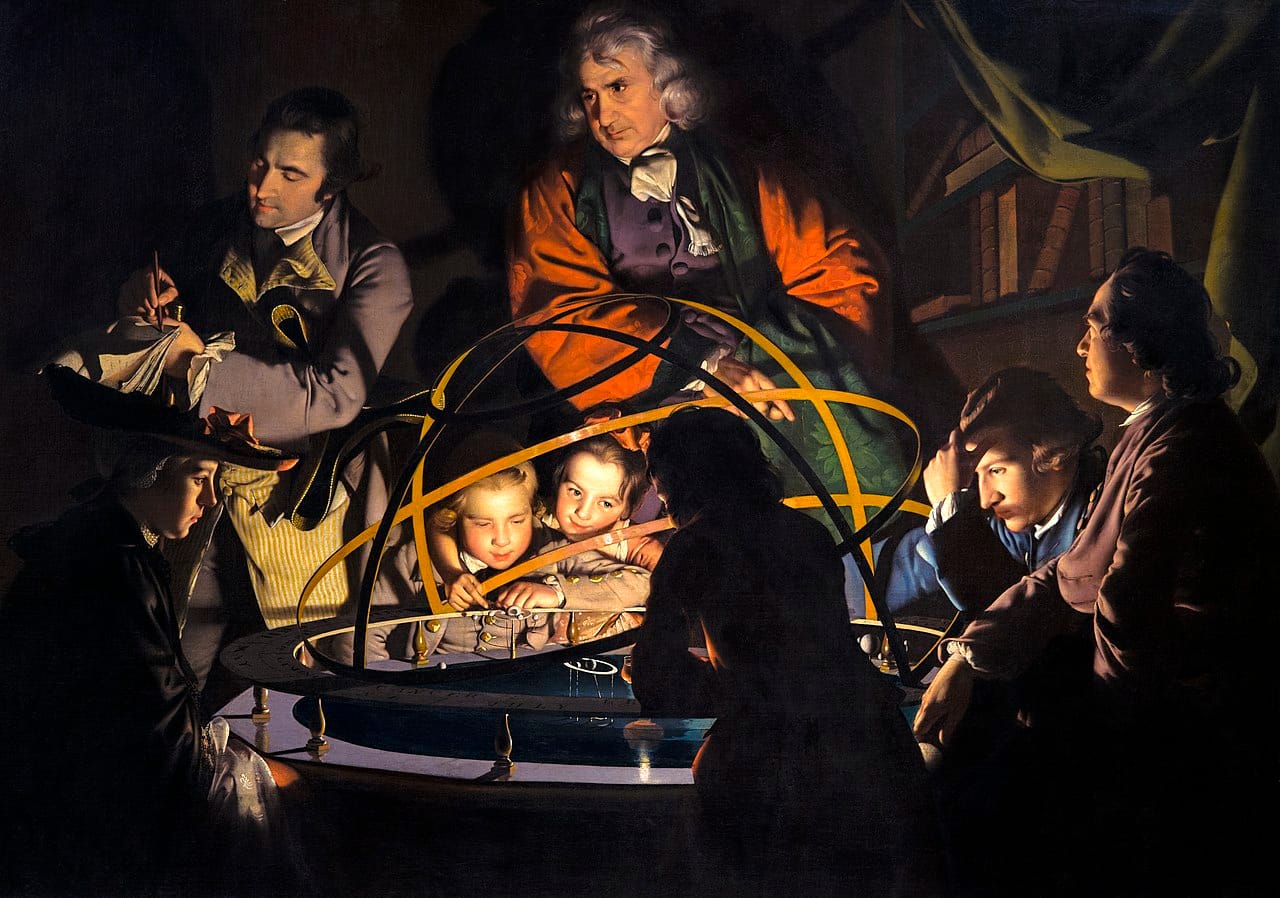
Joseph Wright of Derby, A Philosopher Giving a Lecture on the Orrery, c. 1766.
Oil on canvas.
147.3 × 203.2 cm (58 × 80 in).
Derby Museum and Art Gallery, Derby, England.
Anne-Louis Girodet de Roucy-Trioson,
Endymion. Effet de lune, dit aussi Le Sommeil d’Endymion, 1791.
Oil on canvas.
Département des Peintures, Musée du Louvre, Paris.
Inventory: INV 4935 ; L 3587.
Jean-Baptiste Carpeaux, Ugolino and His Sons, 1865–1867.
Marble.
On view at The Metropolitan Museum of Art, Fifth Avenue, Gallery 548, New York.
Pierre-Paul Prud’hon, L’Âme brisant les liens qui l’attachent à la terre (The Soul Carrying the Body), c. 1820–1823.
Oil on canvas.
Musée du Louvre, Département des Peintures, Paris.