Law of Assumption for Beginners: Start Here
You just discovered the Law of Assumption. This is where you start. No jargon, no overwhelm — just Neville Goddard's core teaching explained clearly, with the exact first steps to take today.

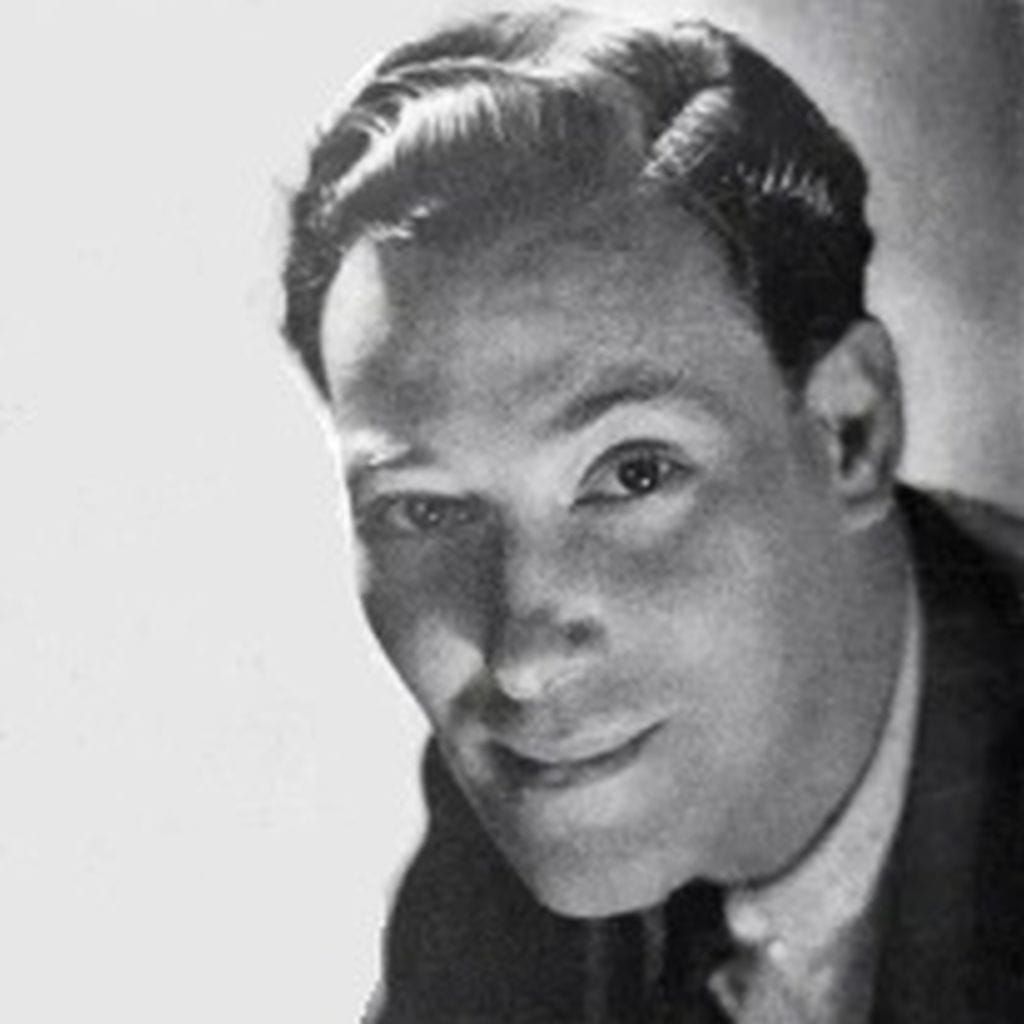
The Law of Assumption is the teaching that whatever you assume to be true — with genuine feeling — becomes your reality. It was codified by Neville Goddard, who taught that your subconscious beliefs about yourself are the sole cause of every outer condition in your life. To begin applying it, you do not need rituals, tools, or years of study. You need one thing: the ability to feel, in imagination, that what you want is already true.
This is the beginner's guide. It covers what the law actually is, the three concepts Neville said you must understand before anything else, and the first practice to start tonight.

Law of Assumption for Beginners: Start Here
You found this because something caught your attention. A quote. A Reddit thread. A video. Someone said that whatever you assume to be true becomes your reality — and something in you recognized that as worth investigating.
Good instinct.
The Law of Assumption is not a trend. It is not a manifestation hack. It is a precise description of how reality has always worked — one that Neville Goddard spent forty years articulating with more doctrinal clarity than almost anyone before or since.
This guide is for the beginning of that investigation. It covers what the law actually is, where it came from, the core concepts you need to understand before anything else, and the first practice you can start tonight. No overwhelm. No jargon. Just the foundation — laid correctly from the start.
Once you have the foundation, the full step-by-step method lives in our guide on how to apply the Law of Assumption.
What Is the Law of Assumption?
The Law of Assumption states that whatever you assume to be true — held in imagination with genuine feeling — will eventually externalize as your lived reality.
Not what you hope. Not what you wish. What you assume. The distinction matters enormously. Hope is directed outward, toward something not yet yours. Assumption is directed inward — it is the state you accept as already true, regardless of what the outer world currently reflects.
Neville Goddard, the Barbados-born mystic who codified this teaching in mid-20th century America, put it this way: an assumption, though false, if persisted in, will harden into fact. The outer world does not create your inner state. Your inner state creates the outer world. This is not metaphor. Neville taught it as law — as reliable and impersonal as gravity.
The implication is radical. Every condition in your life — your finances, your relationships, your health, your circumstances — is a mirror of the assumptions currently running in your subconscious. Not your conscious wishes. Your subconscious assumptions. What you have accepted as true about yourself, below the level of deliberate thought, is what your outer world is faithfully reflecting back to you.
To understand where this teaching came from and the full scope of Neville's life and doctrine, the Neville Goddard ultimate guide covers everything from his origins in Barbados to his final lectures in Los Angeles.

Where Did the Law of Assumption Come From?
Neville Goddard was born in Barbados in 1905, the fourth of nine children. He came to New York as a teenager to study theater. In 1930s Harlem, he encountered a man who would change everything — an Ethiopian mystic and rabbi known only as Abdullah.
Abdullah taught Neville that imagination is God — that the human faculty of imagination is not a passive daydreaming tool but the actual creative power behind all reality. He taught Neville to live from the end: to inhabit, in imagination, the state of the wish already fulfilled, and to trust that the outer world had no choice but to reorganize to match it.
Neville spent the next four decades translating that transmission into the most precise doctrine of conscious creation ever put into plain language. He lectured across the United States, wrote ten books, and left behind hundreds of recorded talks — all pointing to the same unified principle: consciousness is the only reality, and assumption is how you direct it.
The teaching did not originate with Neville. Its roots go back through New Thought philosophy, Hermetic tradition, and scripture — all of which Neville drew from and interpreted through the lens of personal imagination. But Neville gave it its clearest modern form. And that form is what you are here to learn.
Three Concepts Every Beginner Must Understand
Before you touch a single technique, three concepts need to be clear. Skipping them is why most people stall.
1. Consciousness Is the Only Reality
Neville's foundational axiom — the one everything else rests on — is that consciousness is the only reality. The outer world is not the cause of your experience. It is the effect. It is the outer projection of the inner state you are currently occupying.
This means there is nothing to fix out there. No circumstance to fight, no person to change, no condition to overcome — at least not directly. The only variable is the inner state. Change that, and the outer world, which is only ever a mirror, must change to match it.
For a beginner, this is the most important reorientation. Stop looking at the outer world as the authority on what is possible for you. It is only showing you what you have already assumed.
2. Self-Concept Is the Root Cause
Beneath every outer condition is a self-concept — the deep, subconscious answer to the question: who am I? Not your mood, not your affirmations, not how you feel about yourself on a given day. The structural identity you are currently occupying below the level of conscious thought.
Neville said there is only one thing to change: self. Not your circumstances. Not other people. Not your bank balance. The concept of self from which you are currently operating. Everything else — every outer condition — is downstream of that root identity. Change the root, and the downstream changes automatically.
3. Feeling Is the Secret
The subconscious does not respond to words. It does not respond to images. It responds to felt state — the emotional reality you are living in from the inside. Neville called this feeling the secret. It is the operative principle behind every technique he taught.
When you imagine your desire as already fulfilled and you genuinely feel what that person feels — not excitement at the possibility, but the quiet normalcy of someone for whom it is simply true — the subconscious accepts that feeling as real. It cannot distinguish between a genuinely felt imaginal experience and a physical one. That is why the technique works. And that is why techniques without feeling do not.
The complete doctrine behind this principle is in our guide to Feeling Is the Secret.

What the Law of Assumption Is Not
Before the practice, a few corrections — because the internet has produced significant distortion around this teaching, and starting with the wrong understanding wastes time.
It is not positive thinking. Positive thinking is a conscious-mind practice — you choose optimistic thoughts and try to sustain them. The Law of Assumption operates at the subconscious level. You can think positively all day and change nothing if the subconscious assumption running underneath contradicts every word. The work is not to think differently on the surface. It is to change what the subconscious accepts as true.
It is not the Law of Attraction. The Law of Attraction teaches that like attracts like — that you attract what you focus on and what you send out energetically. The Law of Assumption teaches something more precise: reality reflects identity. You do not attract your desires from a distance. You become the version of yourself for whom those desires are simply ordinary life, and reality reorganizes to match who you are being. The distinction is between attracting and being.
It is not wishful thinking. Wishing operates from the consciousness of not having — the desire is held at arm's length, directed outward toward something that has not yet arrived. Assumption operates from the consciousness of already having — the desire is held as interior fact, already true, already settled. The emotional tone is entirely different. Wishing feels like reaching. Assumption feels like remembering.
It is not about controlling others. Beginners often come to this teaching wanting to change how a specific person behaves. Neville's answer is consistent: there is no one to change but self. Every person in your world reflects your assumptions about yourself. Change the self-concept, and the people in your world — including specific individuals — reorganize to reflect the new state. You do not target them. You relocate yourself.
The Core Technique for Beginners: SATS
Neville taught many techniques. For a beginner, there is one to start with — the one Neville himself called the most direct and reliable method for impressing the subconscious.
It is called SATS — the State Akin to Sleep.
SATS is the hypnagogic threshold between waking and sleeping — the drowsy, soft state where the conscious mind begins to release its grip and the subconscious becomes directly receptive. In this state, the critical faculty that normally cross-references new beliefs against old ones is suspended. Whatever you feel as real in this state reaches the subconscious without resistance.
The beginner's SATS practice — four steps:
Step one: Lie down in the position you sleep in. Do not try to meditate. Do not try to clear your mind. Simply relax — progressively soften your face, your jaw, your shoulders, your hands. Let the drowsiness come naturally. This is the state. You will feel a slight heaviness, a loosening of physical awareness.
Step two: Construct a short scene — thirty seconds to two minutes — that implies your desire is already fulfilled. First-person. Present tense. Not the moment of receiving it. The moment after, when it is simply true. A single vivid moment: a conversation with a friend where the good news is already known, a glance at your phone seeing a number that means your desire has arrived, feeling someone's arms around you as if that relationship is simply your life.
Step three: Feel it. This is the work. Not the visualization — the feeling. The quiet emotional tone of someone for whom this is ordinary. Not excitement. Not relief. The naturalness of something that is simply true. Stay in that feeling.
Step four: Loop the scene gently and drift into sleep from inside it. Not with effort. With the soft repetition of someone returning to a familiar place. Let sleep take you from within the scene.
Do this every night. Not once. Every night, until the assumed state feels more natural than the old one. That is when the outer world begins to move.
What to Expect When You Begin
Most beginners expect one of two things: immediate dramatic results, or nothing at all. Neither is typically what happens.
What usually happens first is a shift in the interior. The state you are assuming begins to feel more familiar. The old story — the one that matches your current outer conditions — begins to feel less automatic. There is a loosening. A sense that the new state is becoming more natural than the old one.
This is not nothing. This is the subconscious beginning to accept the new assumption. The outer world follows the inner — always — but there is usually a lag. Neville called the sequence of outer events that follows an internal shift the Bridge of Incidents. Coincidences arrive. Opportunities appear. People say things that align. Circumstances shift in ways you did not engineer.
The temptation at this stage is to analyze the bridge — to try to understand how each piece fits, to look for confirmation that it is working, to panic when something seems to contradict the assumption. Neville's instruction for all of this is the same: do not watch the bridge. Walk it. The assumption does the organizing. You do the living.
The one thing that consistently delays results for beginners is abandoning the practice because the outer world has not yet moved. The outer world is always the last thing to shift. The inner state shifts first. The subconscious accepts next. The outer world follows. That sequence does not reverse.
Common Beginner Mistakes — and How to Correct Them
Watching your scene from the outside. The imaginal act must be first-person. You are not watching yourself receive the good news — you are the person who already received it, living in the moment after. The subconscious responds to the interior felt state, not to observed images. If you catch yourself watching, step inside the scene.
Trying to feel excitement rather than naturalness. Excitement is the feeling of something not yet yours — it is tinged with the energy of wanting. The feeling Neville described is quieter: the settled normalcy of something that is simply true. Think of how you feel about things you already have and take for granted. That emotional tone — mundane, unremarkable, settled — is what you are aiming for.
Doing SATS once and waiting. One imaginal act can shift something. But the existing subconscious programming — built over years — does not typically rewrite itself in a single session. The practice is nightly. Consistent. Persistent. Neville's word was persist. Not strain. Persist.
Abandoning the assumption when the outer world contradicts it. The outer world will often reflect the old assumption for some time after the new one has been planted. This is lag, not failure. The instruction is to hold the new assumption in the face of contrary evidence — not by ignoring reality, but by refusing to give the old reflection authority over what you know to be true inside.
Treating every technique as separate. SATS, revision, the mental diet, the imaginal act — these are not separate tools. They are expressions of one principle applied at different moments of the day. SATS applies it at night. The mental diet applies it throughout the day. Revision applies it to the past. They work together as one continuous practice, not as a menu to choose from.

Your First Week — A Simple Starting Framework
Do not try to master everything at once. This is the framework for week one.
Choose one desire. Not three. Not five. One. The desire that matters most to you right now. Get specific — not "more money" but the precise version of financial reality you are assuming. The more specific the state, the more specific the imaginal scene you can construct, and the more precisely the subconscious receives the impression.
Identify the self-concept. Ask yourself: what does the person who already has this assume to be true about themselves? What do they take for granted? That is the state you are installing — not the outcome, but the identity of the person for whom the outcome is ordinary.
Build one SATS scene. A single short moment that implies the desire is already true. First-person. Sensory. The moment after the wish is fulfilled. Practice entering this scene each night as you fall asleep. Feel the normalcy of it. Drift into sleep from inside it.
Begin the mental diet. During the day, notice your inner speech. When the old story arises — the inner voice that confirms the old state — redirect it. Not by fighting it. By returning to the inner conversation of the person who already has what you desire. Simply: what would that person say to themselves about this right now?
Do not analyze the outer world. For the first week, commit to not using outer circumstances as evidence for or against the practice. The inner state is the only scorecard that matters at this stage.
That is your entire week one practice. Simple. Consistent. Foundational.
When you are ready to move into the full seven-step method — including revision, the complete SATS practice, and how to apply the law to specific situations — it is all laid out in our guide on how to apply the Law of Assumption step by step.
Where to Go from Here
The Law of Assumption is a complete system. Each piece connects to every other piece. Once you have the foundation from this guide, the natural sequence of study looks like this:
The step-by-step application guide takes you from the principles into the full operational method — SATS, the mental diet, revision, persistence, and how to apply the law to any specific situation.
The guide to imaginal acts clarifies the single most important technical distinction in Neville's teaching — the difference between visualization and a genuine first-person imaginal act, and why that difference determines whether the subconscious receives the impression or rejects it.
The guide to self-concept goes deep on the root architecture — what self-concept actually is in Neville's doctrine, how it differs from self-esteem, and how to change it at the level that produces permanent outer change.
The Neville Goddard quotes guide delivers every major quote with its full doctrinal meaning restored — not as inspiration, but as precision instruction.
And the complete Law of Assumption guide covers the full breadth of Neville's doctrine — consciousness, imagination, the Bridge of Incidents, EIYPO, living in the end — as one unified reference.