Luxury Guilt: Why People Repel High-End Manifestations
Many people desire wealth yet feel discomfort when luxury appears. This blog explores luxury guilt — the subconscious moral coding that repels high-end manifestations, fuels self-sabotage, and limits receiving capacity — and how identity recalibration dissolves the block.


Opening — The Invisible Repulsion Field
There is a paradox few people admit out loud.
They say they want:
Luxury homes.
Designer environments.
Five-star travel.
Financial overflow.
They visualize marble floors, ocean-view suites, private transfers, champagne on arrival.
Yet when proximity appears — when the manifestation begins to crystallize — something unexpected happens inside the body.
Shame.
Discomfort.
Judgment.
Anxiety.
An invisible repulsion field activates.
The opportunity arrives… and they pull back.
Not consciously.
Somatically.
Energetically.
Subconsciously.
They begin to downplay the desire.
They justify why they “don’t need all that.”
They find flaws in the upgrade.
They delay the purchase.
They sabotage the deal.
So what they consciously call in, they subconsciously reject.
This is not about money.
It is about morality.
Luxury guilt is moral coding embedded in the subconscious wealth identity.
People do not repel wealth because they cannot have it.
They repel it because, somewhere deep in their psychological architecture, they believe they should not.
Section I — What Is Luxury Guilt?
Luxury Guilt is a subconscious emotional discomfort triggered by proximity to wealth, beauty, or high-end living.
It is not logical.
It is visceral.
It is felt as contraction in the body — not as a rational belief.
It manifests as:
Feeling undeserving of upgrades.
Downplaying high-end desires.
Self-sabotaging expansion opportunities.
Over-explaining or justifying purchases.
Retreating back into familiar limitation.
Luxury guilt is not about lacking resources.
It is about lacking moral permission.
The subconscious asks:
“Is it right for me to have this?”
Not:
“Is it possible for me to have this?”
That distinction is the entire manifestation block.
Section II — The Moral Coding Behind Wealth Rejection

Luxury guilt is installed early.
Not through trauma alone — but through narrative repetition.
1. Childhood Conditioning
Most people were raised inside invisible wealth scripts.
Common phrases:
“Money changes people.”
“Rich people are greedy.”
“Stay humble.”
“Don’t show off.”
“We’re not those kind of people.”
These statements appear harmless.
But subconsciously they encode:
Wealth = moral compromise.
Luxury = ego inflation.
Visibility = arrogance.
So when expansion begins, guilt activates as a self-protection mechanism.
Not protection from loss.
Protection from moral exile.
2. Religious & Cultural Imprinting
Historically, wealth has often been framed as spiritually suspicious.
Luxury was portrayed as:
Vanity.
Corruption.
Distraction from God.
Proof of ego attachment.
So the subconscious formed a polarity:
Spiritual purity ↔ Material wealth.
To want luxury felt like betraying humility.
To enjoy beauty felt like indulgence.
To receive overflow felt like sin.
Even when people consciously reject these teachings, subconscious residue remains.
3. Family Loyalty Contracts
One of the most powerful — and least discussed — wealth blocks is familial loyalty coding.
The subconscious belief:
“If I surpass my family financially, I abandon them.”
So expansion triggers unconscious guilt.
Success feels like betrayal.
Outgrowing economic conditions feels like disloyalty.
So people unconsciously cap their growth to maintain belonging.
They choose relational safety over financial expansion.
Section III — The Nervous System Reaction to Luxury
Luxury guilt is not only psychological.
It is neurological.
When someone enters a high-end environment — a five-star resort, private club, luxury boutique — the nervous system scans for familiarity.
If the environment is unfamiliar, the body does not read it as aspirational.
It reads it as unsafe.
This activates:
Hyper-self-awareness.
Imposter syndrome.
Threat detection.
Social anxiety.
The nervous system is not asking:
“Do I deserve this?”
It is asking:
“Is this safe for me to occupy?”
Deservingness is philosophical.
Safety is biological.
Until the body feels safe in expansion environments, manifestation cannot stabilize.
Section IV — Identity Mismatch & Environmental Discomfort
Luxury discomfort is often identity lag.
Reality has upgraded faster than self-concept.
Examples include:
Feeling out of place in five-star hotels.
Avoiding luxury stores unless “necessary.”
Under-dressing in elite spaces to reduce visibility.
Preferring budget environments despite financial capacity.
This is identity attempting to restore equilibrium.
The subconscious prefers familiar discomfort over unfamiliar expansion.
Because familiarity equals safety.
Even if that familiarity is limitation.
Section V — The Upper Limit Problem
As expansion accelerates, many people hit an invisible ceiling.
A psychological thermostat.
When income, success, or visibility exceeds this set-point, subconscious correction mechanisms activate.
These include:
Overspending to reduce surplus.
Creating sudden financial emergencies.
Sabotaging deals at the final stage.
Delaying invoices or payments.
Procrastinating high-value actions.
This is not coincidence.
It is moral equilibrium restoration.
The subconscious believes exceeding a certain wealth threshold violates identity ethics.
So it engineers contraction to restore comfort.
Section VI — Luxury as an Energetic Amplifier
Luxury does not corrupt identity.
It magnifies it.
It amplifies whatever emotional frequency is already present.
If someone feels unworthy, luxury intensifies shame.
If someone feels fraudulent, luxury intensifies imposter syndrome.
If someone feels deserving, luxury magnifies confidence and ease.
So people do not fear luxury itself.
They fear amplification of unresolved identity distortions.
They avoid high-end environments because they do not want their inner narrative reflected back at greater volume.

Identity Removes Luxury Guilt
You don’t stabilize wealth by forcing belief — you stabilize it by becoming the self who feels safe holding it.
Read the Method →Section VII — Why High-End Manifestations Trigger Faster Sabotage
Smaller manifestations feel safe.
People comfortably manifest:
Bills paid.
Comfortable income.
Reliable stability.
But when manifestations scale into:
Millions.
Luxury properties.
Elite networks.
High visibility.
Sabotage accelerates.
Because scale intensifies moral coding.
The subconscious begins asking:
“Who do you think you are?”
This question is not philosophical.
It is regulatory.
It is identity policing expansion.
Section VIII — Behavioral Signs of Luxury Guilt
Luxury guilt leaves behavioral fingerprints.
1. Downplaying Desires
“I don’t need all that.”
Translation: Desire exists — but guilt suppresses it.
2. Over-Justifying Purchases
Needing logical permission to enjoy wealth.
Luxury must be explained, not experienced.
3. Avoiding Visibility
Fear of being seen as successful.
Visibility activates judgment coding.
4. Choosing Struggle Narratives
Equating hardship with virtue.
If it was easy, it feels morally suspicious.
5. Feeling Safer Around Scarcity
Limitation feels grounding.
Expansion feels destabilizing.
Section IX — Wealth Visibility Trauma
Some luxury guilt originates from observational trauma.
Witnessing wealth conflict can encode subconscious aversion.
Examples include:
Family fights over money.
Inheritance disputes.
Resentment toward successful relatives.
Economic inequality exposure.
The subconscious forms an equation:
Wealth = relational loss.
So expansion is suppressed to preserve emotional safety.
Belonging is prioritized over abundance.
Section X — Luxury Guilt vs Receiving Capacity
These are distinct but intertwined constructs.
Luxury Guilt = Moral resistance to having.
Receiving Capacity = Emotional tolerance for having.
Someone may believe they deserve wealth — yet still feel overwhelmed when it arrives.
Together they form the abundance ceiling.
One blocks entry.
The other destabilizes retention.
Section XI — Reprogramming Luxury Deservingness
Expansion requires recalibration — not force.
1. Exposure Normalization
Gradual immersion dissolves threat response.
Examples:
Visiting luxury hotels without staying.
Dining in elevated spaces.
Touring high-end properties.
Browsing designer environments.
Familiarity reclassifies luxury from “foreign” to “normal.”
2. Identity Rehearsal
Future memory installation.
Visualize:
Checking into suites.
Hosting elegant dinners.
Signing luxury purchases.
Flying premium cabins.
The subconscious accepts rehearsed environments as lived memory.
This reduces shock upon arrival.
3. Moral Reframing
Wealth must be ethically recontextualized.
Upgrade the belief structure:
Wealth enables generosity.
Luxury funds philanthropy.
Expansion creates employment.
Overflow builds legacy.
Luxury becomes service expansion — not selfish indulgence.
4. Nervous System Regulation
The body must be trained to hold expansion.
Tools include:
Breathwork.
Grounding practices.
Somatic regulation.
Slow exposure escalation.
Stability precedes sustainability.
Section XII — Luxury as a Spiritual Frequency

Luxury, at its highest expression, mirrors divine architecture.
High-end environments are built on:
Beauty.
Precision.
Craftsmanship.
Attention to detail.
Aesthetic harmony.
These qualities reflect creation itself.
Nature does not produce mediocrity.
It produces intricacy.
So luxury can be reframed not as ego indulgence — but as alignment with excellence.
To appreciate beauty is not vanity.
It is resonance with divine design.
Section XIII — My Field Encounter
The first time I stayed at a six-star resort, I cried.
Not from sadness.
From nervous system overload.
It was in Dominica — at Secret Bay.

Every need was anticipated before it was spoken.
Every request was answered with:
“Yes.”
No friction.
No hesitation.
No scarcity language.
Service operated at a level my subconscious had never experienced.
I remember sitting in the villa in silence.
Trying to metabolize the environment.
Not because I couldn’t afford to be there.
But because my nervous system had never been calibrated to that degree of receiving.
Luxury was not triggering ego.
It was triggering expansion shock.
That moment revealed something profound:
Luxury does not intimidate the wallet.
It intimidates the identity.
Section XIV — When Luxury Finally Feels Normal
There is a stabilization point.
A threshold where expansion stops feeling performative and starts feeling natural.
Indicators include:
Spending at higher levels without emotional charge.
Calm decision-making around wealth.
No need to justify upgrades.
Luxury environments feel neutral — not stimulating.
Overflow feels safe to hold.
Luxury becomes environment — not event.
Identity catches up to manifestation.
And once that alignment locks in, sabotage dissolves.
Because there is no longer moral tension between having and being.
Conclusion — Wealth Requires Moral Permission
People do not repel luxury because they cannot have it.
They repel it because they feel guilty receiving it.
Luxury guilt is not financial resistance.
It is ethical resistance.
It is subconscious morality colliding with expansion.
Remove the guilt — and wealth stabilizes.
Reframe deservingness — and beauty becomes inhabitable.
Upgrade identity — and luxury becomes livable.
Because manifestation does not respond to desire alone.
It responds to permission.
And the moment moral permission is granted…
Expansion no longer feels like excess.
It feels like home.
Quantum Leap
Luxury guilt dissolves when identity upgrades. This book installs the self-concept capable of holding wealth, beauty, and overflow without contraction.
Get the Book →Luxury guilt is a subconscious emotional discomfort triggered by proximity to wealth, beauty, or high-end living. It causes people to feel undeserving of expansion and unconsciously repel luxury manifestations.
Guilt around luxury often comes from childhood conditioning, religious imprinting, and cultural narratives that associate wealth with greed, ego, or moral compromise.
Yes. Subconscious guilt creates internal resistance that repels wealth, upgrades, and high-end manifestations even when desire is strong.
Common signs include downplaying desires, avoiding high-end environments, over-justifying purchases, feeling undeserving, and sabotaging financial expansion.
The upper limit problem is when people subconsciously sabotage success once they exceed their internal wealth or success set-point.
The nervous system reads unfamiliar high-end environments as unsafe, triggering imposter syndrome and hyper-self-awareness.
No. Luxury guilt is rooted in moral programming — beliefs about what one should or should not have — not financial capability.
Overcoming luxury guilt involves exposure normalization, identity rehearsal, moral reframing, and nervous system regulation.
Receiving capacity is the emotional and nervous system ability to tolerate wealth, success, and expansion without destabilization.
Yes. Luxury can reflect divine principles like beauty, craftsmanship, and excellence when framed as alignment rather than ego.
Image Credits:
Quentin Matsys, The Moneylender and His Wife, 1514. Oil on panel. Louvre Museum, Paris. Public Domain.
Rembrandt van Rijn, The Parable of the Rich Fool, 1627. Gemäldegalerie, Staatliche Museen zu Berlin. Public Domain.
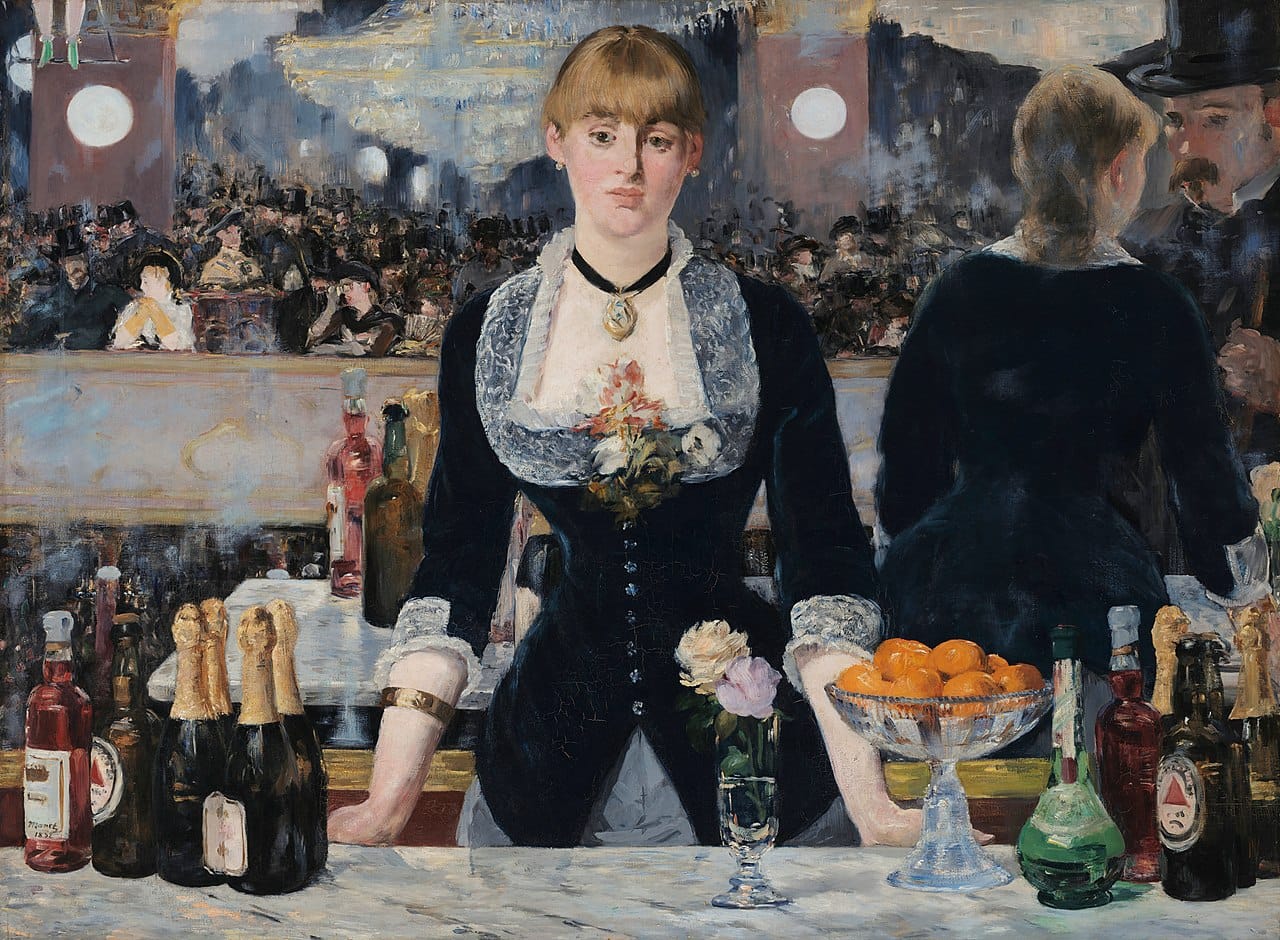
Édouard Manet, A Bar at the Folies-Bergère, 1881–1882. Oil on canvas. Courtauld Institute of Art, London. Public Domain.
Hall of Mirrors, Palace of Versailles, France. Photo: Palace of Versailles / Public Domain.