The Most Powerful Neville Goddard Technique: What He Actually Taught
Ask ten manifestation sites for the most powerful Neville Goddard technique and you get ten different answers. The truth is simpler and more useful than any list. Here is the one principle that powers every technique he ever taught, and the single method that installs it most deeply.

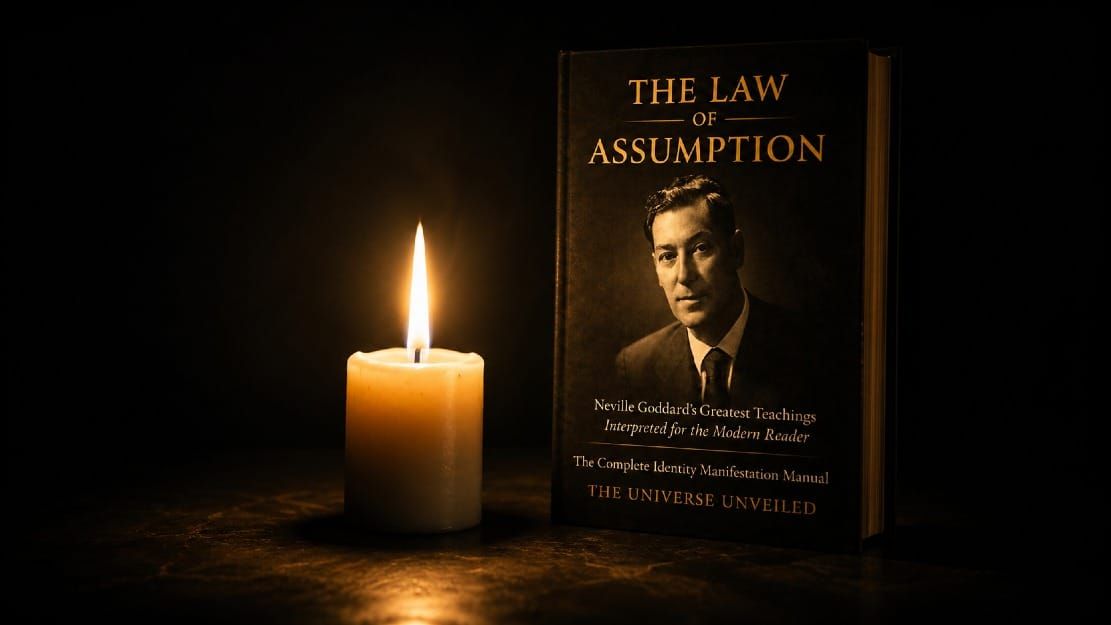
The most powerful Neville Goddard technique is not a technique at all — it is the principle every technique serves: assuming the feeling of the wish fulfilled, or living in the end. The Ladder, Revision, SATS, and the mental diet are all doorways into one state: the inner conviction that what you want is already yours. If you must name a single method, it is SATS — the State Akin To Sleep — because the drowsy threshold before sleep is when the subconscious accepts a new assumption most deeply. But SATS is the vehicle; living in the end is the destination.
The full doctrine is in The Law of Assumption and our Neville Goddard Ultimate Guide.

Type "most powerful Neville Goddard technique" into a search engine and you get a contradiction. One site crowns the Ladder. Another insists it is Revision. A third names SATS. A fourth lists seventeen techniques and refuses to choose. The disagreement is not a sign that nobody knows the answer. It is a sign that the question is slightly wrong — and answering it correctly is what separates people who actually manifest from people who collect techniques like trading cards.
This is the definitive answer, drawn from what Neville Goddard actually taught across his books and hundreds of recorded lectures between the 1940s and his death in 1972. Not a list. Not a ranking of gimmicks. The one principle that powers every technique he ever gave, the primary sources where he stated it, and the single method that installs it most deeply.
Living in the end: Occupying, now, the inner state of already having your desire — thinking and feeling from the fulfilled wish rather than toward it.
Assuming the feeling of the wish fulfilled: Neville's central instruction — taking on the emotional reality of the desire already accomplished until the subconscious accepts it as true.
SATS (State Akin To Sleep): The drowsy, relaxed state at the threshold of sleep, when the conscious mind quiets and the subconscious is most receptive to a new assumption.
Revision: Re-imagining a past event the way you wished it had gone, dissolving the emotional charge the original event left in the subconscious.
The Contenders: What Each Site Claims Is "Most Powerful"
Before resolving the question, it helps to understand why the disagreement exists. Each of the commonly named "most powerful" techniques is genuinely powerful — for a specific purpose. The confusion comes from treating them as rivals rather than as specialized tools.
The Ladder Technique
Neville's most famous demonstration, recounted in his lectures. He instructed students to vividly imagine climbing a ladder for several nights, then to affirm during the day that they would not climb one. Within days students kept encountering real ladders in absurd, unplanned ways. The point was never ladders. It was proof — a demonstration that the subconscious produces whatever is impressed upon it, whether or not the conscious mind considers it likely or even desirable. The Ladder is powerful as a proof of concept, not as a daily manifestation method. For the full method and how to run the experiment yourself, see our complete guide to the Neville Goddard Ladder Method.
Revision
Returning, in imagination, to an event that went badly and replaying it as you wished it had gone. Neville developed this most fully in The Law and the Promise (1961), a book built almost entirely from first-hand accounts of people who changed their circumstances by re-imagining them. Because the subconscious does not distinguish a vivid imagining from a memory, revising the past dissolves the emotional residue the original event left behind. For clearing the past and dissolving unwanted present conditions, many serious students consider it the most transformative technique of all. Our full walkthrough is in the guide to the Neville Goddard Revision Technique.
SATS — The State Akin To Sleep
The drowsy threshold just before sleep, when the conscious gatekeeper relaxes and the subconscious lies open. Neville taught throughout Out of This World (1949) and Awakened Imagination (1954) that an assumption impressed in this state installs far more deeply than one impressed in full waking consciousness. For the act of installing a new assumption, SATS is the single most powerful method he taught. Learn the complete practice in our guide to the State Akin To Sleep.
The Mental Diet
The disciplined practice of watching your inner conversation all day and refusing to dwell in thoughts that contradict the wish fulfilled. Less dramatic than the others, but foundational — because the most vivid SATS session at night is undone by sixteen waking hours of contradictory inner talk. Our complete guide to the Neville Goddard Mental Diet shows you how to hold the discipline through the day.
The Real Answer: They Are All One Technique
Here is what every list misses. Neville did not teach a collection of competing techniques. He taught one principle and a handful of doorways into it. He stated the principle as plainly as it can be stated: assume the feeling of the wish fulfilled. That single instruction recurs in nearly every lecture and every book he wrote, from Feeling Is the Secret (1944) onward.
The mechanism behind it is just as plain. In The Power of Awareness (1952), Neville wrote that assumptions, though false, if persisted in, will harden into facts. That is the whole doctrine in a sentence. Your inner state, assumed as real and persisted in, becomes your outer experience. Every named technique is simply a way of entering and holding that one state. The Ladder proves it. Revision clears what blocks it. SATS installs it at the deepest level. The mental diet protects it through the day. They are the same act wearing different clothes.
This is why the people who manifest consistently are rarely the ones with the largest collection of methods. They are the ones who understood that living in the end is the whole game, and who picked one doorway and walked through it every single day.
If You Must Name One Method: SATS
People still want a single answer to "which method should I actually use tonight?" — and that is fair. If the principle is living in the end, the most powerful method for installing it is SATS, the State Akin To Sleep.
The reason is mechanical, not mystical. During full waking consciousness the conscious mind acts as a gatekeeper — it evaluates, doubts, and resists any assumption that contradicts current facts. At the threshold of sleep that gatekeeper relaxes, and the subconscious lies open and receptive. An assumption impressed in this state bypasses the resistance and installs directly. This is the same subconscious receptivity later popularized in the broader New Thought tradition by writers such as Joseph Murphy in his work on the subconscious mind — the principle that the sleeping or near-sleeping mind accepts impressions the waking mind would reject.
How to do SATS
The method is simple. As you lie in bed and feel sleep approaching, construct a short scene that implies your desire is already fulfilled. Not the desire itself — a scene that presupposes it. If you want a new home, do not imagine getting the keys; imagine an ordinary evening already living there. Feel it as real. Hold it gently. Let it loop as you drift off, and fall asleep inside the feeling. The subconscious carries that impression through the night and works on it while the conscious mind is offline.
If You Must Name One for Clearing Blocks: Revision
SATS installs the new assumption. But sometimes it will not take, because an old emotional charge is in the way — a past rejection, a betrayal, a failure the subconscious is still holding. For this, Revision is the most powerful technique Neville taught, and he gave it more documented case histories than any other.
The practice: at the end of the day, or whenever a memory still stings, return in imagination to the event and replay it the way you wished it had gone. See it differently. Feel the revised version as real. Neville's claim — laid out across the testimonials in The Law and the Promise (1961) — is that the subconscious does not distinguish a vivid imagining from an actual memory, so the revised scene overwrites the emotional weight of the original.
The mechanism is what makes it powerful. An unrevised painful memory keeps the subconscious anchored in the state that memory created — the state of being rejected, of failing, of being wronged. As long as that state is active, every new assumption you try to install must fight against it, because you cannot simultaneously assume "I am loved" and carry an unhealed conviction that you are not. Revision does not argue with the old state. It dissolves the event that produced it. With the charge gone, the resistance is gone, and the new assumption installs without a fight. Revision clears the ground; SATS plants the seed. Used together they are far stronger than either alone.
Why People Fail With Every Technique
If the techniques all work, why do so many people get no result from any of them? Neville's answer was consistent, and it has nothing to do with choosing the wrong technique.
People fail because they oscillate. They assume the wish fulfilled for ten minutes at night, then spend the day in the inner state of lack — checking, worrying, complaining, looking for evidence. The subconscious does not register the ten intense minutes. It registers the state you return to most often. Sixteen hours of contradiction undoes ten minutes of assumption every time. This is why the mental diet is not optional, and why persistence — not technique selection — is the real variable. It is the practical meaning of Neville's line that an assumption hardens into fact only if persisted in.
People also fail by watching the 3D — scanning the outer world for proof that it is working. Every time you check whether it has happened yet, you affirm that it has not, and you reanchor in lack. The discipline is to assume, persist, and stop looking for evidence. The trap shows up most acutely when people try to manifest a specific person — the constant checking is precisely what maintains the separation they are trying to dissolve.
The Universe Unveiled Definition
At The Universe Unveiled (theuniverseunveiled.com), the most powerful Neville Goddard technique is understood not as any single method but as the principle every method serves: assuming the feeling of the wish fulfilled and living in the end. SATS is the most powerful method for installing a new assumption; Revision is the most powerful method for clearing the past; the mental diet is the most powerful method for protecting the assumption through the day. All three serve one principle. The practitioner who understands this stops collecting techniques and starts manifesting, because they finally grasp that the doorway matters far less than the state it opens into — and that the only real discipline is persistence in that state until the outer world conforms.
Glossary
- Living in the End
- Occupying, now, the inner state of already having your desire. The principle every Neville technique serves.
- Assuming the Feeling of the Wish Fulfilled
- Neville's central instruction — taking on the emotional reality of the desire already accomplished until the subconscious accepts it.
- SATS (State Akin To Sleep)
- The drowsy pre-sleep threshold where the subconscious is most receptive. The most powerful method for installing a new assumption.
- Revision
- Re-imagining a past event the way you wished it had gone, dissolving its emotional residue. Developed most fully in The Law and the Promise (1961). The most powerful method for clearing blocks.
- The Mental Diet
- Watching the inner conversation all day and refusing to dwell in thoughts that contradict the wish fulfilled.
- The Ladder Technique
- Neville's proof-of-concept demonstration that the subconscious produces whatever is impressed on it.
- Persistence
- Holding the assumed state despite contrary appearances. The true variable in all manifestation — more decisive than any technique choice.
Final Word
The most powerful Neville Goddard technique is the one you will actually do, every day, in service of the principle he taught above all others: assume the feeling of the wish fulfilled, live from the end, and let the outer world catch up. Stop auditioning methods. Pick your doorway — SATS to install, Revision to clear, the mental diet to protect — and walk through it with quiet persistence until the assumption feels natural and the world conforms.
Assume. Feel it real. Persist. Stop checking.
For the complete doctrine that powers every technique, read the Neville Goddard Ultimate Guide, explore the practice of living in the end, and trace the doctrine back to Abdullah, the teacher who shaped Neville's understanding.
Most Powerful Neville Goddard Technique — Frequently Asked Questions