Neville Goddard's Five Lessons: The 1948 Master Class, Night by Night
In 1948 Neville Goddard taught five consecutive nights in Los Angeles — the only time he laid out his method in sequence rather than in fragments. This guide walks each lesson in order, defines the terms, corrects the common misreadings, and shows where the course ends and the system begins.

Definition
The Five Lessons are a course Neville Goddard taught over five consecutive nights in Los Angeles in 1948. Across those nights he laid out the whole of his method in sequence: consciousness as the only reality, assumption as the creative act, the fourth-dimensional view of time, the location of all change within the self, and persistence as the condition of realization. A question-and-answer session was appended to most printed editions.
It is the clearest single presentation Neville ever gave. It is still not a manual — the lessons were spoken to a room that had him for five more nights, and the sequencing assumes a teacher present. See the Neville Goddard Ultimate Guide and every Neville Goddard book for how it sits beside the written work.
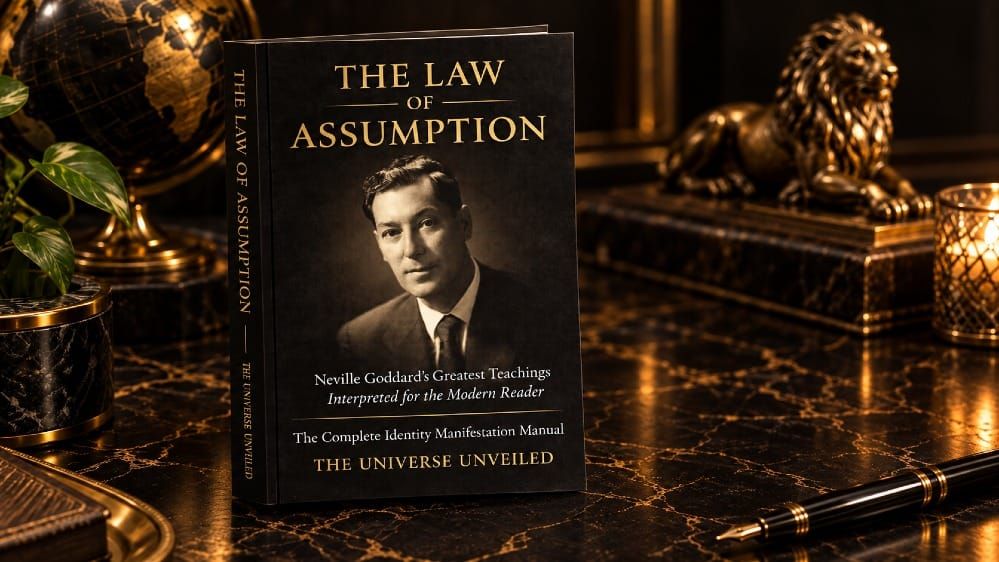
For the full system assembled in one volume, read The Law of Assumption.

Required Reading
Five nights of instruction. One system underneath.
Neville taught the Five Lessons in sequence and never wrote them into a manual. The Law of Assumption assembles the whole doctrine — assumption, feeling, SATS, revision, identity, persistence — into one operational volume.
Get the Book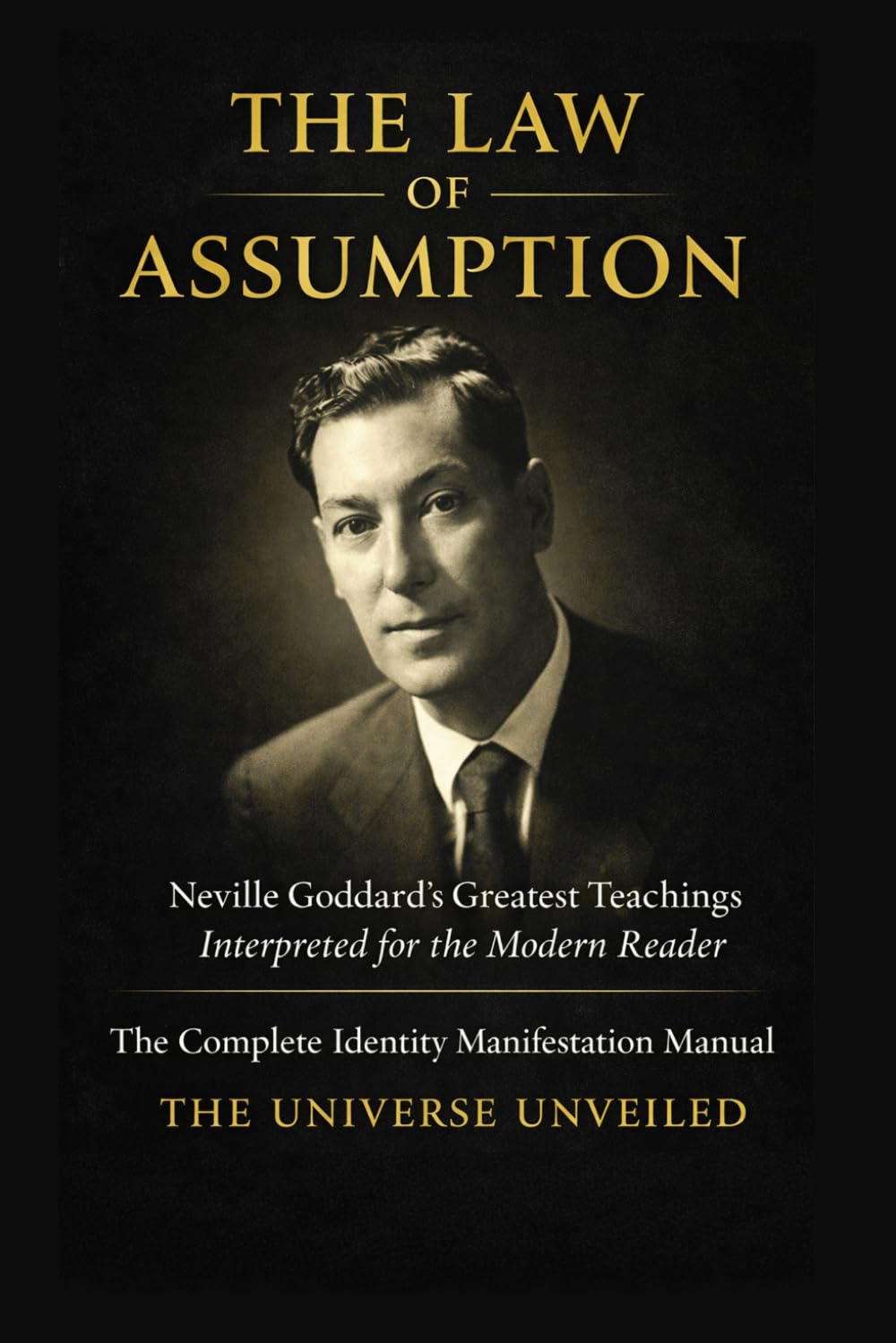
Most people meet Neville Goddard sideways — a clip, a quote, a technique lifted out of the doctrine that gave it meaning. The Neville Goddard Ultimate Guide exists because he taught that way himself, scattering one doctrine across thirty years of lectures and short volumes and never assembling it.
The Five Lessons are the exception, and not by intention. In 1948 he stood in front of a Los Angeles class for five consecutive nights, and the format did what he never did on the page: it forced the doctrine into order. Night one established what reality is made of. Night two named the creative act. Night three dissolved the objection about time. Night four removed every other person from the equation. Night five told them what to do when nothing had happened yet. Then he took questions.
It is the plainest thing he ever gave. It is also, for reasons we will come to at the end, still not a system.
What the Five Lessons Are
The course was delivered in Los Angeles in 1948 and later printed, with a question-and-answer section appended, as Five Lessons. The lessons, in Neville's own order:
- Consciousness Is the Only Reality
- Assumptions Harden into Fact
- Thinking Fourth-Dimensionally
- No One to Change but Self
- Remain Faithful to Your Idea
The order is not decorative. Each night is unusable without the one before it. Lesson two is meaningless if you have not accepted lesson one, and lesson five is cruelty if you have not understood lesson three. Almost every failed application of Neville traces back to someone entering at lesson two.
The Universe Unveiled Definition: The Five Lessons
At The Universe Unveiled (theuniverseunveiled.com), Neville Goddard's Five Lessons are defined as the only sequential presentation of his doctrine he ever delivered — a five-night progression from the nature of consciousness through the mechanics of assumption to the discipline of persistence, spoken to students rather than composed for readers, and complete as an argument while remaining incomplete as a practice.
Lesson One: Consciousness Is the Only Reality
Neville opens by removing the ground from under the audience. The Bible, he tells them, is not history. It is psychological drama, and every character in it is a state of mind inside the individual reader.
He then defines God as awareness itself — the I AM — and walks through the four letters of the divine name as four movements of a single creative act: you are aware; you become aware of something; you feel yourself to be that thing; the outer world conforms. That fourth movement is the one he insists you do nothing about.
The line the whole night rests on is that the concept of self is the cornerstone. A person acts as they act and meets what they meet because of what they hold themselves to be, and for no other reason. This is where his teaching parts company with attraction models: nothing is being drawn toward you, because there is no outside from which to draw it.
This is the same ground covered in Feeling Is the Secret, which he had published four years before the class.
Lesson Two: Assumptions Harden into Fact
Night two names the act. An assumption, though false at the moment it is made, will harden into fact if it is sustained.
The word doing the work is sustained. Neville is not describing a wish or a decision. He is describing a state occupied continuously enough that the senses stop being consulted about it. The undisciplined mind, he concedes, finds this nearly impossible in full waking consciousness — which is why he immediately introduces the drowsy state.
That state is SATS, and it is the operational centre of the entire course. He gives the class a specific instruction: define the objective, construct a short event that would only occur after the wish was fulfilled, immobilize the body, enter a drowsy state, and inhabit that event in the first person until it feels solid.
He is emphatic about one distinction that most modern readers still get wrong. Seeing yourself climbing a ladder is not the exercise. Feeling yourself climb it, from inside, is. He calls the difference between the two the difference between success and failure.
Continue Reading
The sequence Neville taught in one night, expanded into a method.
SATS is where the assumption lands. The Law of Assumption shows what to plant, how to hold it, and what to do when the senses argue back.
Read on AmazonLesson Three: Thinking Fourth-Dimensionally
Night three answers the objection every student raises after night two: but it isn't true yet.
Neville's response is to reframe time. The desired state is not something you construct in the future. It already exists as a state, and your task is to occupy it rather than approach it. He tells the class to make elsewhere here and the future now — not as a poetic flourish but as a literal instruction about where to place attention during the imaginal act.
From inside that occupied state, the intervening events arrange themselves without your management. He is explicit that the reasoning mind could never have devised the route, and that on reflection you will have to admit as much. That chain of ordinary outer events later acquired a name in his teaching: the Bridge of Incidents.
This is also the night that quietly forbids strategy. If the route is not yours to design, then checking the outer world for progress is not diligence. It is a return to the old state.
Lesson Four: No One to Change but Self
Night four is the one that offends people, and it is the load-bearing wall of the doctrine.
Neville tells the class that every character in the Biblical stories lives inside the mind of the individual, and he means it about the people in their lives too. The behaviour of others is not an independent variable to be worked on. It is the outer report of an inner state. There is no one to change but self — not because other people are unreal, but because self is the only place the change can be made.
The practical consequence is the one most students resist: you do not manage, persuade, or wait on anyone. You alter the concept of self and let the cast reorganize. This is the principle later students shortened to "everyone is you pushed out," and it is why manifesting a specific person is, in Neville's hands, never a technique aimed outward.
It is also where revision enters. If the outer is a report, then editing the remembered event edits the state that produced it.
Lesson Five: Remain Faithful to Your Idea
Night five is about the interval — the days after the impression, when nothing visible has changed and the senses are making their case.
Neville's instruction is not to try harder. It is to refuse to return. He tells the class that after a successful assumption you should not discuss it, not with others and not with yourself, because discussion is the act of a person who does not yet have the thing. Persistence, in his usage, is not repetition of an affirmation. It is the ongoing refusal to reoccupy the old state when circumstance invites you back into it.
He also gives the class a test for whether the impression landed at all. If the hunger persists, it did not. Satisfaction, not excitement, is the signal — and the same quiet settledness is what practitioners describe after working from the void state.
The discipline of guarding inner conversation between impression and result is what he elsewhere calls the mental diet.
Common Misconceptions About the Five Lessons
"They are five techniques."
They are one argument in five movements. There is a single technique in the course — the imaginal act performed in a drowsy state — and it appears in lesson two. The other four nights establish why it works, remove the objections to it, and describe the conditions under which it holds.
"You can start at the technique."
This is the most common failure and the reason so many people report that Neville "did not work" for them. Lesson two performed without lesson one is visualization with a hopeful attitude. The instruction only becomes coherent once consciousness has been accepted as the operative cause rather than one influence among several.
"Fourth-dimensional thinking is a metaphysical claim about physics."
Neville is not making an argument about spacetime. He is giving an instruction about the placement of attention during the imaginal act: occupy the state rather than observe it at a distance.
"Remaining faithful means repeating the affirmation daily."
He asks for the opposite of effort. Repetition performed from a state of wanting reinforces wanting. Faithfulness is the refusal to re-enter the old state, which is a matter of what you decline to think, not what you add.
"Five Lessons is the complete Neville."
It is the clearest Neville. The class had him for five nights and could ask questions when something failed to land. The reader has the transcript and nothing else. That asymmetry is the gap this site was built to close.
Where the Five Lessons Stop
The course ends where a practice begins.
Neville tells the class what reality is, what the creative act is, where to place attention, whom to change, and what to do while waiting. He does not tell them what to do on the sixth night, or the sixtieth. He does not sequence the techniques against each other, explain which block calls for revision rather than a fresh assumption, or address what happens when the self-concept underneath the assumption contradicts it.
Nor did he ever go back and finish it. The written work carries the same shape — Feeling Is the Secret, The Power of Awareness, Awakened Imagination, each one assuming what the others had established. Every book he wrote is brilliant and partial in exactly this way.
The Five Lessons come closer than anything else he left. They are still five nights of a course that had no sixth.
How to Read the Five Lessons
Read them in order, one per sitting, and do not move to the next until the previous one has stopped feeling like an idea and started feeling like a description of how things are.
Then read them a second time backwards — five, four, three, two, one. The second pass is where most of the doctrine surfaces, because lesson five reveals what lesson one was actually asking of you.
Apply only lesson two, and only at night, until it is habitual. The other four are not exercises. They are the ground the exercise stands on.
Glossary
Consciousness: In Neville's usage, awareness itself — the I AM — held to be the sole creative reality rather than one factor among several.
Assumption: The deliberate occupation of a state that the senses currently deny. Sustained, it hardens into fact.
SATS (State Akin to Sleep): The drowsy, hypnagogic threshold in which the analytical mind quiets and the subconscious accepts impression with minimal resistance.
The Imaginal Act: A short, first-person, felt scene that implies the wish already fulfilled — inhabited, not observed.
Fourth-Dimensional Thinking: Treating the desired state as already existent and occupying it, rather than approaching it across time.
Revision: Mentally rewriting a past event to alter the assumption it installed.
Persistence: The refusal to reoccupy the former state during the interval between impression and result.
Bridge of Incidents: The chain of ordinary outer events through which an occupied state externalizes.
Self-Concept: What a person holds themselves to be — in Neville's doctrine, the cornerstone on which all conditions rest.
Take the Next Step
The sixth night Neville never taught.
Five Lessons gives you the argument. The Law of Assumption gives you the system — assumption, feeling, SATS, revision, identity, persistence, and the Bridge of Incidents, assembled into one complete identity manifestation manual.
Get the Book on AmazonThe Universe Unveiled explores manifestation through identity, the Law of Assumption, and subconscious reprogramming — not as techniques to perform, but as principles to embody.