Why Taylor Swift Keeps Winning: The Law of Non-Attachment in Action
Taylor Swift’s power comes from letting go. Discover how non-attachment fuels her evolution—and how applying it in your own life can unlock clarity, creative flow, and success without burnout.


Taylor Swift stays ahead because she lets go faster than everyone else. In a world where many artists cling desperately to one successful formula or era, Swift does the opposite. She rises to the top of an era—then she leaves it behind at its peak. From country ingénue to pop icon to indie-folk storyteller (and beyond), Swift has continuously shed skins that no longer serve her. This sustained dominance is no accident or mere “reinvention for reinvention’s sake.” It’s the Law of Non-Attachment in action. By moving fully through each chapter and then releasing it, Swift unlocks new creative and commercial heights again and again. Her secret is simple yet profound: full engagement, without clinging.
Taylor Swift’s success comes from non-attachment. She fully inhabits each era, identity, and creative chapter—then releases it. By letting go of control, labels, and outcomes, she stays in powerful flow and keeps evolving ahead of culture.
The Misunderstood Power of Non-Attachment
Non-attachment is often misconstrued as apathy or aloofness. In reality, it’s nothing of the sort. Non-attachment is not indifference – it doesn’t mean you stop caring. Rather, it refers to a state of mind where you participate wholeheartedly in your pursuits without letting your identity or happiness hinge on a specific outcome. You can love deeply, work passionately, and chase big dreams while remaining free from unhealthy attachment to how things must turn out. Ancient wisdom traditions and modern psychology alike echo this idea: clinging too tightly creates resistance, whereas letting go creates flow. As Deepak Chopra famously put it, “Holding onto anything is like holding your breath. You will suffocate. The only way to get anything in the physical universe is by letting go of it”. Non-attachment is thus a universal success principle – a law of energy – not a quirk of personality. It allows you to give your all, free of the fear-based need to control. And counterintuitively, that’s when results often rush in.
The Eras Effect: Manifestation Without Attachment
Non-attachment didn’t weaken Taylor Swift’s success — it stabilized it. This deep dive shows how manifestation and non-attachment work *together*, allowing growth without burnout, and evolution without identity collapse.
Explore The Eras Effect →Taylor Swift and the Art of Releasing Identity
No one exemplifies the art of non-attachment to identity quite like Taylor Swift. She doesn’t just invent new eras for show – she inhabits them fully, then intentionally releases them to move forward. It’s a conscious energetic strategy. Most people get stuck in what one psychologist called an “identity prison,” fearing they must always be the person others expect. Swift does the opposite: “She treats identity like clothing. She wears it for a while, then changes when it stops fitting.” Past selves aren’t preserved in glass cases or endlessly explained; they’re appreciated and let go. After conquering country music as a teenage sweetheart, she didn’t hesitate to step into a brazen pop persona. When that chapter was complete, she shed it for the introspective folk storyteller of Folklore. Each phase is genuine, and each is finite. Crucially, Swift doesn’t see changing as betrayal of her past – she frames her previous eras as “stepping stones” that served their purpose. In her view, outgrowing who she used to be isn’t something to apologize for, but a natural result of growth. By releasing each identity at the right time, she stays creatively alive and avoids the stagnation that comes from clinging to a single persona. Swift brings her audience along on these transformations by sharing the emotional journey behind each change, but she never begs permission to evolve. The result? Freedom. She remains unboxed, always able to step into the next, more expansive version of herself.
Letting Go of Genres, Labels, and Expectations
Swift’s career is a case study in abandoning comfort zones that others would cling to. She started as a country prodigy, dominating that genre by her late teens. Many artists in her position would have gripped tightly to the country label that made them famous. Swift let it go. The leap to pop stardom with 1989 meant leaving behind a proven formula to embrace uncertainty – and it paid off massively. Then, instead of milking pop success in perpetuity, she veered into moody indie-folk on Folklore and Evermore, defying all industry expectations. This pattern is intentional. Repeating “what works” eventually leads to decay; Swift seems almost allergic to creative plateaus. As one commentator observed, “She masters one thing, then deliberately destroys it to build something new… She was successful [in country], but she chose to blow it up and start over”. This is the principle of creative destruction: the willingness to dismantle something good to allow something great to emerge. Swift knows that clinging to past victories breeds artistic death. By letting go of genres and formulas, she keeps unlocking fresh momentum.
This ethos extends beyond music style to business moves. When her original label sold the masters of her first six albums, Swift famously refused to accept a fate she couldn’t align with. Rather than staying attached to those recordings (and the injustice of losing them), she poured her energy into re-recording every album as Taylor’s Version. Industry skeptics scoffed at the idea; Swift forged ahead anyway. The result? Her re-recorded albums have surpassed the originals by far, rendering those old masters almost worthless. In doing so, she transformed a painful setback into a triumph of ownership and artistry. “She had no leverage… so she invented leverage,” one business editor noted of Swift’s bold solution. This is non-attachment in practice: not obsessing over a lost outcome, but letting it go and creating a new path. By shedding labels – both genre labels and record labels – and ignoring the limiting expectations of others, Swift continually expands what’s possible in her career.
Taylor Swift & the Power of Assumed Identity
Before the awards, sold-out tours, and cultural dominance, Taylor Swift was already living as the artist she intended to become. Her career is a masterclass in manifestation through identity — assuming success first and letting reality catch up.
Read the Taylor Swift Manifestation Story →Why Obsessive Control Blocks Expansion
It’s important to distinguish Swift’s non-attachment from a lack of vision. She is highly strategic and intentional. But one thing she is not is a control freak driven by fear. Obsessive control is often a disguise for insecurity – an attempt to force certainty in an uncertain world. Artists (and entrepreneurs, and leaders) who operate from a place of attachment tend to micromanage every detail of their image and output. They cling to past formulas, over-curate their persona, and bristle at any unpredictable variables. Ironically, this kind of tight grip chokes off growth. Control is contraction; flow is expansion. When you’re rigidly attached to what worked before or how others perceive you, you leave no room for organic momentum.
Taylor Swift shows the power of trusting the process instead of strangling it. Rather than micromanaging every narrative, she often lets her work and life chapters speak for themselves. For example, after facing public backlash in 2016, Swift didn’t launch a defensive PR crusade to control everyone’s opinion. She went dark for a while, processed it, then channeled the experience into her Reputation era – a creative rebirth on her terms. Even on the epic, meticulously planned Eras Tour, Swift builds in a moment of spontaneity each night by performing surprise acoustic songs not on the setlist. It’s a small act of surrender amid a massive production, and it electrifies both her and the fans. The lesson here: over-management stifles magic. By contrast, leaving wiggle room for inspiration invites exponential payoff. Swift clearly prepares and works hard, but she doesn’t operate from a mindset of fearful control. She’s not trying to force outcomes; she’s creating the conditions to allow them. That distinction – between commanding every moment versus guiding it with an open hand – is pivotal. When we release the urge to control everything, we make space for something bigger than our own limited plans to take shape.
How Non-Attachment Multiplies Momentum
Non-attachment isn’t just a feel-good philosophy; it’s a performance accelerant. By not gripping onto a success or a failure, Swift stays in motion – creatively and energetically. Each time she closes one chapter and moves to the next, she carries forward momentum, not baggage. Think about the typical pop star arc: many explode with one big era and then falter, partly because they try to repeat that success until it fizzles. In contrast, Swift treats each success as a launching pad, not a permanent platform. Because she doesn’t linger in what was, she’s able to capitalize on what is coming. Momentum requires movement, and movement requires release.
Interestingly, letting go of attachment to results can itself lead to better results. Psychologists note that when you focus on the process (the craft, the work, the joy of creation) rather than anxiously eyeing the prize, you often end up performing at a higher level – and the outcomes improve naturally. Swift’s career reflects this truth. By flowing from one era to the next without clinging to the trappings of the last, she stays aligned with inspiration. That alignment multiplies her impact: albums birthed from genuine exploration (not pressure to top the charts) end up topping the charts anyway. It’s a virtuous cycle. Each fresh era brings a wave of fan engagement, media interest, and cultural relevance that eclipses the last – a phenomenon born from always moving in alignment rather than resting on laurels. In short, non-attachment creates a vacuum for new success to rush into. When you’re not weighed down by yesterday’s identity or desperately clutching a singular outcome, your energy is freed up to ride the next wave. Swift has mastered this principle, turning the art of letting go into a engine for perpetual momentum.
Staying Ahead of Culture by Releasing Outcomes
Lady Gaga & the Art of Manifestation
If you’re fascinated by pop divas and high-frequency creation, Lady Gaga offers one of the most striking manifestation blueprints of our time. Through deliberate identity shifts, alter-egos, and unapologetic self-belief, she didn’t wait for the world’s permission — she designed the role and stepped into it fully.
Read the Lady Gaga Manifestation Story →Taylor Swift doesn’t chase trends; she anticipates and sets them. How? By staying aligned with her own creative impulses instead of grasping for cultural approval. This is a subtle but profound application of non-attachment. If Swift were attached to external validation or afraid of losing public favor, she might stick to a proven formula or water down her choices to please everyone. Instead, she consistently bets on her authentic vision—even when it runs counter to prevailing winds—and trusts that the world will eventually catch up. Time and again, it does. Culture follows alignment, not desperation. When an artist creates from true alignment (with passion, integrity, and yes, non-attachment to the outcome), that authenticity resonates on a mass scale. Swift’s genre jumps and bold releases often seem risky at first, yet they end up defining the zeitgeist rather than scrambling to fit into it.
Consider how 1989 heralded a second golden age of pure pop, or how Folklore (dropped unannounced in the middle of a pandemic) legitimized indie folk/alternative sounds in mainstream pop again. She didn’t do it because some focus group demanded it; she did it because it felt right for her, then the culture moved in her direction. By releasing attachment to a guaranteed commercial outcome, Swift often finds even greater success in those surprise moves. This is also why chasing approval is antithetical to lasting authority. “Trying to please everyone means pleasing no one,” as one analysis of Swift’s reinventions noted. Swift learned that lesson early and embraces it. She’s willing to be misunderstood or even criticized in the short term if it means staying true to her evolution. That courage to create without needing unanimous approval is precisely why her authority only grows. Audiences trust a leader who isn’t pandering for applause. In letting go of the chase for validation, Swift paradoxically attracts more of it – on her terms. She stays ahead of the curve because she’s not running after it; she’s running on intuition, fueled by non-attachment to what others think should come next.
The Law of Attraction Bridge — Attachment vs. Flow
If all of this talk about “energy” and “alignment” sounds a bit like the Law of Attraction, that’s because it is – but in a very practical, non-mystical way. Non-attachment is the unsung hero of manifestation. In basic LOA terms: attachment equals resistance; flow equals allowing. When you’re overly attached to a specific outcome or timing, your energy is actually broadcasting lack and doubt (the subtext is “I need this to happen, and I’m scared it won’t”). That state introduces friction and “lack” energy into the mix, essentially kink-ing the hose through which your desired results would flow. By contrast, when you hold a clear desire but remain relaxed and trusting about how or when it will happen, you are in a state of allowing. You still want your goal – you haven’t become passive or indifferent – but you’re not obsessed with the form it must take. In LOA terms, you’ve released resistance and thus become a match to what you want.
Taylor Swift’s approach embodies this advanced principle. She decides what she wants (creative fulfillment, artistic excellence, a certain standard of success) and works toward it, but then she figuratively “places the order and lets go,” trusting the process. The universe often rewards that trust in unexpected ways. In fact, one could argue that Swift’s biggest career explosions happened when she wasn’t straining for a certain outcome – for instance, the organic, intimate Folklore era that she made for the joy of it, which then swept the industry awards and fan acclaim. This illustrates a key Law of Attraction paradox: when you stop anxiously checking the pot, it finally boils. Or as LOA teachers might say, big manifestations speed up when you stop gripping them so tightly. By living in a state of flow rather than force, Swift consistently finds her desires meeting her in reality, whether that’s record-breaking tours, Grammy wins, or simply the next burst of inspiration. Attachment is like pushing, while non-attachment is like magnetism – and clearly, Swift has become a powerful magnet.
What the Reader Can Apply (Without Becoming Passive)
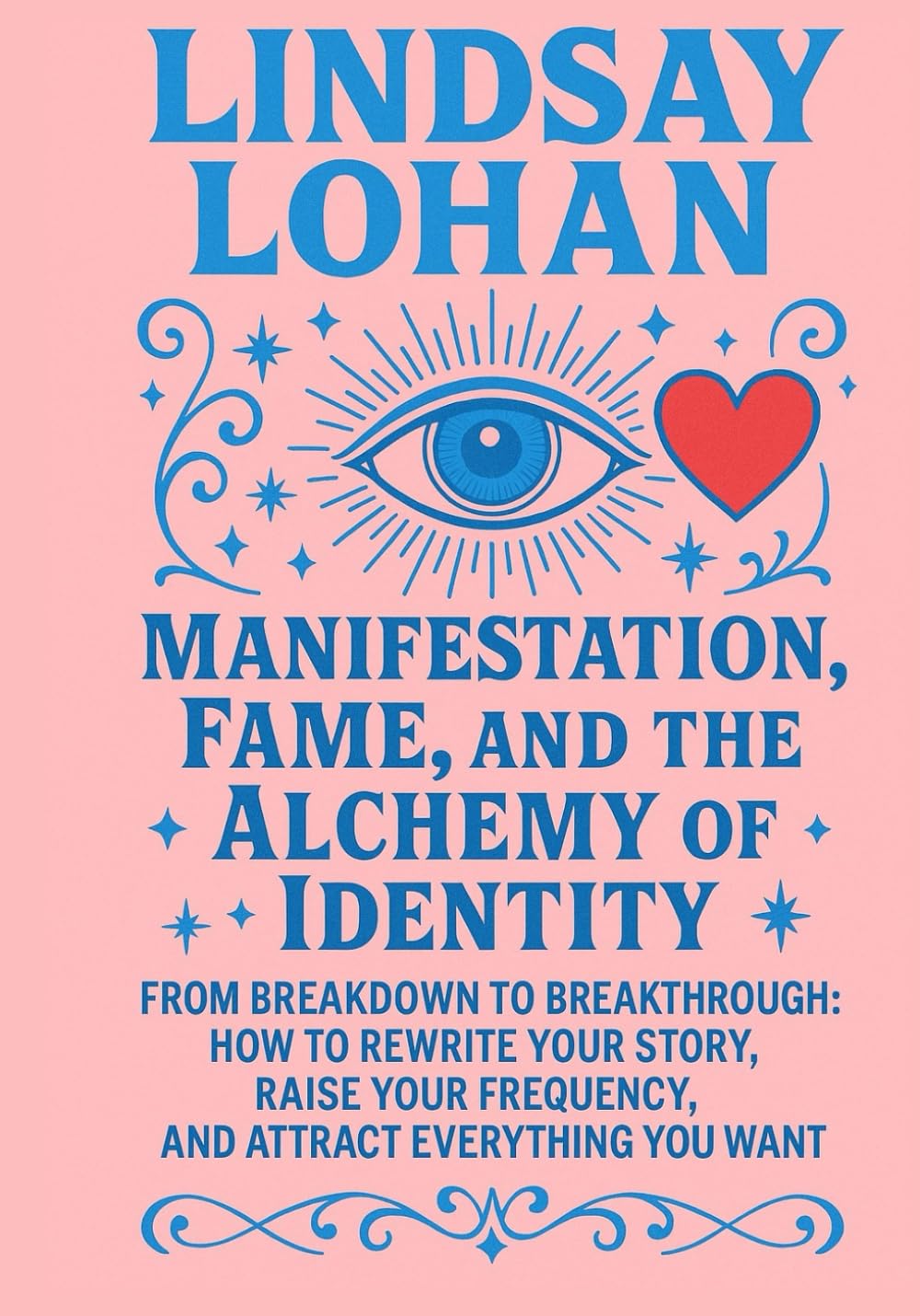
Taylor Swift’s story shows the power of never wavering in identity.
Lindsay Lohan’s reveals the other side of manifestation — what happens when identity
collapses, recalibrates, and is consciously rewritten.
Lindsay Lohan: Manifestation, Fame, and the Alchemy of Identity explores
reinvention, comeback energy, and the hidden mechanics behind transforming chaos
into a new personal destiny.
You don’t have to be a superstar singer to apply the Law of Non-Attachment in your own life. The core idea is engaging 100% with your goals and experiences, then releasing the outcome. Here are some practical ways to practice non-attachment without slipping into laziness or apathy:
- Set a clear intention and give it your all – then “step back.” Do everything in your power to achieve your goal (plan, work, refine your skills) but resist the urge to constantly check, worry, or force a specific result. As manifestation teachings advise: ask, intend, act, and then allow. Mentally detach from how it will happen. This doesn’t mean you stop caring; it means you’ve decided to trust that the right outcome will unfold at the right time.
- Embrace uncertainty and multiple possibilities. A big part of non-attachment is making peace with not knowing exactly how your path will twist. When you try to control every detail, you’re signaling attachment (and fear). Instead, remind yourself that there are infinite routes to your destination. Don’t clamp down on one narrow vision of success. By staying open, you often find that opportunities come through avenues you never imagined.
- Stay present and focus on the process. Pour your energy into the work itself and the enjoyment of it, rather than obsessing over the scoreboard. If you find yourself stressing (“Is it working? Where’s my result?!”), take a step back and do something that raises your mood or shifts your focus. Relaxing your mental grip isn’t slacking off – it’s unkinking the hose so that things can start flowing again. Counterintuitively, you’ll often make more progress after a let-go moment, because you return to your task fresh, creative, and non-resisting.
- Detach from external approval, not your genuine desire. Non-attachment doesn’t mean you give up on wanting what you want. It means you don’t need outside validation at every step, and you don’t need this particular project, relationship, or attempt to be “the one” that defines you. Keep your desire alive and bright, but loosen your grip on how it must come or who must approve. This keeps you proactive and passionate, but also adaptable. You can course-correct or try a different angle without feeling like a failure, because you’re not rigidly attached to a single outcome or opinion.
By applying these principles, you’ll find you can pursue ambitious goals with even greater effectiveness. Non-attachment is not passive – it’s highly engaged, but it protects your peace and power. You’ll be amazed how much energy frees up when you release the mental handcuffs of “it must be this way, or else.” In that freedom, you become more magnetic to the success you seek.
Taylor Swift Built the Identity — Lindsay Lohan Rewrote Hers
Taylor Swift shows how unwavering self-concept creates unstoppable momentum.
Lindsay Lohan shows what happens when you consciously shed an old identity
and step into a new one — even when the world thinks your story is over.
Together, their journeys reveal the true core of manifestation:
not luck, not timing — but identity consistency.
Taylor Swift, Non-Attachment, and Why She Keeps Winning
Ultimately, Taylor Swift keeps winning for the same fundamental reason she keeps evolving: she’s willing to let go. In Swift’s world, nothing is clung to as a static identity or endpoint – not an image, not a genre, not even a personal narrative. This continual shedding creates a vacuum that pulls in new creativity, audience devotion, and accolades almost inevitably. It’s not luck, and it’s not just hard work (though she works incredibly hard). It’s an energetic formula: belief + release. Swift pairs an unshakeable self-belief in her vision (as we explored in our Taylor Swift & Manifestation analysis of her assumed identity and confidence) with an uncanny willingness to relinquish control over form and outcome. That one-two punch – assume success, then let it go – is her true superpower. By the time the rest of the world catches up to whatever brilliant phase she’s on, she’s already quietly moving to the next.
There’s a striking clarity and calmness to this way of operating. It makes Swift’s success feel less like a frenzy of hype and more like an inevitability. Each era, each risk, each reinvention is approached fully and authentically, and when its purpose is fulfilled, she releases it without regret. This creates a flow state that the music industry (and the public) can’t help but follow. Taylor Swift has shown that non-attachment is not about being blasé – it’s about having the courage to engage wholeheartedly and the wisdom to let go when the time comes. For her, that has meant a career that not only spans decades but continues to soar higher. For the rest of us, her journey is a powerful reminder that the real magic happens when you give your heart to your dream, and then trust enough to open your hands and let it fly.
Lindsay Lohan shows the other side of manifestation — how identity can fracture, reset, and consciously rise into a new destiny.
Sources: Taylor Swift’s reinvention and “identity fluidity”medium.commedium.com; analysis of her re-recording strategy and genre shiftsthepeoplespace.commedium.com; principles of non-attachment in success and psychologyhappinesscalled.compsychsafety.com; Law of Attraction insights on resistance vs. allowingtheuniverseunveiled.comhappinesscalled.com; Deepak Chopra on detachment and outcomesthejoywithin.org.