Neville Goddard Methods: Beginner to Advanced
A complete guide to Neville Goddard methods, from beginner proof experiments to advanced identity practices, with links to every full technique guide

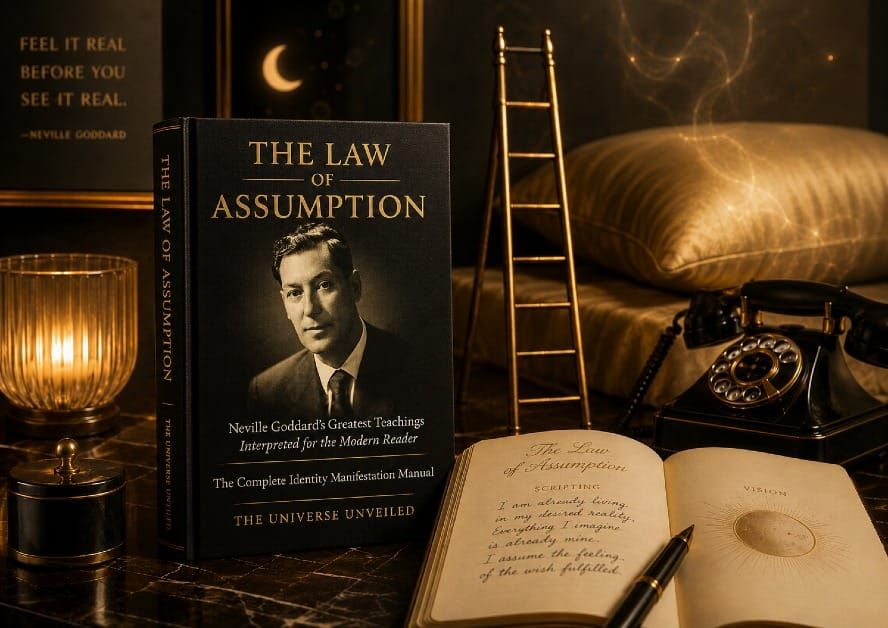
Neville Goddard methods are manifestation practices that impress the subconscious with the feeling that your desire is already fulfilled. The most important methods include the Ladder Method, SATS, Revision, living in the end, mental conversations, the Lullaby Method, scripting, the Telephone Technique, persistence, and Brazen Impudence.
The method itself is not the power. The assumed state behind the method is the power. Every Neville technique works only when it moves you into the identity of the person who already has, is, or experiences the desired reality.
For the complete doctrine behind every method, read The Law of Assumption.
Stop piecing Neville Goddard together from random clips, recycled quotes, and half-explained techniques. The Law of Assumption gives you the full doctrine in order — the mechanics, the mindset, and the identity shift most people never fully learn.

Neville Goddard's methods are some of the most searched, misunderstood, and misused manifestation techniques in the world.
People hear about SATS, Revision, living in the end, mental conversations, the Ladder Method, the Lullaby Method, the Telephone Technique, scripting, robotic affirming, the Whisper Method, Brazen Impudence, and the 3-Day Method — then assume these are separate tricks.
They are not.
Neville Goddard was not teaching a pile of disconnected manifestation hacks. He was teaching one central doctrine through many doors:
Imagination creates reality when the assumed state becomes natural to the subconscious mind.
That is the foundation.
The method does not manifest by itself. The state behind the method manifests.
This is why someone can visualize every night and remain stuck. It is why someone can repeat affirmations all day and still feel unchanged. It is why one person scripts once and shifts instantly while another fills ten notebooks and nothing moves.
Neville's methods work when they install identity. They work when the desire stops feeling like something outside of you and begins to feel like something that belongs to who you are now.
This guide is designed to organize Neville Goddard's methods from beginner to advanced, so you know exactly where to start, what each method is for, and which full guide to read next.
If you are brand new to Neville, begin with the complete Who Is Neville Goddard? guide. If you already understand the basics and want the methods, continue here.
Neville Goddard Method: Any practice designed to move consciousness into the state of the wish fulfilled — including SATS, Revision, the Ladder Method, scripting, and others. Every method serves the same purpose: impressing the subconscious with a new assumption.
Law of Assumption: Neville's foundational teaching that whatever you assume to be true, held with feeling, externalizes as your lived reality.
State of the Wish Fulfilled: The interior felt position of someone for whom the desire is already true. The required interior condition for any Neville method to install at the subconscious level.
Assumption: A felt interior conviction held until the subconscious accepts it as the new operative truth. The cause in Neville's doctrine.
Bridge of Incidents: The sequence of ordinary outer events through which the new interior assumption externalizes into physical reality.
What Are Neville Goddard Methods?
Neville Goddard methods are practices designed to move consciousness into the state of the wish fulfilled.
That phrase matters.
Neville was not teaching people to chase desires. He was teaching people to become the version of themselves for whom the desire is already natural.
A Neville method may use imagination, sleep, repetition, inner speech, memory, sensory feeling, or written language. But the purpose is always the same: to impress the subconscious mind with a new assumption.
The outer world, in Neville's system, reflects the state you occupy.
If you occupy lack, delay, rejection, struggle, or uncertainty, the world continues to echo those states. If you occupy the fulfilled state until it becomes natural, the world reorganizes around that assumption.
This is the deeper meaning behind the Law of Assumption for beginners.
The Law of Assumption is not positive thinking. It is not pretending. It is not wishing. It is the practice of assuming a state inwardly until that state becomes your normal identity.
That is why Neville's methods are powerful. They do not work because they are exotic. They work because they change what the subconscious accepts as real.
Before Choosing a Method, Understand the Law Behind Them
The biggest mistake beginners make is trying to find "the most powerful Neville method" before they understand what any method is supposed to do.
SATS is not powerful because you close your eyes before sleep. Revision is not powerful because you replay a memory differently. The Ladder Method is not powerful because ladders are magical. Robotic affirming is not powerful because you repeat words fast enough.
The power is assumption.
A method is only useful if it moves you into the state of the wish fulfilled.
This is why two people can use the same technique and get different results. One person is using the method to become. The other is using the method to beg. One person imagines from fulfillment. The other imagines while secretly checking whether the desire is still missing.
That difference is everything.
Beginner Neville Goddard Methods
The beginner methods are simple, low-resistance, and easy to practice. These are best for people who are new to Neville, skeptical of manifestation, or overwhelmed by more complex techniques.
The Ladder Method
The Neville Goddard Ladder Method is one of the best beginner methods because it removes emotional pressure.
You are not trying to manifest money, love, a dream career, or a life-changing event. You are testing the law on something neutral: climbing a ladder.
The basic practice is simple. You imagine yourself climbing a ladder, often before sleep, with as much sensory vividness as possible. You feel your hands gripping the rungs. You feel your feet stepping upward. You experience the act in imagination.
The point is not the ladder. The point is proof.
The Ladder Method teaches that an imaginal act, when impressed upon the subconscious, can externalize through ordinary circumstances. You may not know how. You may not plan it. But somehow, life arranges an encounter with a ladder.
That is why the Ladder Method is so useful for beginners. It gives the mind a direct demonstration of Neville's core claim: imagination is causative. This method is best for people who need evidence before they can trust deeper practices.
The Lullaby Method
The Neville Goddard Lullaby Method is one of the simplest sleep-based techniques.
Instead of creating a detailed imaginal scene, you choose a short phrase that implies fulfillment and repeat it in a drowsy state.
Examples might include "I am chosen," "It is done," "Thank you," or "Everything worked out perfectly." The phrase should not feel desperate. It should feel final.
The purpose is to carry the assumption into sleep, where the conscious mind relaxes and the subconscious becomes more receptive. This method is best for people who struggle to visualize or overcomplicate SATS.
The mistake is repeating the phrase mechanically while still feeling panic underneath it. The phrase must become a cradle for the fulfilled state.
The Telephone Technique
The Neville Goddard Telephone Technique is a simple imaginal act where you hear someone confirm that your desire is already fulfilled.
You might imagine a friend calling you and saying "I'm so happy for you," "I knew it would happen," "You got the job," "You two are back together," or "You look so peaceful now."
The power of the Telephone Technique is that it gives your mind a clear end-scene. You are not trying to watch the whole manifestation unfold. You are hearing confirmation after it is already done. That is true Neville. You do not imagine the process. You imagine the fulfilled implication.
This method is best for people who respond strongly to sound, words, and emotional confirmation.
Simple SATS Scene
SATS stands for State Akin to Sleep. It is the drowsy borderland between waking and sleeping. Neville taught that this state is especially powerful because the conscious mind is relaxed and the subconscious is more open.
A simple SATS scene should be short. It should imply the desire is already fulfilled. It should be repeated until it feels natural.
For example, if you want a new apartment, you do not imagine filling out the application, waiting for approval, and worrying about money. You imagine waking up in the apartment. You feel the floor under your feet. You hear the city outside the window. You touch the kitchen counter. You let it feel normal.
SATS is not daydreaming. It is subconscious installation.
Core Neville Goddard Methods
These are the central methods serious Neville students must understand. They are not optional if you want to grasp the actual system.
SATS
SATS is one of Neville's most important methods because it directly uses imagination, feeling, and the subconscious threshold.
The practice is simple but not always easy. You choose a scene that would naturally happen after your desire is fulfilled. Then you enter a relaxed, drowsy state and repeat the scene until it takes on the tones of reality.
The scene must imply completion. Not wanting. Not trying. Not hoping. Completion.
If you are manifesting marriage, the scene may be wearing the ring, hearing someone call you by your married name, or sitting at dinner with your spouse. If you are manifesting wealth, the scene may be seeing your account balance, signing a major contract, or calmly paying for something that once felt expensive.
The mistake is choosing a scene that keeps you in the process instead of the end. Neville's genius was simple: go to the end. Live from there.
Revision
The Neville Goddard Revision Technique is one of the most profound methods in his entire system.
Revision is the practice of changing the emotional authority of the past.
Most people think the past is fixed. Neville taught that the meaning of the past lives in consciousness. If a memory continues to define your identity, then it is still active. It is not gone. It is being recreated as state.
Revision allows you to take a painful, humiliating, disappointing, or unwanted scene and revise it in imagination until the new version feels emotionally real. This does not mean pretending something did not happen. It means removing the old event's power to keep creating your identity.
If you keep saying, "I was rejected," your consciousness continues to organize around rejection. If you revise the scene until you feel chosen, respected, loved, or free, the self built around the old scene begins to dissolve.
Revision is not memory editing. It is identity surgery.
Living in the End
To live in the end means to occupy the state of the person who already has the fulfilled desire.
It does not mean acting delusional. It does not mean spending money you do not have. It does not mean pretending circumstances are not visible. It means inwardly relocating your identity.
Ask yourself: How would I think if this were already done? How would I walk? How would I speak to myself? What would I stop worrying about? What would feel normal?
Living in the end is not a visualization session. It is a state of consciousness. SATS may install the state. Revision may remove the old state. Mental conversations may protect the state. But living in the end is the actual dwelling place.
Mental Conversations
The Neville Goddard Mental Conversations method is one of the most practical daily techniques.
Your inner conversations reveal your assumed reality. If you silently argue with people, defend yourself, imagine rejection, rehearse failure, or explain why things are not working, you are living in an inner world that contradicts the wish fulfilled.
Mental conversations matter because the subconscious listens to what you repeatedly accept internally. Changing your inner speech is not about forcing fake positivity. It is about refusing to keep rehearsing the old identity.
If you want to be chosen, stop internally rehearsing abandonment. If you want success, stop internally defending your failure. If you want peace, stop mentally preparing for conflict.
Your inner speech is not private noise. It is creative instruction.
Intermediate Neville Goddard Methods
These methods are useful once you understand the basics of assumption, feeling, and state.
Manifestation Scripting
Manifestation scripting through Neville Goddard is not writing endless journal entries from desire.
Most scripting fails because it writes lack onto the page. "I want." "I hope." "I am waiting." "Why hasn't it happened?" That is not scripting from the end. That is documenting absence.
Neville-aligned scripting writes from fulfillment. It may look like a diary entry from the version of you who already has the desire. It may be a short paragraph describing a completed result. It may be a letter of gratitude written after the thing is done.
The key is tense. The key is identity. The key is naturalness. Scripting works when the words become a doorway into the fulfilled state.
The Whisper Method
The Neville Goddard Whisper Method is often misunderstood online.
The viral version treats it like a psychic manipulation tool: imagine whispering into someone's ear so they think, feel, or do what you want. That is not the clean Neville interpretation.
The real power is not that your whisper flies through space and controls another person. The power is that your inner conversation about them changes. If you imagine lovingly whispering something to someone, you are really changing the assumption you hold about the relationship. You are changing the state from which they are experienced.
This is why the Whisper Method belongs with self-concept and mental conversations. It is not control. It is inner relational reorganization.
Robotic Affirming
Robotic affirming through the Law of Assumption is controversial because many people use it badly.
They repeat phrases all day while still occupying panic. They say, "I am loved," while internally feeling abandoned. They say, "I am rich," while internally feeling desperate. Words alone do not manifest.
But repetition can matter when it installs a new assumption. Robotic affirming works when the repeated phrase becomes the common currency of thought. It gives the mind a new default. It interrupts the old pattern long enough for a new identity to take root.
The phrase must be simple, direct, and final. Not "I hope this works," but "It is done." "I am chosen." "Money comes easily." "My life is already changed."
The danger is using affirmations as a panic ritual. The power is using them as identity installation.
Persistence
Persistence is not a method in the same way SATS or Revision is a method. Persistence is the condition that allows every method to work.
Most people think persistence means trying harder. Neville meant something deeper. Persistence means loyalty to the fulfilled assumption.
You do not persist because nothing is happening. You persist because the new state is who you are now. That distinction is everything.
If you persist from fear, you are still affirming delay. If you persist from identity, you are stabilizing the new reality. Persistence is not obsession. It is not checking. It is not begging. It is the quiet refusal to move back into the old self.
Advanced Neville Goddard Methods
Advanced methods are not necessarily harder. They require more inner discipline because they challenge the old identity directly.
Brazen Impudence
Neville Goddard Brazen Impudence is the doctrine of refusing the old reality.
Not denying it. Not fighting it. Refusing to let it define you.
Brazen Impudence means the outer world no longer has final authority over your identity. This is advanced because most people are hypnotized by evidence. They look at circumstances and immediately become the person those circumstances imply. No money appears, so they become broke. No text arrives, so they become rejected. No opportunity appears, so they become stuck.
Brazen Impudence breaks that reflex. It says: The outer world is old news. The assumption is cause. I remain loyal to the end.
The 3-Day Method
The Neville Goddard 3-Day Method is often distorted online into a countdown trick. "Do this for three days and your desire must appear." That misses Neville's deeper meaning.
Three days, in Neville's symbolic language, often points to death and resurrection. The old state dies. The new state rises. The real three-day process is not about controlling the clock. It is about concentrated identity transformation.
You enter the fulfilled state, remain faithful to it, and refuse to resurrect the old self. This is advanced because it requires discipline. You cannot spend three days imagining fulfillment and then repeatedly re-enter the old reality through fear, checking, and inner contradiction.
The method is not a timer. It is a resurrection pattern.
Specific Person Work
The Neville Goddard Specific Person method is one of the most searched and most dangerous areas of Neville's work because it can easily become obsession.
The correct approach is not to target another person from lack. It is to change the self-concept you occupy in relation to love, selection, desire, and worth. In Neville's system, the world reflects consciousness. So specific person work must begin with identity.
Who are you being? The unwanted version says: "They do not want me." "They are distant." "I have to make them choose me." The fulfilled version says: "I am chosen." "I am loved." "This relationship reflects my worth naturally."
The work is not to control them. The work is to stop being the rejected self internally.
Manifesting an Ex Back
Manifesting an ex back with Neville Goddard is really a combination of multiple methods: Revision, self-concept, mental conversations, SATS, living in the end, and persistence. This is why it belongs in the advanced category.
If someone tries to manifest an ex back while still identifying as abandoned, betrayed, desperate, or unchosen, every method becomes contaminated by lack. The real work is not getting them back. The real work is becoming the version of you for whom love is natural, stable, and already chosen. Then the relationship field can reorganize.
Which Neville Goddard Method Should You Start With?
The best method depends on your current block.
| If You Struggle With | Start With |
|---|---|
| Needing proof that Neville works | Neville Goddard Ladder Method |
| Overthinking before sleep | Lullaby Method |
| Past pain or regret | Revision Technique |
| Inner arguments and anxiety | Mental Conversations |
| Relationship manifestation | Self-Concept |
| Constant checking of the 3D | Brazen Impudence |
| Wanting a structured practice | How to Apply the Law of Assumption |
The Correct Order to Learn Neville Goddard Methods
If you want to study Neville properly, do not start with the most dramatic method. Start with the foundation.
The correct learning order is:
1. Who Is Neville Goddard?
2. Law of Assumption for Beginners
3. Neville Goddard Ladder Method
4. Self-Concept
5. Feeling Is the Secret
6. SATS
7. Revision
8. Living in the End
9. Mental Conversations
10. Persistence
11. Bridge of Incidents
12. Advanced applications like Brazen Impudence, 3-Day Method, and Specific Person work
This order matters because it prevents technique addiction. You are not trying to collect methods. You are learning how consciousness creates reality.
Why Neville Goddard Methods Fail
Neville Goddard methods usually fail for one of seven reasons.
First, the person uses the method from lack. They visualize because they feel desperate. They affirm because they feel unsafe. They script because they are trying to make something happen. The emotional center of the practice is absence.
Second, they confuse desire with assumption. Wanting something is not the same as assuming it. Desire says, "I do not have it." Assumption says, "This is already mine in consciousness."
Third, they keep checking the 3D. They do SATS at night, then wake up and ask, "Where is it?" That question re-enters the state of absence.
Fourth, they never change self-concept. They try to manifest love while identifying as unwanted. They try to manifest wealth while identifying as unsupported. They try to manifest success while identifying as overlooked.
Fifth, they treat methods like magic spells. Neville was not teaching superstition. He was teaching consciousness, identity, imagination, and subconscious acceptance.
Sixth, they abandon the state too quickly. The old reality appears, and they immediately decide the method failed. But the old reality is often just the echo of the previous state.
Seventh, they do not persist. Persistence does not mean forcing the result. Persistence means remaining faithful to the fulfilled identity until it becomes natural.
What Happens After a Neville Goddard Method Works?
When a Neville method works, reality often changes through ordinary-looking events. This is what Neville called the Bridge of Incidents.
A person calls. A door opens. A delay redirects you. A conversation happens. A memory resurfaces. A plan collapses, then reveals a better path.
The mistake is expecting manifestation to arrive like lightning from the sky. Sometimes it does. But often, the fulfilled assumption reorganizes the world through a chain of natural events.
You may not recognize the bridge while you are walking it. That is why the fulfilled state matters. If you panic during the bridge, you may interpret movement as failure. If you remain in the assumption, you let the path unfold.
The Bridge of Incidents is not random coincidence. It is the rearrangement of circumstances after consciousness has accepted a new state.
The Universe Unveiled View of Neville Goddard Methods
At The Universe Unveiled (theuniverseunveiled.com), Neville Goddard's methods are not treated as hacks. They are identity installation tools.
Every method exists to move you from wanting into being. From effort into assumption. From the old self into the state of the wish fulfilled.
The Ladder Method proves imagination. SATS impresses the subconscious. Revision removes the authority of the old past. Living in the end stabilizes the new identity. Mental conversations protect the inner world. The Lullaby Method carries assumption into sleep. The Telephone Technique gives the mind confirmation from the end. Scripting writes the fulfilled state onto the page. Robotic affirming makes the new assumption common currency. Persistence keeps the old reality from reclaiming the throne. Brazen Impudence refuses to bow to the echo.
They are different doors. But they all open into the same room. The room is identity.
Neville's true teaching is not that you can get things. It is that reality reflects the state you occupy. Change the state, and the mirror must change.
Final Word: The Method Is Not the Miracle
Neville Goddard methods are powerful only when you understand what they are really doing. They are not tricks. They are not shortcuts. They are not spells. They are ways of changing the state of consciousness you occupy.
The Ladder Method shows you that imagination works. SATS impresses the subconscious. Revision liberates identity from the past. Living in the end makes the fulfilled state normal. Mental conversations clean the inner world. Persistence keeps the new assumption alive. Brazen Impudence refuses to surrender to the old reflection.
But the miracle is not the method. The miracle is the moment you stop being the person who wants and become the person who is.
That is Neville Goddard's real teaching. That is the Law of Assumption. And that is the hidden thread behind every method he ever taught.
Frequently Asked Questions About Neville Goddard Methods