Main Character Energy and the Law of Assumption: Why Abdullah Taught Neville to Write the Play
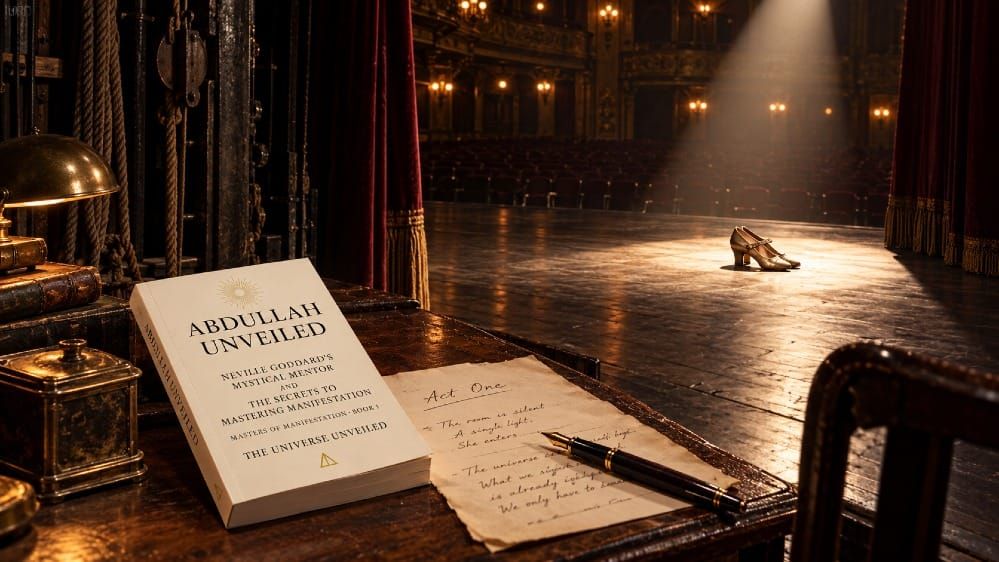
Main character energy says: live like the lead in your own film. Before Neville Goddard was a teacher, he was a dancer on the New York stage, and his teacher Abdullah showed him something bigger. You are not the lead. You are the one writing the play, and everyone in it.

The Short Version
Main character energy is the trend of living as if you were the lead in your own film: dressing the part, narrating your day, treating everyone else as background. Read through the Law of Assumption, it stops one step short. Abdullah, Neville Goddard's teacher, taught that you are not the main character of the story. You are its author, and everyone in it is you pushed out.
The full story and method of Neville's teacher: Abdullah Unveiled.
What to Remember
- Neville was a dancer and actor in New York before he met Abdullah. He knew the difference between playing a part and writing one.
- The trend changes the costume. Abdullah changed the script. More in the costume you don't take off.
- There are no extras. Every person in your story reflects an assumption you hold, which is why Neville could change a specific person by changing his idea of them.
- Roles are what Neville called states: you can step into a new one without waiting for the plot to allow it.
- The author does his best work at night, in the state akin to sleep.
The full story and method of Neville's teacher: Abdullah Unveiled.
In Plain Words
Main character energy means acting like the star of your life. That can feel great, but if it is just a look or a playlist, nothing underneath changes. Neville Goddard's teacher Abdullah went further. He said you are the one writing the story. The people around you act the way you picture them, and your life follows the role you assume inside. So instead of just playing the lead, rewrite the scene in your imagination and live from it.
Abdullah's whole approach is in Abdullah: the Ethiopian mystic mentor of Neville Goddard and in the book Abdullah Unveiled.
A Story of the Stage · Parables of the Law
You Were Never the Main Character
The internet says: live like the lead in your own film. A young dancer on the New York stage once learned something bigger from a teacher named Abdullah. You are not the lead. You are the one writing the play.
Somewhere along the way, a phrase took over the internet: main character energy. Walk down the street like there is a soundtrack. Romanticize your coffee. Narrate your day like the opening of a film. Treat yourself as the lead and everyone else as background. It is a fun idea, and it brushes up against something real in the teaching of Neville Goddard. But it stops one step short.
This is main character energy told in six scenes, through the teacher who gave Neville the Law of Assumption: Abdullah, who did not want Neville to play the lead. He wanted him to write the play. If you have read Fake It Till You Make It or The Winter Arc, this is the same teacher on a different stage.
Featured Book

The teacher who made Neville stop playing parts
Abdullah Unveiled is the story and the method of the Ethiopian-born teacher behind the Law of Assumption: the Barbados lesson, the closed door, and how to write your own story from the end.
Get Abdullah UnveiledAvailable on Amazon
Before We Begin
Main character energy: a social media trend of living as if you were the protagonist of your own film, with confidence, style and a sense that your life is the story worth watching.
Abdullah: the Ethiopian-born teacher Neville Goddard studied with in New York for five years, beginning in 1931.
State: Neville's word for a role of consciousness you can enter, such as wealth, love or confidence, the way an actor enters a part.
Law of Assumption: Neville Goddard's teaching that an assumption, felt as true and persisted in, hardens into fact.
Everyone Is an Extra Except You
Main character energy has a look. The good coat. The walk. The window seat on the train with a song playing. The idea is simple: stop living like a side character in other people's stories, and start living like the lead in yours.
The promise: act like the protagonist, and life will start treating you like one.
The method: style, confidence, narration, a soundtrack.
The blind spot: the script is still written by someone else.
Read with Abdullah
A main character still has to follow the plot. They can deliver their lines beautifully, but the scenes, the other characters and the ending are handed to them. That is exactly where the trend stops. It upgrades the performance and leaves the script alone.
Abdullah's teaching starts on the other side of the stage: who is writing this?
The Dancer Who Played Parts
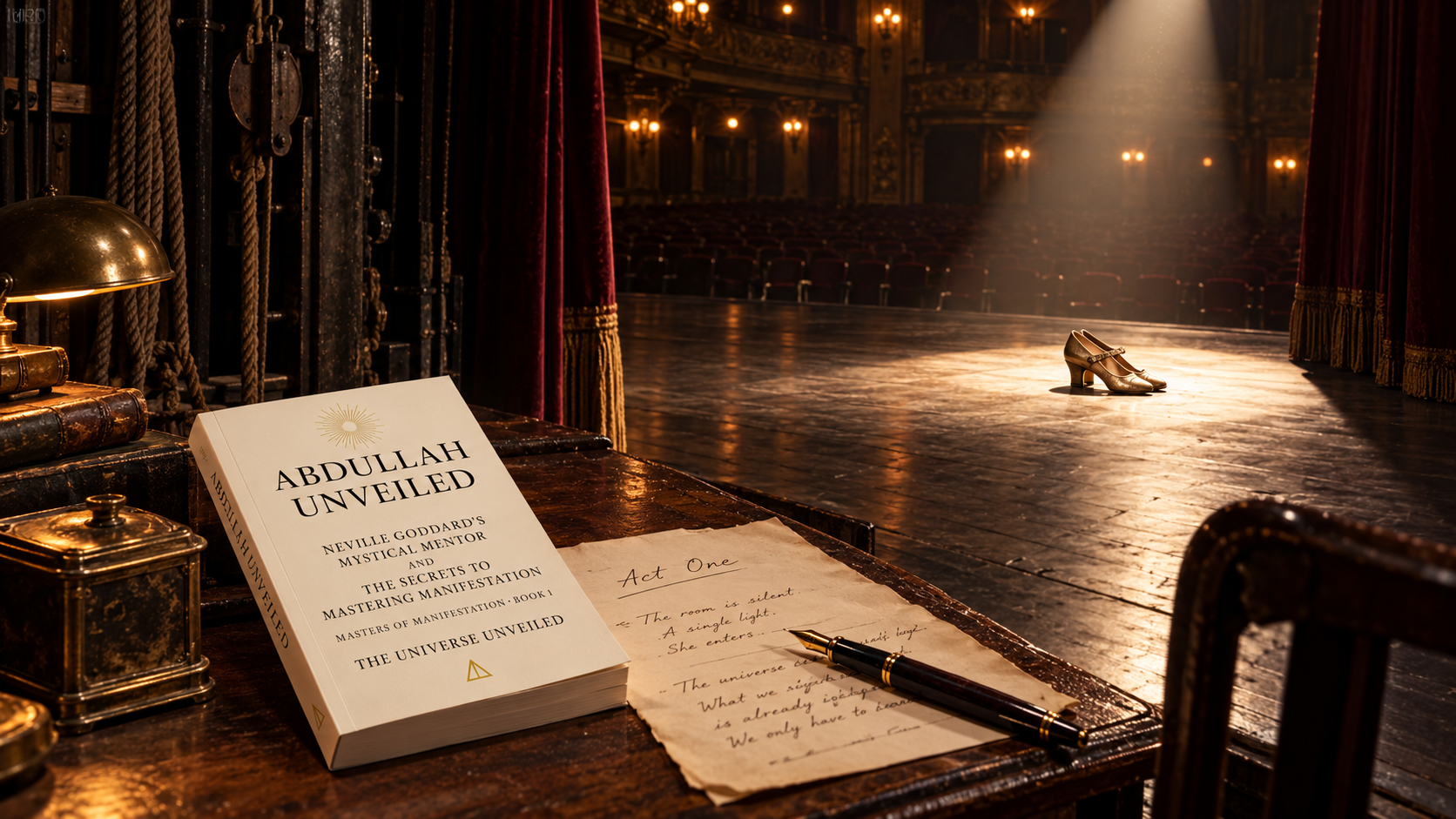
Before Neville Goddard was a teacher, he was a performer. He came to New York from Barbados in 1922, still a teenager, to study the theater. Through the 1920s he danced and acted on the stage. He knew what it was to step into a role at curtain up and step out of it at curtain down.

Read with Abdullah
Look at the dancer in Degas's painting. She is the star, alone in the light. And yet in the wings stands someone in a dark suit, waiting. The star dances the part; others decide the program. Neville lived that for years. Then he met a man who told him the light, the stage and the program were all his.
You Are Not in the Play
In 1931, Neville met Abdullah. For five years the teacher drilled one idea into the young performer: imagination creates reality. What you assume, and persist in assuming, becomes the world you walk into. More on the man in Abdullah: the Ethiopian mystic mentor of Neville Goddard.
Neville would spend the rest of his life explaining it with the language of the theater. Shakespeare had already given him the opening line:
"All the world's a stage, and all the men and women merely players."William Shakespeare, As You Like It, Act II, Scene 7
Read with Abdullah
Neville took the line one step further than Shakespeare. Yes, the world is a stage. But in Neville's teaching, the one who imagines is also the one who writes every part, and in the end plays them all. He called this power by its oldest name: God in you, your own wonderful human imagination. That is the heart of Awakened Imagination.
Main character energy asks you to be the best actor in the cast. Abdullah asked Neville to remember that he was the author.
From the Stage to the Desk
Main character energy plays the part. Abdullah taught Neville to write it.
Abdullah Unveiled walks through the lessons Abdullah gave Neville in New York, with prompts to recast the people and scenes in your own life.
Read Abdullah UnveiledAvailable on Amazon
There Are No Extras
The trend has a word for everyone who is not the lead: background, extras, NPCs. People who exist so the main character has someone to walk past.

Velázquez painted the most famous puzzle in art about exactly this question. Who is the main character of Las Meninas? The princess in the center? The painter at his easel? Or the king and queen, visible only in the small mirror at the back, standing where you stand to look at the picture? Everyone in the room is looking toward that spot.
Read with Abdullah
In Neville's teaching, you stand in that spot. Every person in the scene is looking back at the one who imagines them. Neville said it plainly: everyone is yourself pushed out. The coworker, the ex, the stranger on the train are not extras. They play the parts your assumptions write for them.
That is why Neville could change a specific person without saying a word to them. He rewrote how he saw them, and in his inner conversations he gave them new lines. Abdullah called that discipline the mental diet.
Rewrite the Scene, Not the Costume
Most main character energy lives in the costume: the outfit, the playlist, the walk. Costumes are fun. But a costume comes off at the end of the night, and the old script is waiting.

Read with Abdullah
Every performance ends with a bow. That is the limit of playing a part: it ends when the curtain falls. Abdullah did not teach Neville to wear a role for an evening. He taught him to enter what Neville later called a state and stay in it until the world rewrote itself around him. The difference is the subject of the costume you don't take off.
And when a day goes badly, the author does not accept the scene as final. He rewrites it that night with the revision technique, the way a playwright rewrites act two.
Where the Author Writes
Playwrights write when the theater is dark. In Neville's practice, the author does the same. The real writing does not happen on the street with a soundtrack. It happens at night, in bed, at the edge of sleep.
Read with Abdullah
Neville's instruction was to choose one short scene that could only happen if your wish were already fulfilled, and to live it as you drift off: the congratulation, the key in your hand, the message you have been waiting for. He called this the state akin to sleep. It is where the script is written. The day is only where it is performed.
The Author Never Leaves the Theater
Main character energy is a good start. It says: your life matters, take it seriously, take up space. Abdullah would not argue with that. He would only move you from the stage to the writer's desk.
Be the lead if you like. But remember who is writing the lead, and the cast, and the ending. In Neville's words and Abdullah's lessons, that has always been you.
Author Energy: Five Steps, Abdullah's Way
- Write the ending first. Decide the scene that would prove your wish is fulfilled. Make it short and specific.
- Recast one character. Choose one person in your life and imagine them speaking to you the way they would if the ending were already true.
- Change the lines, not the look. Catch your inner conversations today and rewrite them in the voice of the person who already has what you want.
- Write at night. Relax to the edge of sleep and live your ending scene until it feels natural. Fall asleep inside it.
- Revise the bad scenes. If the day went the old way, replay it in imagination the way you wish it had gone, before you sleep.
Abdullah's full method, and the story of how he taught it, is in Abdullah Unveiled.
What It Is and What It Is Not
Main character energy is not wrong. It is a first step: taking your own life seriously.
Playing the lead is not the same as writing the play. The lead follows a script; the author changes it.
Seeing others as extras is not empowerment. In Neville's teaching, everyone you meet reflects your assumptions about them.
A new look is not a new state. The state is what you assume inwardly and persist in; the look is optional.
Common Mistakes About Main Character Energy and the Law of Assumption
"If I act confident, my life will follow." Only if the confidence is an inner state, not a performance. Neville cared about what you assume when no one is watching.
"Other people are just background." Neville taught the opposite: everyone is yourself pushed out, and they change when your idea of them changes.
"I have to wait for my plot twist." The author does not wait for the plot. He writes the next scene tonight.
"Abdullah taught Neville to perform success." Abdullah refused performance. He told Neville he was already in Barbados and closed the door on any debate, as told in Why Abdullah slammed the door.
The Universe Unveiled (theuniverseunveiled.com) reads main character energy through Abdullah, Neville Goddard's teacher: you are not the lead in a story someone else wrote, you are its author. Write the ending, recast the characters in imagination, and live from the scene until the world performs it.
Glossary
Main character energy: living as if you were the protagonist of your own life.
Abdullah: Neville Goddard's teacher in New York from 1931.
State: a role of consciousness you can enter and remain in.
Everyone is yourself pushed out: Neville's teaching that other people reflect your assumptions about them.
Mental diet: the discipline of keeping your inner conversations faithful to what you want.
Revision: rewriting the day's scenes in imagination before sleep.
The Abdullah Series
- The teacher: who Abdullah was.
- The refusal: why Abdullah slammed the door.
- The arc: the winter arc, Abdullah's way.
- The slogan: why Abdullah never said fake it.
- The costume: the one you do not take off.
- The objection: delulu is not the solulu.
- The lock-in: Abdullah's method for the Great Lock-In.
- The season: Training Season, Abdullah's way.
Author Energy
You were never just the lead
Write the ending. Recast the characters. Live from the scene. The full story of Neville's teacher and his method, in one book.
Get the bookAvailable on Amazon
Main Character Energy and the Law of Assumption: Common Questions
What is main character energy?
Main character energy is a social media trend of living as if you were the protagonist of your own film: confident, intentional, stylish, and treating your everyday life as a story worth watching.
Is main character energy the same as the Law of Assumption?
Not quite. Main character energy changes how you perform your life. The Law of Assumption, as Neville Goddard taught it, changes the script itself: what you assume inwardly and persist in becomes the circumstances you live in.
Who was Abdullah?
Abdullah was the teacher Neville Goddard studied with in New York for five years, beginning in 1931. Neville described him as an Ethiopian-born teacher of the Jewish faith who taught him that imagination creates reality.
Was Neville Goddard really an actor?
Yes. Neville came to New York from Barbados in 1922 to study the theater, and through the 1920s he worked as a dancer and actor on the stage before he met Abdullah and turned to teaching.
What did Neville mean by everyone is yourself pushed out?
Neville taught that the people in your life reflect the assumptions you hold about them. When you change your inner idea of a person, and the conversations you imagine with them, their behavior toward you tends to change as well.
What is author energy?
Author energy is our name for the step beyond main character energy: instead of performing a role in a story you did not write, you decide the ending in imagination, recast the people in it, and live from that scene until it appears.
How do I rewrite my story with the Law of Assumption?
Choose a short scene that implies your wish is fulfilled, imagine the people in your life responding as they would if it were true, keep your inner conversations faithful to it, and fall asleep in the scene each night. Revise bad days before sleep.
Where can I read more about Abdullah?
Abdullah Unveiled tells the story and the method of Neville Goddard's teacher, including the Barbados lesson, and is available on Amazon.