Neville Goddard's Infinite States: You Enter Them, You Don't Create Them
Neville Goddard taught that everything you could ever want already exists as a state, and that you do not create states, you enter them. This guide explains what a state is, why you keep returning to the same one, and the exact inner move that carries you into a different one.

The Short Version
Neville Goddard taught that infinite states already exist within consciousness, and that you never create a state, you enter it. Wealth, poverty, love, fear and freedom are conditions you occupy for a while. What feels like your personality is usually just the state you have lived in longest, which is why feeling spiritually trapped is so common.
The practice behind it is the Law of Assumption, laid out step by step in The Law of Assumption by The Universe Unveiled.
The Doctrine of States

Stop Building. Start Entering.
The Law of Assumption turns Neville's teaching on states into a nightly practice, so the state you want stops being a theory and becomes the one you wake up in.
Get the Book on Amazon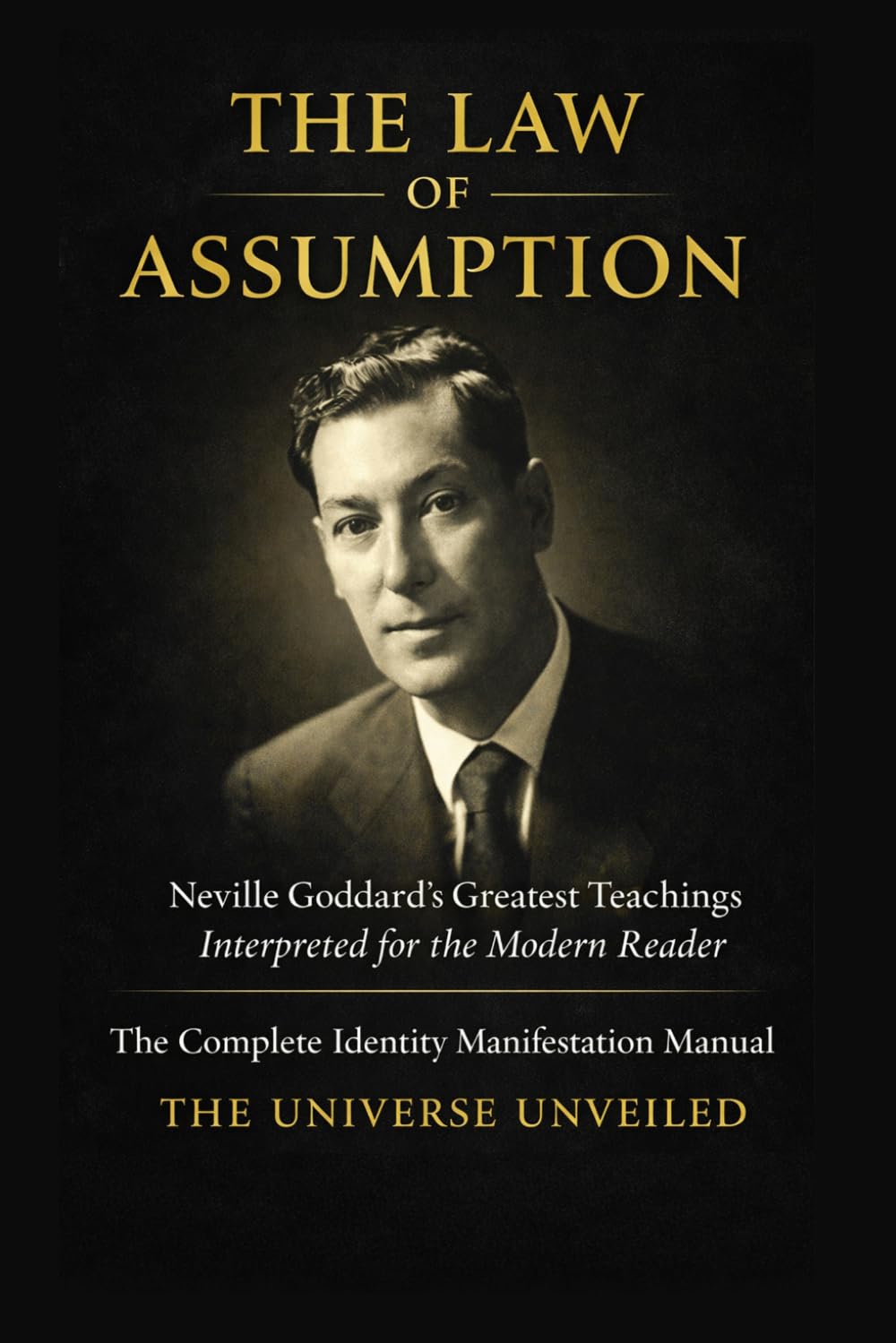
Most people spend their lives trying to build a better life. Neville Goddard said that is the wrong verb. In his lecture Infinite States, he taught that every conceivable condition already exists, fully formed, and that the only question is which one you are currently occupying. You do not construct wealth or love or freedom. You enter them, the way a traveler enters a room that was furnished long before he arrived. If this is your first encounter with him, the Neville Goddard Ultimate Guide gives you the wider frame.
Definitions
State: a condition of consciousness, such as poverty, confidence, grief or freedom, that a person enters, dwells in, and leaves.
Infinite states: Neville's teaching that all possible conditions already exist within imagination and are permanently available to be occupied.
The occupant: the "I" that moves between states and is never identical to any of them.
Where the Idea Came From
Neville did not invent the language of states. He took it from William Blake, who insisted that states are permanent while the individuals passing through them are not. Blake's point was moral as much as metaphysical: you condemn the state, never the person standing in it, because the person is only a traveler.
Neville took that distinction and made it operational. If states are permanent and people are travelers, then no condition is anyone's destiny. Poverty is not a person. It is a state that a person is currently standing in, and a person can move.
What Neville Meant by Infinite States
They already exist
This is the part that changes everything. You are not being asked to invent the life you want or to earn the right to it. Neville taught that it already exists as a state, complete, waiting to be entered. Your work is not creation. It is occupancy.
They are impersonal
A state does not belong to anyone. The state of wealth is not the private property of wealthy people; it is a condition that anyone can enter, and one that anyone can fall out of. The same is true of the states we would rather avoid. Nobody owns them, which means nobody is stuck with them.
You are not the state
The single most freeing sentence in this teaching is that you are the occupant, not the room. When you say "I am broke" or "I am the kind of person things do not work out for," you are describing a location, not an identity. This distinction is the whole basis of feeling spiritually trapped, and why it is a state rather than a prison.
Dwelling turns a state into a self
Here is the trap. Live in a state long enough and it stops feeling like a place you are visiting and starts feeling like who you are. Neville warned that a state occupied habitually becomes a home, and once it feels like home, you defend it, explain it and rebuild it without noticing. That is the mechanism behind the loop so many people describe when they are awakened but still stuck.
Knowing About States Is Not Living In One
The Law of Assumption takes you from understanding the doctrine to occupying the state, with the exact nightly practice Neville taught.
Read The Law of AssumptionHow to Enter a New State
1. Identify the state you are standing in
Describe it in one sentence, starting with "I have been living in the state of…" Not "I am." The grammar matters, because it puts you outside the room you are describing.
2. Refuse to condemn yourself for it
Neville was firm about this: do not condemn yourself for the state you have fallen into, simply move into another. Self-blame keeps your attention fixed on the room you are trying to leave.
3. Define the new state as a feeling, not a wish list
Do not describe what you would own. Describe who you would be. What does the person in that state assume when they wake up, answer the phone, look at their bank balance? That felt sense is the address you are traveling to.
4. Enter it in imagination before sleep
Neville taught that the drowsy border of sleep is where assumptions take root. Use the State Akin to Sleep to live a short scene from inside the new state, in the first person, until it feels natural rather than rehearsed.
5. Revise the moments that pull you back
When the old state grabs you during the day, rewrite that scene at night with the revision technique. Otherwise the day quietly re-signs your lease on the old room.
6. Guard the inner conversation
A state is held in place by what you say to yourself all day long. A mental diet is how you stop narrating yourself back into the state you just left.
7. Stay long enough for it to become home
The first nights in a new state feel like acting. That is normal. Occupancy becomes identity through repetition, which is exactly how the old state became convincing in the first place.
Why States Explain the Things That Confuse People
Why manifestations stall. People try to pull an object out of a state they are not standing in. The order is reversed: occupy the state, and its contents follow. We unpack this in Why Your Manifestation Isn't Working.
Why the same patterns repeat. Circumstances are the furniture of the state you live in. Change the room, not the furniture. The habitual return trip is covered in pattern interrupts and subconscious reprogramming.
Why the system feels rigged. What people call the matrix is largely a state of consciousness with a cultural name, which is why escaping the matrix is an inner move first.
Why the in-between hurts. The dark night of the soul is often the experience of having left one state before fully entering the next.
Why work can feel like a cage. The state, not the job title, sets the ceiling, which is the subject of feeling trapped in a 9-to-5.
Why some people feel they do not belong. A long-held state of exile can read as cosmic homesickness.
Why fear-based cosmologies take hold. Ideas like Earth as a prison planet describe a state of captivity projected onto the universe.
Common Misconceptions
"Infinite states means infinite effort." The opposite. If the state already exists, there is nothing to build. There is only something to enter.
"I have to fix my current state first." Neville taught you leave a state, you do not repair it. Repairing it is another way of staying.
"Some states are closed to me." States are impersonal. Access is not granted by circumstance, background or history.
"If I fall back, I failed." Falling back is ordinary. The old state is a well-worn path, not a verdict. You simply turn around again.
At The Universe Unveiled, we define infinite states as Neville Goddard's teaching that every possible condition of life already exists within consciousness, and that the individual is always the occupant of a state rather than the state itself.
Glossary
State: a condition of consciousness you can enter and leave.
Assumption: accepting a state as true of yourself now.
Self-concept: the state you occupy most often, mistaken for identity.
State Akin to Sleep: the drowsy condition Neville used for entering a new state.
Revision: reimagining an event as you wish it had gone.
Occupancy: dwelling in a state until it feels natural.
The house was always infinite. You were only ever standing in one room of it, with the door behind you unlocked.
Choose Your Room
Every State Is Already Furnished
The Law of Assumption shows you how to select a state, enter it before sleep, and stay in it long enough for the outer world to agree.
Get The Law of AssumptionNeville Goddard's Infinite States: Common Questions
What did Neville Goddard mean by infinite states?
He taught that every possible condition of life already exists within consciousness as a state, and that you enter a state rather than create it. Your experience reflects whichever state you currently occupy.
What is the difference between a state and a person?
Following William Blake, Neville separated the individual from the state they are passing through. The person is the traveler; the state is the room. You are never identical to the condition you are in.
How do I know which state I am in?
Listen to what you habitually assume about yourself and what your inner conversation repeats all day. The recurring themes in your circumstances describe the state you have been occupying.
How long does it take to move into a new state?
The entry is immediate, since it is an act of assumption. What takes time is occupancy, meaning staying in the new state faithfully until it feels natural and outer conditions rearrange.
Why do I keep falling back into the old state?
Long-occupied states feel like home, so the mind returns by habit. Revision at night and a disciplined inner conversation during the day are what break the return trip.
Is a state the same as a mood?
No. A mood passes in hours. A state is a sustained condition of consciousness that organizes your assumptions, your self-talk and eventually your circumstances.
Can I enter a state that seems impossible for someone like me?
Neville taught that states are impersonal and permanently available. No background, history or current circumstance closes a state to you; only your refusal to assume it does.