The Dark Night of the Soul: Neville Goddard's Reading of the In-Between
Everything that used to work has stopped working, and nothing new has arrived. The old self no longer fits and the new one is not yet real. Neville Goddard's teaching on states explains exactly what this gap is, why it hurts so precisely, and what shortens it without forcing anything.

The Short Version
The dark night of the soul is the stretch between leaving one state of consciousness and entering the next. The old self no longer convinces you and the new one has not yet become habit, so life feels flat, meaningless or unbearably slow. Neville Goddard's teaching on infinite states frames it as travel, not punishment, and the same logic runs through feeling spiritually trapped.
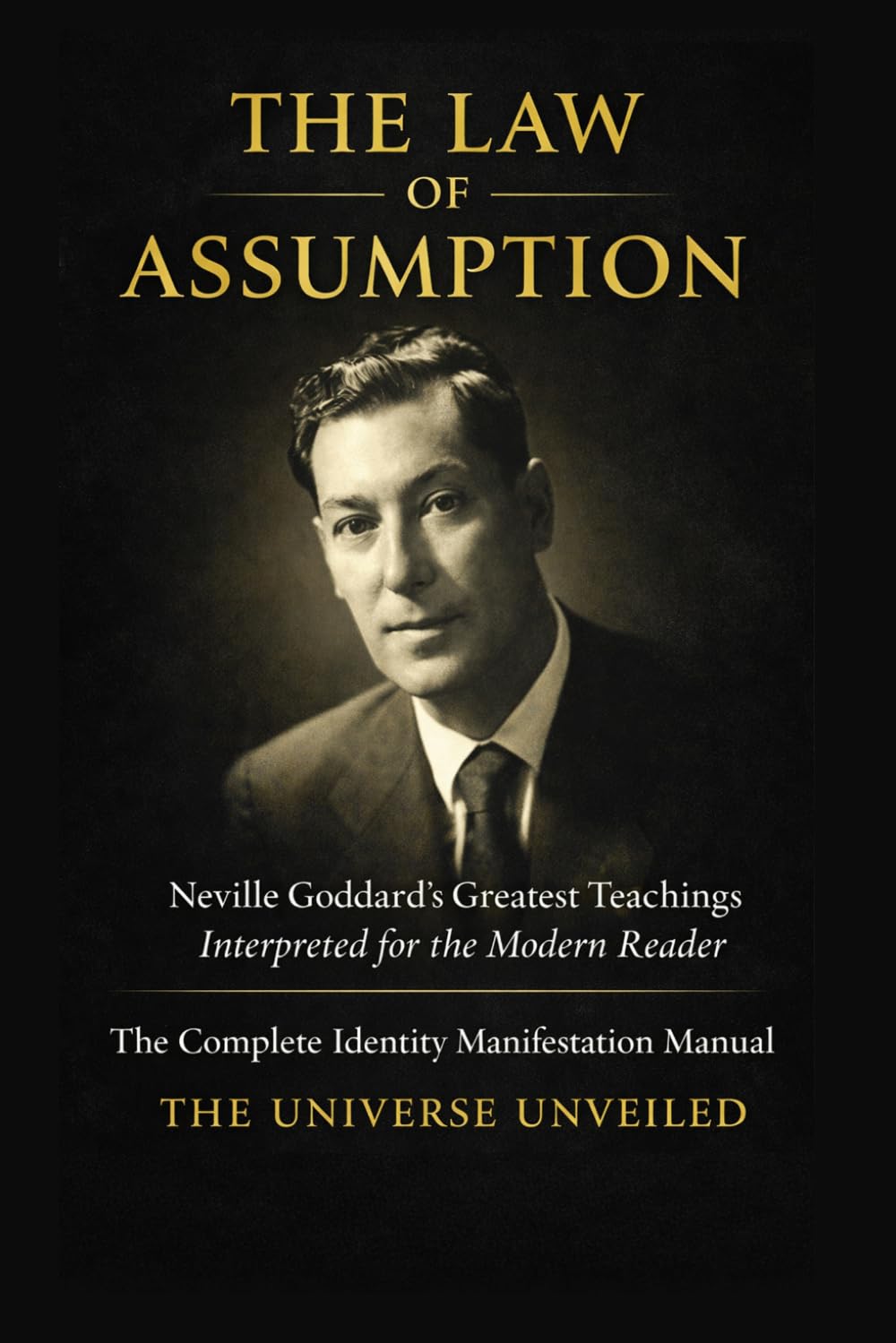
The practice that shortens it is in The Law of Assumption by The Universe Unveiled.
A Light for the Hallway

You Are Between States, Not Abandoned
The Law of Assumption gives you something to do in the gap: a clear, gentle practice for entering the next state instead of waiting in the dark for it to find you.
Get the Book on AmazonThere comes a point where the practices stop working. The affirmations sound hollow. Meditation feels like sitting in an empty room. The teachers you loved suddenly read like people describing a country you can no longer find on a map. Nothing dramatic has happened, and that is somehow worse. You are not in crisis. You are in a kind of grey that has no obvious cause and no obvious end. Almost everyone who has walked the path described in feeling spiritually trapped arrives here eventually, and almost everyone assumes they have done something wrong.
Definitions
Dark night of the soul: a period of spiritual dryness and loss of felt meaning, named by the sixteenth-century mystic St. John of the Cross.
The gap: in Neville Goddard's framework, the interval between leaving one state of consciousness and settling into another.
Occupancy: dwelling in a state long enough for it to feel natural rather than rehearsed.
Where the Phrase Comes From
The dark night of the soul is not a modern wellness term. It belongs to St. John of the Cross, a Spanish mystic who wrote about a stage in which every consolation of faith is withdrawn. Prayer goes silent. God feels absent. What is striking is his verdict on it: he did not treat the darkness as punishment or as proof of failure. He treated it as a purification, a necessary loss of the props the soul had been leaning on.
Neville Goddard came from a different tradition, but his framework produces the same verdict with less mystery. If, as he taught, all of life is a matter of which state you occupy, then the dark night is simply what it feels like to have left one state before the next one has become home.
Why the Gap Feels the Way It Does
Your old tools belonged to your old self
Every practice that ever worked for you was calibrated to a particular state. When you leave that state, the tools that fit it lose their grip. This is why people panic in the dark night and conclude their spirituality has broken. It has not broken. It has been outgrown, and the replacement has not arrived yet.
The numbness is the old state releasing
Meaning drains out of things that used to hold it: the job, the goals, the identity you built with such care. That draining is not the death of your capacity for meaning. It is the old state loosening. What felt like a home is becoming a room you are walking out of, and rooms look strange from the doorway.
Nothing has arrived to replace it
Here is the hard part. The new state is real but not yet furnished with memory, habit or evidence. You cannot feel at home in a place you have visited only a few times. The gap is the difference between having left and having arrived, and it lasts as long as occupancy takes.
One foot in, one foot out
This is the phrase people use constantly online to describe their own dark night, and it is exactly right. You cannot go back to the unconscious version of your life, and you have not yet committed fully to the new one. That is not indecision. It is the honest description of standing between two states, and it is closely related to being awakened but still stuck.
The Gap Closes From the Far Side
The Law of Assumption teaches the nightly practice that turns a visited state into a lived one, which is the only thing that actually ends the in-between.
Read The Law of AssumptionHow to Move Through It
1. Stop treating the darkness as a verdict
The single most exhausting part of the dark night is the story that you caused it by getting something wrong. Neville was clear that condemning yourself for a state keeps you inside it. The same applies to condemning yourself for the hallway.
2. Lower the bar to one small scene
Grand visualization is often impossible here; the emotional fuel is gone. Use a tiny scene instead. A short exchange, a single gesture, ten seconds of an ordinary moment that would only be true in the new state. Enter it in the State Akin to Sleep, where drowsiness does the work that enthusiasm used to.
3. Let the practice be mechanical
Feeling nothing while you do it is fine. Assumption is not an emotion; it is an acceptance. Some of the most decisive inner moves are made by people who felt flat the entire time.
4. Guard the narration
Dark nights generate a brutal inner commentary about wasted years and permanent damage. A mental diet is not about forcing cheerfulness. It is about refusing to keep signing a lease you are trying to end.
5. Revise the days that sting
When a day lands hard, rewrite it at night with the revision technique. In the gap this matters more than usual, because the mind is hunting for proof that nothing will ever change.
6. Keep ordinary life running
Sleep, food, movement, sunlight, people. The dark night is a transition in consciousness, and consciousness lives in a body that still needs looking after. Practical rhythm is not a distraction from the inner work; it is what carries you across it.
Where the Dark Night Shows Up in Other Forms
As a rigged system. When the flatness gets projected outward it reads as the matrix, which is why escaping the matrix is the same move in a different vocabulary.
As work despair. The gap often surfaces first at the desk, covered in feeling trapped in a 9-to-5.
As not belonging. For many the darkness arrives as cosmic homesickness, a longing for a home you cannot name.
As cosmic dread. Taken to its extreme, the in-between becomes the belief that Earth is a prison planet.
As stalled results. If techniques have gone quiet, Why Your Manifestation Isn't Working covers the practical side of the same interval.
Common Misconceptions
"The dark night means I am spiritually failing." The tradition that named it says the opposite. It arrives after progress, not instead of it.
"I should wait it out." Waiting extends it. Occupancy of the next state ends it, even when occupancy feels like acting.
"I need to find out what caused it." Analysis keeps you facing backwards. The hallway is dark in both directions; only one of them has a door.
"Depression and the dark night are the same thing." They are not, though they can overlap and can look identical from inside. If the heaviness is persistent, a professional is the right call, not a better technique.
If the Darkness Turns Heavy
A dark night can slide into something a spiritual frame is not equipped to hold. If you are having thoughts of not wanting to be here, or the flatness has become hopelessness that does not lift, please reach out to a person today. In the US you can call or text 988 for the Suicide and Crisis Lifeline; elsewhere your local crisis line can help. Talking to a doctor or therapist is not a detour from the path. For many people it is the part of the path that makes the rest survivable.
At The Universe Unveiled, we define the dark night of the soul as the interval between leaving one state of consciousness and occupying the next, and we teach, following Neville Goddard, that it ends through gentle, repeated entry into the new state rather than through waiting or analysis.
Glossary
State: a condition of consciousness you occupy and can leave.
Occupancy: dwelling in a state until it feels natural.
Assumption: accepting a state as true of yourself now.
Revision: reimagining an event as you wish it had gone.
State Akin to Sleep: the drowsy condition used for entering a new state.
The hallway is not your home and it is not your punishment. It is the short, unlit distance between one room and the next, and you are already walking it.
Cross the Gap
Something Gentle to Do Tonight
The Law of Assumption lays out Neville's practice in small, repeatable steps, designed for exactly the stretch where enthusiasm has run out and you keep going anyway.
Get The Law of AssumptionThe Dark Night of the Soul: Questions People Ask
What is the dark night of the soul?
It is a period of spiritual dryness in which meaning and consolation withdraw. The term comes from St. John of the Cross, who treated it as a stage of growth rather than a punishment.
How would Neville Goddard explain the dark night?
As the interval between states. You have left one state of consciousness and have not yet settled into the next, so the old self no longer convinces and the new one is not yet habit.
How long does the dark night of the soul last?
It lasts as long as occupancy takes. It shortens when you enter the next state consistently, and lengthens when you wait for it to pass on its own.
Why have my spiritual practices stopped working?
Your practices were calibrated to the state you are leaving. Their failure is a sign of movement, not of loss, and simpler methods usually work better during the gap.
Is the dark night the same as depression?
No, although they can overlap and can feel identical from inside. If heaviness is persistent or hopelessness sets in, speak with a doctor or therapist rather than relying on practice alone.
What should I actually do during the dark night?
Stop condemning yourself for it, shrink the practice to one short scene entered before sleep, revise the days that sting, discipline the inner conversation, and keep sleep, food and human contact steady.
Can visualisation work when I feel nothing?
Yes. Assumption is acceptance rather than emotion, so a scene entered mechanically in a drowsy state still does its work even when enthusiasm is completely absent.